Author: silasfong

  • Bread Whispers — Okinawa

    Bread Whispers · Naha, Okinawa · 2024
    Learning baguette making at La Boulangerie Le Prêt à Porter

    In Naha, I continued Bread Whispers by learning to make baguettes at La Boulangerie Le Prêt à Porter. The encounter extends the project’s exchanges with bakers beyond Gwangju and Frankfurt, following practical knowledge from one kitchen and place to another.

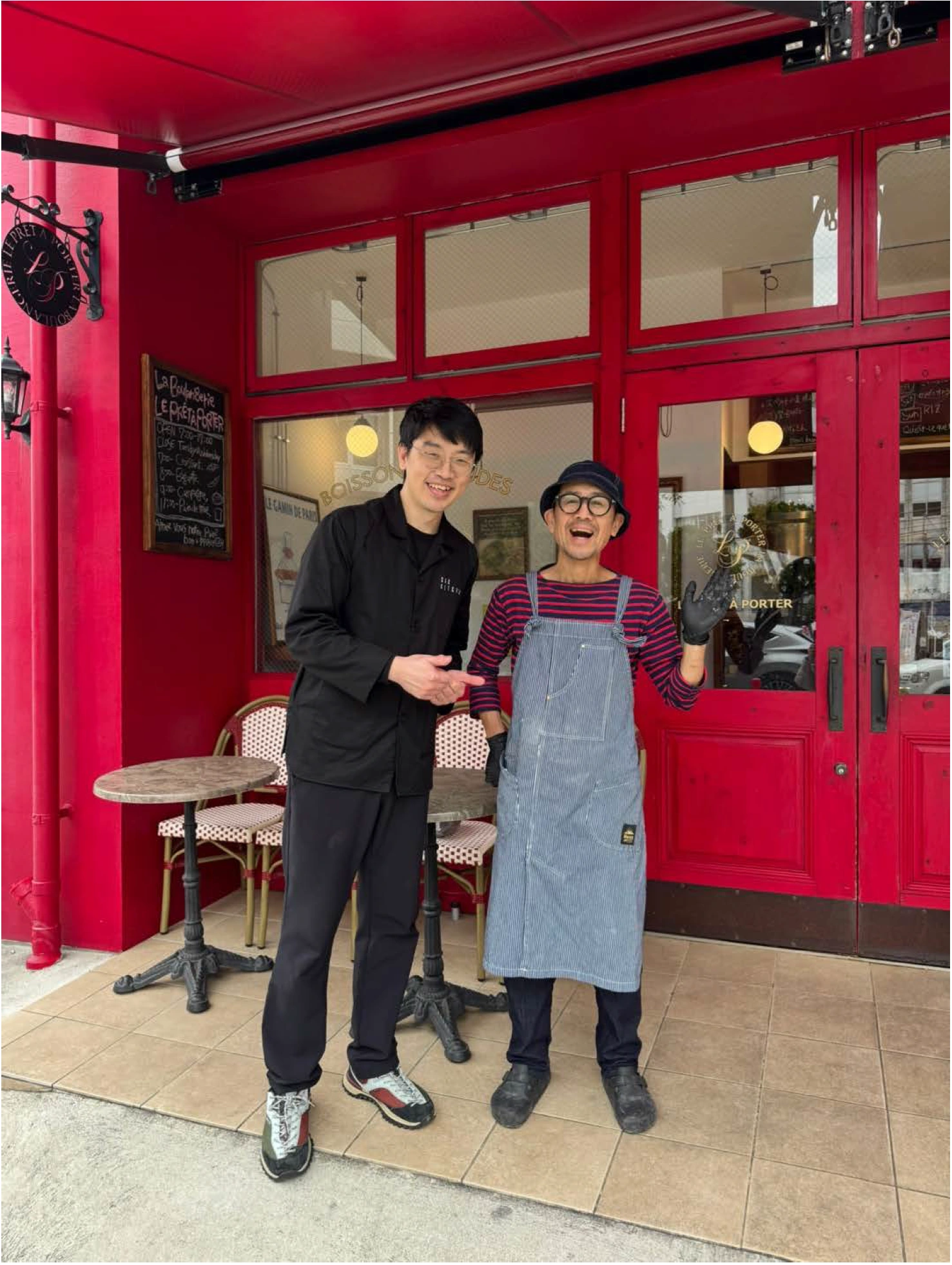
    With the baker outside La Boulangerie Le Prêt à Porter in Naha
    With the baker in Naha, Okinawa, December 2024.

    A record of the exchange

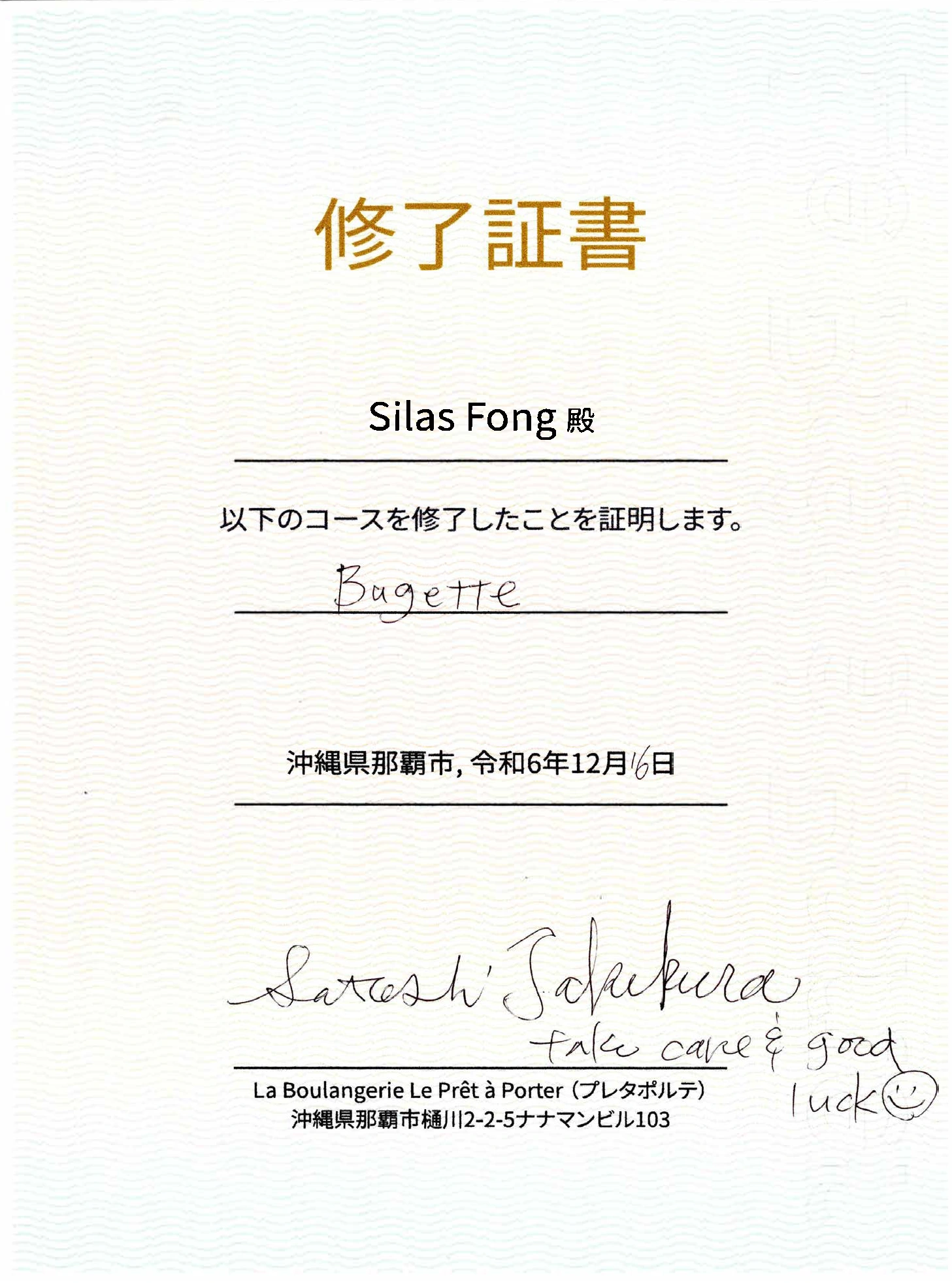
    I designed and made the certificate myself, then asked the baker at La Boulangerie Le Prêt à Porter who taught me baguette-making to sign it. Dated 16 December 2024, it records the skill and the learning exchange.

    Certificate designed and made by Silas Fong, signed by the baker who taught him baguette-making in Naha, 16 December 2024
    Certificate designed and made by Silas Fong, signed by the baker who taught him baguette-making, 16 December 2024.

    Explore the continuing Bread Whispers project

  • Bread Whispers — Frankfurt

    Bread Whispers · Frankfurt · 2024
    Learning sourdough rye bread at the Städelschule canteen

    After beginning Bread Whispers in Gwangju, I continued the project in Frankfurt by learning to make sourdough rye bread with the head chef of the Städelschule canteen. The exchange brought an art school into view through its kitchen and the practical knowledge of the people who feed it.

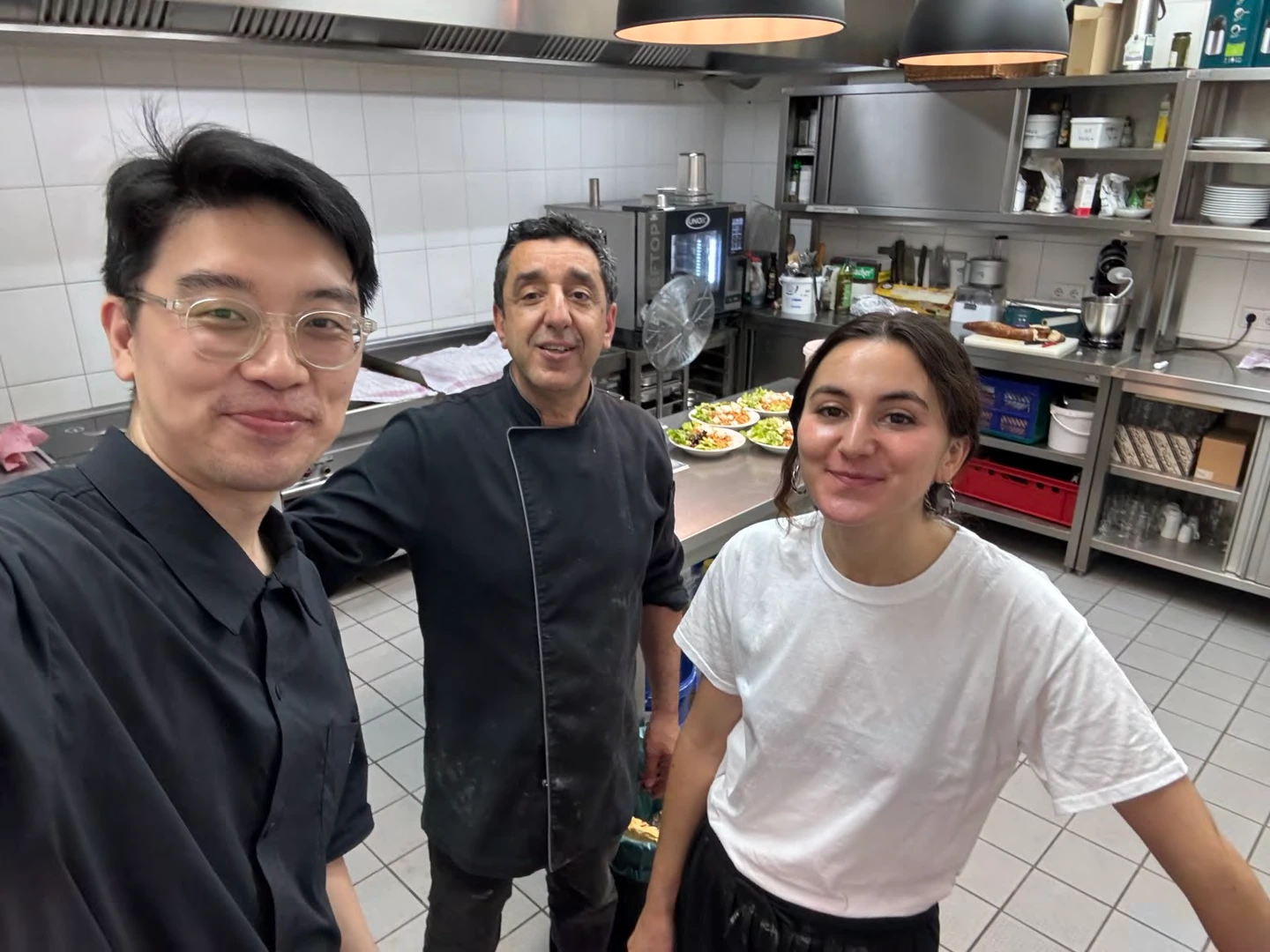
    With the chefs in the Städelschule kitchen, Frankfurt
    With the chefs at Städelschule, Frankfurt, 2024.
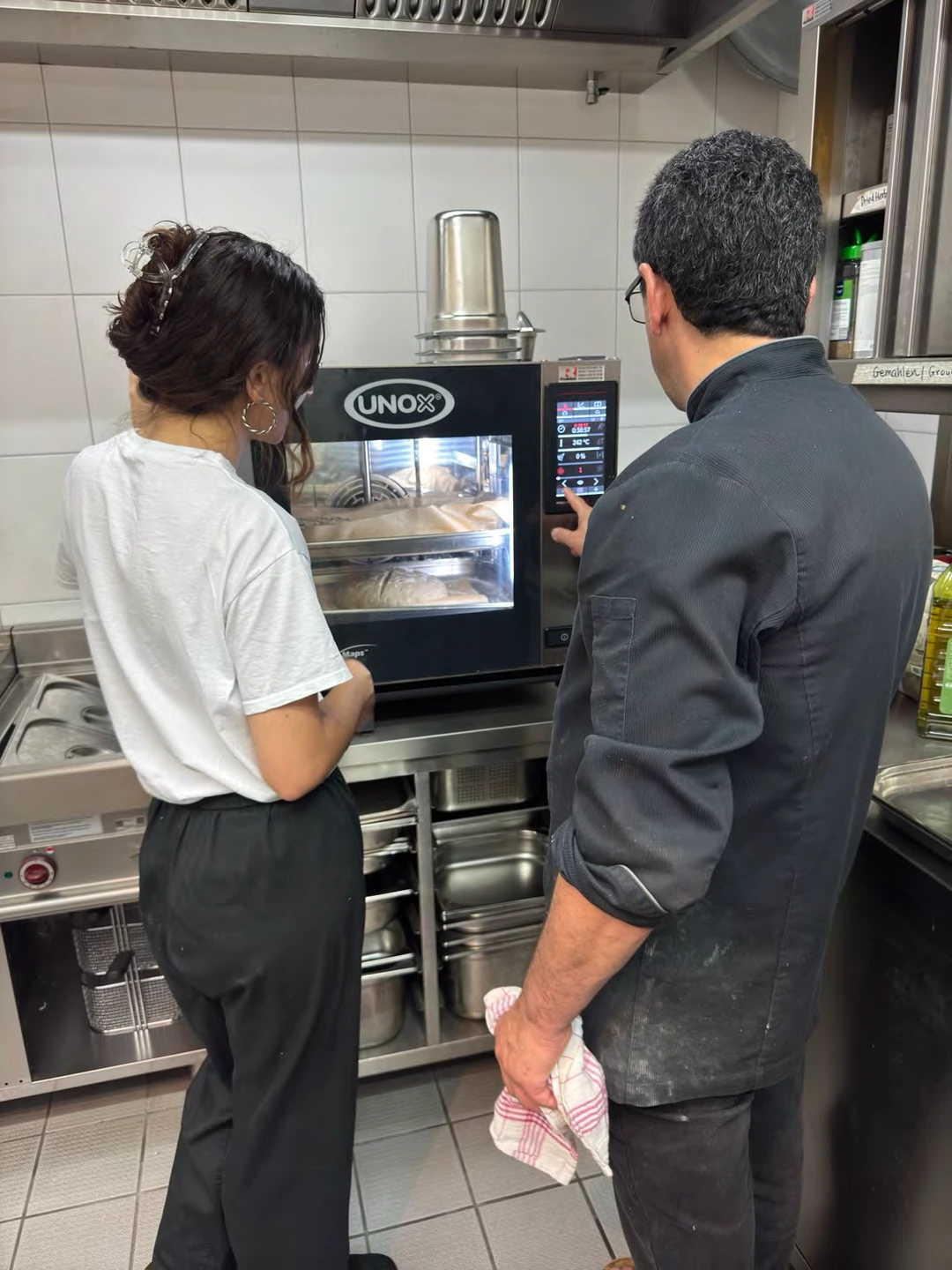
    Learning at the oven with a chef in the Städelschule kitchen
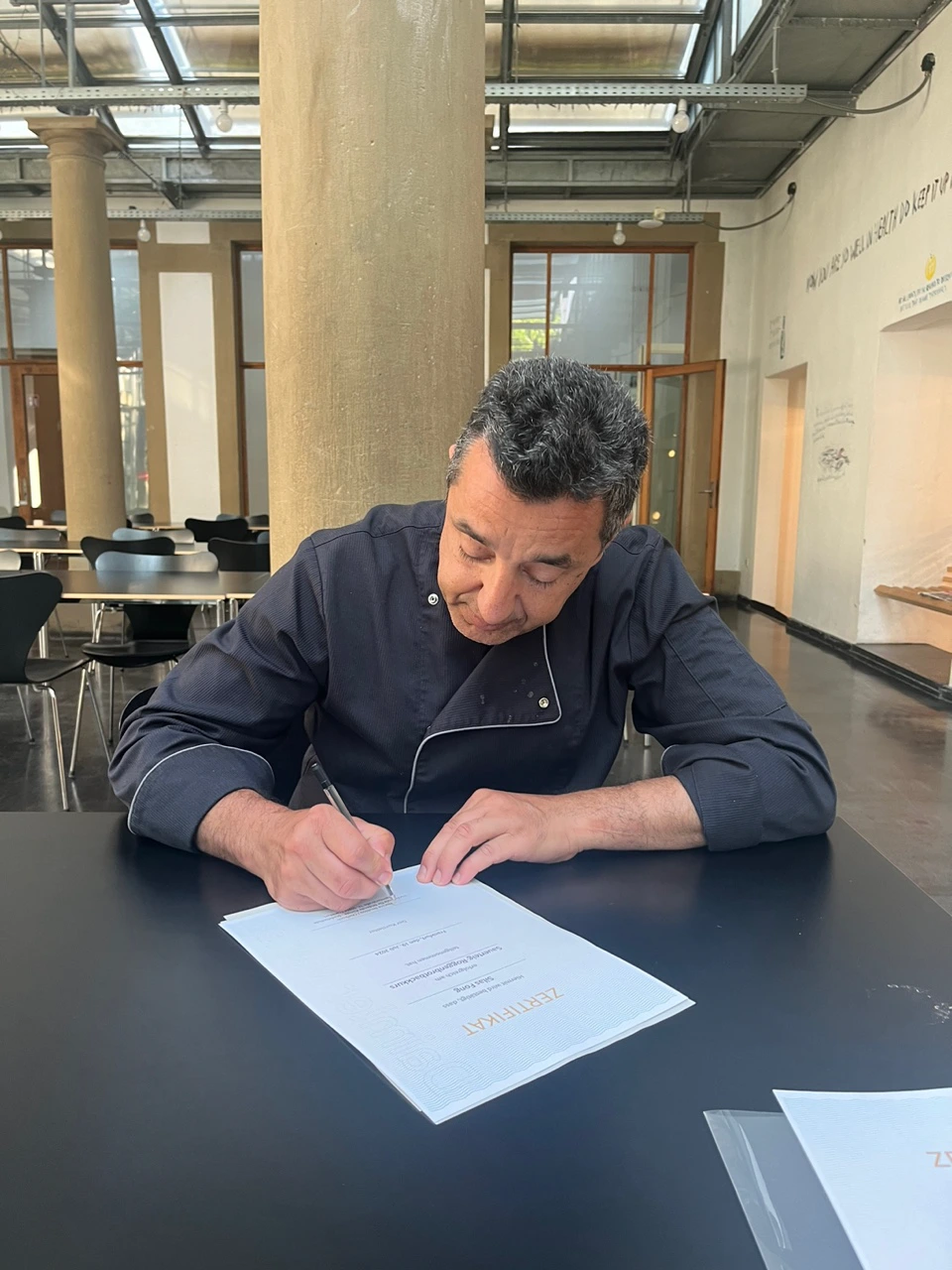
    Head chef of the Städelschule canteen signing the certificate designed and made by Silas Fong
    I designed and made this certificate. The head chef at the Städelschule canteen, who taught me sourdough rye bread-making, signed it as a record of the learning exchange.
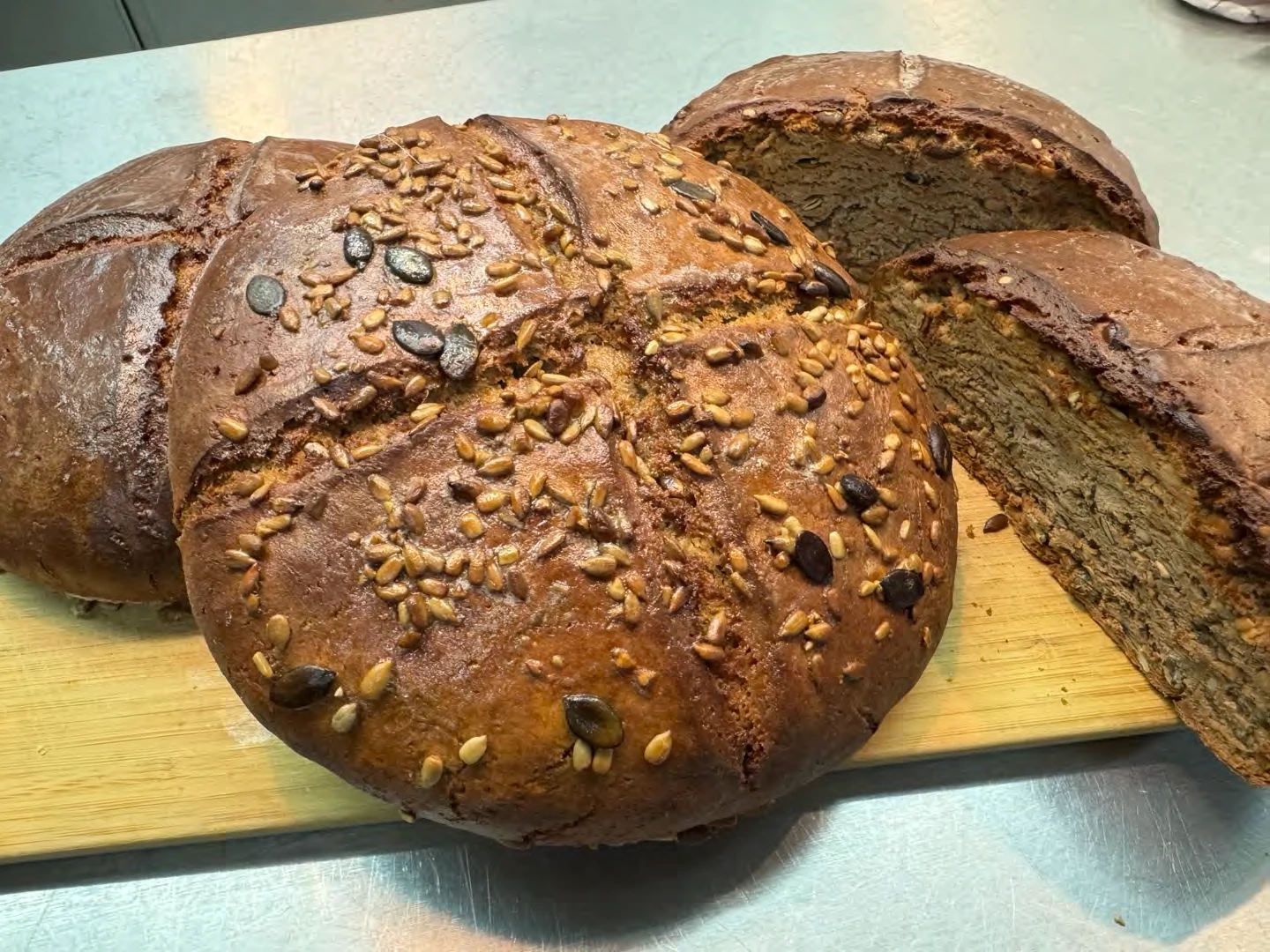
    Sourdough rye loaves made during the Frankfurt exchange
    Sourdough rye bread from the learning exchange.
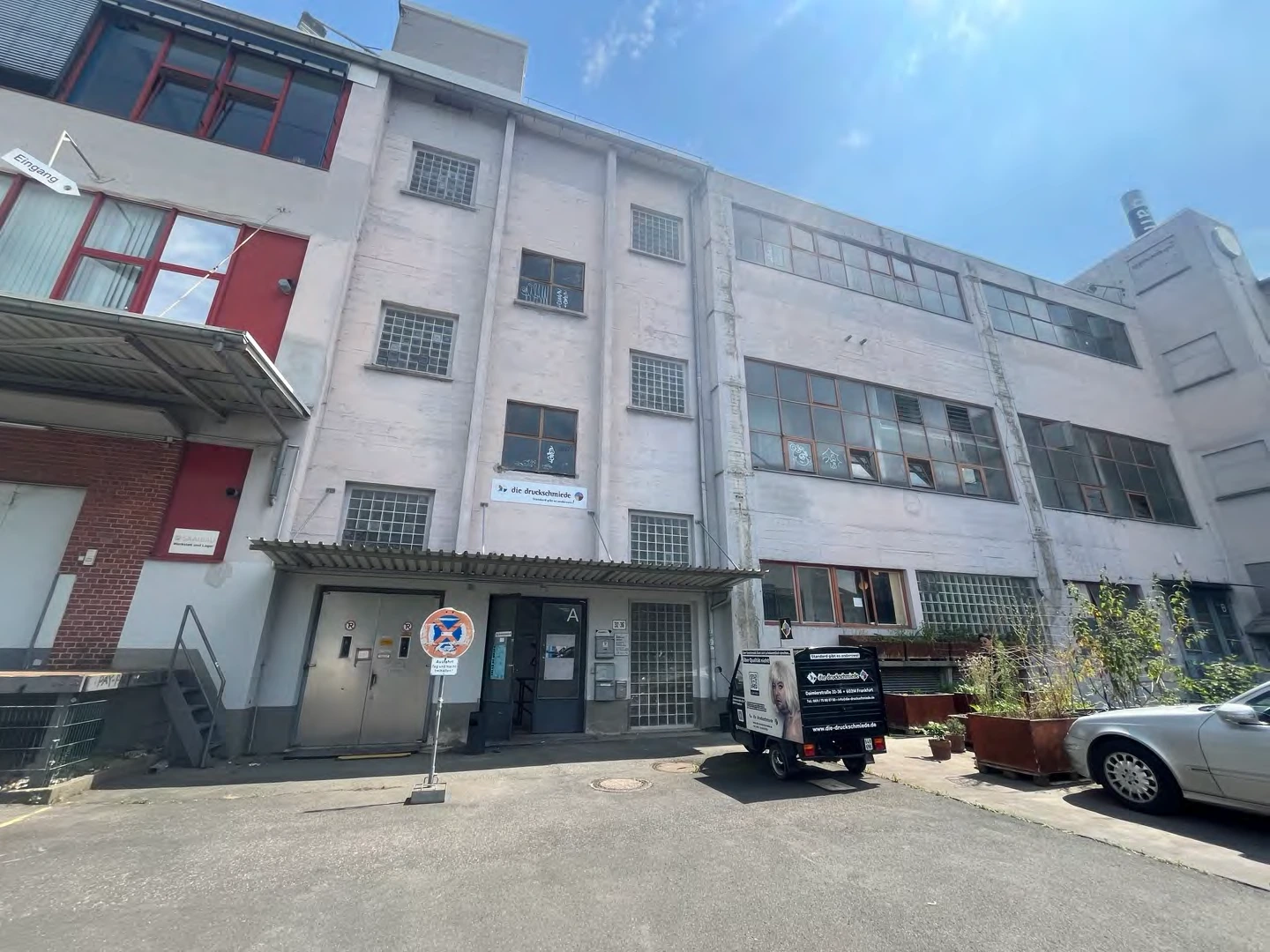
    The Städelschule building in Frankfurt

    The artist-made certificate, signed by the chef who taught me, makes the learning relationship visible. Within Bread Whispers, it connects the practical work of baking with questions about how learning is recognised and valued.

    Explore the continuing Bread Whispers project

  • Development and Application of Art Home Shopping

    2020 · Installation, furniture, vinyl on wall, UHD video and sound
    900 × 400 × 500 cm
    Presented in SAD School of Artists Development, Cheongju Art Studio
    Later single-channel video version, 2023, approximately 5 minutes

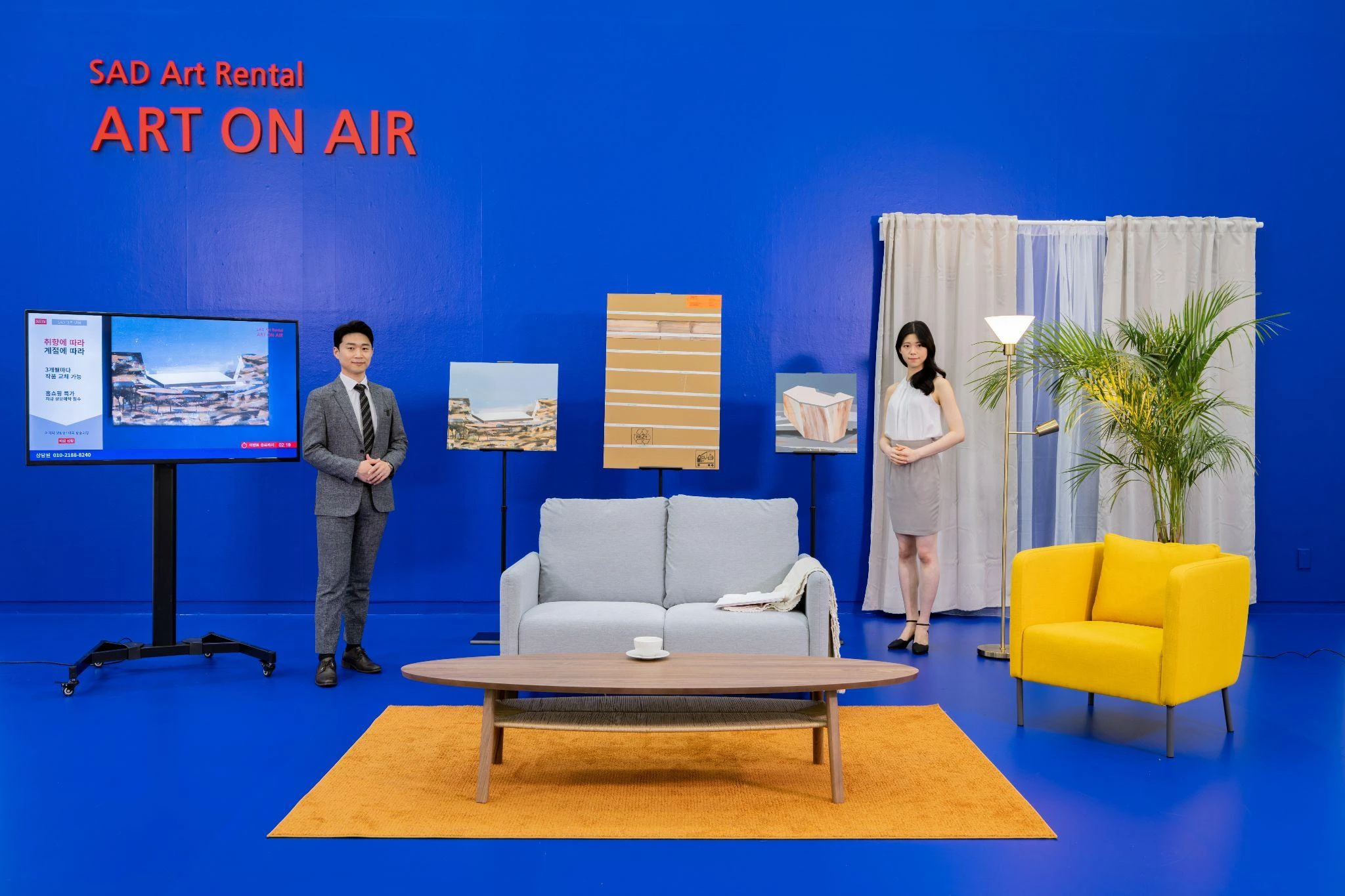
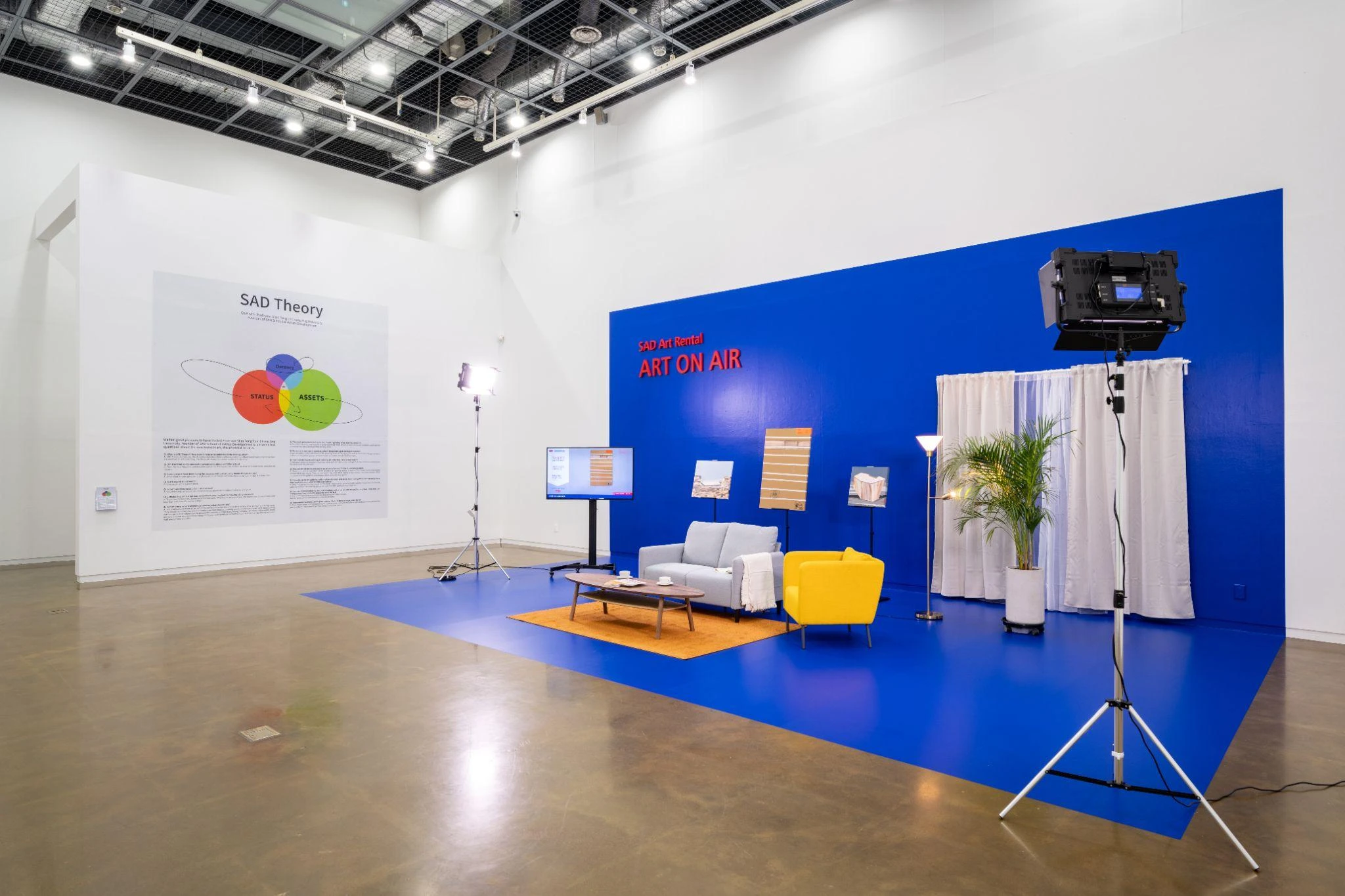
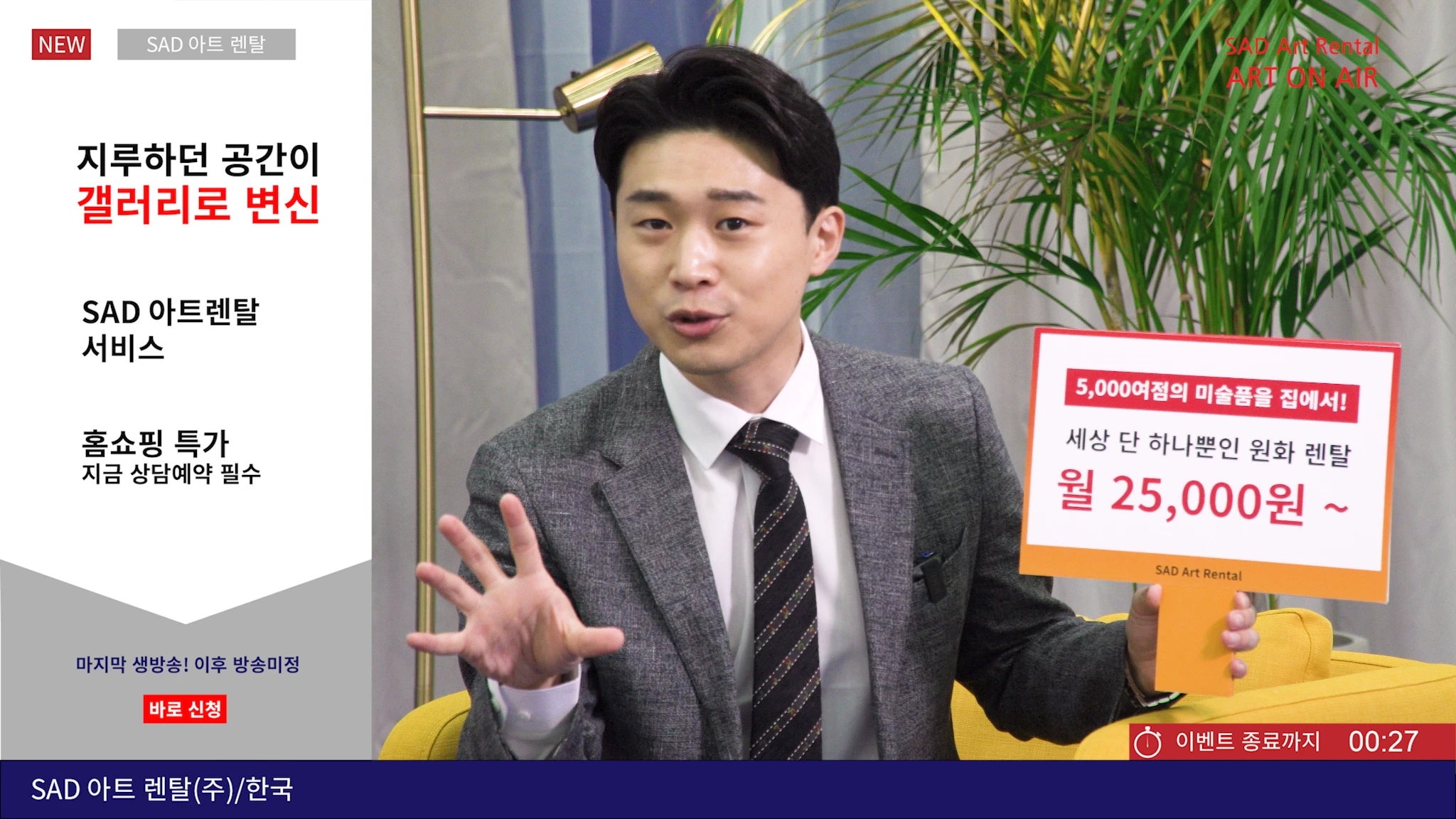
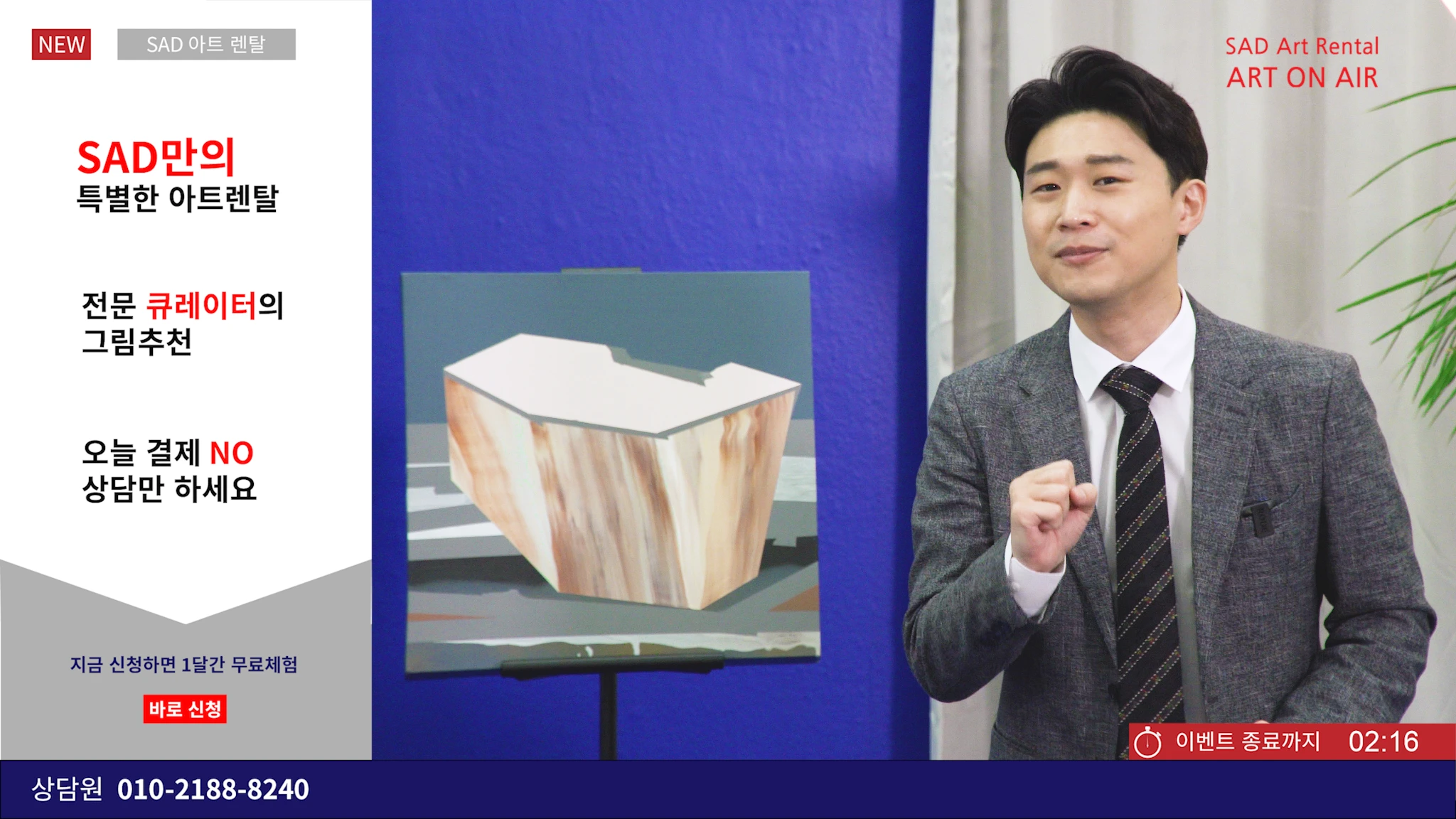
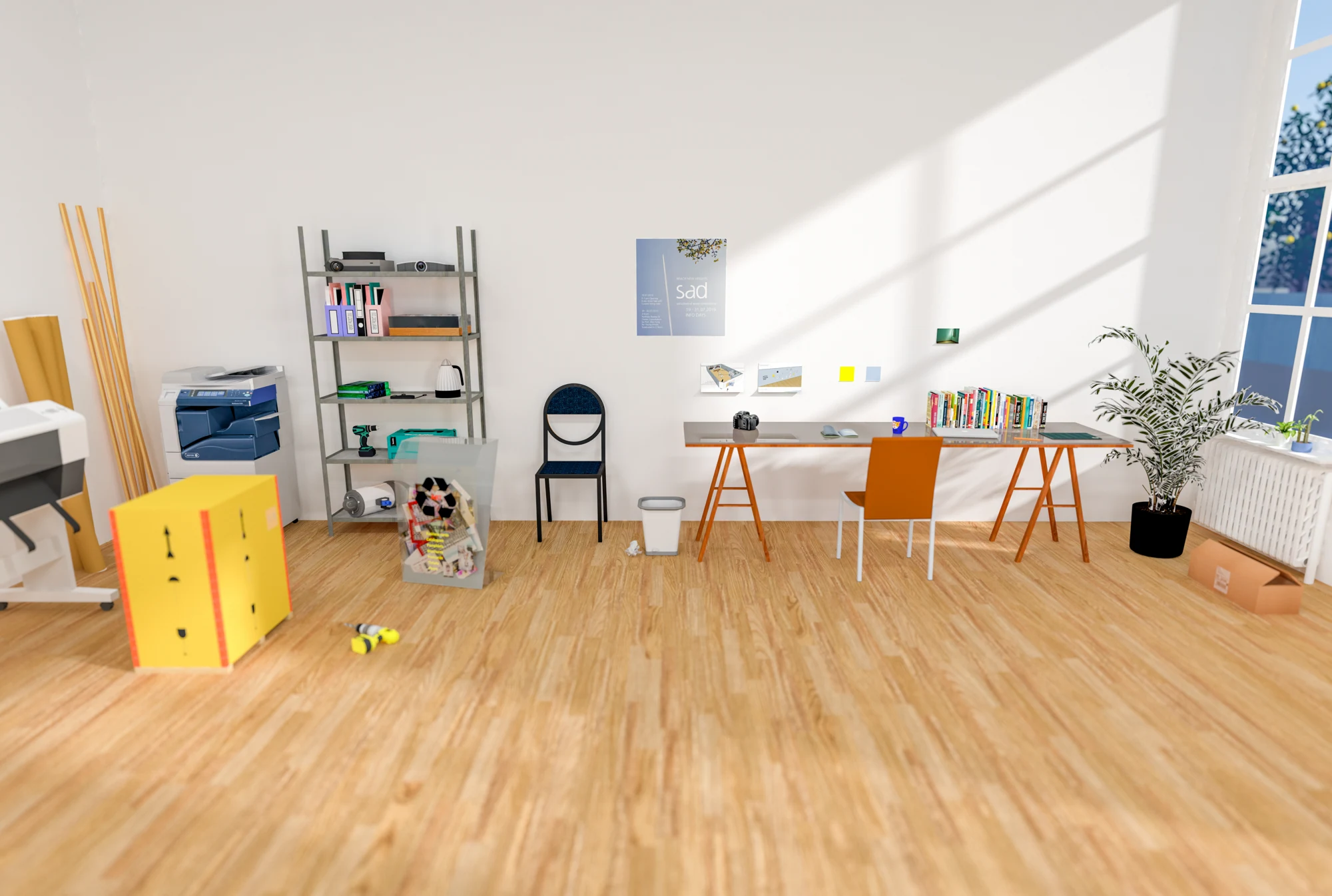
    Under the name SAD Art Rental, a television home-shopping set becomes a showroom for artworks. Presenters introduce art through the familiar promises of shopping television: special offers, convenient services and the transformation of an ordinary room into a gallery.

    The installation brings the sales set into the exhibition space. Furniture, display screens, artworks and the blue studio backdrop place visitors between an art exhibition and a commercial broadcast, extending SAD’s fictional professional training programme into the promotion and rental of art.

    Development and Application of Art Home Shopping, Cheongju Art Studio, 2020 — installation view 1.
    Development and Application of Art Home Shopping, Cheongju Art Studio, 2020 — installation view 2.
    Development and Application of Art Home Shopping, Cheongju Art Studio, 2020 — installation view 3.

    Video

    Five-minute excerpt with English subtitles.

    Development and Application of Art Home Shopping, 2023 — video still 1.
    Development and Application of Art Home Shopping, 2023 — video still 2.

    See the full SAD School of Artists Development exhibition, 2020.

    Also archived as SAD Art Rental. Photographs and video stills courtesy of the artist.

  • Bread Whispers — ARKO Art Center

    2024 · ARKO Art Center, Seoul
    Performance, 20 November 2024
    Presented with No Place Like Home, 21 November–1 December 2024

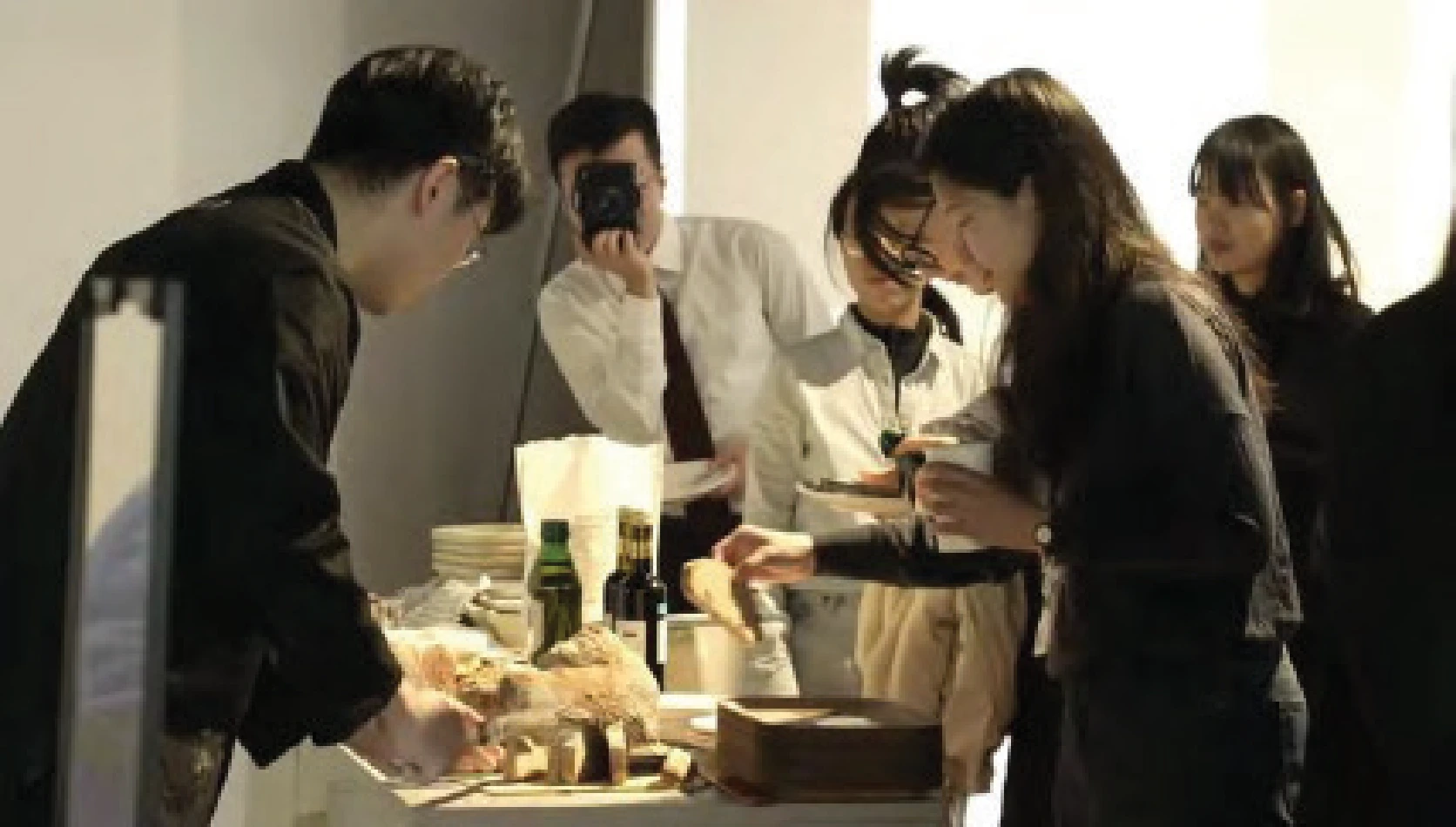
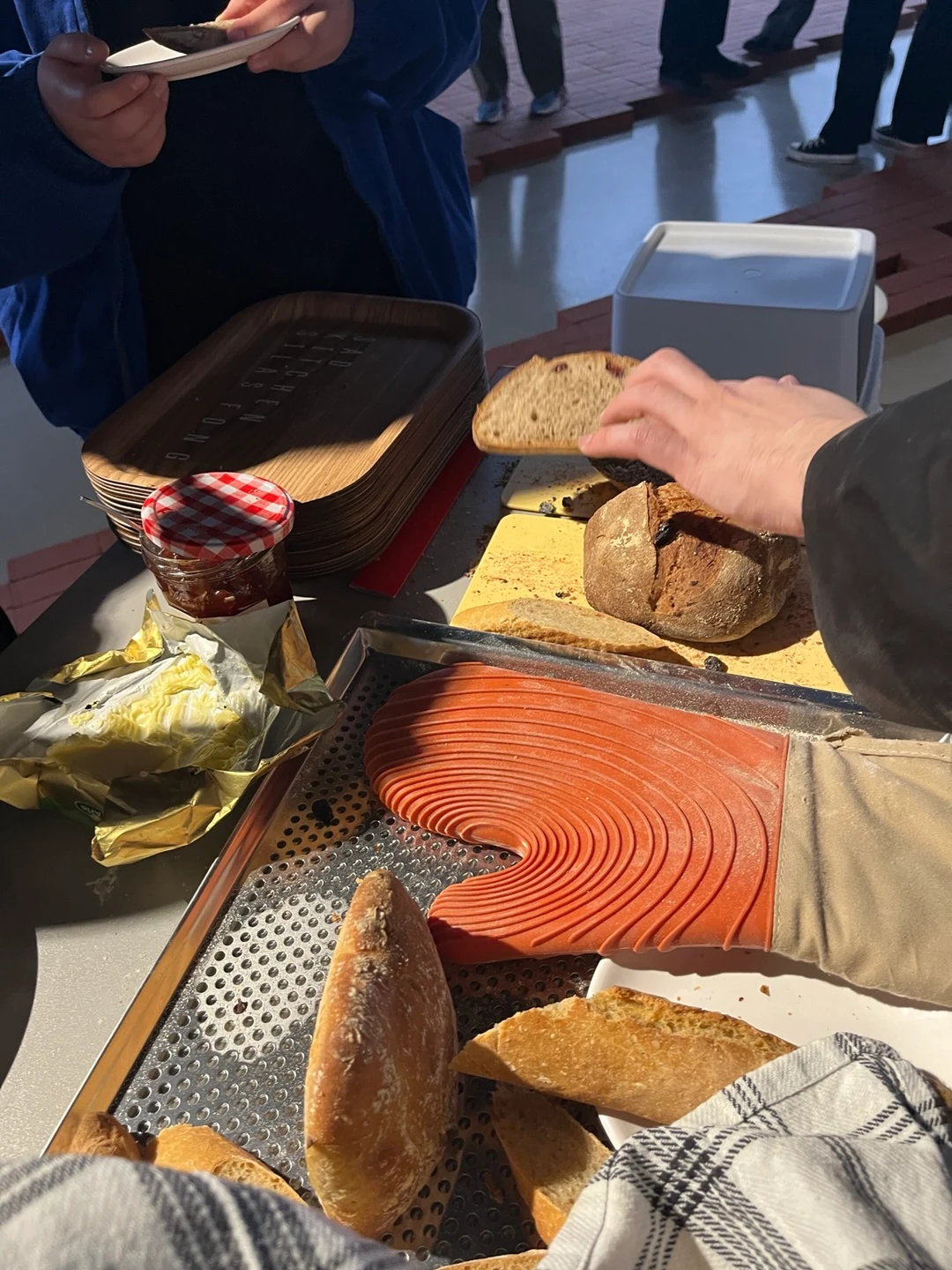
    The ARKO presentation brought Bread Whispers into the preview programme of No Place Like Home. Bread prepared in the gallery became a point of contact between people gathered for the exhibition. The performance continued the practice of learning, baking and sharing that began in Gwangju.

    한국어

    아르코미술관의 《나의 벗 나의 집》 프리뷰 프로그램에서 빵소리를 선보였다. 광주에서 시작한 배움과 제빵, 나눔의 실천을 전시장으로 이어가며 함께 모인 사람들 사이에 대화의 계기를 만들었다.

    Sharing bread with visitors during Bread Whispers at ARKO Art Center, Seoul, 2024.
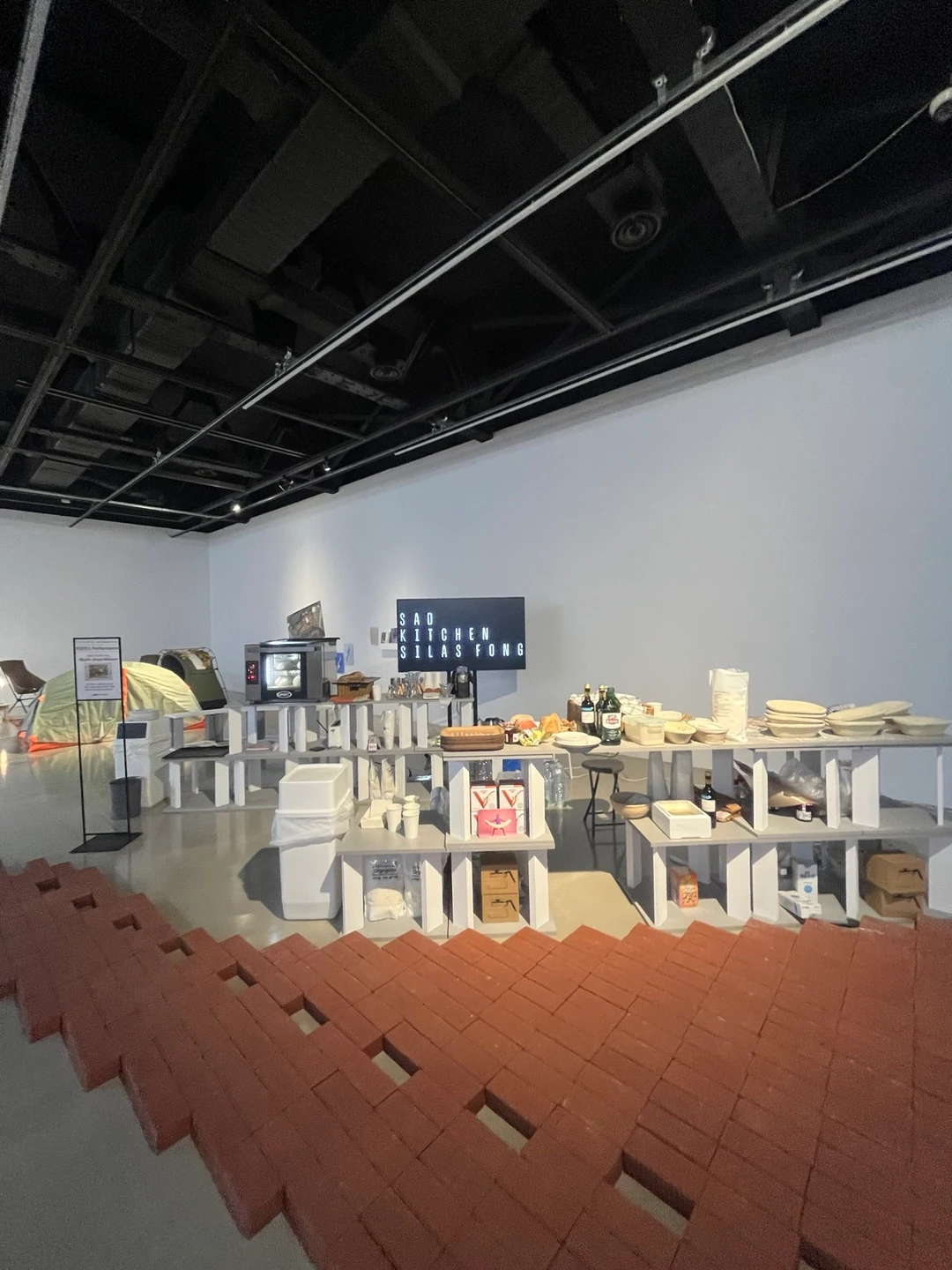
    Bread Whispers and SAD Kitchen presentation in No Place Like Home, ARKO Art Center, 2024.
    Sharing bread during Bread Whispers at ARKO Art Center, 2024.

    Earlier episode: Bread Whispers — Gwangju, 2023.
    Later episode: A Study of Wheat, 2026.

    Programme: Bread Whispers performance · No Place Like Home exhibition. Photographs from the artist’s exhibition archive.

  • Bread Whispers — Gwangju

    Bread Whispers · Horanggasy Creative Studio, Gwangju · 2023

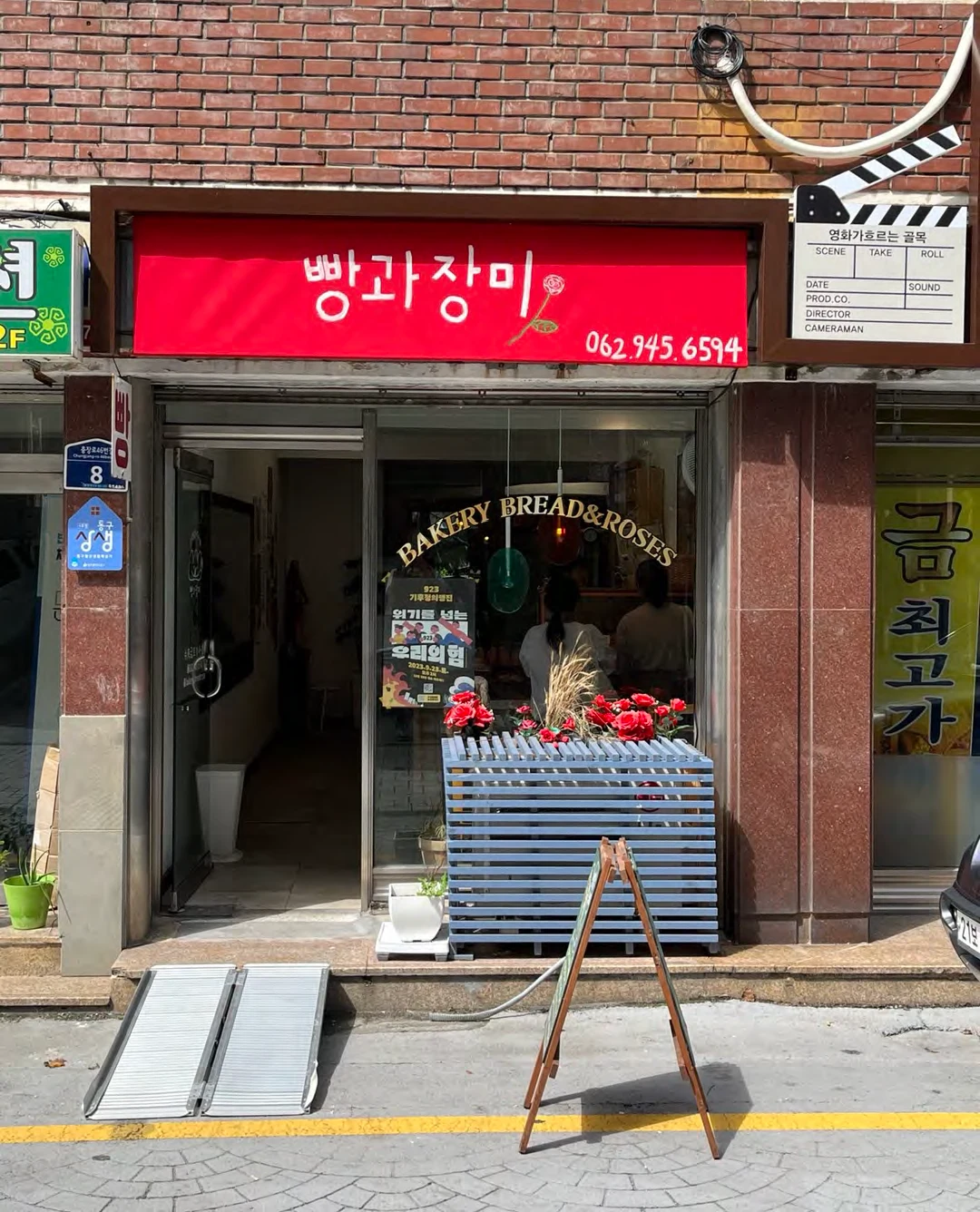
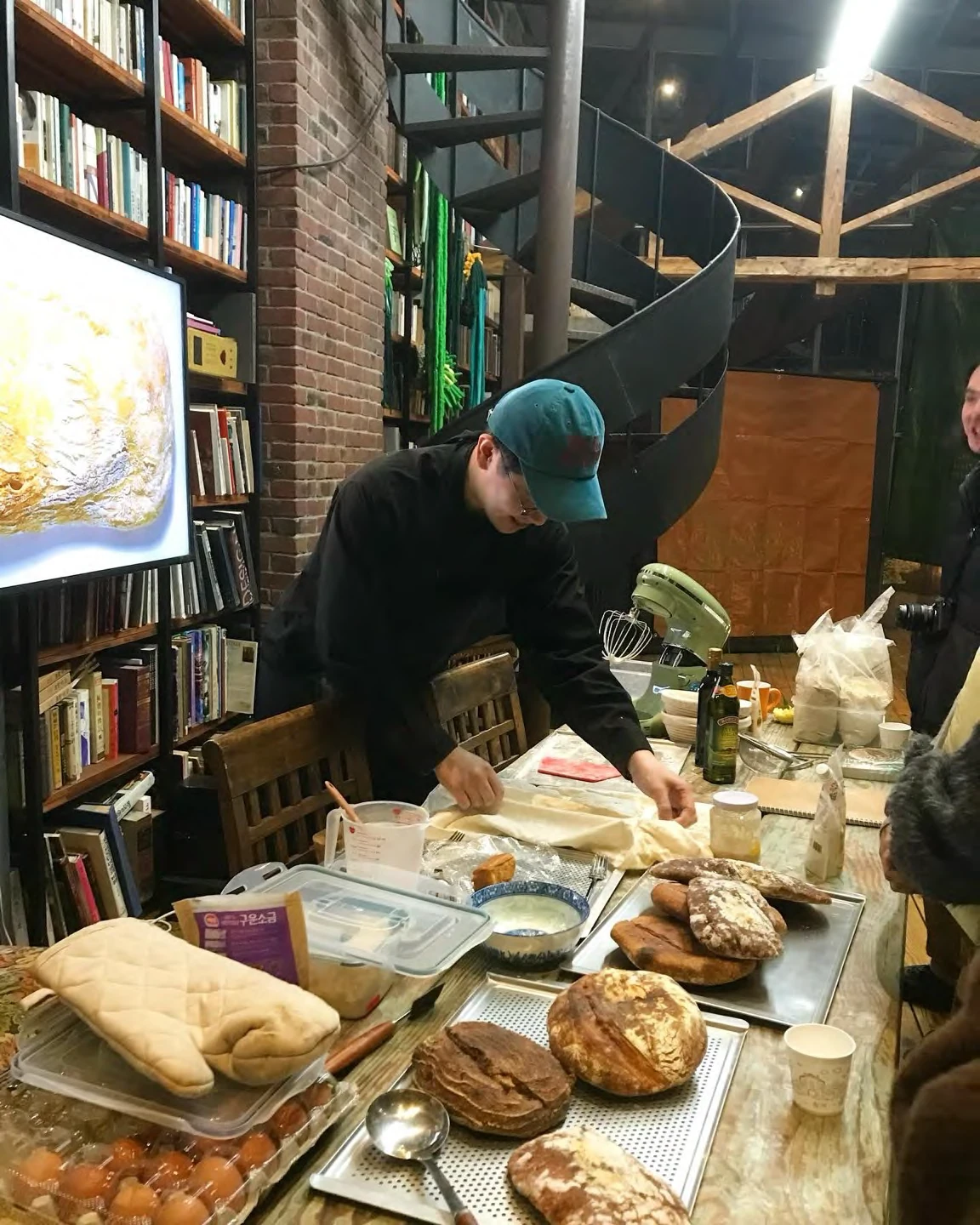
    Bread Whispers began with a practical exchange: I offered my artwork in return for baking knowledge. During my residency in Gwangju, learning from the local bakery Bread and Roses led to repeated trials in the kitchen and occasions to share food with other people. Making bread brought my work as an artist into contact with everyday care, hospitality and the skills of another profession.

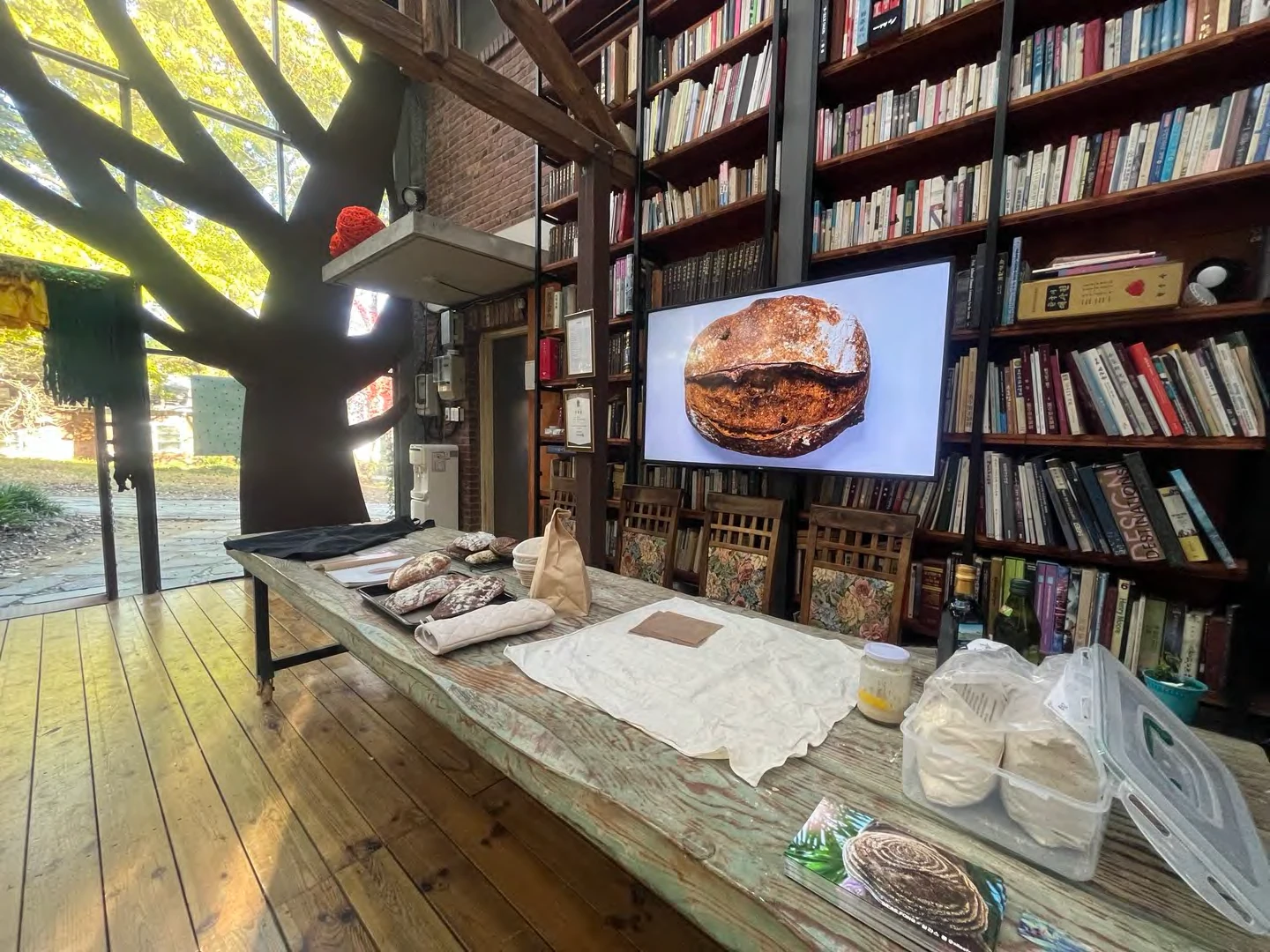
    Bread-making performance installed in the library at Horanggasy Creative Studio
    Bread Whispers, Gwangju, 2023: bread-making equipment, dough and photographic records in the performance setting.

    Learning ciabatta

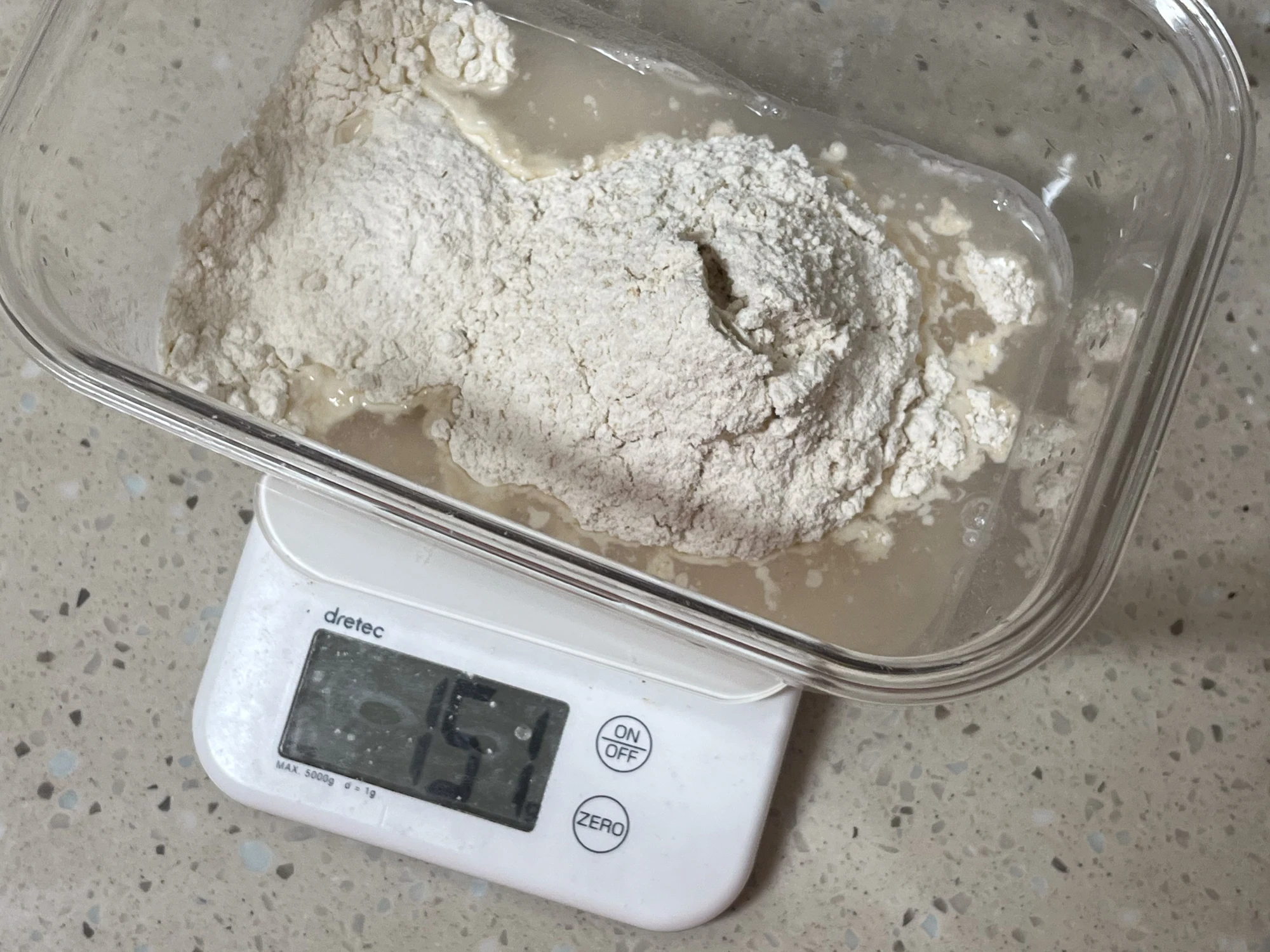
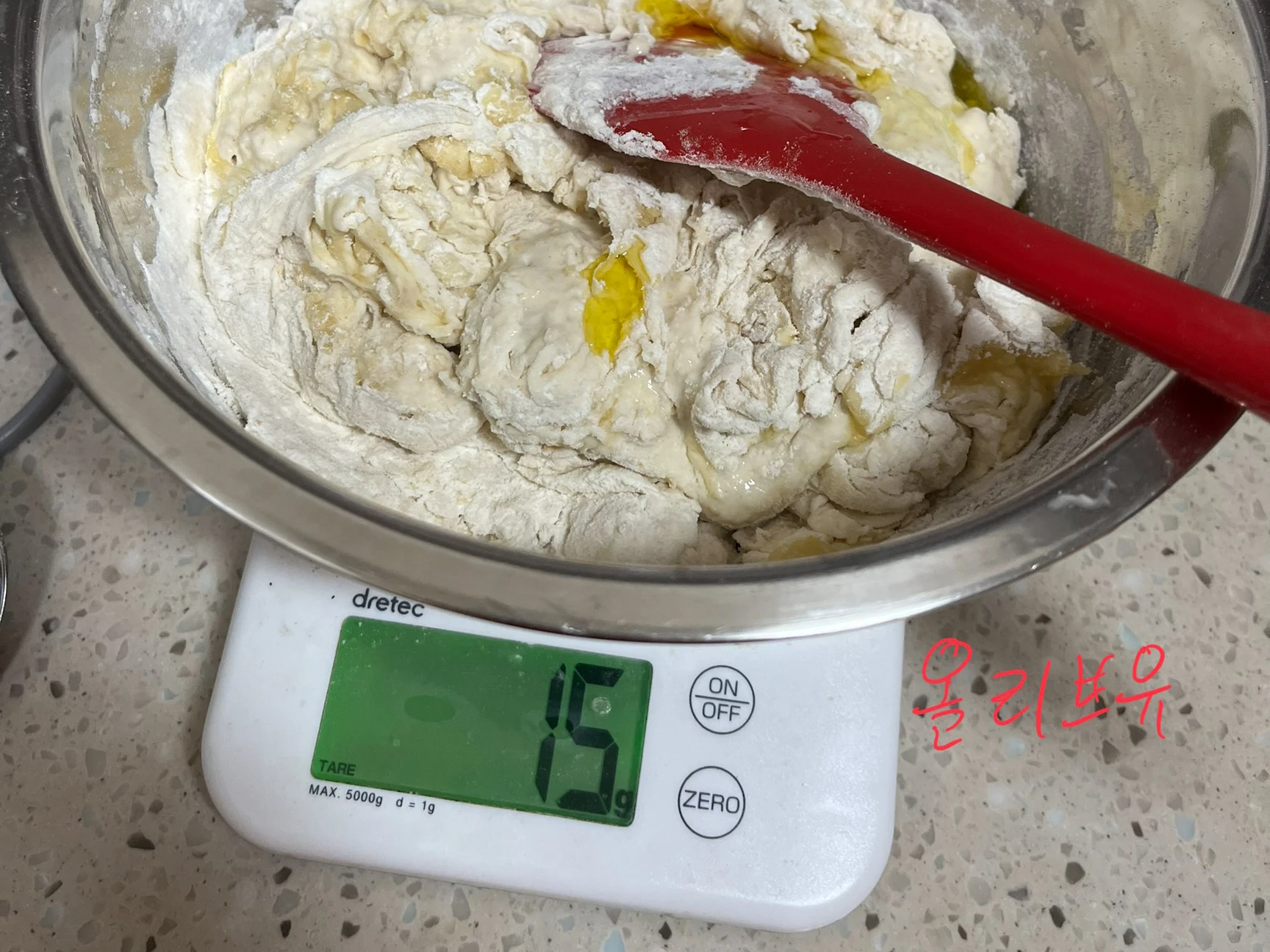
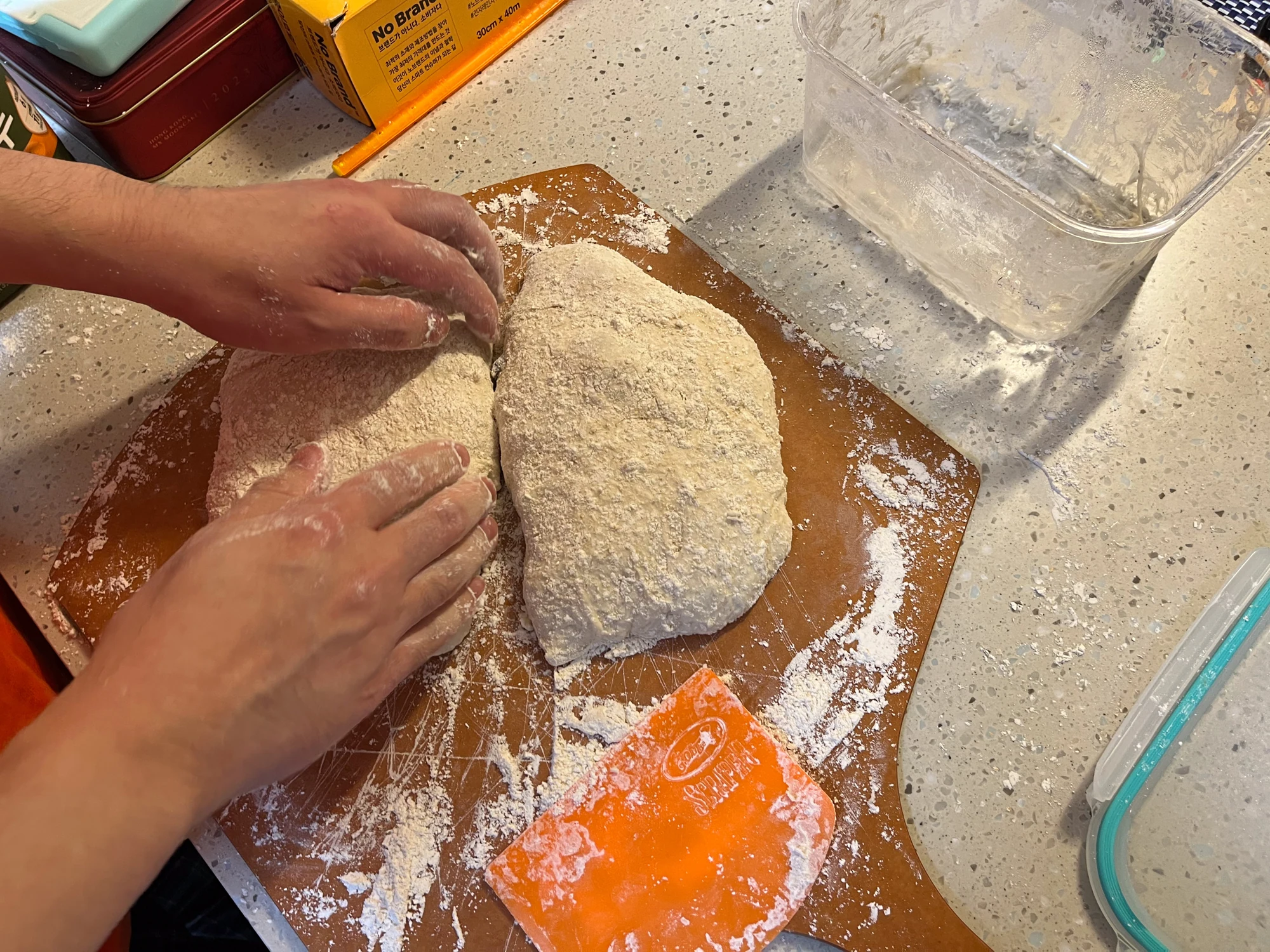
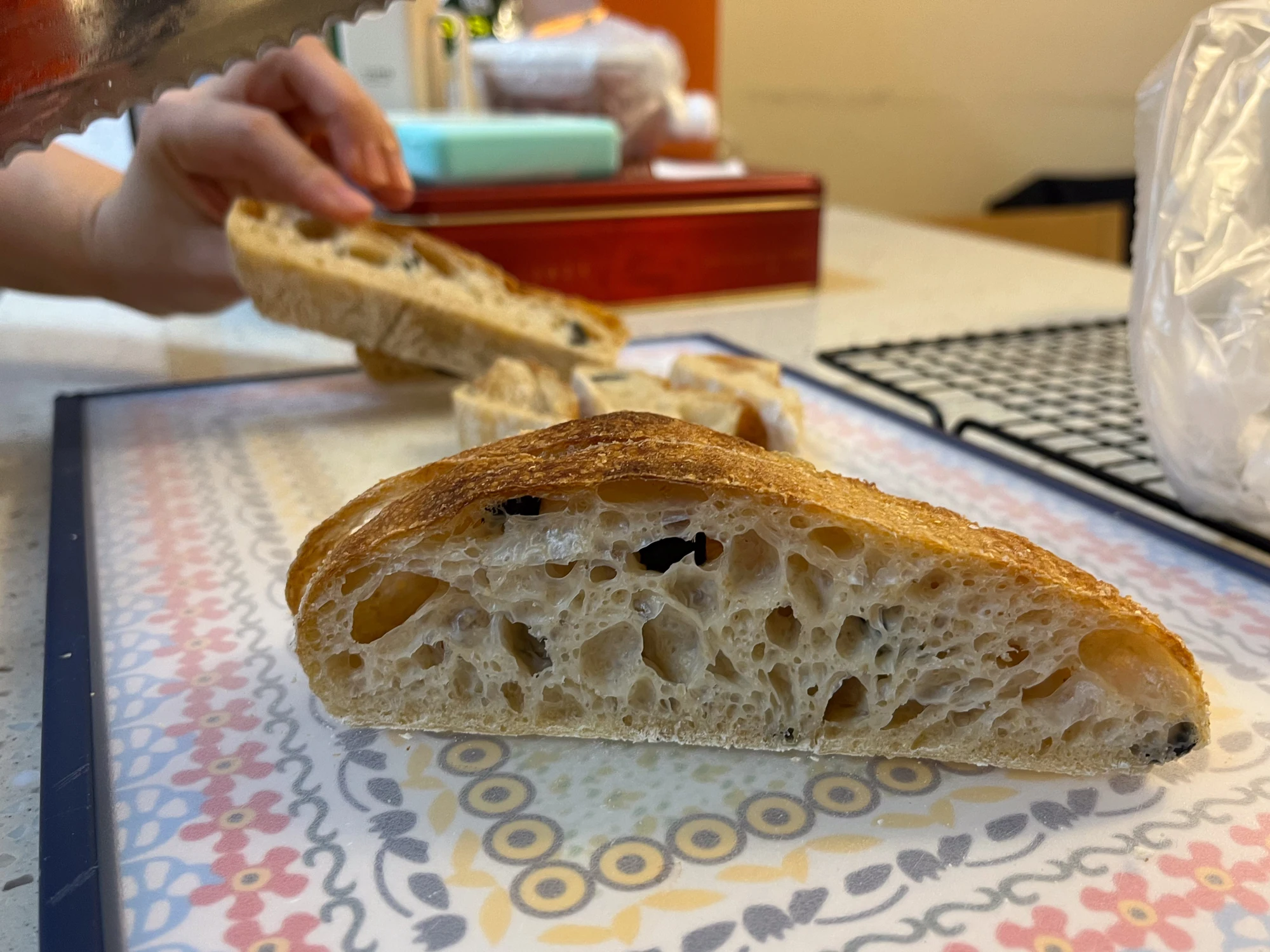
    Ciabatta was central to these baking experiments. Measuring, mixing and handling the wet dough meant learning through repetition, touch and small changes, then cutting into the loaf to see what had happened inside.

    Entrance to Bread and Roses bakery in Gwangju
    Bread and Roses, Gwangju, where I learned bread-making.
    Weighing flour for bread dough
    Mixing the dough in a bowl
    Hands dividing and shaping ciabatta dough
    Dividing and shaping the dough.
    The open crumb of a sliced ciabatta
    Cutting the ciabatta to examine its crumb.

    Castella and other kitchen trials

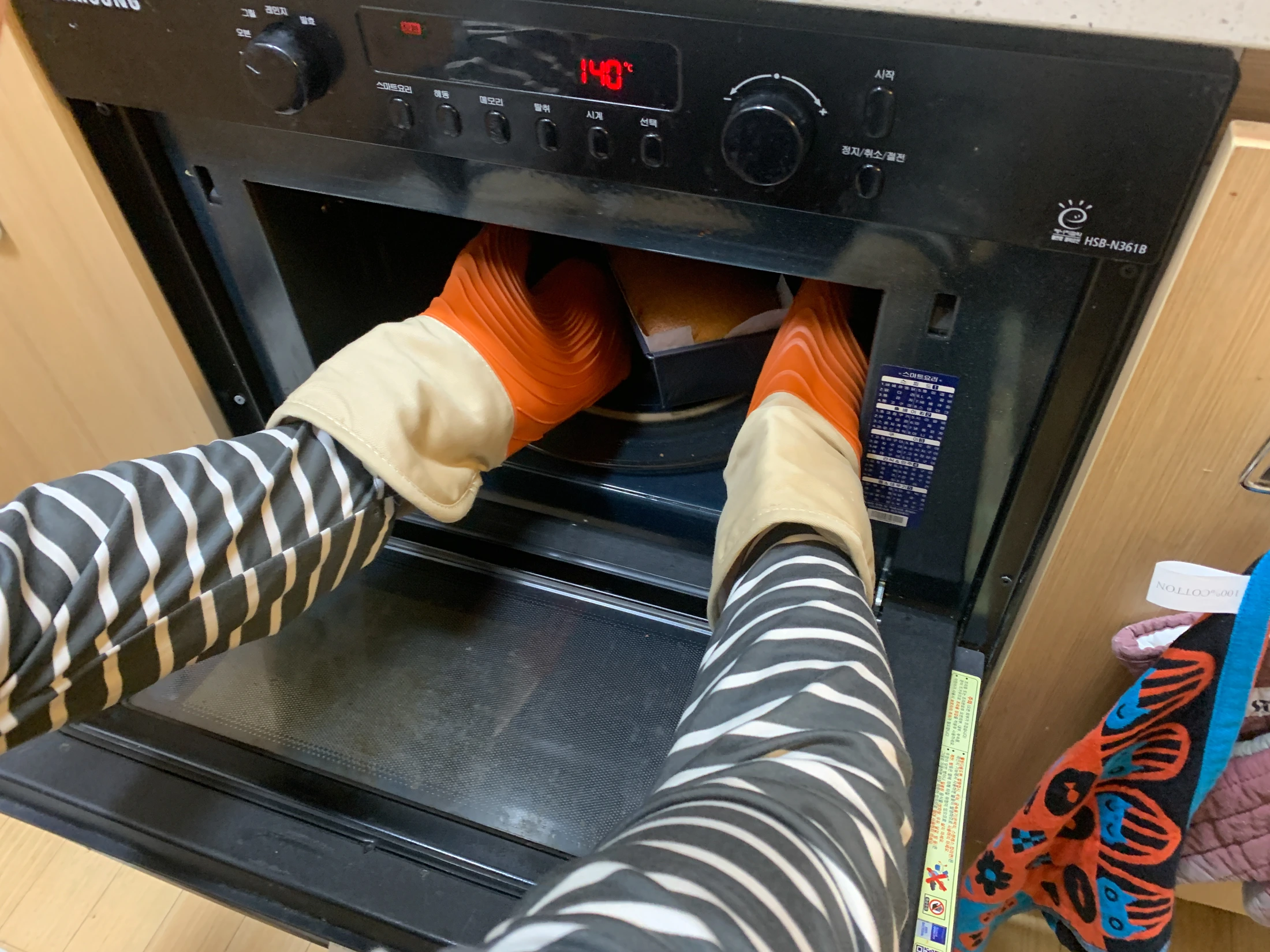
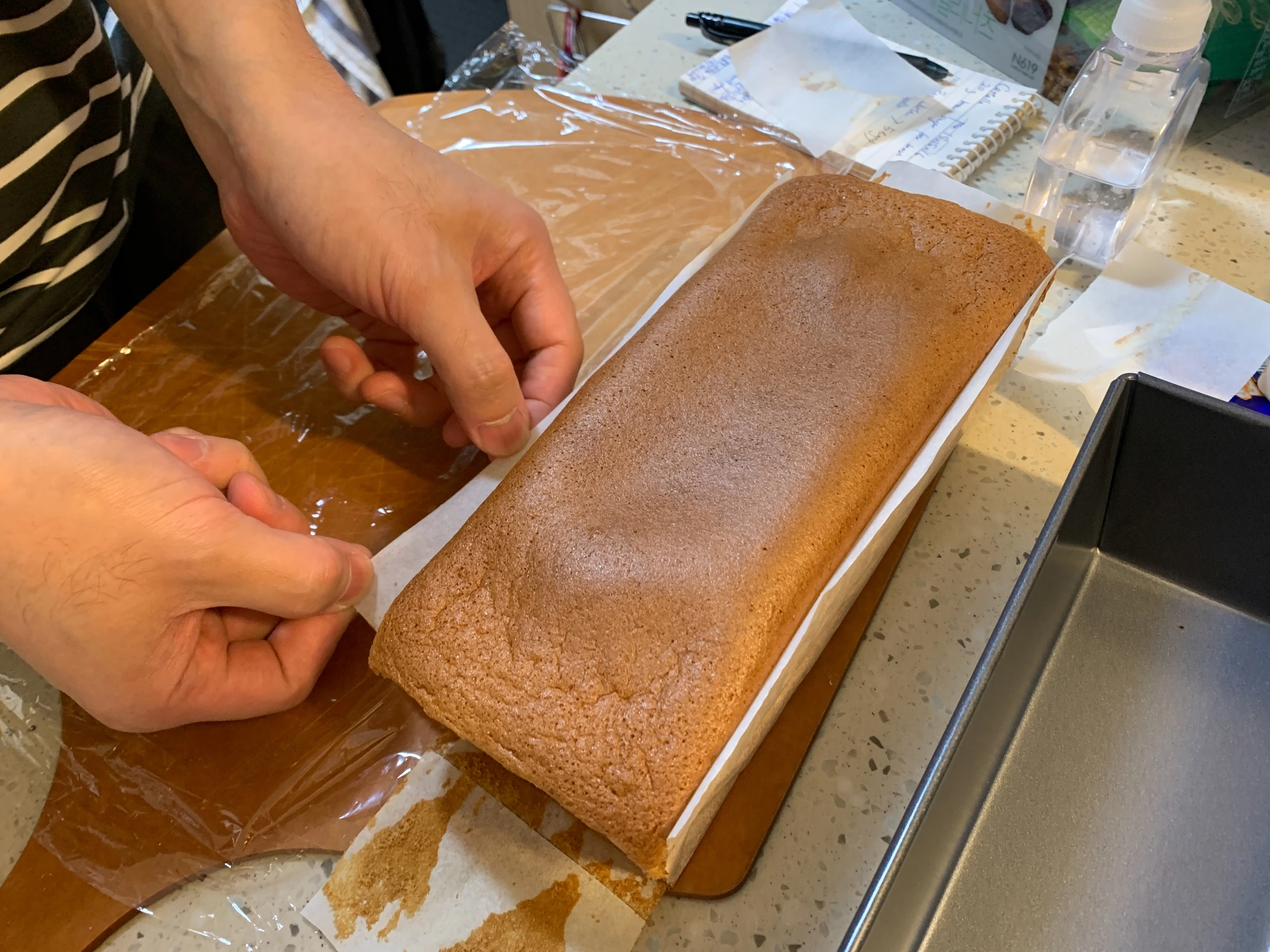
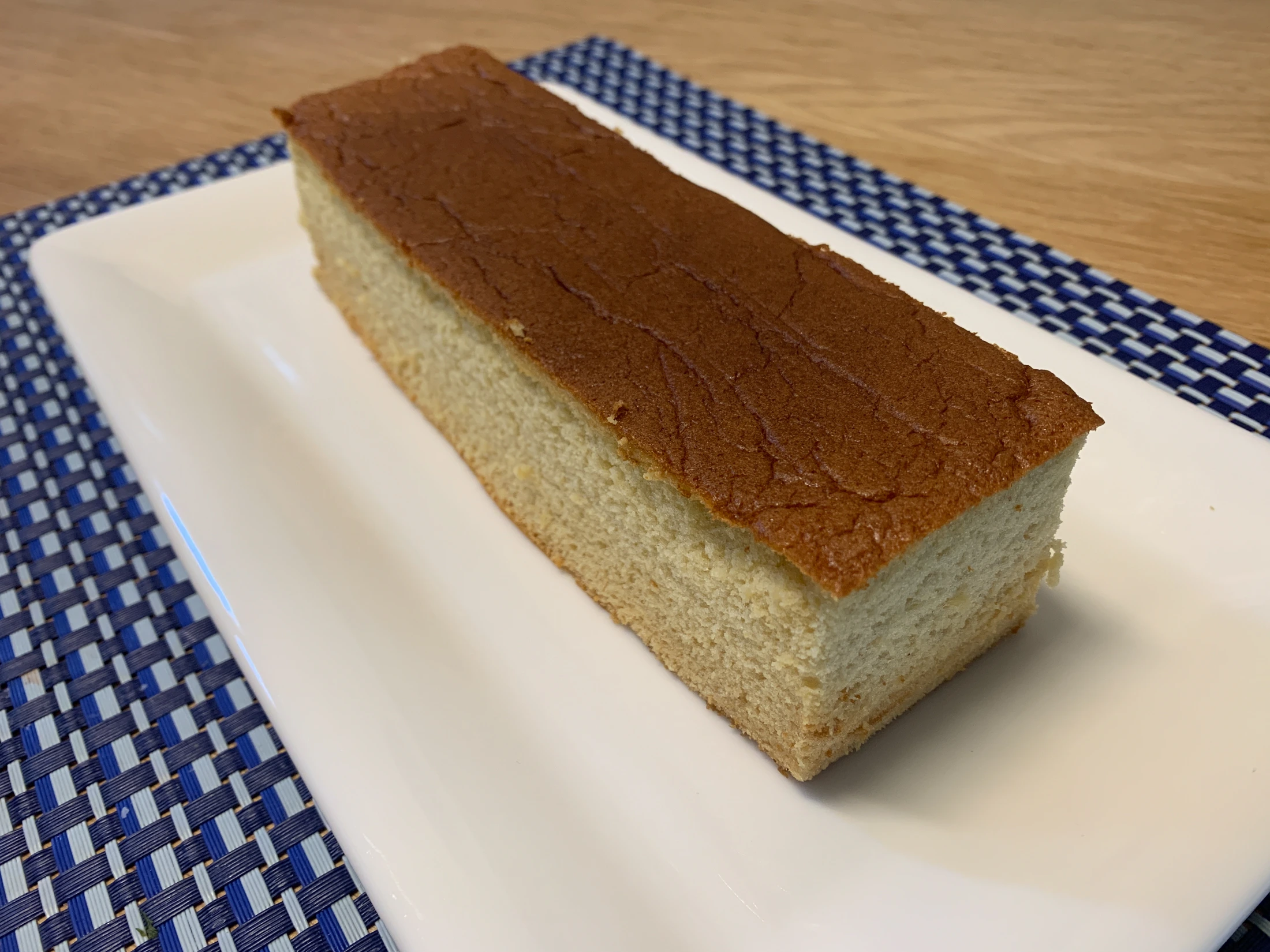
    The photographic notes also follow making castella: preparing it for the oven, releasing it from the tin and sharing the finished cake.

    Placing the castella tin in the oven
    Releasing the baked castella from its tin
    A finished castella on a plate
    Castella made during the residency.

    Making room for others

    The work moves between concentrated practice and social encounters. Baking in front of visitors makes the learning visible; a meal with fellow residency artists places it within a wider everyday life.

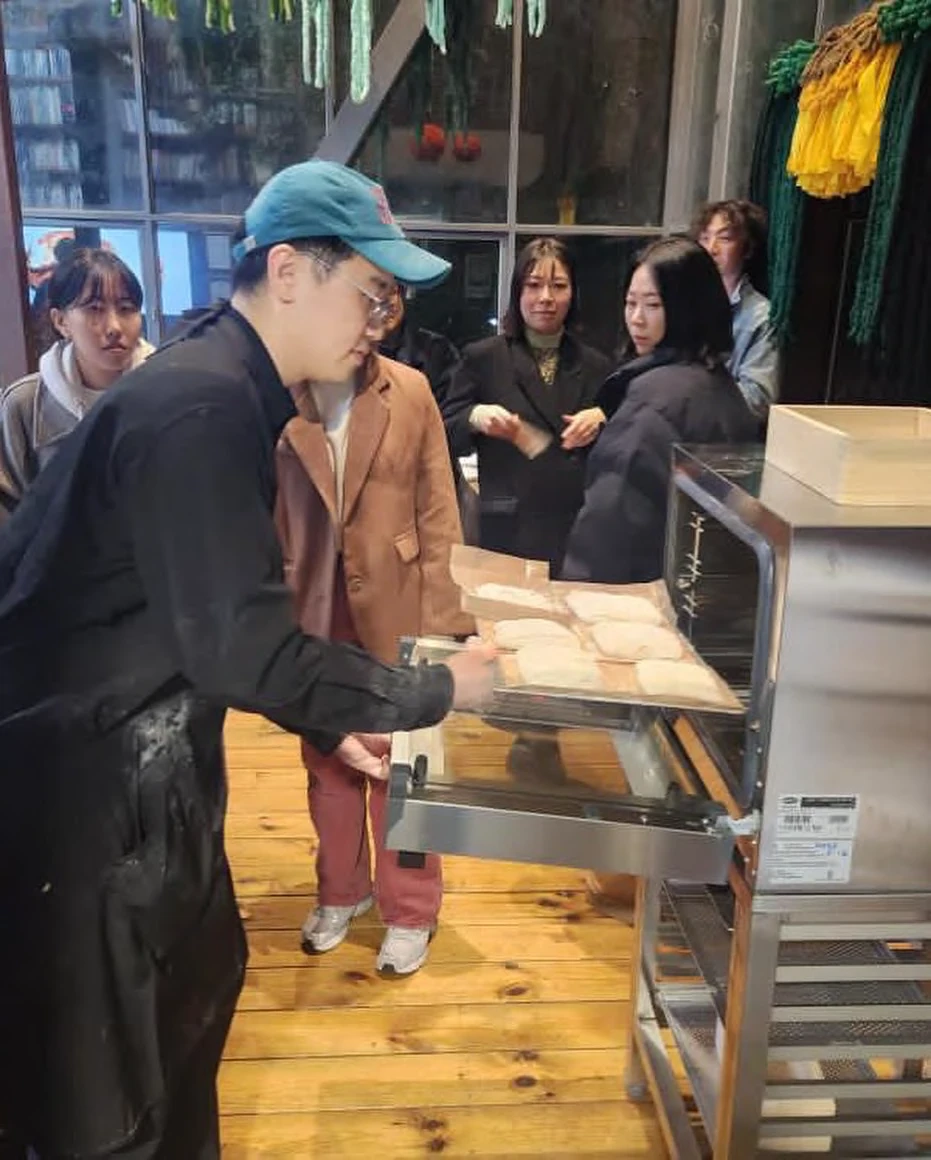
    Making bread in the library during Bread Whispers
    Baking while visitors gather around the oven
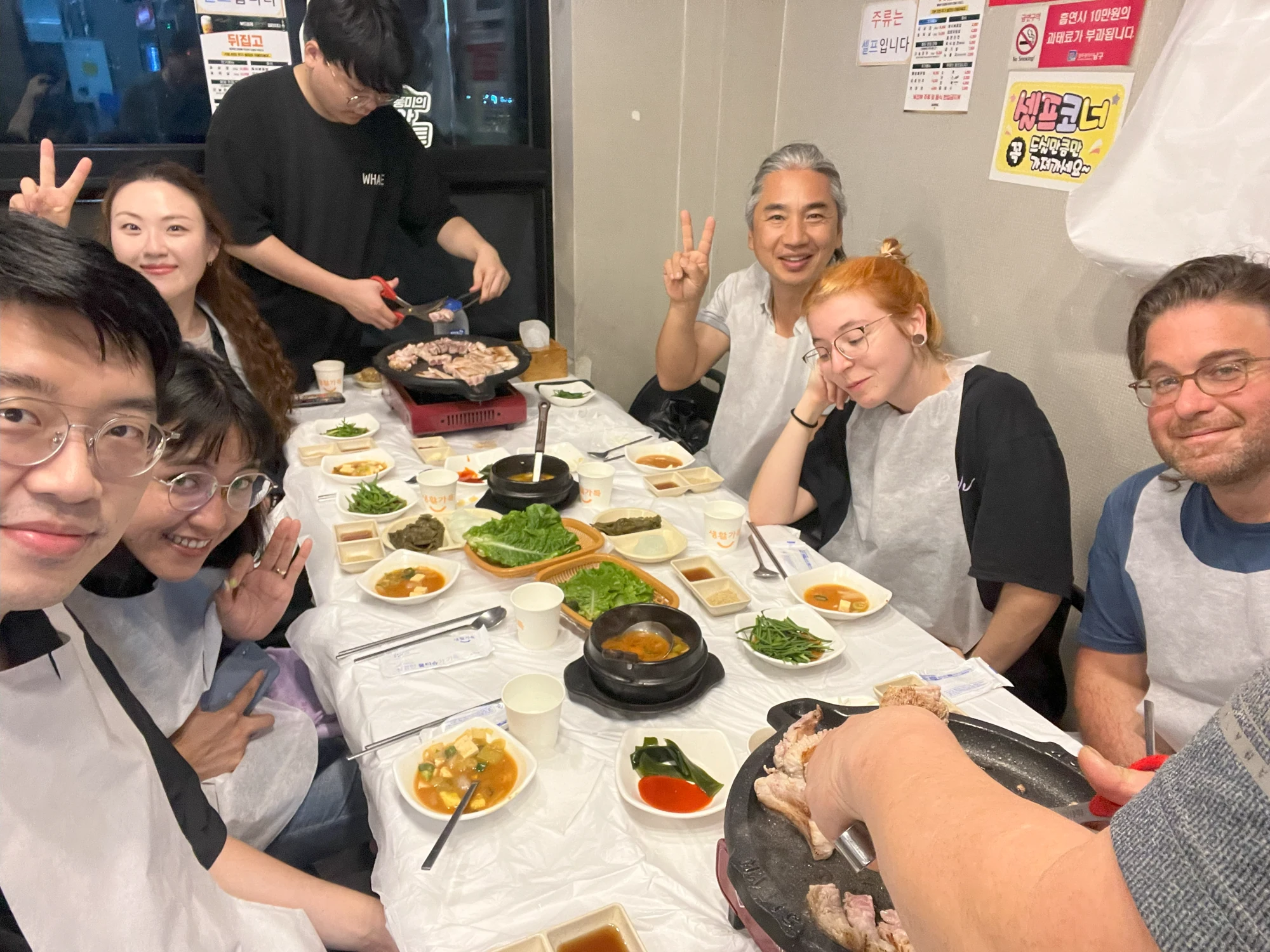
    Silas Fong and fellow residency artists sharing a meal in Gwangju
    A shared meal with fellow residency artists, Gwangju, 2023.

    Self-made certificate and evaluation form

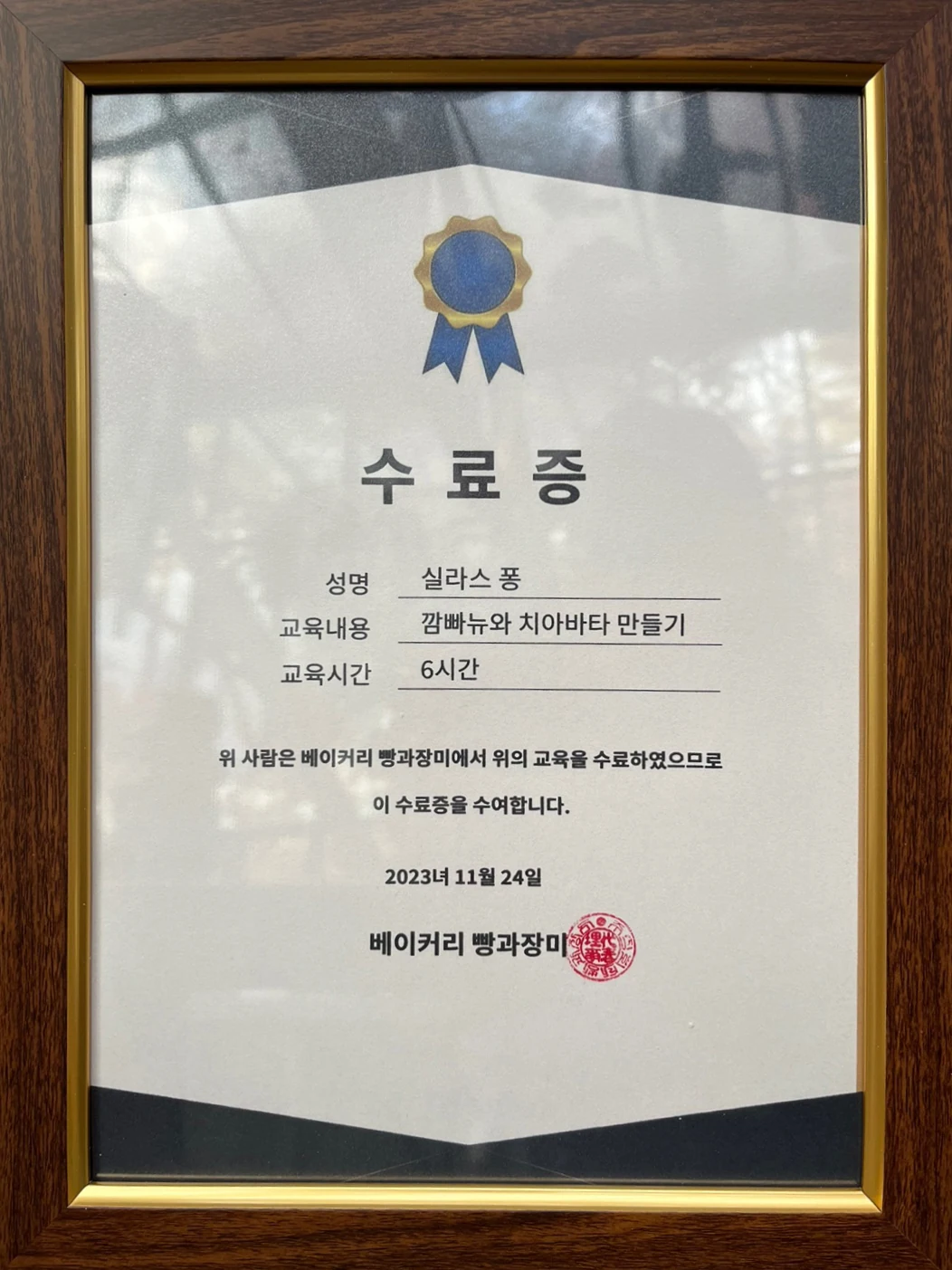
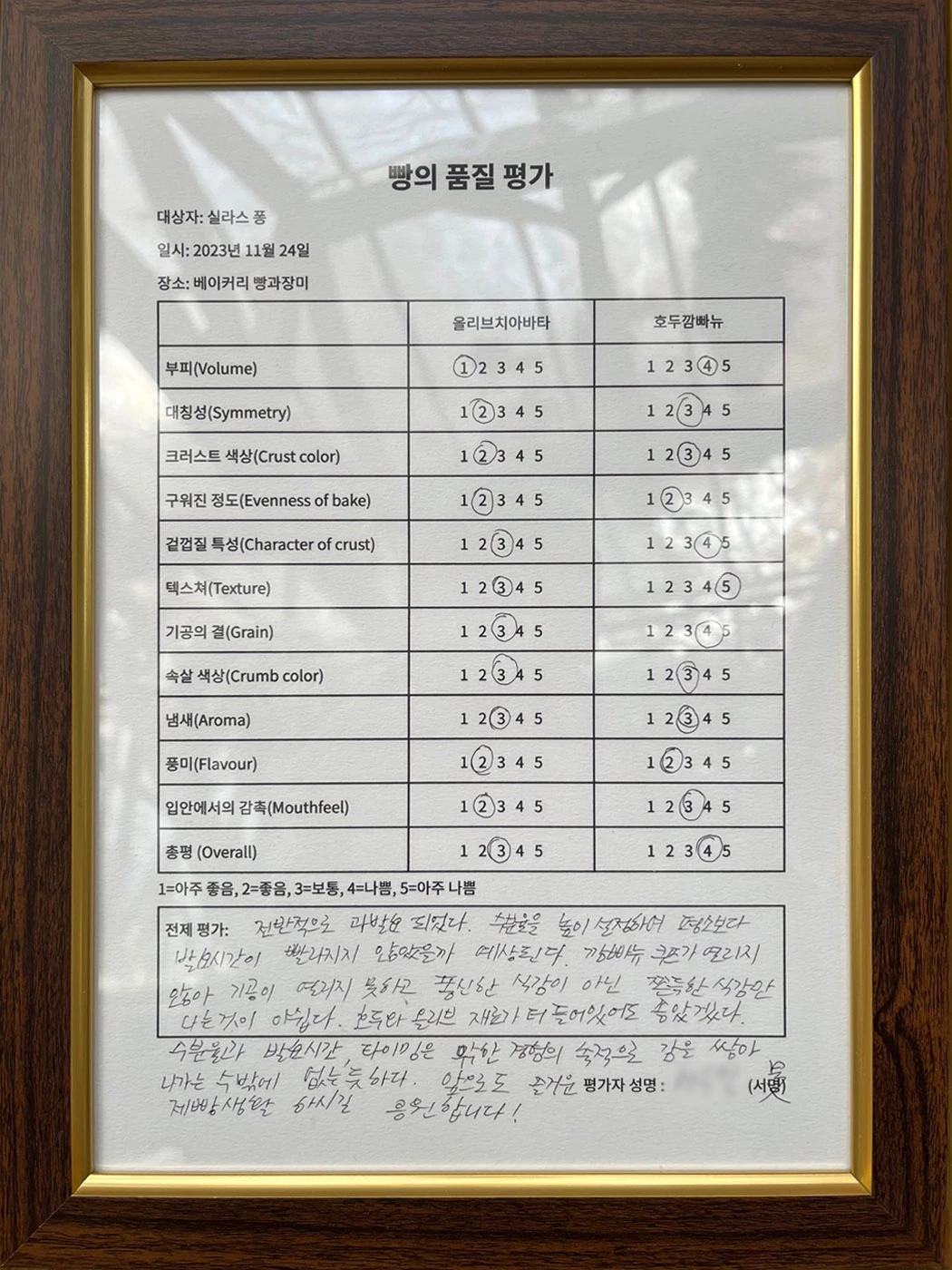
    I designed and made both the certificate and the evaluation form below. The chef at Bread and Roses who taught me bread-making signed both documents, recording the learning exchange and the evaluation of my bread.

    Certificate designed and made by Silas Fong, signed by the chef at Bread and Roses, November 2023
    Self-made certificate, signed by the chef at Bread and Roses, November 2023.
    Evaluation form designed and made by Silas Fong, signed by the chef at Bread and Roses, November 2023
    Self-made evaluation form, signed by the chef at Bread and Roses, November 2023.

    Explore the continuing Bread Whispers project

  • SAD Info Days 2019 — Seoul Art Space Geumcheon

    Solo exhibition · PS333, Seoul Art Space Geumcheon, Seoul
    19–31 July 2019

    Reach New Heights

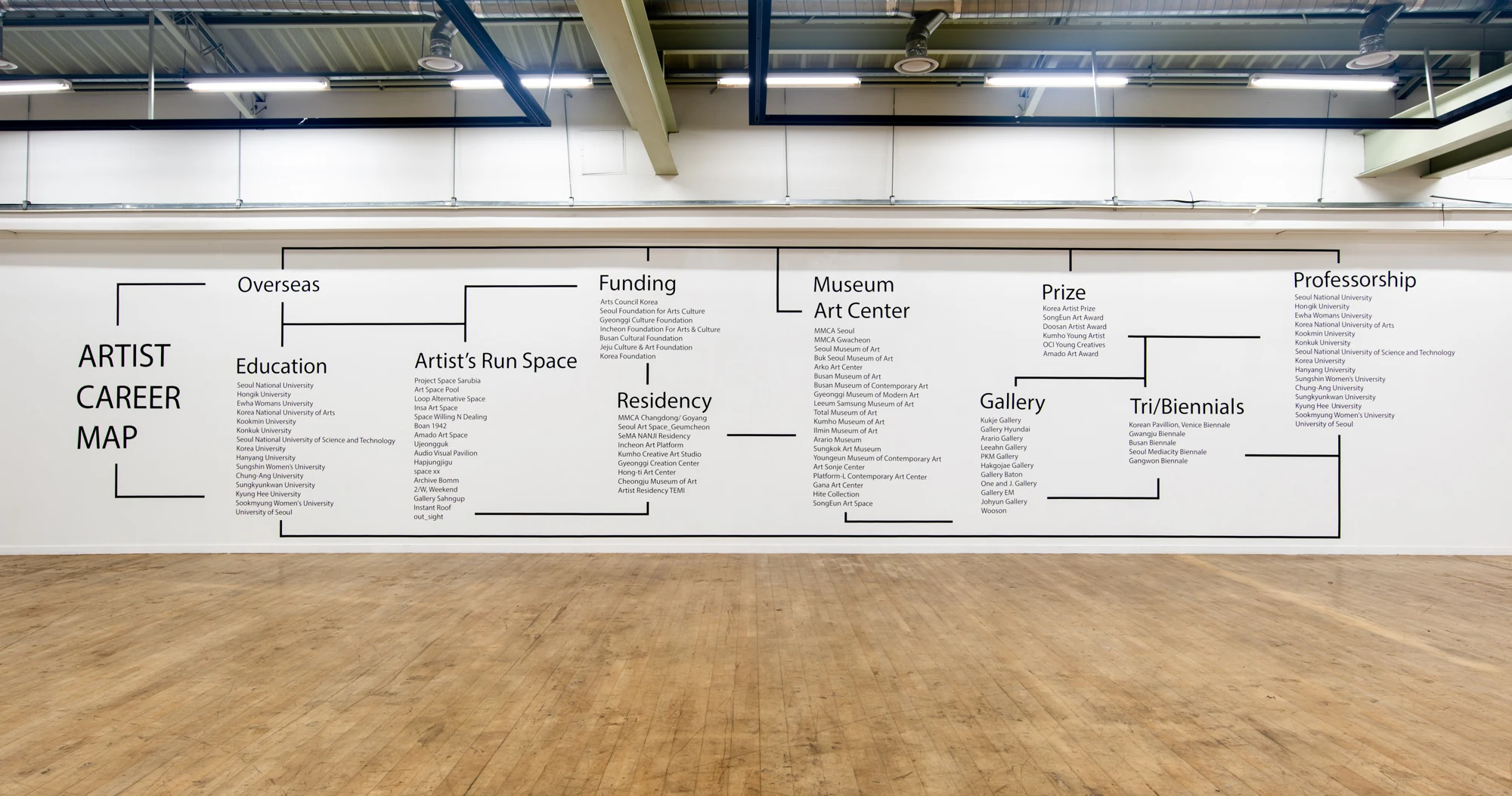
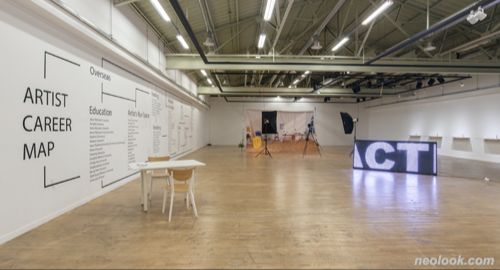
    SAD School of Artists Development takes the form of a fictional vocational school for artists. At SAD Info Days, the exhibition becomes a place to rehearse the skills, language and professional image expected of an artist. Portrait sessions, practical guides, art jargon and a career map turn the promises of professional development into artworks and participatory situations.

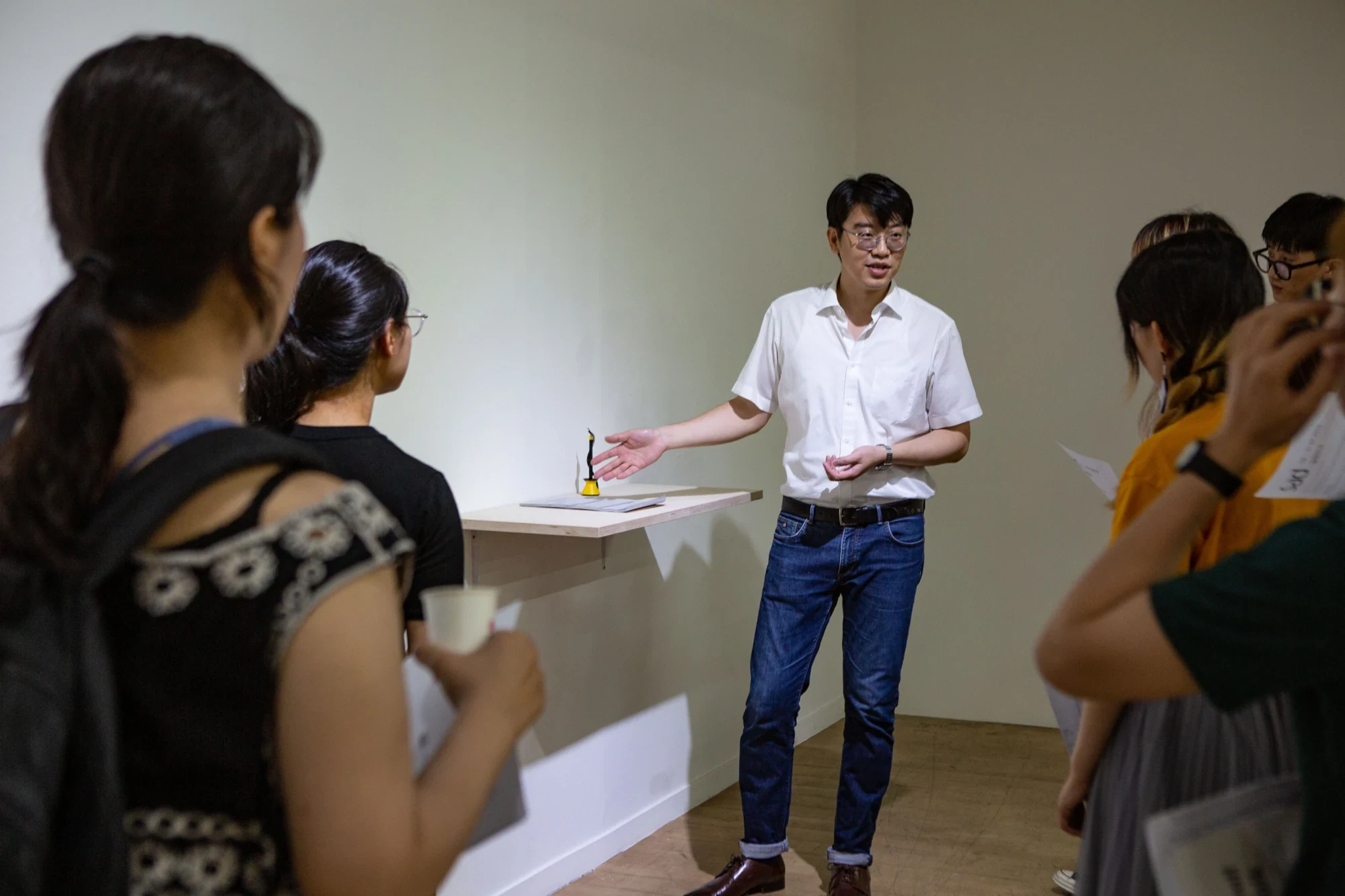
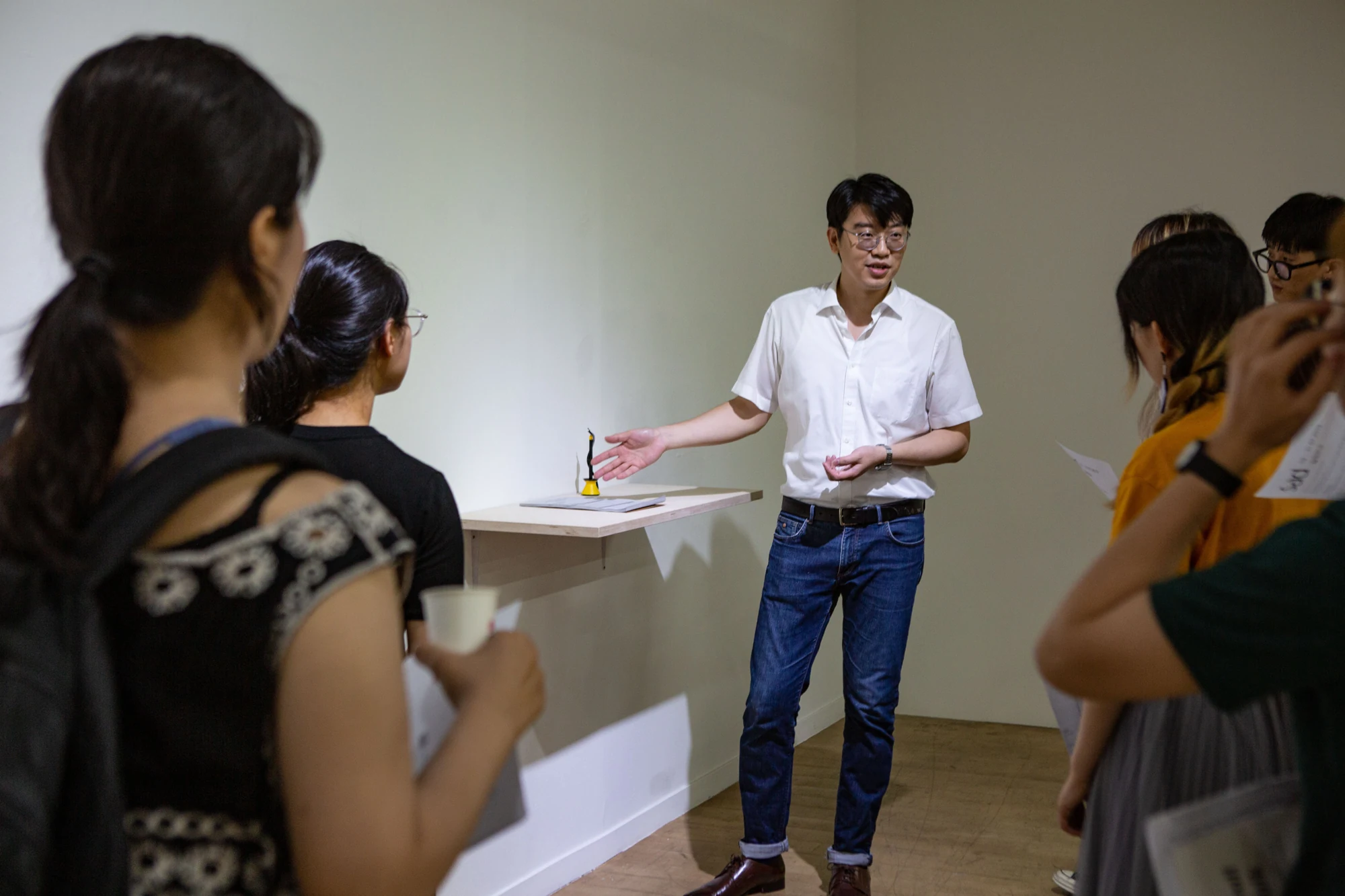
    Introducing Practical Application Basics to visitors at SAD Info Days, Seoul Art Space Geumcheon, 2019.
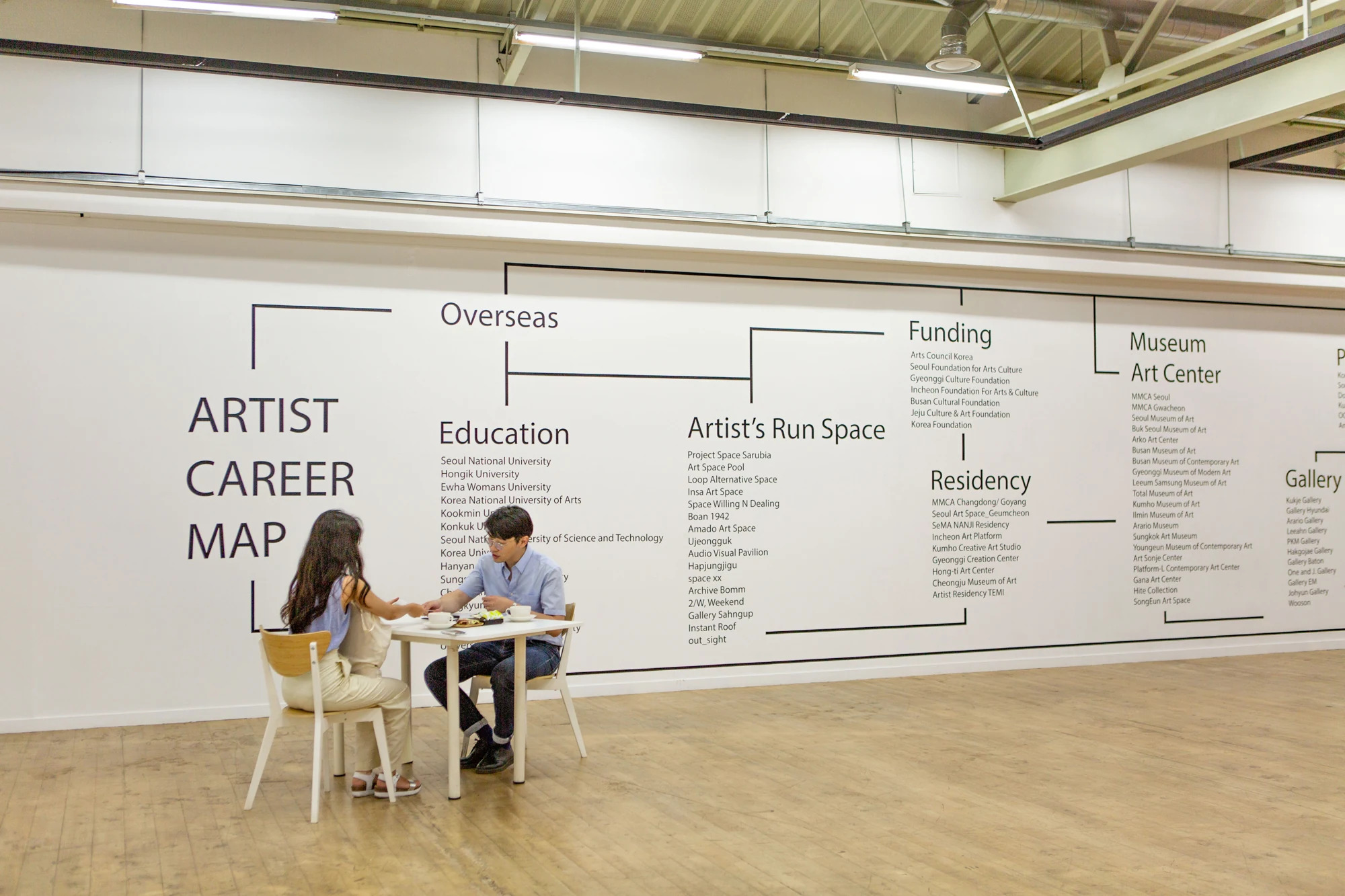
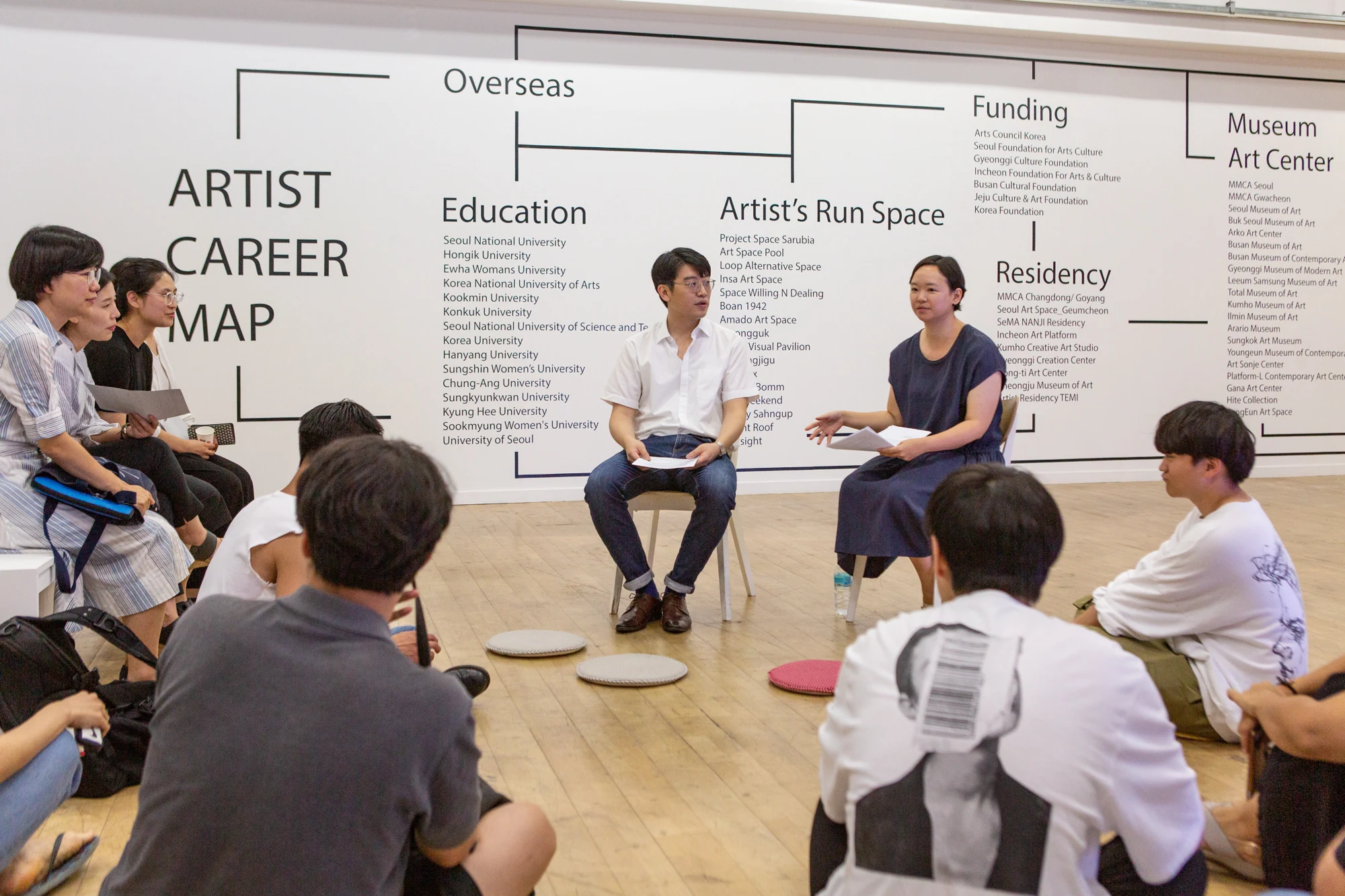
    Artist Career Map installed across the gallery wall, SAD Info Days, Seoul, 2019.
    Visitors reading Artist Career Map, Seoul Art Space Geumcheon, 2019.
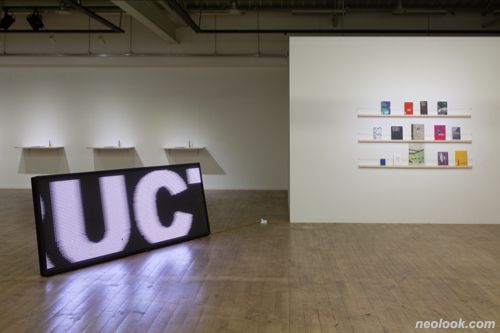
    SAD Info Days, Seoul Art Space Geumcheon, 2019 — exhibition view from the Neolook archive.

    Practical Application Basics

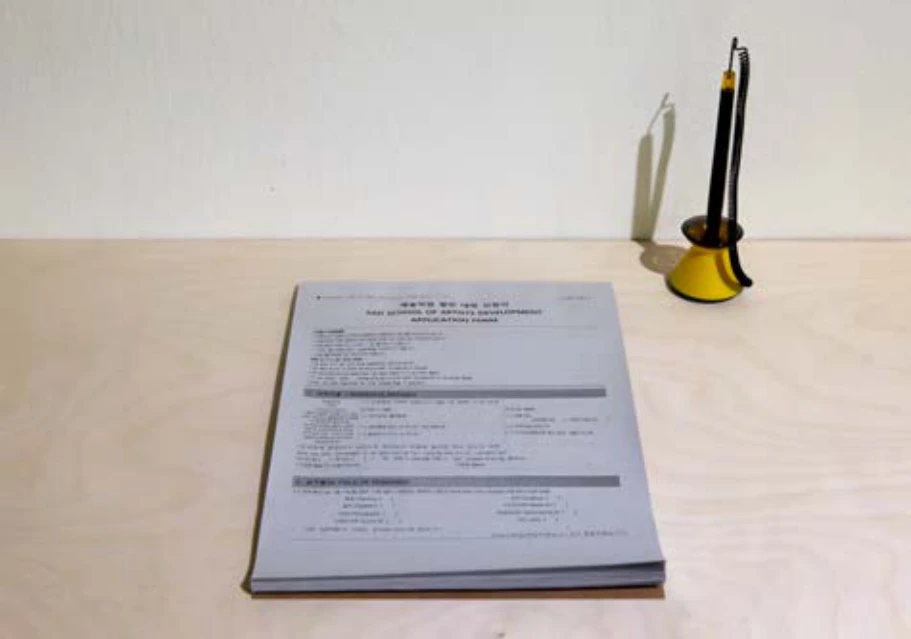
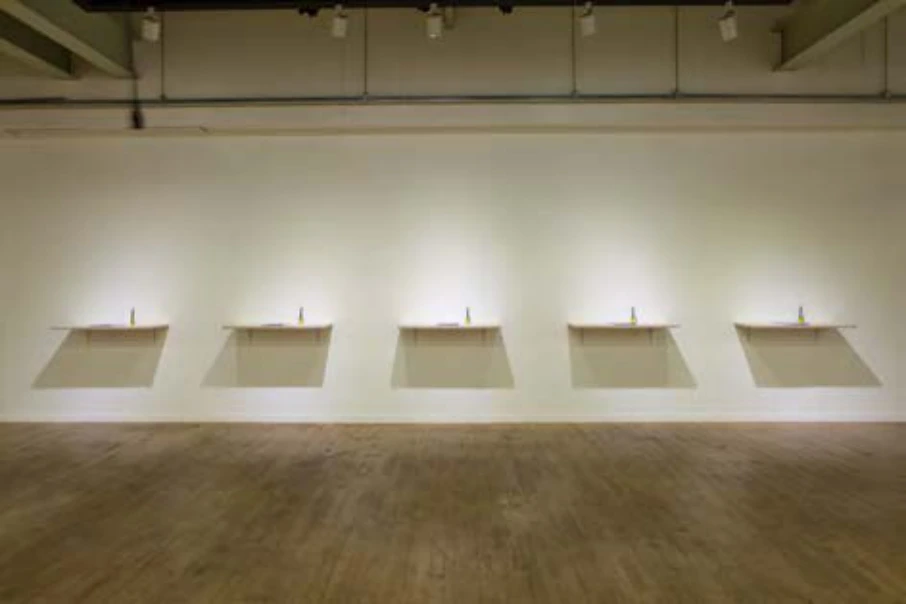
    “One application a day keeps loans away.” Printed application forms, shelves and pens turn the routine of applying for funding into a daily training exercise. The work asks how much of an artist’s professional life is spent learning to present a convincing application.

    Application form and pen, Practical Application Basics, 2019.
    Practical Application Basics, installation at Seoul Art Space Geumcheon, 2019.

    Artist Portrait Basics

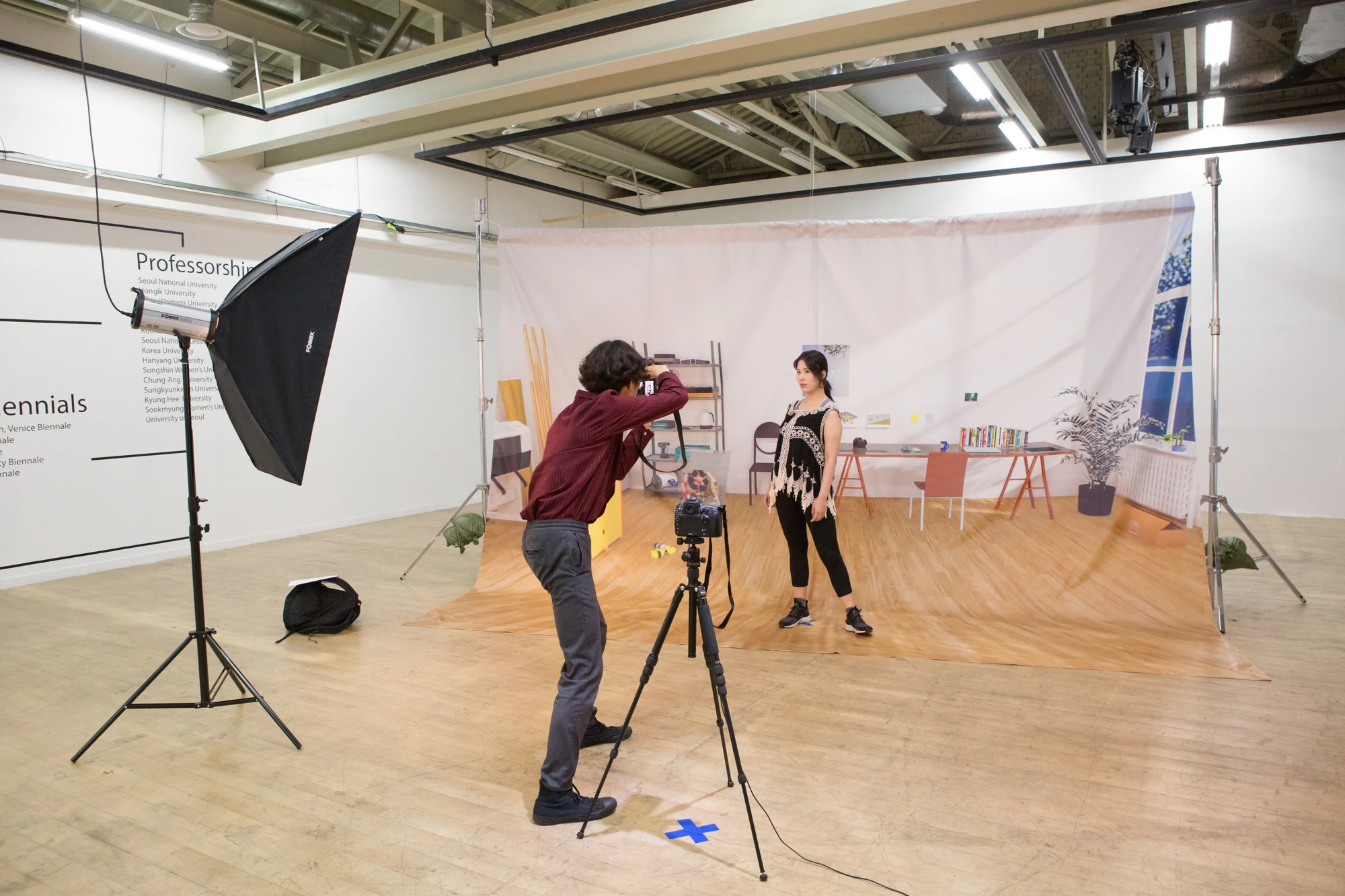
    A photographic backdrop and portrait session offer the setting and poses of an apparently successful artist. View the work.

    Artist Portrait Basics, printed studio backdrop, 2019.
    Artist Portrait Basics, portrait session, 2019.

    Introduction to International Art English

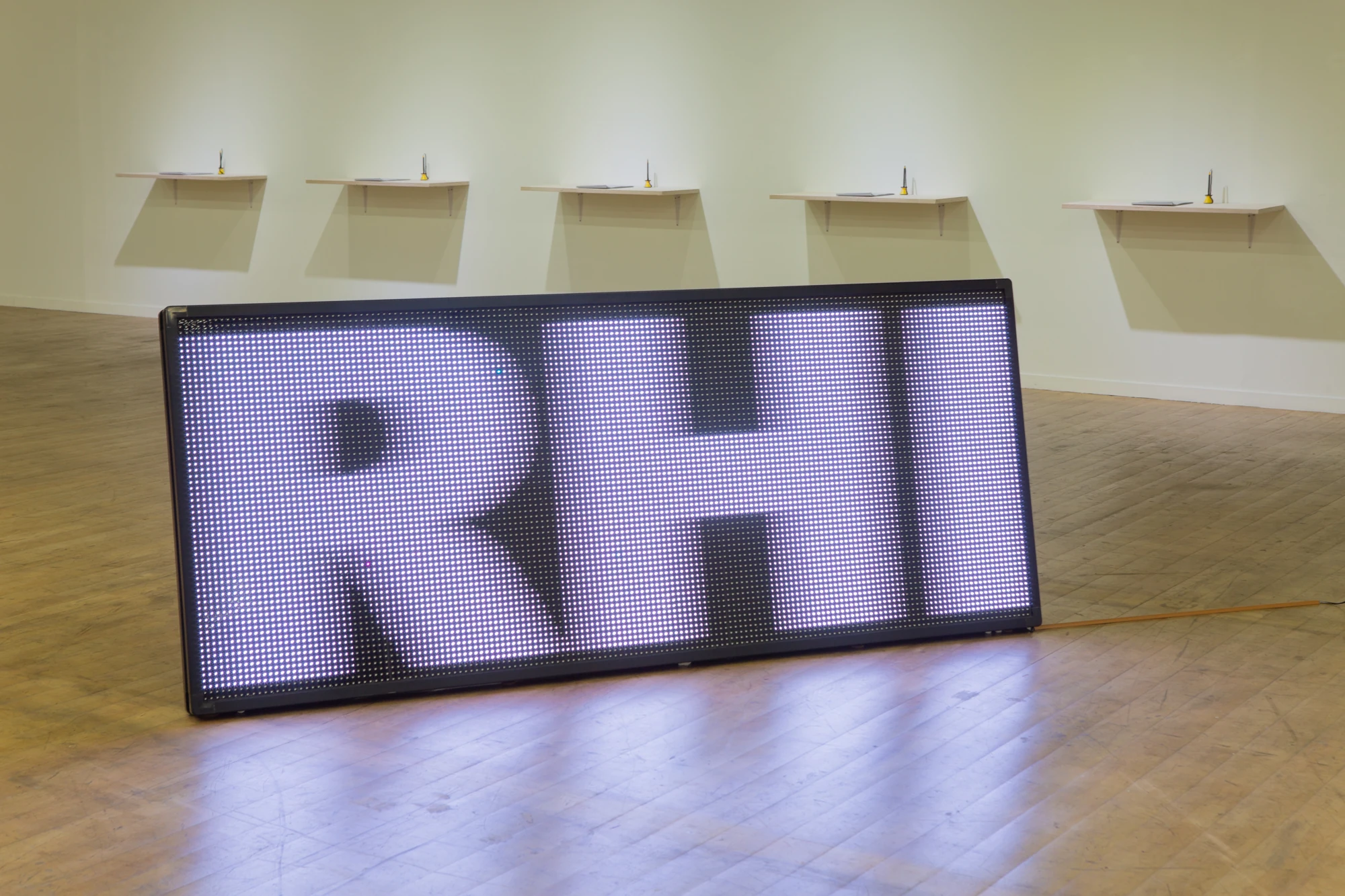
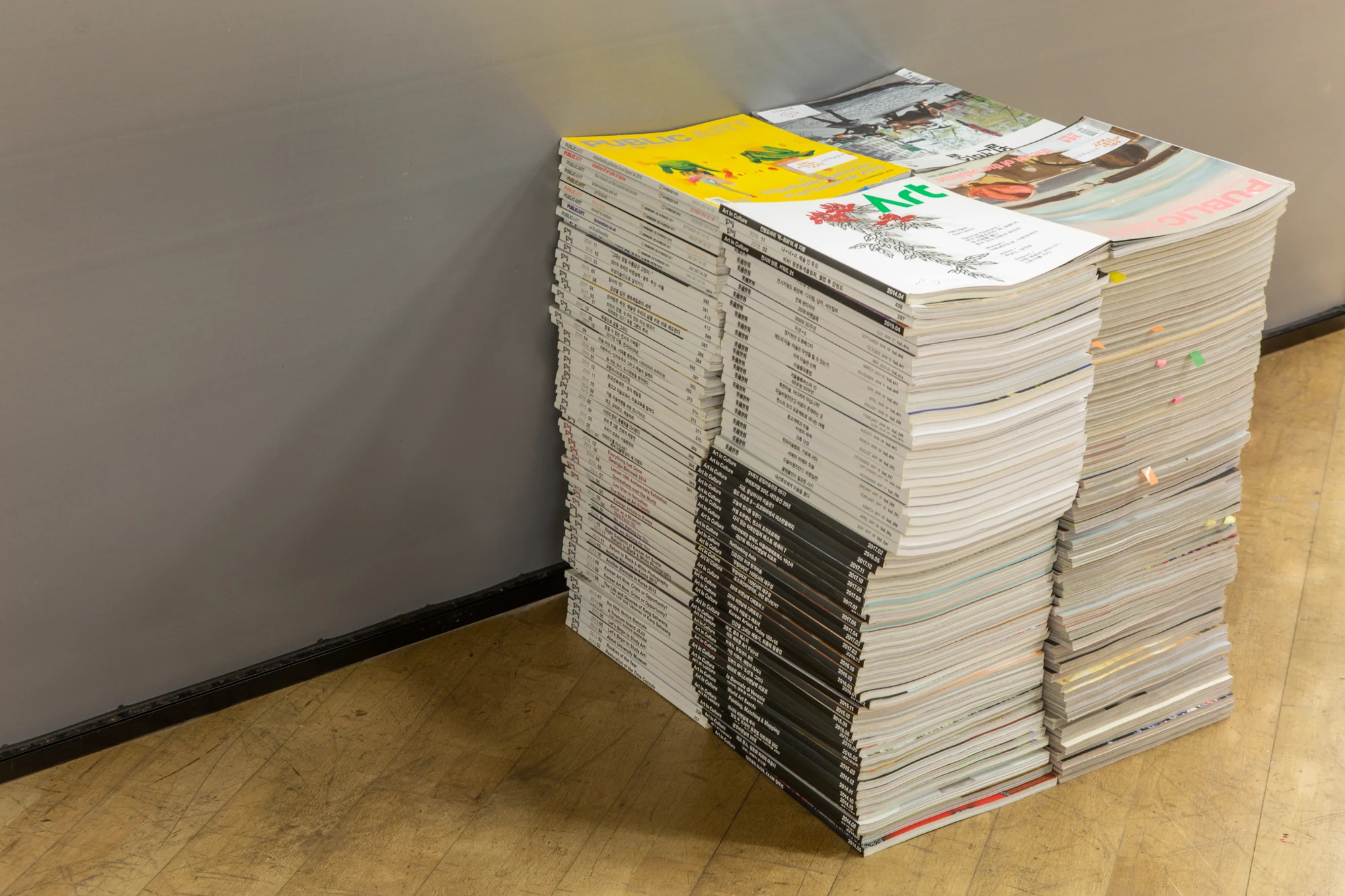
    An LED panel displays the language of contemporary art while resting on stacks of art magazines borrowed from the residency archive. Visitors can take a magazine, but risk disturbing the structure supporting the display. View the work.

    Introduction to International Art English, LED panel and art magazines, 2019.
    Magazine stacks supporting Introduction to International Art English, 2019.

    Vocabulary

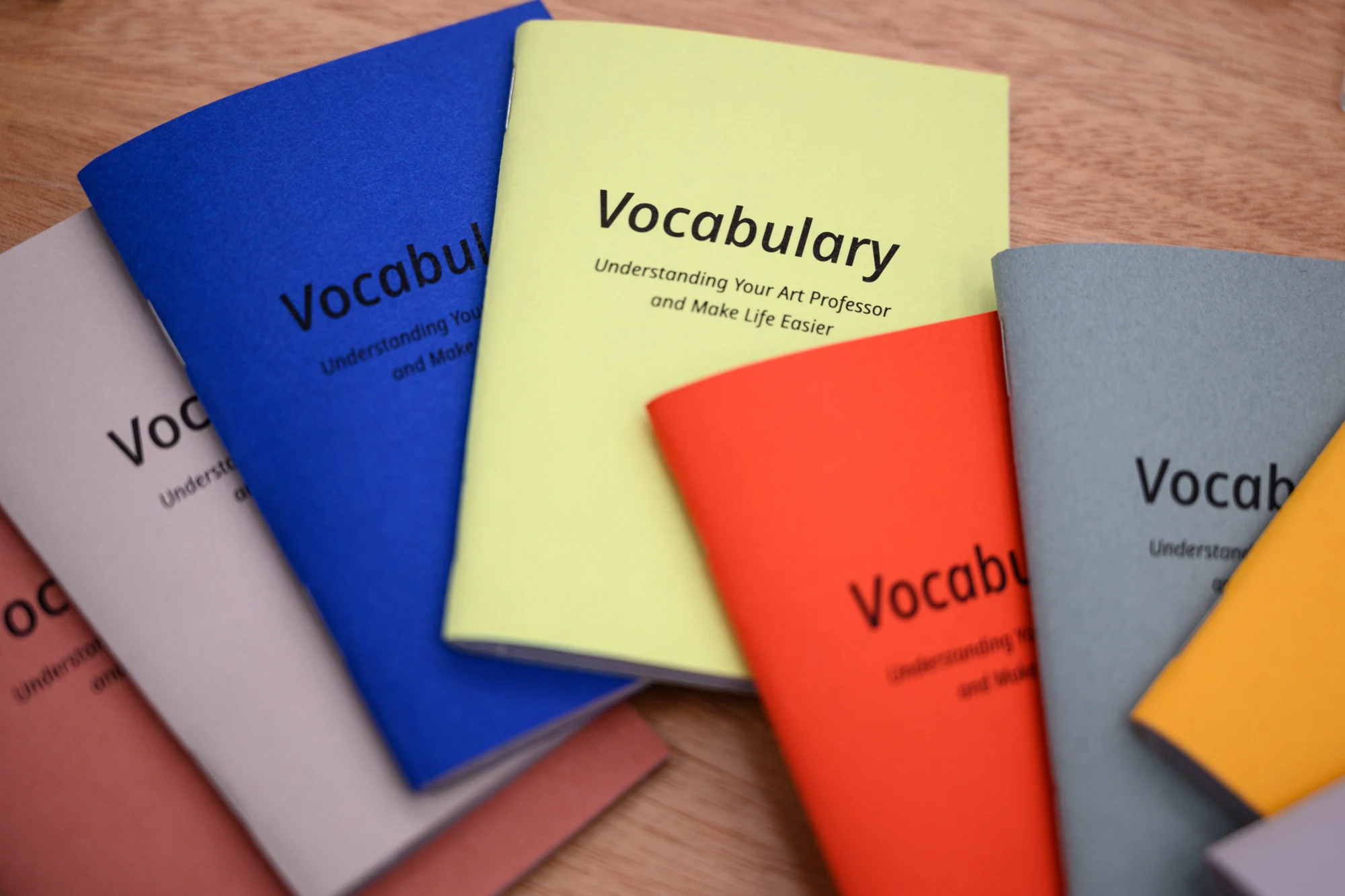
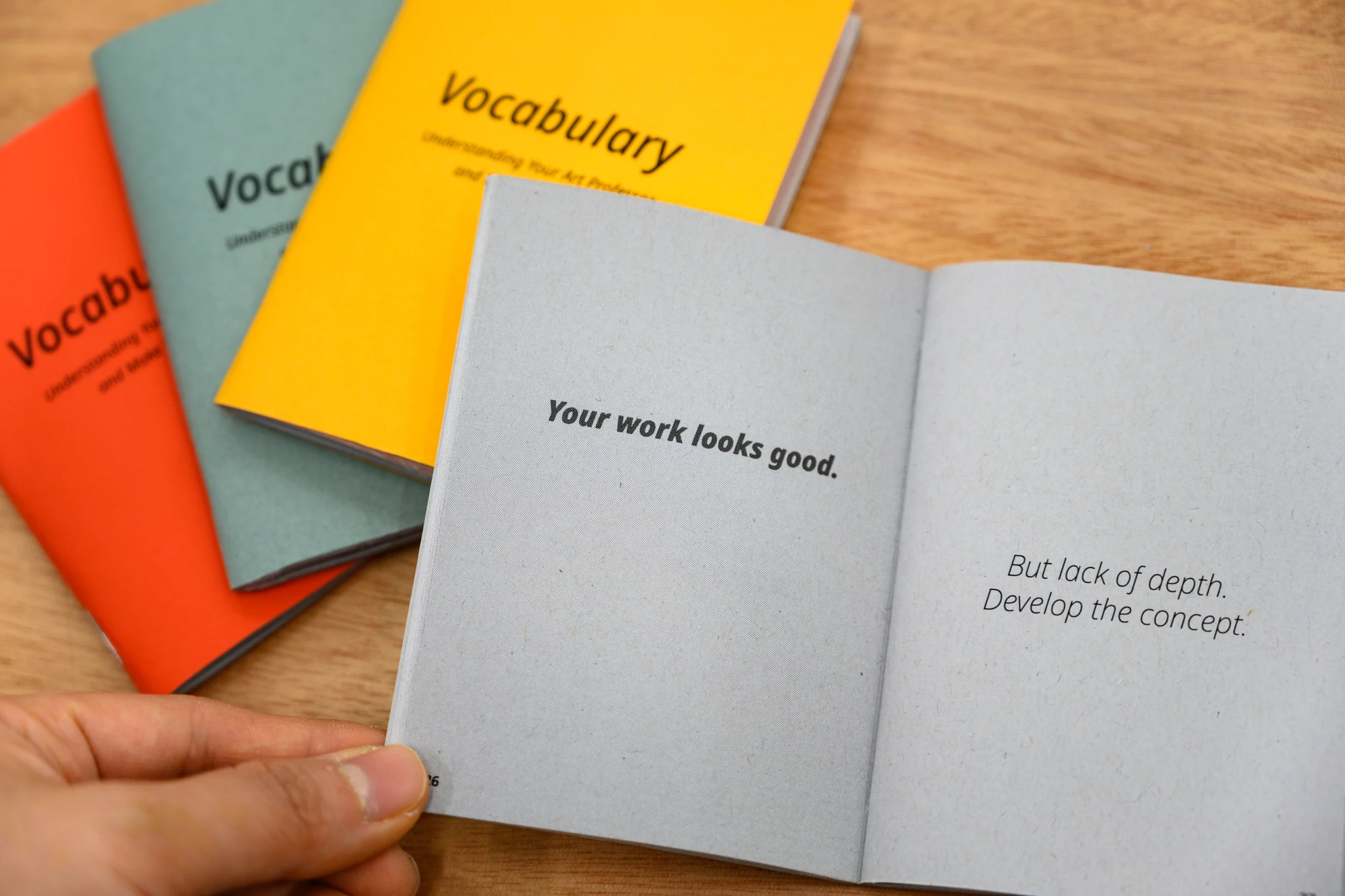
    Vocabulary: Understanding Your Art Professor and Make Life Easier is an artist’s zine in ten cover colours. View the publication.

    Vocabulary, artist zines in different cover colours, 2019.
    Vocabulary, publication detail, 2019.

    Reading corner

    Books and display shelf in the reading corner, SAD Info Days, 2019.

    Conversations and participation

    The programme included a conversation with curator Hong Leeji and portfolio consultations, extending the school’s questions into encounters between artists, curators and visitors.

    Curator Hong Leeji in conversation with Silas Fong, Seoul Art Space Geumcheon, 2019.
    Conversation in the exhibition space, SAD Info Days, 2019.

    Related editions: Cheongju Art Studio, 2020 · Hong Kong Visual Arts Centre, 2021

    Exhibition information: SAD Info Days announcement. Photographs from the artist’s exhibition archive.

    Exhibition archive: SAD Info Days, Neolook, July 2019.

  • The Conditions of an Art That Bakes Life: Silas Fong’s Kitchen Notes

    English · 한국어 원문

    Silas Fong was born in Hong Kong, studied there and in Cologne, Germany, and has lived and worked in Korea for the past eight years. His path as both an educator within Korea’s art institutions and a foreign artist forms the ground and point of departure for his practice. Growing up in Hong Kong, he experienced the cultural hybridity of the British colonial period firsthand. In an international art environment, he encountered the identity of the migrant artist and the language of institutional critique; in Korea, he has worked as an artist and teacher within an unfamiliar social and linguistic context. These layered experiences explain why his projects dissect the gaps between art institutions and everyday life: his own identity and experience stand within those gaps.

    Fong’s work has consistently experimented with twisting the boundaries of art institutions and the social conventions surrounding them. From the SAD School of Artists Development project to art-rental broadcasts borrowing the format of home shopping, and the sound installation Greetings for Artists, he appropriates institutional forms, parodies them, and builds fictional systems that draw viewers into participation. As a result, the languages of artistic production and consumption, education and institutions cease to appear self-evident or natural. They emerge as structures that can become unstable and be overturned at any moment. Kitchen Notes likewise places the artist at an intersection of migration and identity, labour and care, through the everyday medium of food.

    Held at Daechumoo Fine Art in Gangneung in 2025, Kitchen Notes reveals both continuity and a shift in Fong’s practice, extending his longstanding concerns into everyday labour and care. Working from the locality and lived experience of Gangneung, he learned directly from local bakers and a sausage maker, and presented site-specific installations and performances centred on baking and sharing bread. By sharing bread and sausages with visitors, he brought into the exhibition an attitude of returning skills learned locally to the local community, allowing viewers to experience the “rules of the institution.” The exhibition’s central concern becomes a more layered experiment in the rhythms of life, the time of labour, and the conditions of forming relationships through food and consumption.

    During this process, Fong learned directly from two bakers and a sausage maker in Gangneung. To record these learning relationships and the transmission of skills, he designed and printed his own certificates of completion. These are not qualifications issued by a state or accredited institution. Yet they bear the actual names of the workshops, their proprietors and addresses, together with the handwritten signatures of all three craftspeople. They are therefore not a performance of “false certification,” but real documents grounded in relationships and places. By appropriating the document’s form—its layout, language and signature—outside institutional authority, Fong shows that authority need not descend vertically from above: it can be constituted through agreements made on site and the testimony of relationships. This certification based on autonomous relationships makes visible where institutional trust arises. The fact of learning and a signed relationship can offer stronger evidence than regulations and official seals. Through these documents, viewers see that institutional authority cannot be reduced to a binary of official recognition and its absence. It is established on multiple levels through a social process: who transmitted what to whom, how it was transmitted, and who took responsibility by signing to confirm it. What viewers encounter is not a fictional device, but the recognition that institutional character itself is constituted through the enactment of documents, signatures and relationships. Rather than parodying a lack of institutional authority, these documents are a form of record-performance that experimentally reassembles the conditions under which authority is produced. They demonstrate how the boundary between the accredited and the unaccredited can move according to the ways social trust is constructed.

    Within this structural experiment, Kitchen Notes foregrounds the material and social qualities of food. The series of cross-section drawings of gaedureup bread and sourdough bread on the gallery wall provides a representative example. The drawings show life-size sections of loaves made during the artist’s baking practice. Attending to the relationships within a bread-making process carried out by machines operated through computer programs, Fong relates bread’s contrasting associations with programmed production, warmth and hospitality to meticulously delineated drawings. Beyond simple representation, these works function as a visual language that translates food’s material structure into a metaphor for social and institutional order. They reveal that making a living and giving things visual form do not occupy separate realms. Alongside the drawings, wall texts listing bread ingredients and preparation processes recall the schematic charts and graphs that Fong has long used as installation devices. Just as the SAD project presented “how to become a successful artist” through diagrams and statistical graphs, he repeatedly makes institutional structures unfamiliar by visualising language and numbers. In Kitchen Notes, the arrangement of wall texts, drawings, worktops and tools evokes a laboratory or research institute, explicitly showing the process through which food becomes a subject of artistic experimentation.

    In preparing the exhibition, Fong’s research involved approaching craftspeople he did not know, learning production processes directly from them, and practising those processes himself. This desire to learn firsthand confirms that his intention lies beyond simply reproducing dishes. It centres on acquiring local knowledge and traditional skills through the body and translating them into the exhibition space. Such “learning by hand” demonstrates how art can connect with social experience through labour, learning and care, rather than remaining an autonomous act of creation. Another important recipe he introduces is the egg tart. Baking this familiar Hong Kong snack and tourist favourite is a gesture that intersects his identity as a Hong Kong-born artist living in Korea with the context of place. The egg tart carries traces of the colonial period while also functioning as an everyday dessert representative of Hong Kong today. By bringing it into the Korean context of Gangneung, Fong reveals the movement of identity and the transfer of memories of place. If making bread and sausages serves to explore locality and labour, the egg tart instead calls upon his own cultural origins. Encountering a Hong Kong dessert in a gallery in Gangneung, viewers experience the multiple layers through which place and identity intersect.

    The exhibition also includes SAD Kitchen Chef Kits, which reproduce egg tarts, sausages and bread through imitation meal-kit packaging, large posters and logo branding. Appearing to be consumable products, these packages condense the compressive logic of contemporary capitalist consumption. Meal kits presuppose the speed of immediate preparation and consumption, sealing labour and time within a commodified package. Although their glossy printed surfaces resemble commercial products, Fong also reflects on the disappearance of home cooking in Korean society. He focuses on contemporary anxieties about “cooking from scratch” and the convenience of the meal-kit industry that has emerged in response. Every box was printed and folded by the artist, and each ingredient was individually sorted and packaged by hand. The finished products are therefore not factory-produced goods but surfaces of labour made through the artist’s hands.

    In this way, the exhibition reveals both continuity and transformation in Fong’s work. He still draws viewers into the contradictions of institutional structures through fictional institutions and participatory devices. Here, however, food allows him to interweave the conditions of life, labour, consumption and identity on multiple levels. Art no longer remains solely within institutional critique. It expands into a device for testing the possibilities of new social relationships through concrete actions and sensations of living. Ultimately, Fong’s acts of baking bread, making sausages, and preparing and sharing egg tarts ask whether art, through the memories of a migrant, can become a means of experimenting with and reconfiguring the conditions of life. They invite us to reconsider the boundary between life and art itself.
    한국어 원문 · 삶을 굽는 예술의 조건

    삶을 굽는 예술의 조건: 실라스 퐁의 ‘키친노트(Kitchen Note)’

    실라스 퐁Silas Fong은 홍콩에서 태어나 홍콩과 독일 쾰른을 거쳐 학업을 마친 뒤 지난 8년간 한국에 거주하며 활동해온 작가다. 한국의 미술 제도 안에서 교육자로, 동시에 외국인 예술가로 자리를 잡아온 그의 궤적은 작업 전반의 토양이자 출발점이라 할 수 있다. 홍콩에서 성장한 그는 영국 식민지 시절의 문화적 혼종성을 몸으로 겪었고, 다국적 예술 환경 속에서 이주자 예술가의 정체성과 제도 비판의 언어를 배우며, 다시 한국으로 와서는 낯선 사회적, 언어적 맥락 속에서 예술가이자 교직자로 활동해 왔다. 이러한 다층적 경험은 작가의 프로젝트가 예술 제도와 일상의 틈을 해부하는 방향으로 전개되는 점에 바로 작가 자신의 정체성과 경험이 그 틈 위에 서 있기 때문이다.

    퐁의 작업은 언제나 예술 제도의 경계와 그것을 둘러싼 사회적 규범을 비틀어온 실험으로 기억된다. 예술가직업훈련학교 SAD 프로젝트에서부터 홈쇼핑 형식을 빌린 아트 렌탈 방송, 사운드 설치를 통한 ‘작가를 위한 인사말’까지, 작가는 제도의 형식을 빌려와 그것을 희화화하고, 가짜 시스템을 구축해 관객을 참여자로 끌어들인다. 그 결과, 예술의 생산과 소비, 교육과 제도의 언어는 더 이상 당연하거나 자연스러운 것이 아니라, 언제든 불안정하게 뒤집힐 수 있는 구조임을 드러낸다. 전시 《키친노트Kitchen Note》 역시 음식이라는 일상적 매체를 매개로 하여, 이주와 정체성, 노동과 돌봄의 언어가 교차하는 자리에 작가 자신을 투사한다.

    2025년 강릉 대추무 파인아트에서 열린 《키친노트》는 실라스 퐁 작업의 연속성과 전환을 동시에 보여주고, 일관된 관심사가 일상적 노동과 돌봄의 차원으로 확장된 전시다. 작가는 강릉의 지역성과 생활 감각을 바탕으로, 강릉 현지에 있는 제빵 장인과 소세지 장인으로부터 소세지 만드는 법을 직접 배우고, 빵 굽기와 나누기라는 행위를 중심에 둔 장소 특정적 설치와 퍼포먼스를 선보였다. 전시장에서 빵과 소시지를 직접 관객과 나누는 행위는 지역으로부터 배운 기술을 다시 지역 주민들에게 환원하는 태도를 전시 안으로 끌어들이는 작가는 ‘제도의 규칙’을 체험하도록 한다. 이번 전시에서의 핵심은 삶의 리듬, 노동의 시간, 음식과 소비를 매개로 한 관계 맺기의 조건을 탐구하는 보다 다층적인 실험으로 자리매김한다.

    이 과정에서 작가는 강릉의 두 제빵사와 한 소시지 장인에게서 직접 배우고, 그 학습 관계와 기술 전수의 사실을 기록하기 위해 작가 본인이 직접 디자인 및 인쇄한 수료증(증명서)을 제작했다. 이 문서는 국가나 공인기관이 발급한 자격증은 아니지만, 각 공방의 실제 상호와 점주의 성명, 주소가 명기되어 있고 세 장인의 자필 서명이 들어간다. 다시 말해 이것은 ‘가짜 인증’의 연극이 아니라, 관계와 장소에 근거한 실재의 문서다. 퐁은 제도적 권위의 외부에서 문서의 형식(레이아웃, 언어, 서명)을 전유하여, 권위가 위에서 부여되는 수직적 구조가 아니라 현장에서의 합의와 관계의 증언을 통해 구성될 수 있음을 보여준다. 이러한 자율적 관계에 기반한 인증은 제도의 신뢰가 어디에서 발생하는지—규정과 도장보다 배움의 사실과 서명된 관계가 더 강력한 증거가 될 수 있음을—전시장 안에서 가시화한다. 관객은 이 문서를 통해, 제도적 권위가 법적 공인과 비공인의 이분법만으로 환원되지 않으며, 누가 누구에게 무엇을 어떻게 전수했고 누가 그 사실을 책임 있게 서명했는가라는 사회적 절차 속에서 다층적으로 성립됨을 확인하게 된다. 이때 관객이 마주하는 것은 허구의 장치가 아니라, 제도성이 문서-서명-관계의 수행을 통해 구성된다는 인식 자체다. 다시 말해, 작가의 문서는 제도 권위의 결핍을 드러내는 패러디가 아니라, 제도 권위의 생성 조건을 실험적으로 재조립하는 기록-퍼포먼스로서, 공인과 비공인의 경계가 사회적 신뢰의 구성 방식에 따라 이동 가능함을 보여준다.

    이러한 구조적 실험의 《키친노트》는 음식이라는 매체가 지닌 물질성과 사회성을 전면에 내세우는 점에 주목한다. 예컨대, 전시장 벽면에 걸린 개두릅과 사워도우 브레드 단면 드로잉 연작은 그 대표적 사례라 볼 수 있다. 빵을 굽는 연습 과정에서 실제 크기의 빵 단면을 보여준다. 작가는 컴퓨터 프로그램을 바탕으로 작동하는 제빵 기계로 만들어지는 빵의 과정의 관계성에 주목하면서, 프로그램을 통해 발현되는 따뜻함과 환대를 상징할 수 있는 빵의 상반된 이미지를 선적으로 치밀하게 묘사한 드로잉에 빗댄다. 이는 단순한 재현을 넘어, 음식의 물질적 구조를 사회적, 제도적 질서의 은유로 번역하는 시각적 언어로 기능한다. 즉, 먹고 사는 문제와 시각적 형식화가 별개의 층위가 아님을 드러내는 방식인 것이다. 드로잉과 더불어, 빵의 재료와 조리 과정을 텍스트로 정리한 벽면 문구는 이전 작업 방식에서 구현되어 왔던 도식화된 도표와 그래프들의 유사 방식으로 퐁이 과거부터 즐겨 사용해온 설치적 장치다. SAD 프로젝트에서도 ‘성공하는 예술가가 되는 방법’을 도식과 통계 그래프로 제시한 바 있듯이, 그는 언제나 언어와 수치를 시각화하는 형식을 통해 제도의 구조를 낯설게 전시한다. 《키친노트》에서도 벽면 텍스트와 드로잉, 조리대와 도구의 배치는 마치 실험실 혹은 연구소를 연상시키며, 음식이 예술적 실험의 대상으로 번역되는 과정을 명시적으로 드러낸다.

    실라스 퐁은 이번 전시를 준비하면서 리서치를 통해 낯선 장인들을 통해 제작 과정을 직접 배우고 연습하는 과정을 거친다. 이렇게 손수 배우고자 하는 경험은 단순한 요리 재현이 아니라, 지역성과 전통적 기술을 몸으로 습득하고 전시장 안으로 번역하는 행위에 방점을 두고자 한다는 작가의 의도를 확인할 수 있다. 이처럼 ‘손으로 배우는’ 과정은 예술이 자율적 창작 행위에 머무르지 않고, 노동과 학습, 돌봄의 차원에서 사회적 경험과 접속할 수 있음을 보여준다. 작가가 소개하는 중요한 또 하나의 레시피는 에그 타르트다. 홍콩의 대표적 간식이자 관광 명물인 에그 타르트를 작가가 직접 굽는 행위는, 한국에 거주하는 홍콩 출신 작가로서 자신의 정체성과 장소적 맥락을 교차시키는 제스처로써 에그 타르트는 식민지 시대의 흔적을 품은 음식이자, 오늘날 홍콩을 대표하는 일상적 디저트로 작동한다. 작가는 이를 강릉이라는 한국의 맥락 속으로 옮겨옴으로써, 이동하는 정체성과 장소적 기억의 전이를 드러낸다. 빵과 소시지의 제작이 지역성과 노동을 탐구하는 장치였다면, 에그 타르트는 오히려 자신의 문화적 기원을 호출하는 방식으로 기능한다. 관객은 강릉의 전시장에서 홍콩의 디저트를 마주하며, 장소와 정체성이 서로 교차하는 복합적 층위를 경험하게 된다.

    이와 더불어, 전시장에는 에그 타르트, 소시지, 그리고 빵을 가짜 밀키트 패키징과 대형 포스터, 로고 브랜딩으로 재현한 ‘SAD Kitchen chef kit’가 놓여 있다. 소비 가능한 제품처럼 보이는 이 패키지는 오늘날 자본주의 소비 구조의 압축성을 집약하고, 나아가, 밀키트라는 것이 즉시 조리, 즉시 소비라는 속도를 전제로 하여 노동과 시간을 상품화된 패키지 안에 봉인한다. 표면은 유광 인쇄로 마감되어 상업 제품처럼 보이지만, 작가는 오늘날 한국 사회에서 집밥의 문화가 사라져가는 현상을 반영했다. 퐁이 주목한 것은, ‘처음부터 요리를 만드는 것’을 두려워하는 현대인의 심리와 그 결과로 등장한 밀키트 산업의 편리함이다. 모든 패키지 박스는 작가가 직접 인쇄하고 손으로 접었으며, 각 재료 또한 손수 분류, 포장되었다. 따라서 이 완성된 상품은 공장에서 대량 생산된 제품이 아니라, 작가의 손을 통해 만들어진 노동의 표면이다.

    이렇듯, 전시는 실라스 퐁 작업의 연속성과 전환을 동시에 보여주므로 여전히 허구적 제도와 참여적 장치를 통해 관객을 제도적 구조의 모순 속에 끌어들이지만, 이번에는 음식이라는 매체를 통해 삶의 조건과 노동, 소비, 그리고 정체성을 다층적으로 직조한다. 예술은 더 이상 제도 비평의 차원에 머무르지 않고, 삶의 구체적 행위와 감각을 통해 새로운 사회적 관계의 가능성을 실험하는 장치로 확장된다. 퐁이 빵을 굽고, 소시지를 만들고, 에그 타르트를 만들어 나누는 행위는 결국 이주자의 기억을 통해 예술이 삶의 조건을 실험하고 재구성하는 장치가 될 수 있는가라는 질문을 던지며, 우리로 하여금 삶과 예술의 경계 자체를 다시 사유하게 한다.

    View Kitchen Notes – Three Attempts in Gangneung

  • SAD School of Artists Development — Cheongju Art Studio (2020)

    2020 · Solo exhibition
    Cheongju Art Studio, Cheongju, South Korea
    15–25 October 2020

    SAD School of Artists Development treats the art world as a field of professional training. Its fictional school offers guides, products and exercises that turn the habits of artistic success into a curriculum. In Cheongju, the project extended from the artist’s image and social skills to the promotion, sale and rental of artworks.

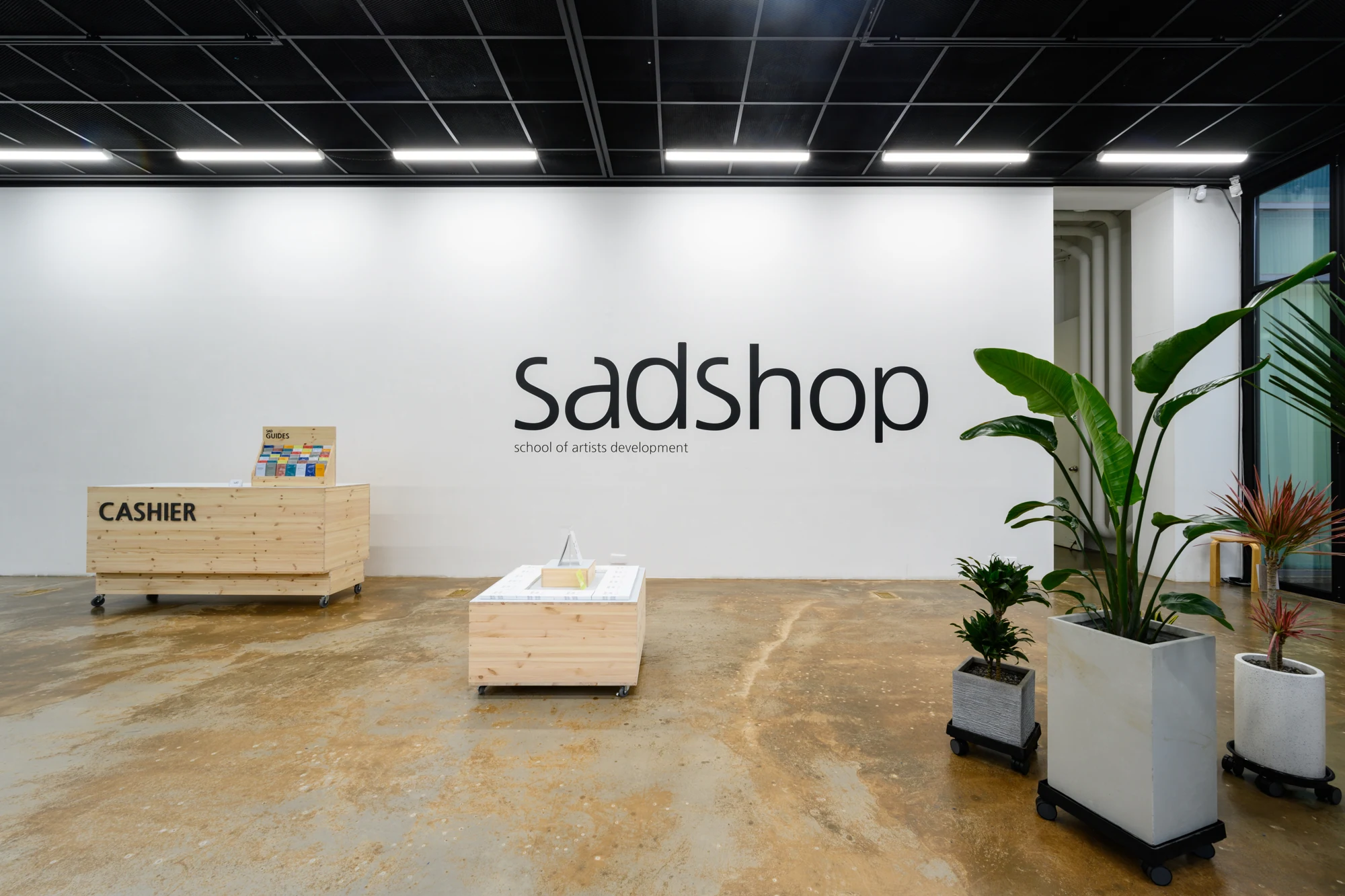
    sadshop, installation view at Cheongju Art Studio, 2020.

    sadshop

    The shop brings together SAD products and learning materials, adopting the forms of retail display and professional advice.

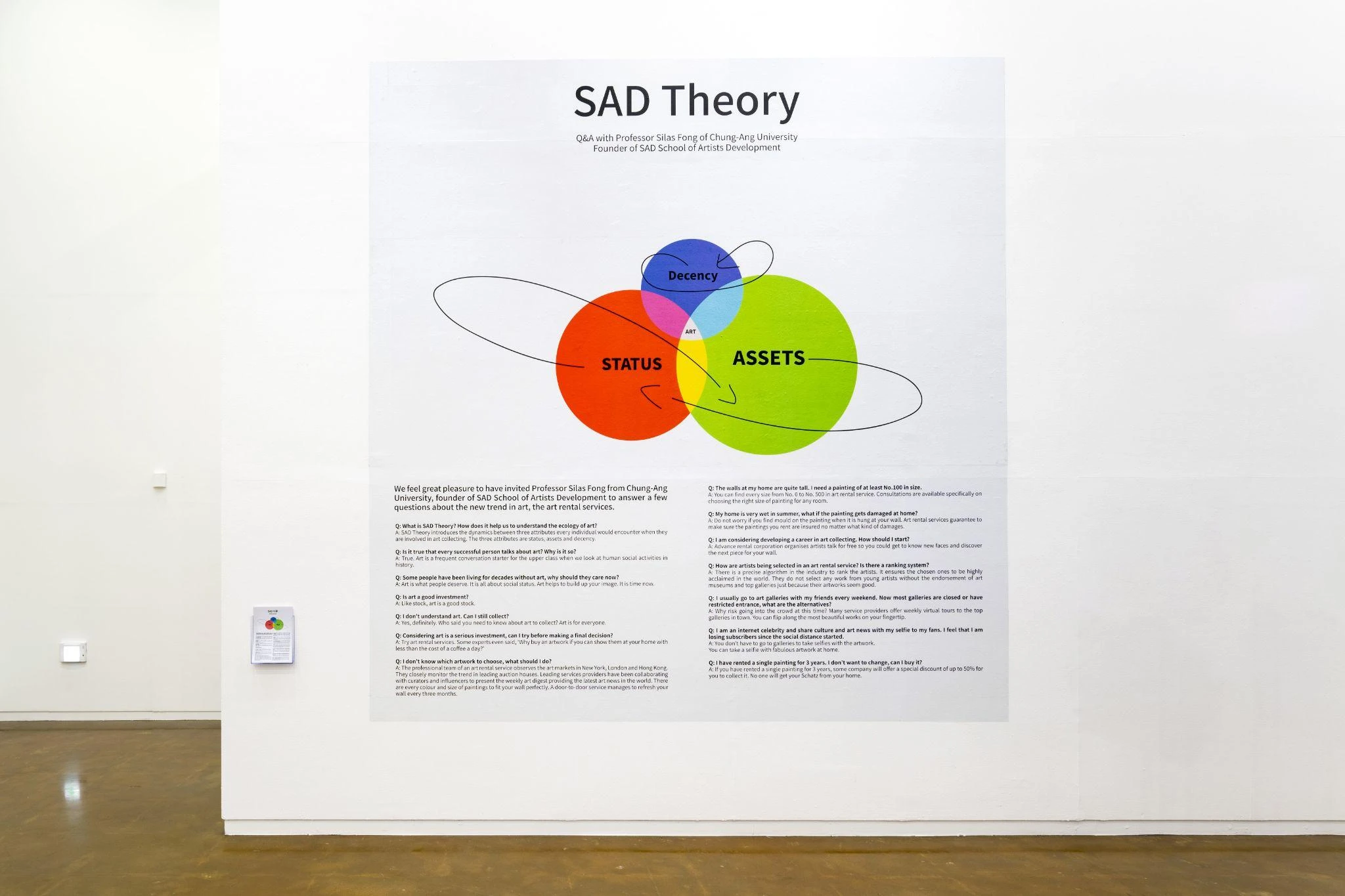
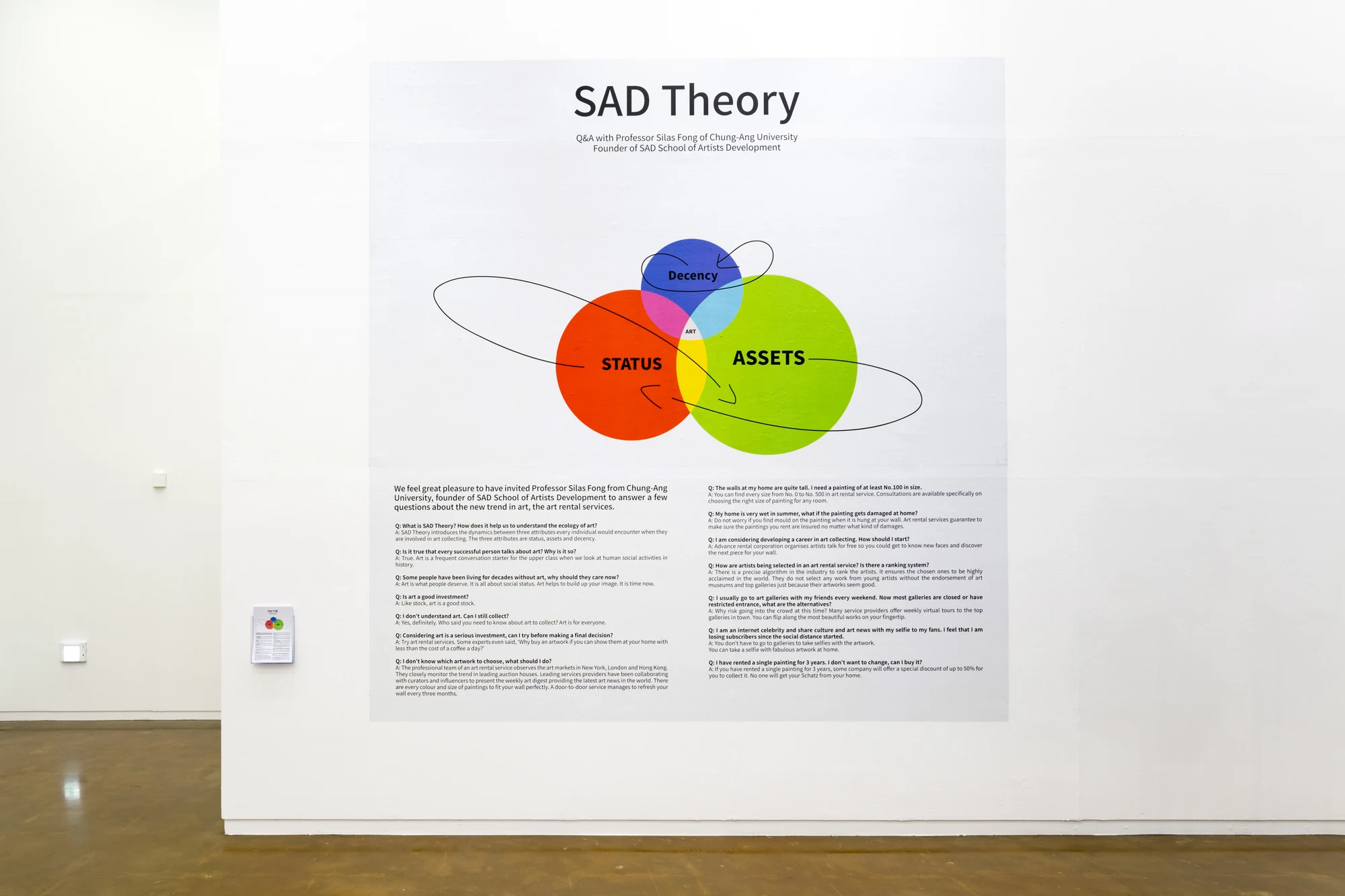
    SAD Theory, displayed in the exhibition.
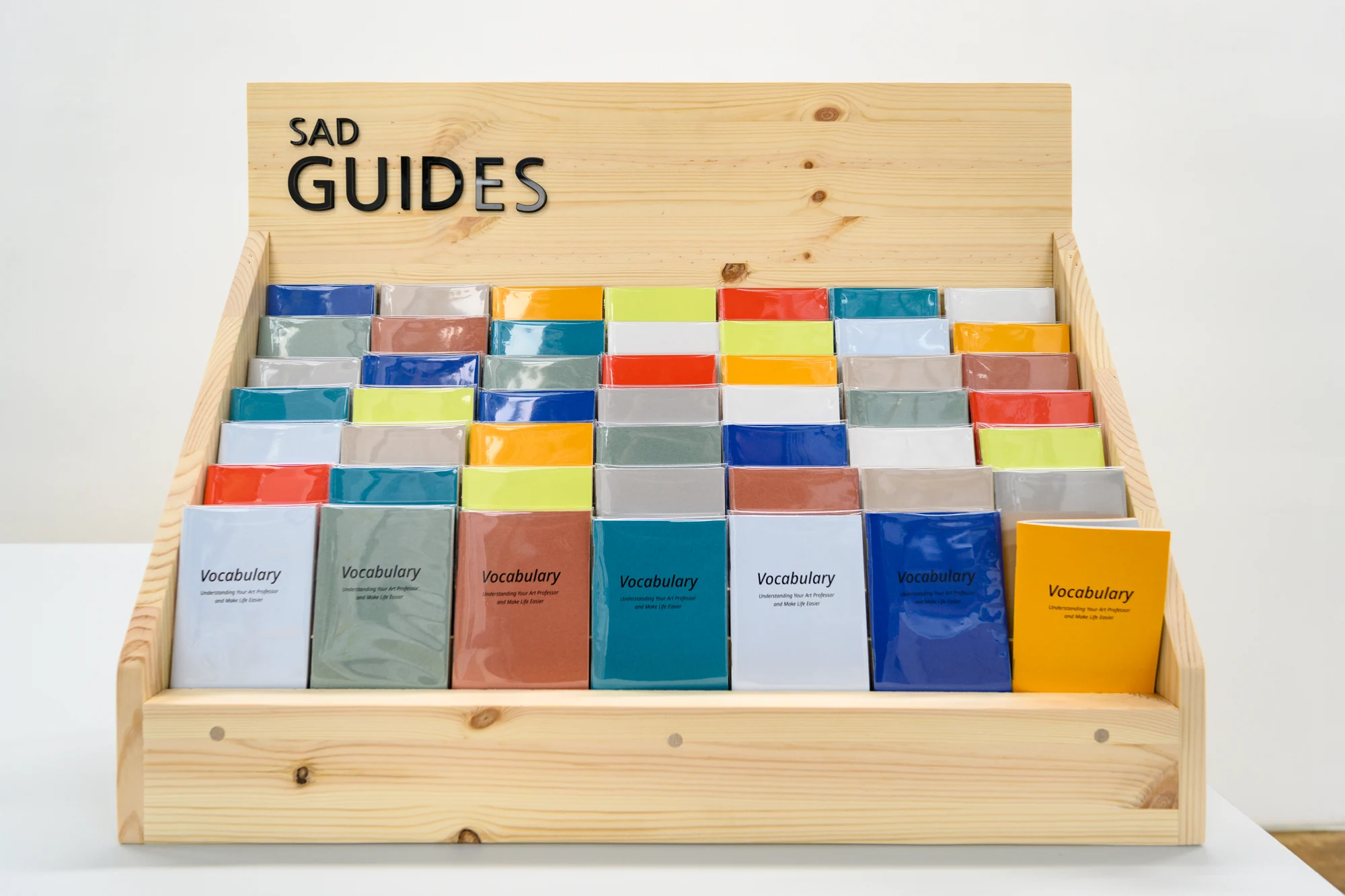
    SAD Guides, including Vocabulary: Understanding Your Art Professor and Make Life Easier.

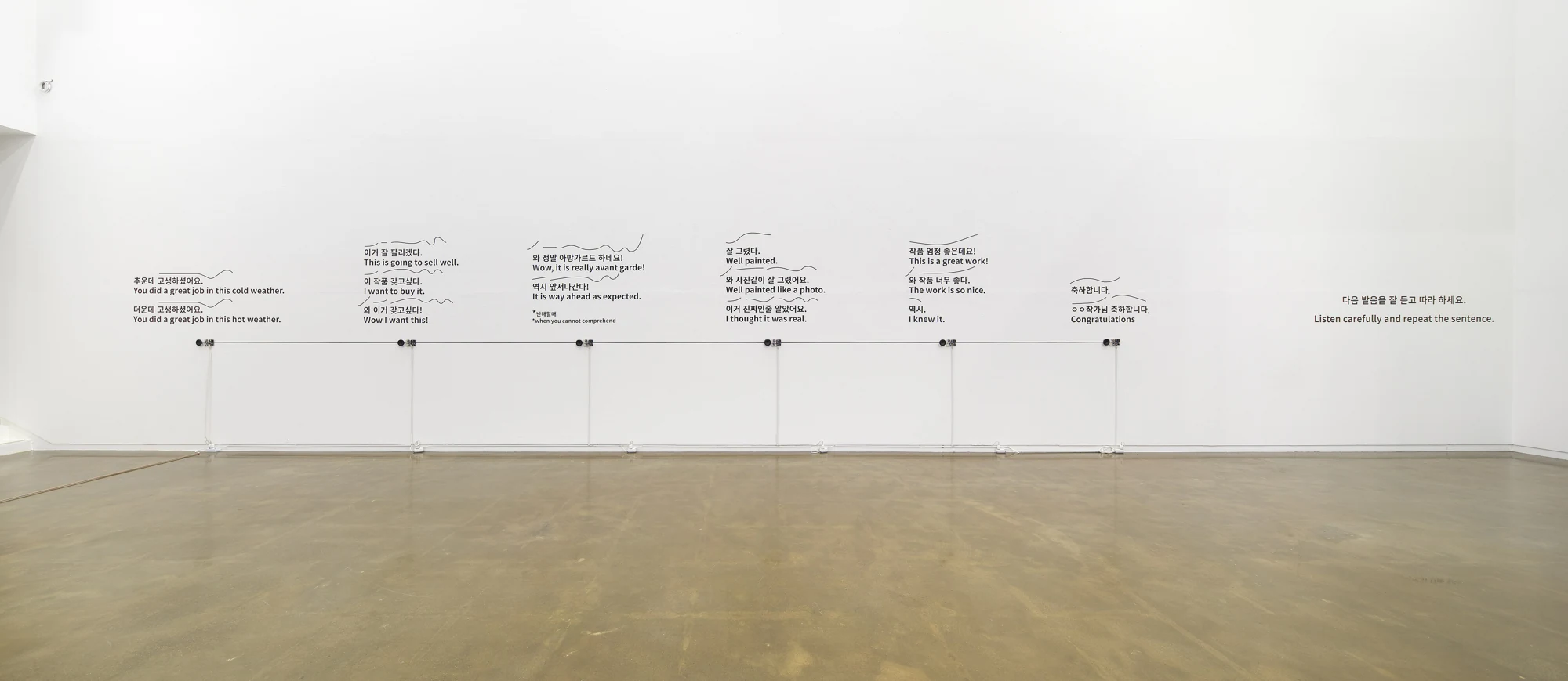
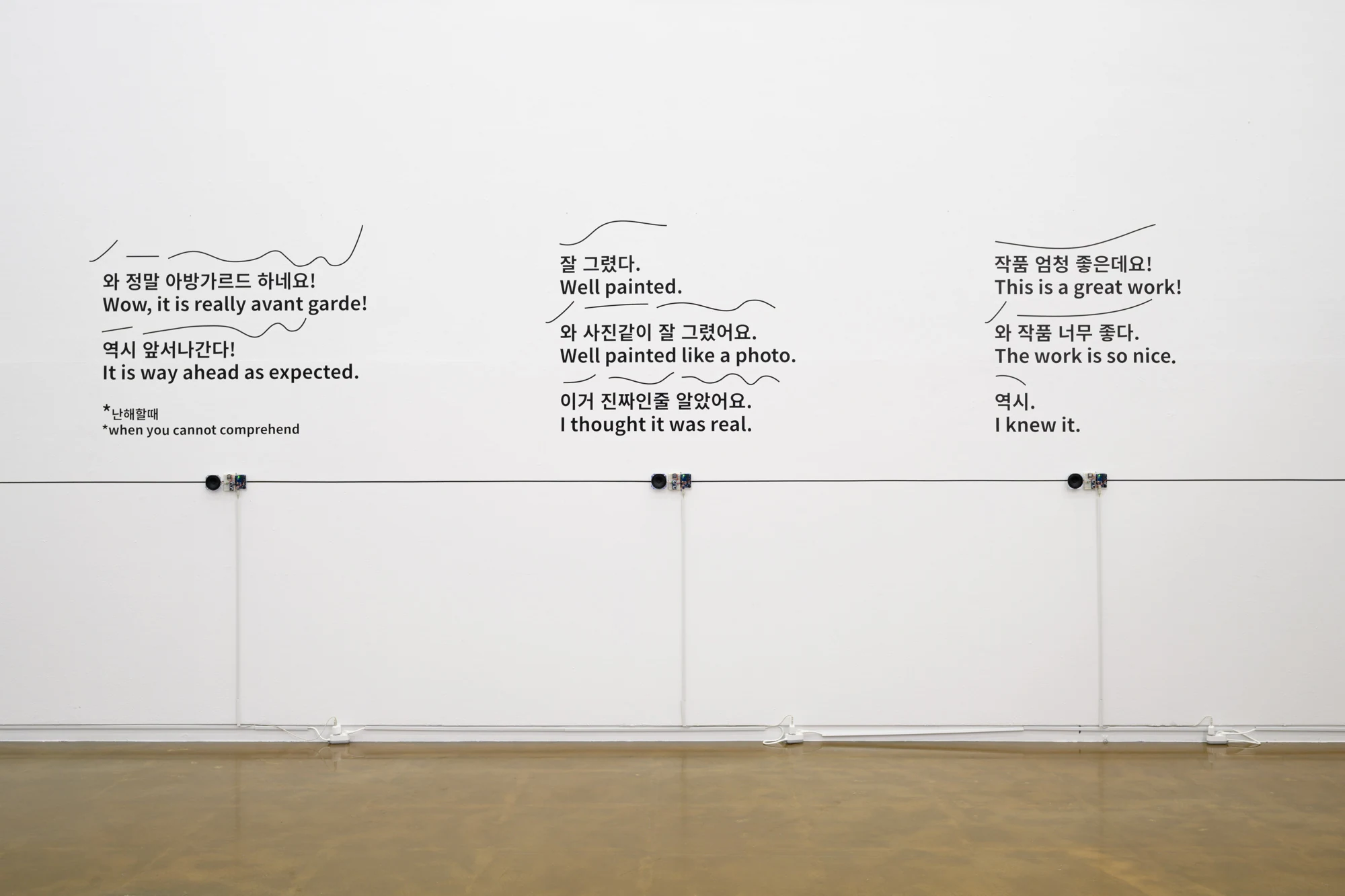
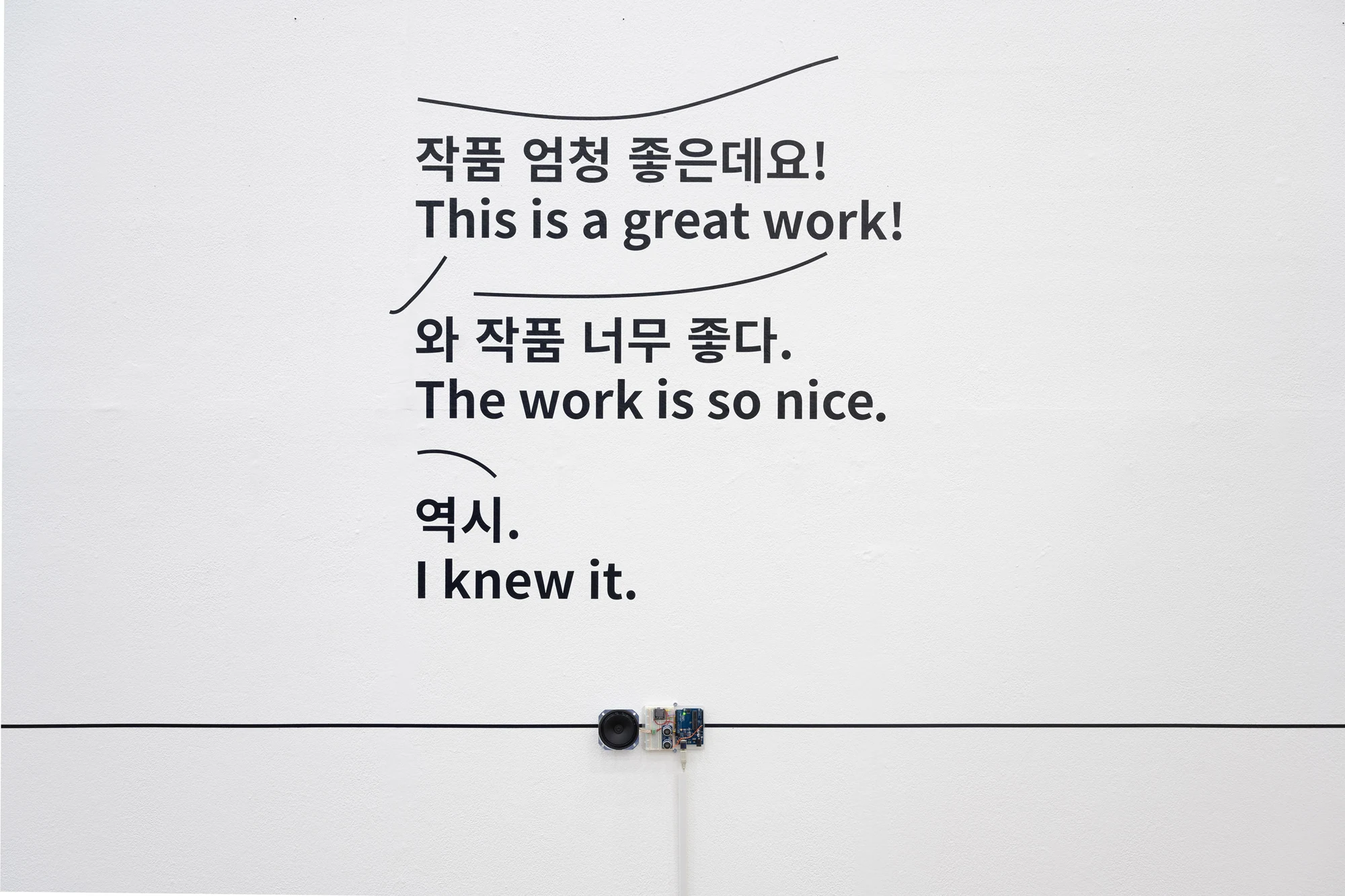
    Greetings for Artists

    2020 · Text vinyl on wall, speakers and interactive device · 1600 × 140 cm

    Greetings for Artists, 2020.
    Greetings for Artists, installation detail.
    Greetings for Artists, detail of the phrases and interactive devices.

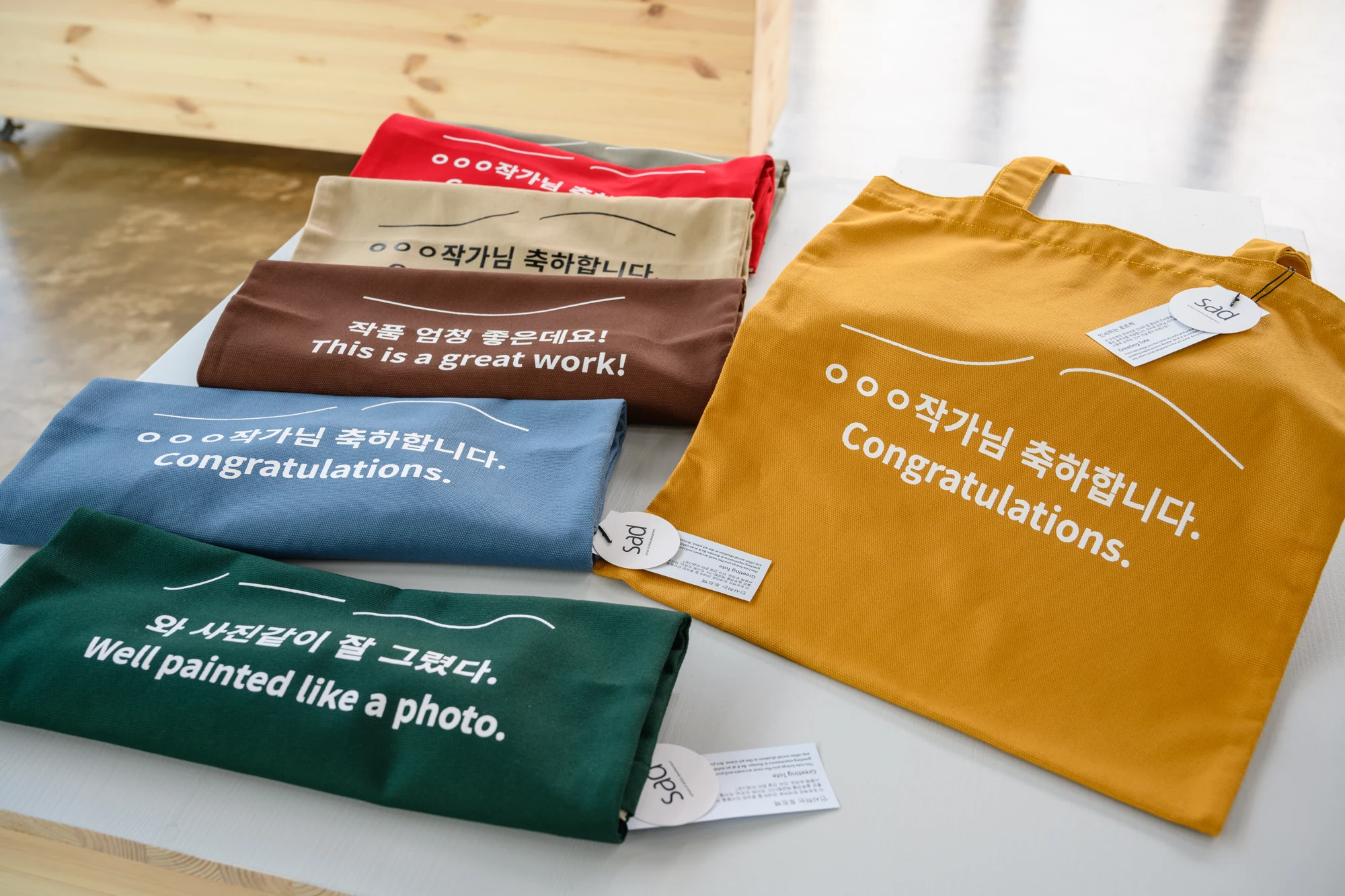
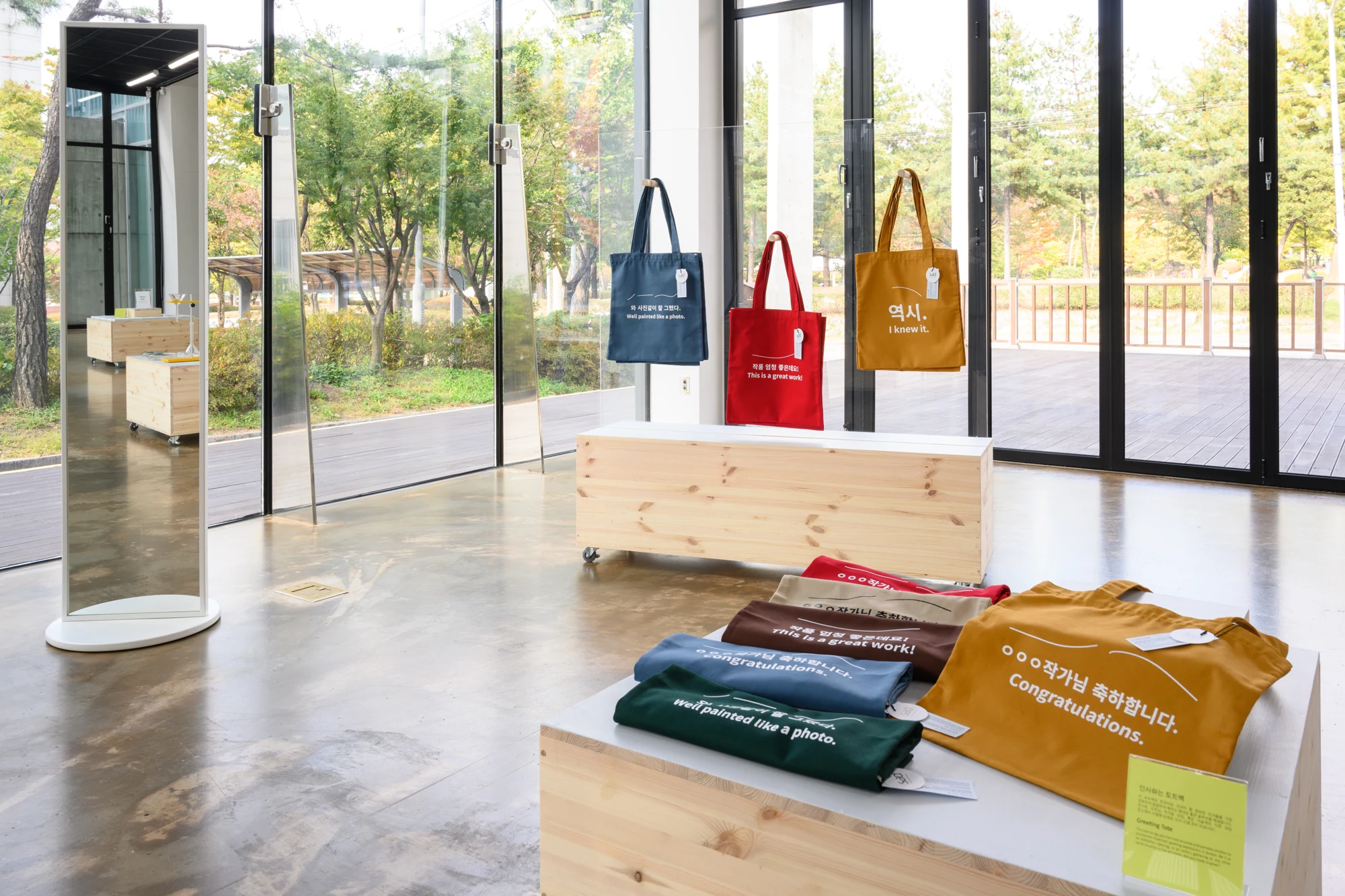
    Greeting Tote

    2020 · Screenprint on cotton bag by the artist · 35 × 39 cm

    Greeting Tote, 2020.
    Greeting Tote, displayed in sadshop.

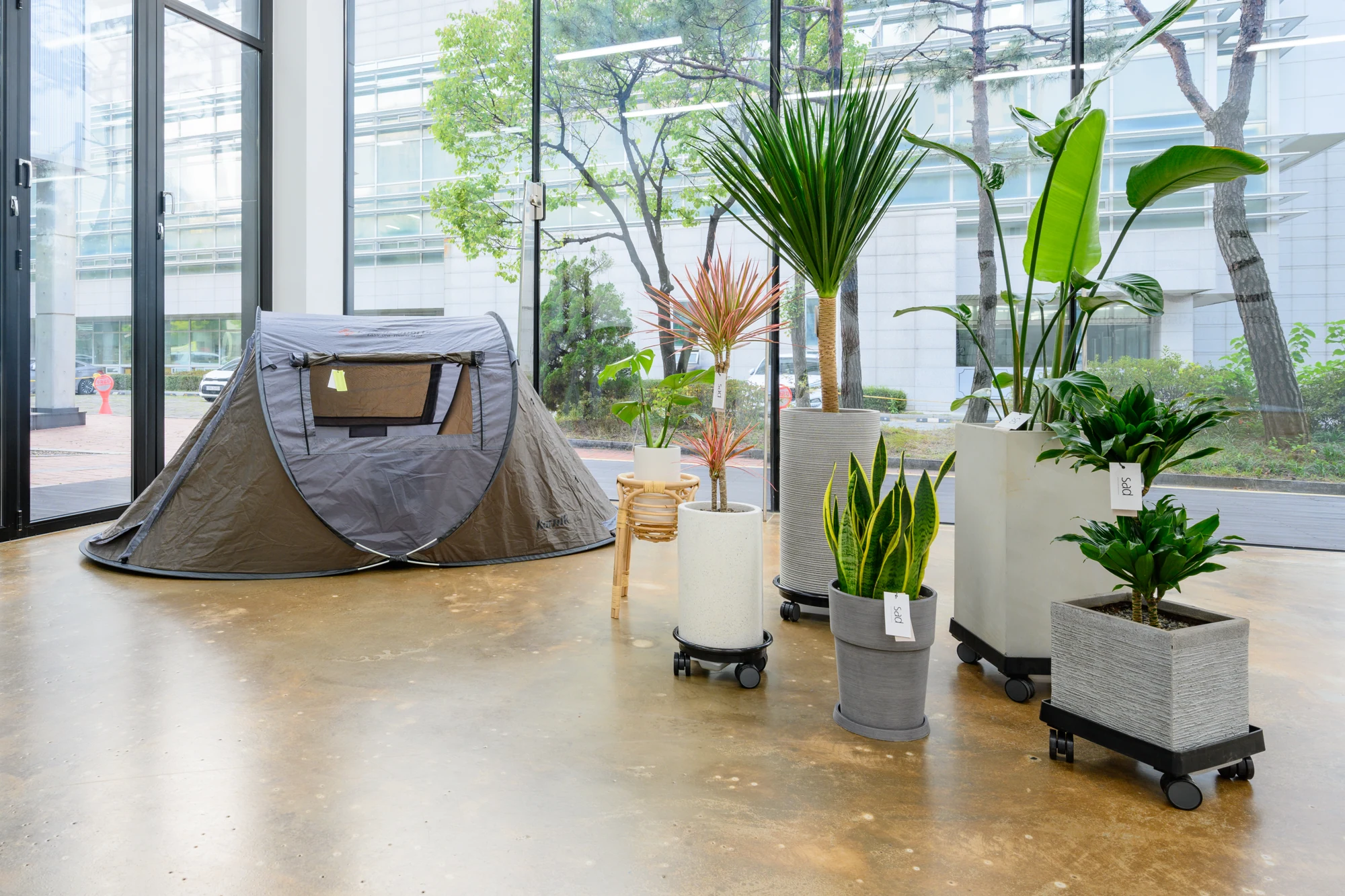
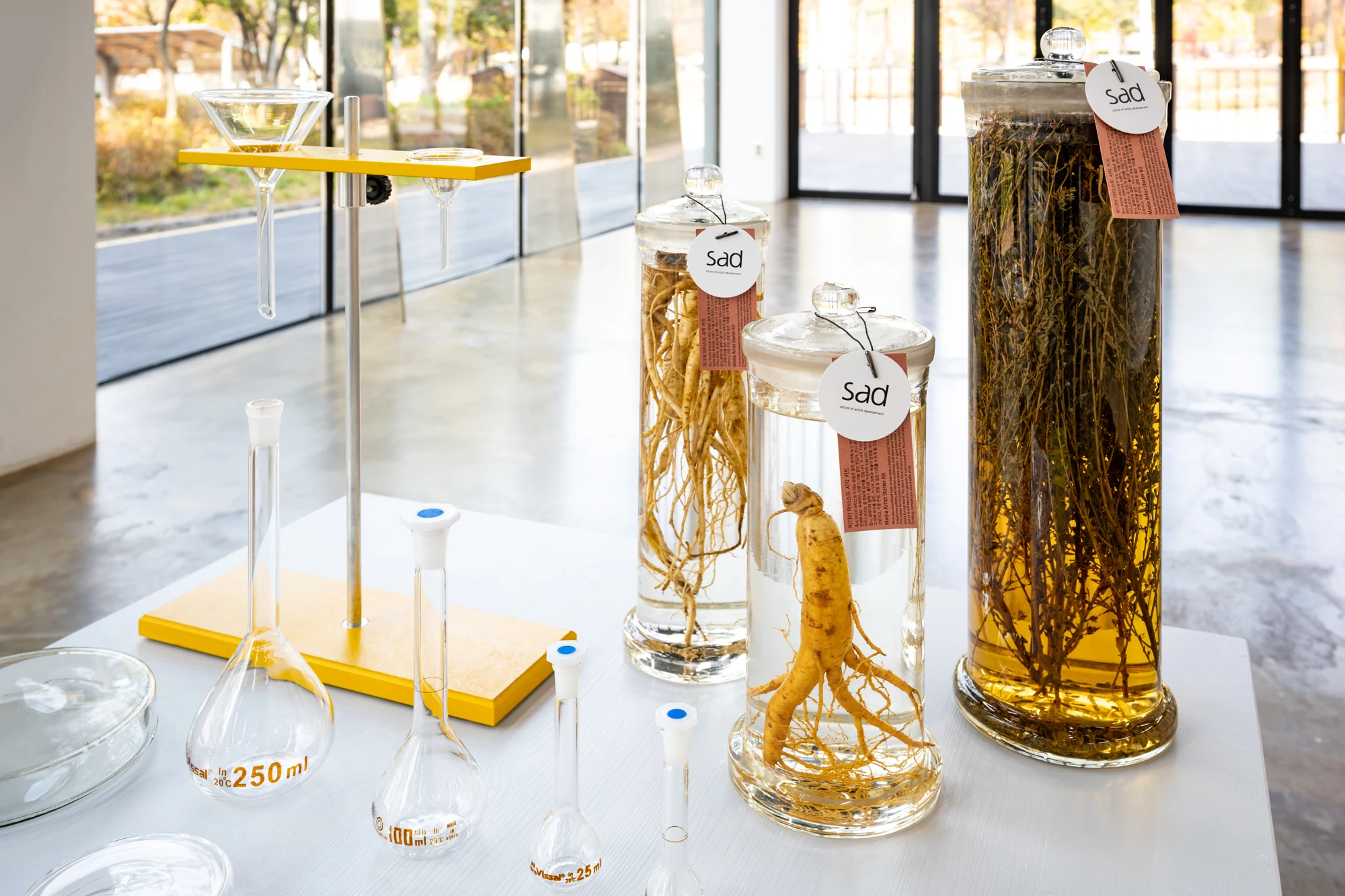
    Artist’s Plant, Artist’s Tent and Media Artist Starter Kit

    Artist’s Plant and Artist’s Tent, 2020. Plants and tent, dimensions variable.
    Media Artist Starter Kit, 2020. Laboratory equipment and display, dimensions variable.

    Development and Application of Art Home Shopping

    Development and Application of Art Home Shopping, Cheongju Art Studio, 2020 — installation view 1.
    Development and Application of Art Home Shopping, Cheongju Art Studio, 2020 — installation view 2.
    Development and Application of Art Home Shopping, Cheongju Art Studio, 2020 — installation view 3.

    The project also used the format of television home shopping to rehearse the promotion and rental of artworks. SAD makes the promise of professional advancement visible through the language of training, sales and consumer products.

    Watch the later video adaptation (2023)

    Photographs courtesy of the artist.
    2020 Artist Relay Project record — Cheongju Art Studio

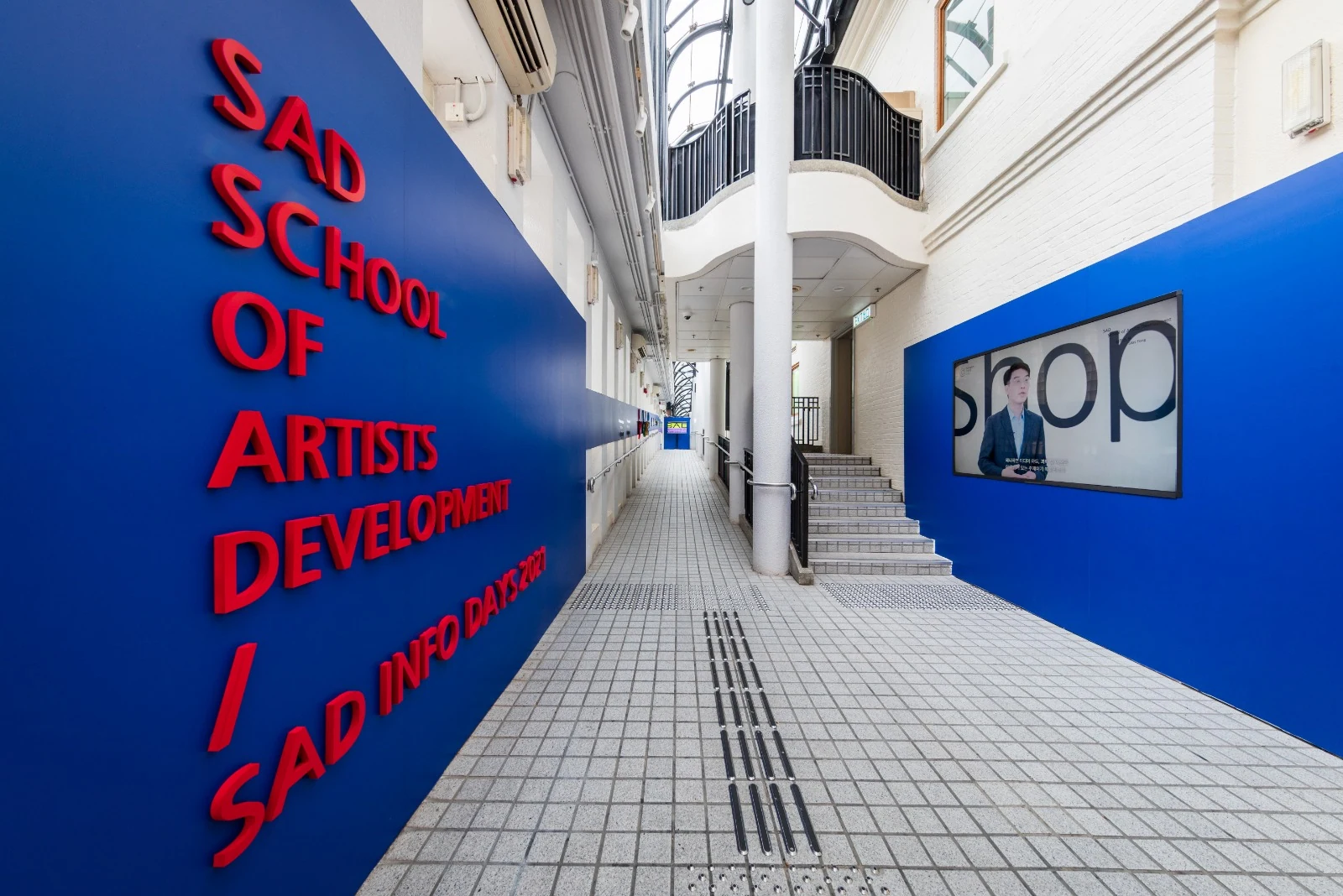
  • SAD Info Days 2021 — Hong Kong Visual Arts Centre

    2021 · Hong Kong Visual Arts Centre (vA!)
    17 May–20 December 2021
    Presented in the medialogue programme

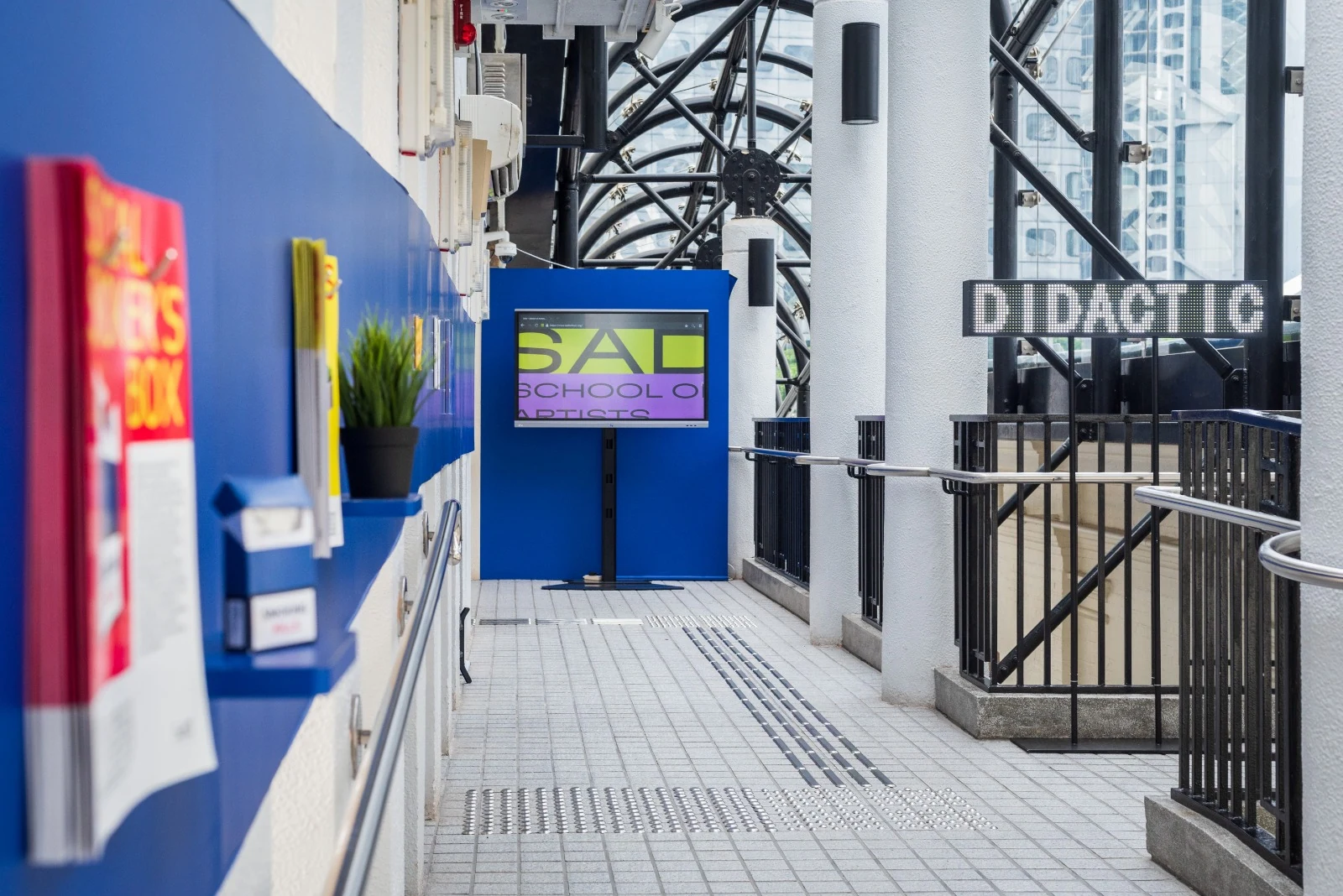
    SAD Info Days 2021 presents the products, services and training materials of the fictional School of Artists Development. Survival kits and crash-course notes turn the social habits of the art world into apparently teachable professional skills.

    SAD Info Days 2021, installation view. Photograph courtesy of Hong Kong Visual Arts Centre.

    A school, a shop and a set of promises

    The exhibition brings SAD into the public spaces of vA!, adopting the visual language of an academy and a shop. Its products question how professional image and social connections shape an artist’s career.

    SAD Info Days 2021, installation view. Photograph courtesy of Hong Kong Visual Arts Centre.

    Greetings for Artists — Hong Kong version

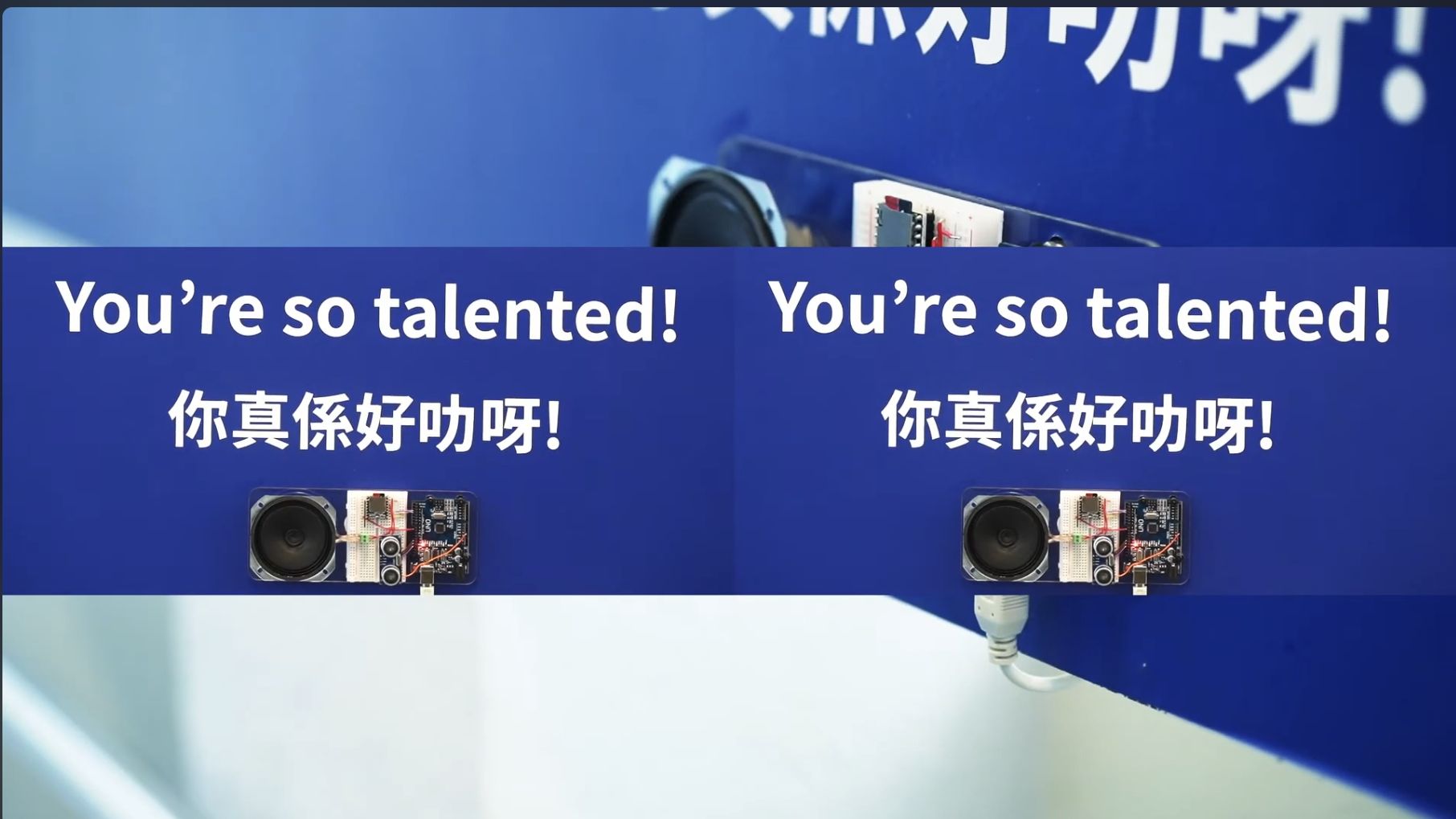
    Text, speakers and an interactive device turn familiar compliments into a form of social training. The Hong Kong installation uses English and Cantonese, including “You’re so talented!” / “你真係好叻呀!”

    English and Cantonese greetings above speakers and interactive electronics in the Hong Kong installation
    Greetings for Artists, Hong Kong version, 2021. Frame from Hong Kong Visual Arts Centre’s official exhibition highlights video.

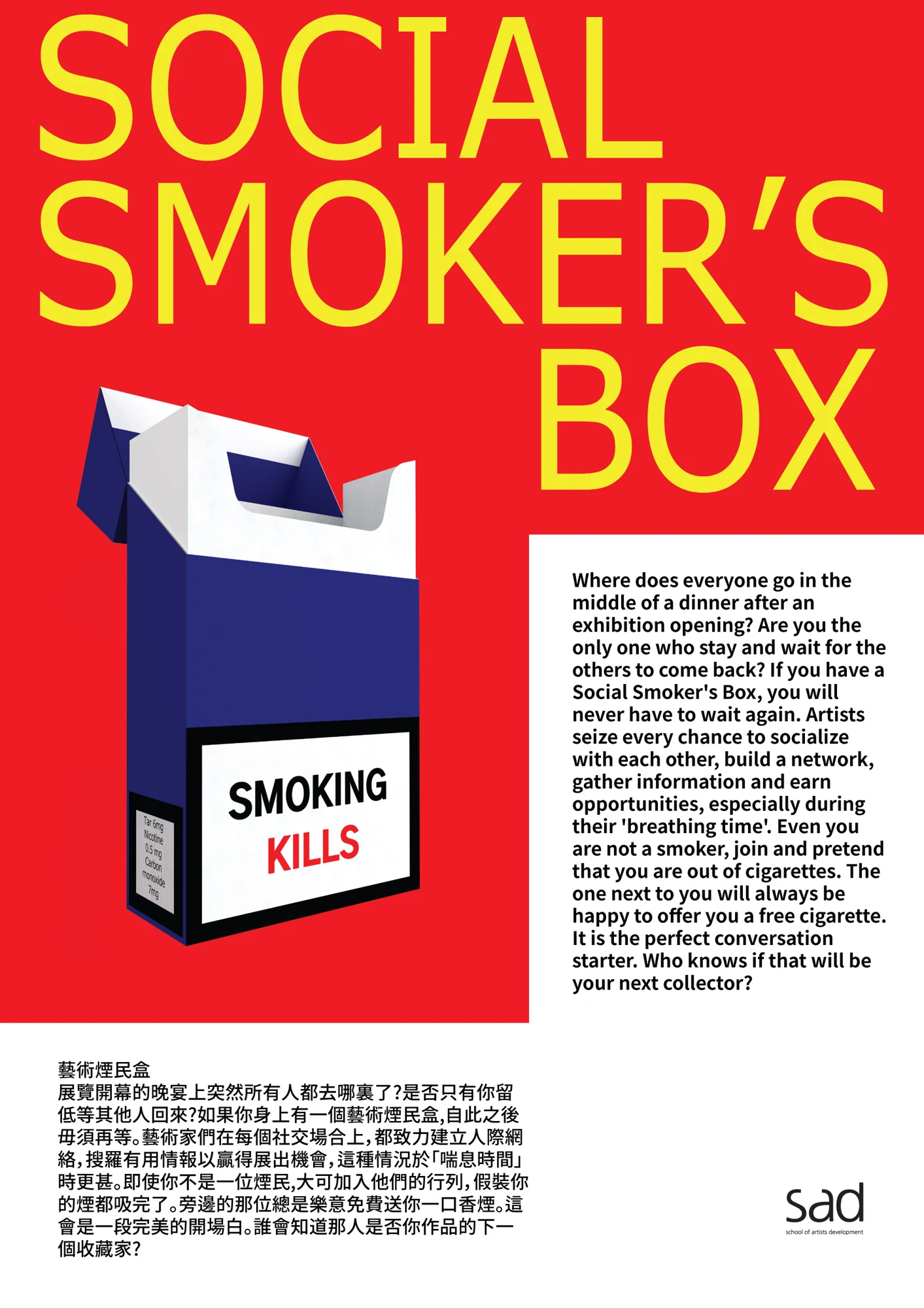
    Social Smoker’s Box

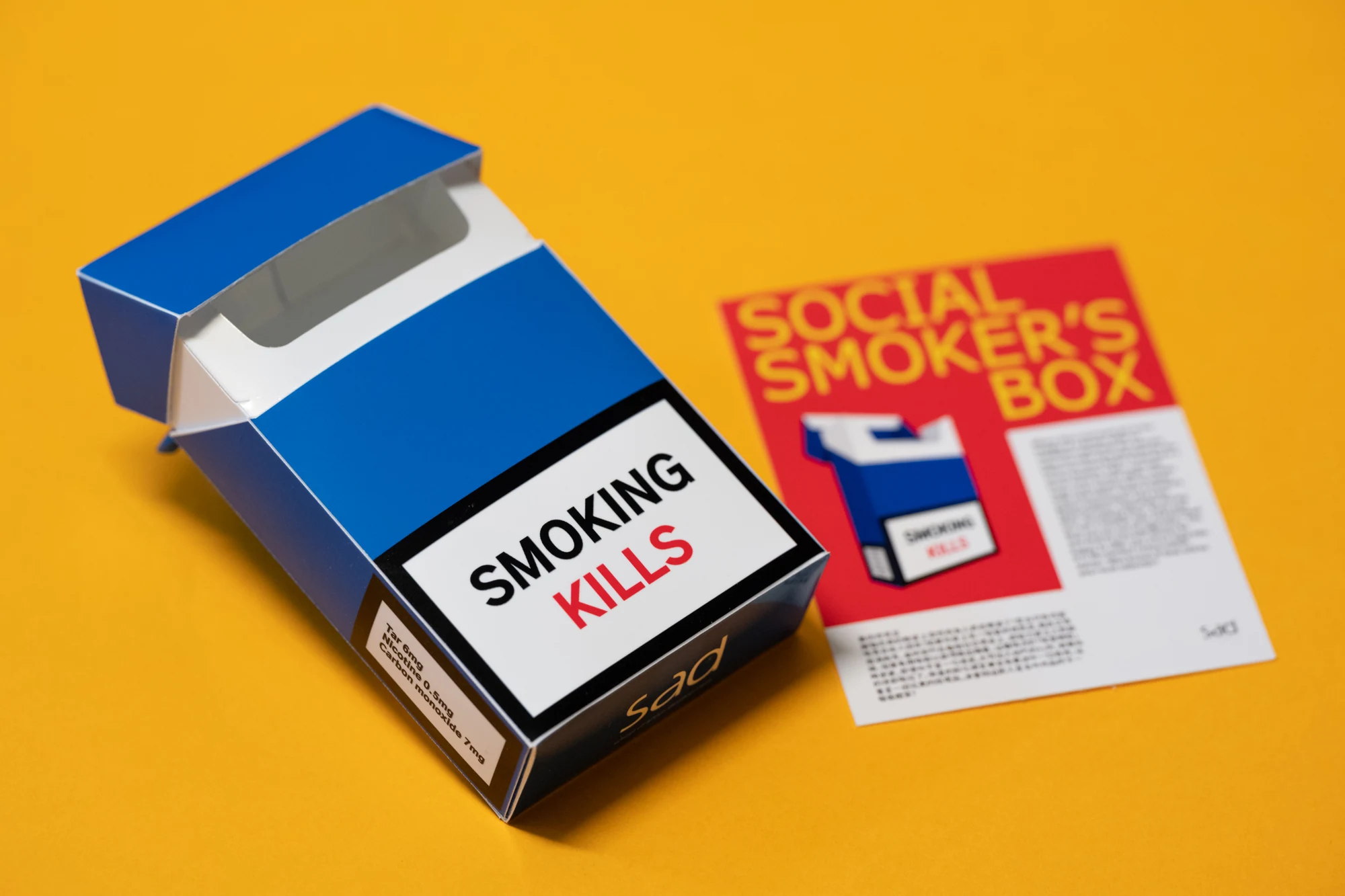
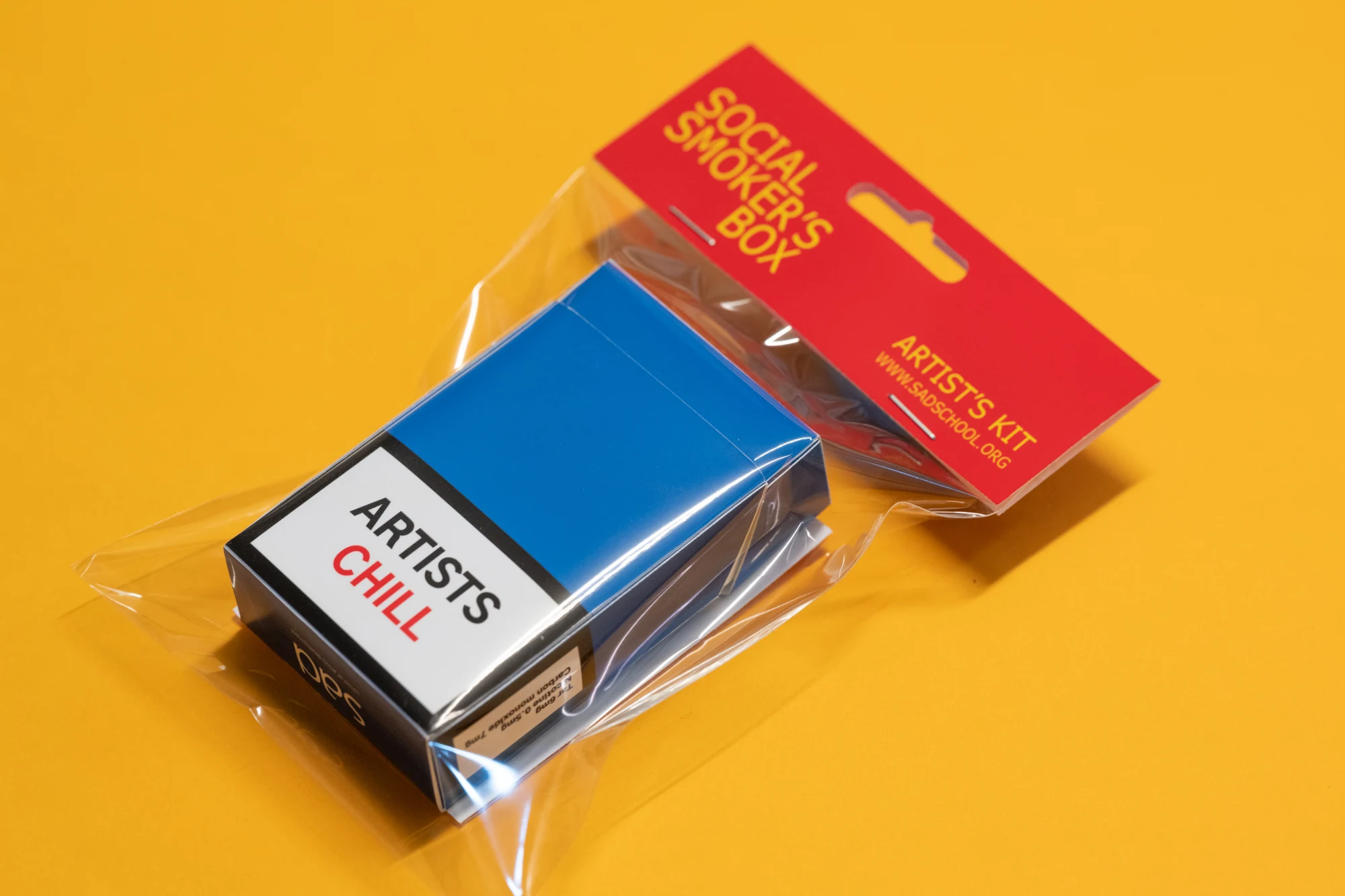
    Social Smoker’s Box (2021) is a handmade paper box, 87 × 56 × 22 mm, presented with a leaflet and packaging.

    Social Smoker’s Box, 2021.
    Social Smoker’s Box, packaged.
    Social Smoker’s Box leaflet, 2021.

    Seminars and exhibition highlights

    Two seminars explored Feng Shui and image design as routes to artistic career success. A video of the events returned to the exhibition as part of the installation.

    Watch the exhibition highlights on YouTube

    Installation photographs courtesy of Hong Kong Visual Arts Centre; product photographs courtesy of the artist.
    Exhibition record — Hong Kong Visual Arts Centre

  • SAD Kitchen — Cheongju Museum of Art (2022)

    2022 · Installation at Cheongju Museum of Art
    2022 Artists of Tomorrow: To Each Their Own
    30 June–10 October 2022

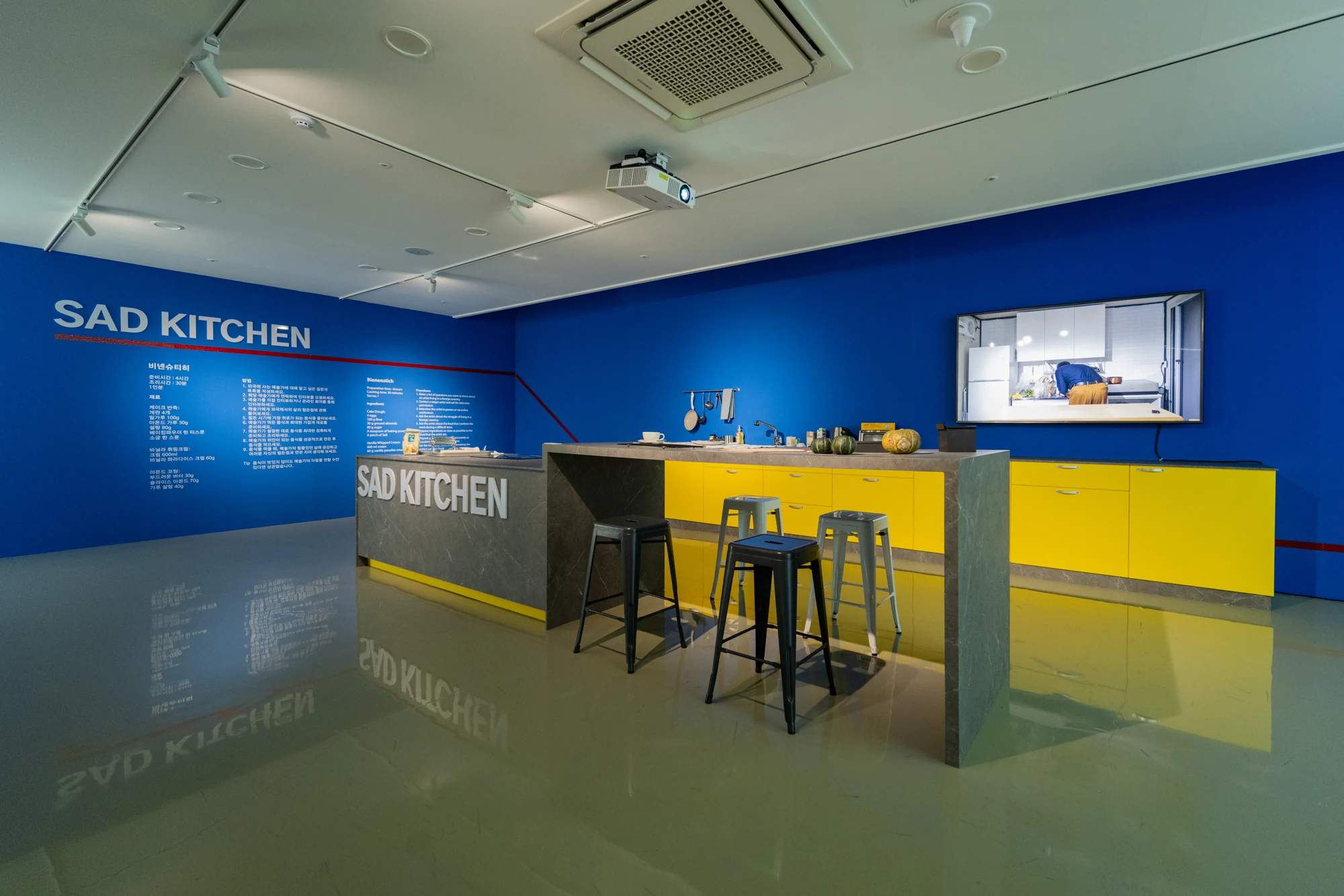
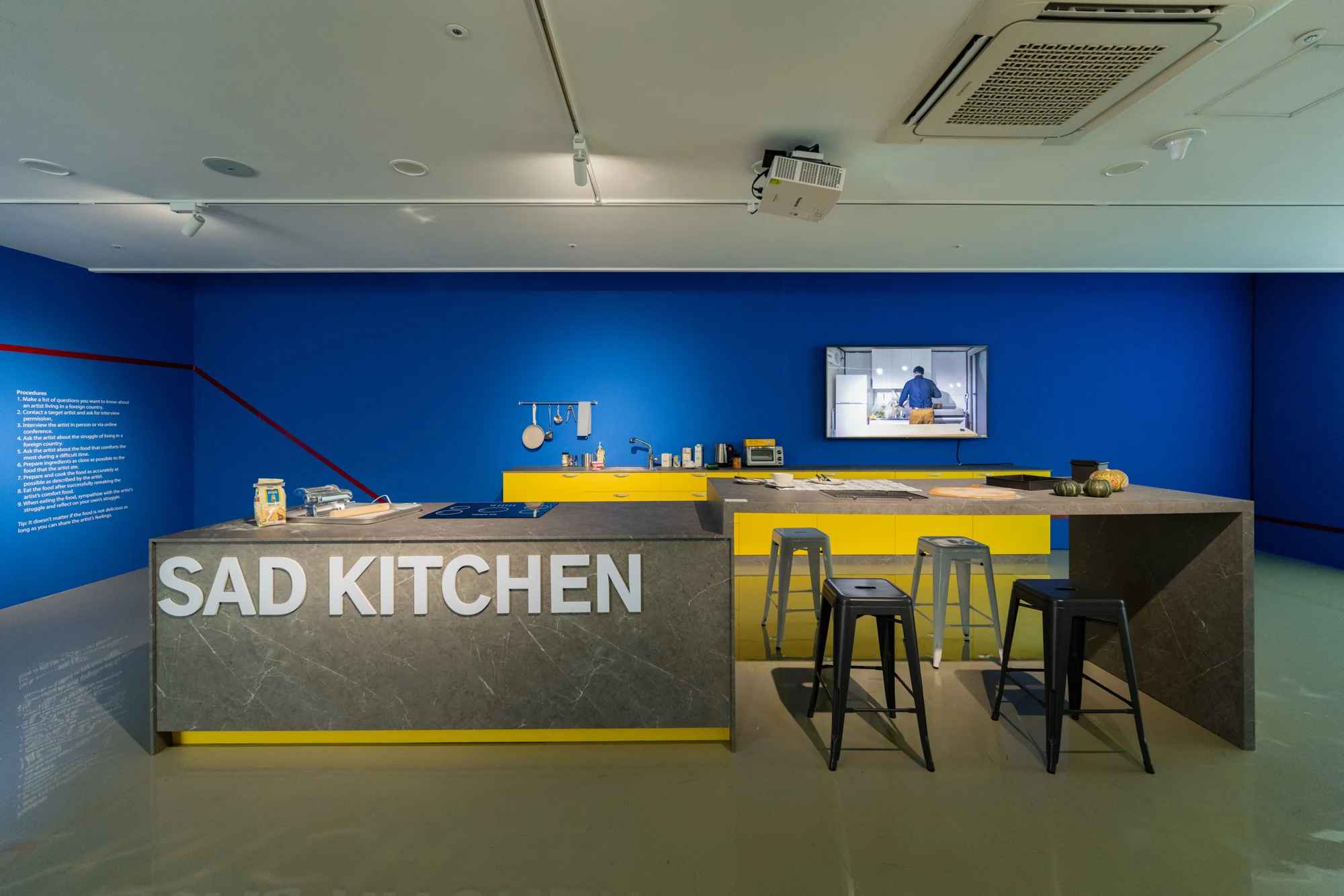
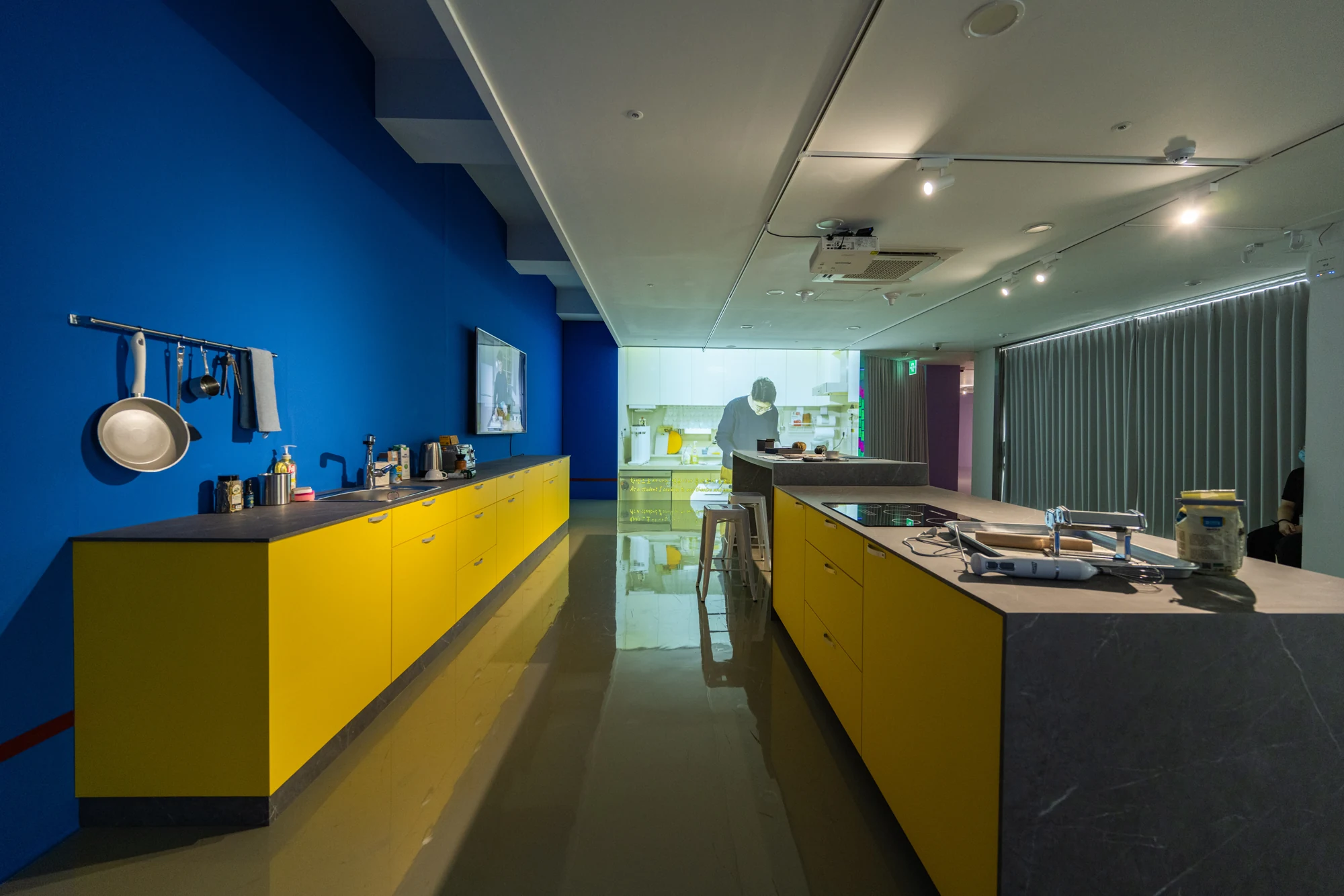
    SAD Kitchen brings cooking and conversation into the exhibition space. The project asks artists who have lived abroad about the difficulties they encounter and the food they turn to for comfort. Preparing and eating these dishes becomes a way to share those experiences.

    SAD Kitchen, installation view at Cheongju Museum of Art, 2022.

    The kitchen in the museum

    The kitchen counter and video in the installation.
    A view through the installation at Cheongju Museum of Art.

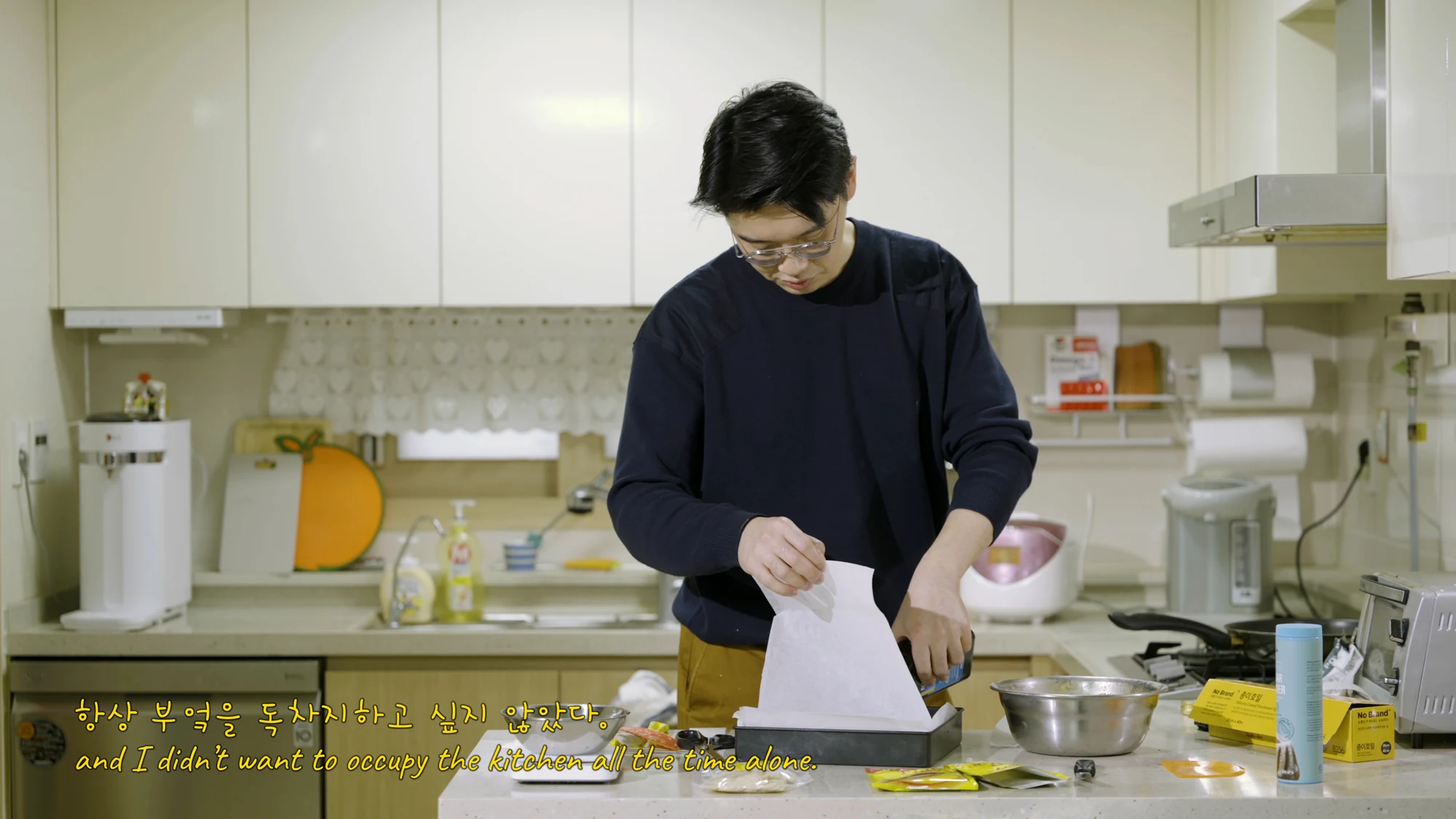
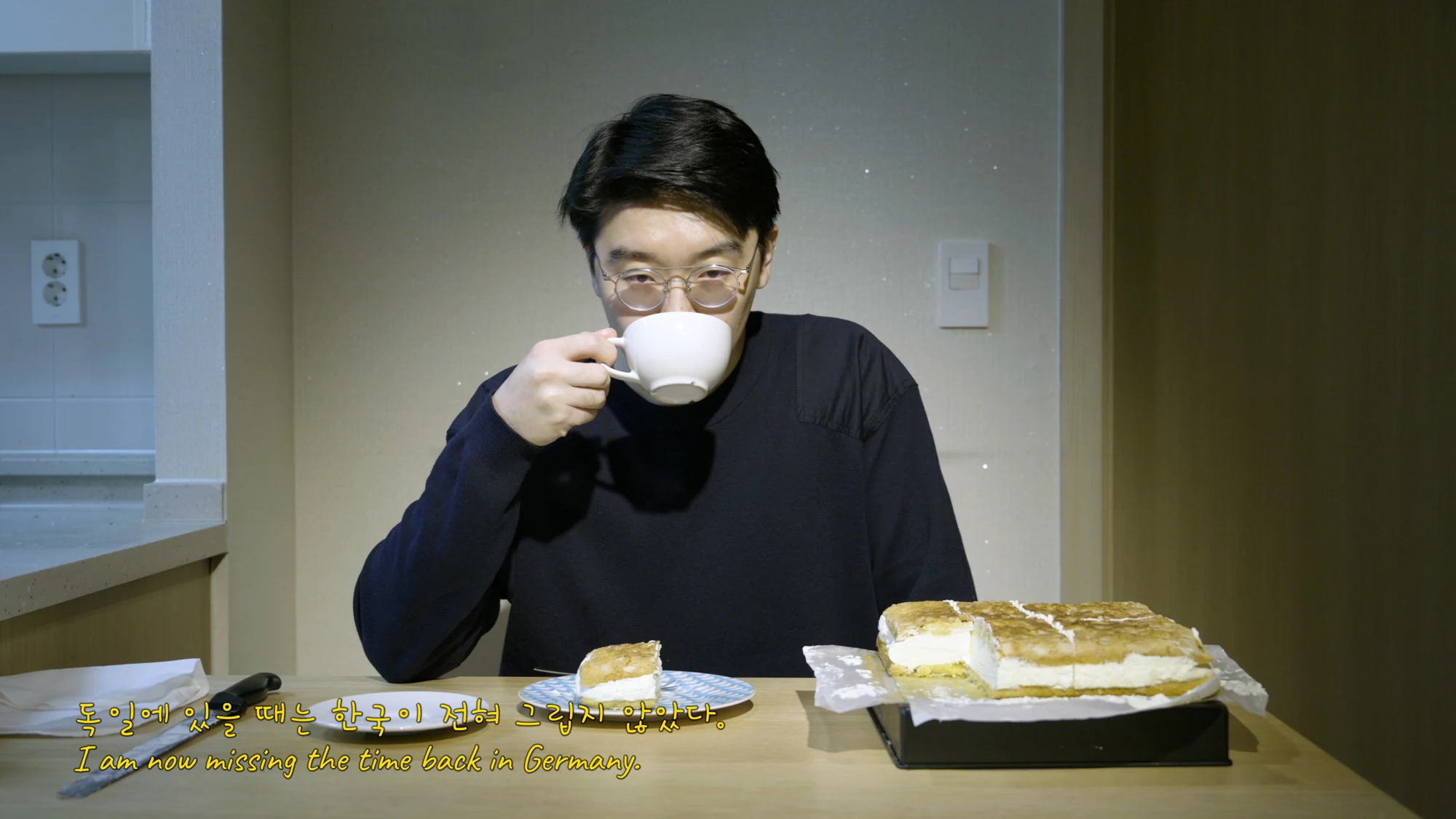
    Bienenstich

    Bienenstich (2021) is a UHD video with sound and colour, 10 minutes 46 seconds. The video is presented as part of the 2021–2022 SAD Kitchen installation.

    Bienenstich, video still, 2021.
    Bienenstich, video still, 2021.

    Watch Bienenstich

    Photographs courtesy of the artist.
    Exhibition record — Cheongju Museum of Art