Author: silasfong

  • Bread Whispers

    2023–ongoing · Bread-making, exchanges, performance, photographs and publications

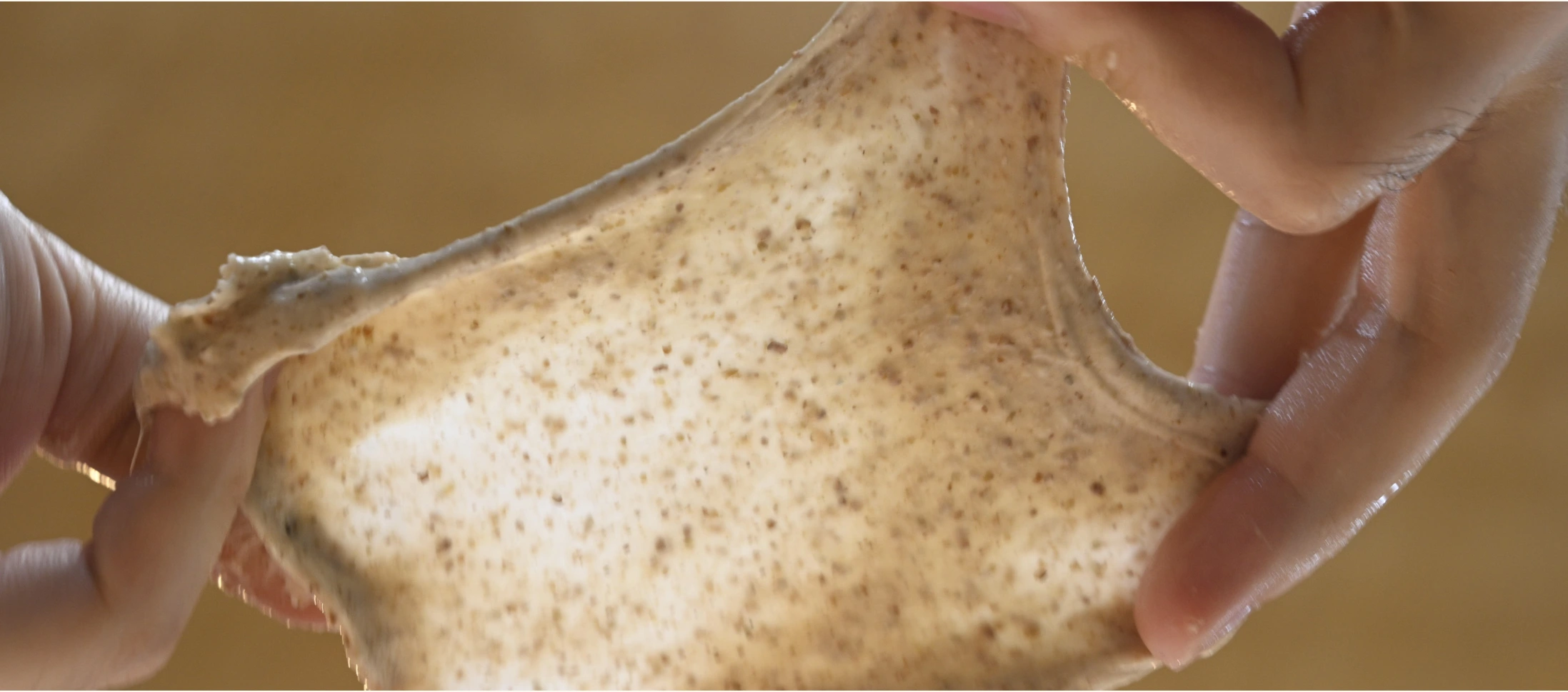
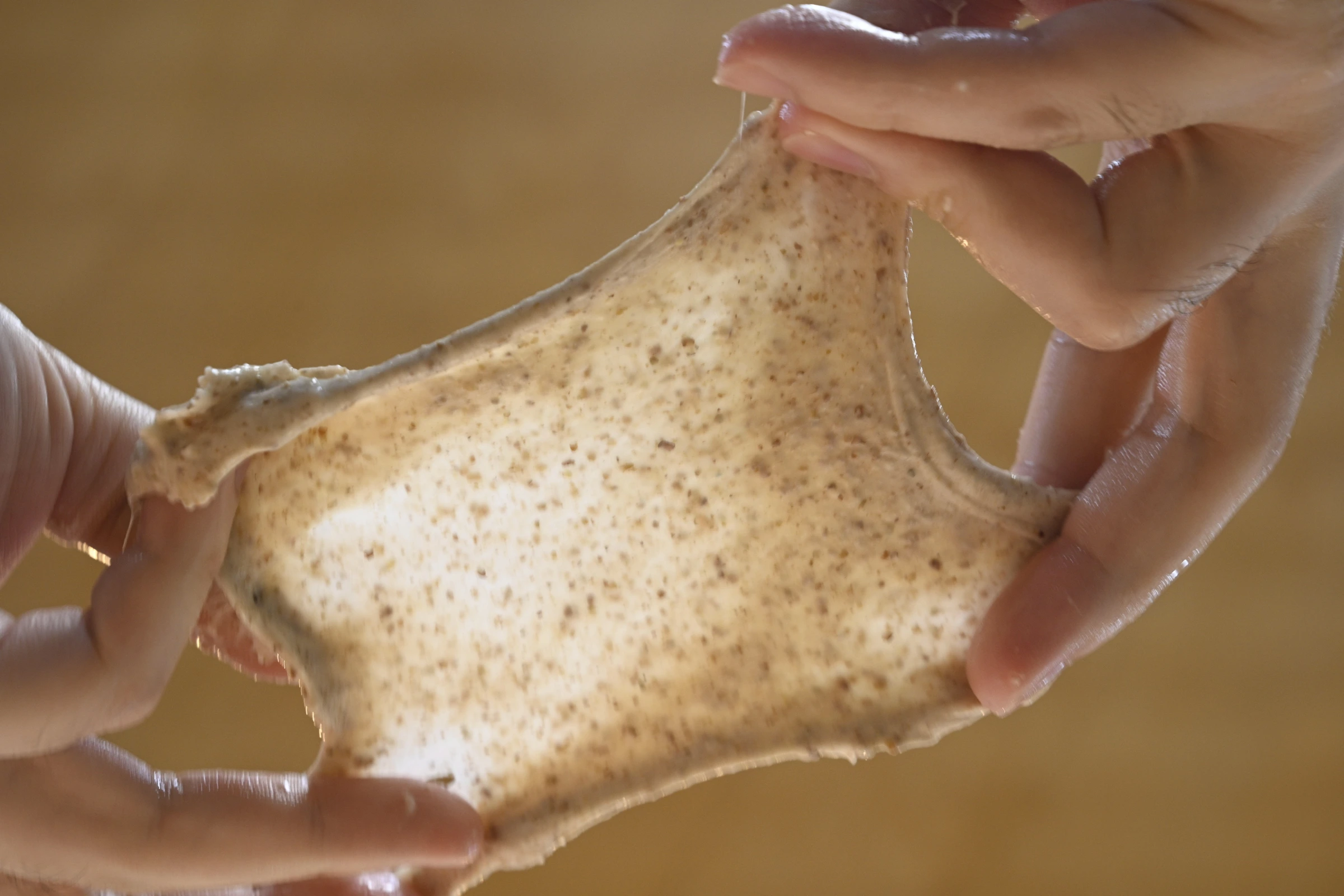
    Both hands stretching dough into a thin membrane, full original photograph, A Study of Wheat

    Bread Whispers develops through learning to bake and sharing what I make. Beginning in Gwangju, exchanges with bakers became a way to enter unfamiliar places through practical work. Repeated trials, signed records of learning, meals and conversations connect the chapters.

    Across Bread Whispers, I design and make the certificates myself. Each is signed by the chef or artisan who taught me the respective skill, recording the learning relationship and the knowledge shared.

    Each place has its own circumstances. The pages below follow those encounters separately, while keeping the continuing project visible.

    Chapters

    Bread Whispers: A Study of Wheat — sharing bread with the elders of Obin-ri

    A Study of Wheat

    Yangpyeong · 2026

    Korean-grown wheat, baking trials and sharing with the elders of Obin-ri connect learning to the daily table.

    Hong Kong

    6–7 February 2025

    I attended a course led by sisternchick. The instructors who taught me signed a certificate that I designed and made to record the learning encounter.

    Bread Whispers — Okinawa

    Okinawa

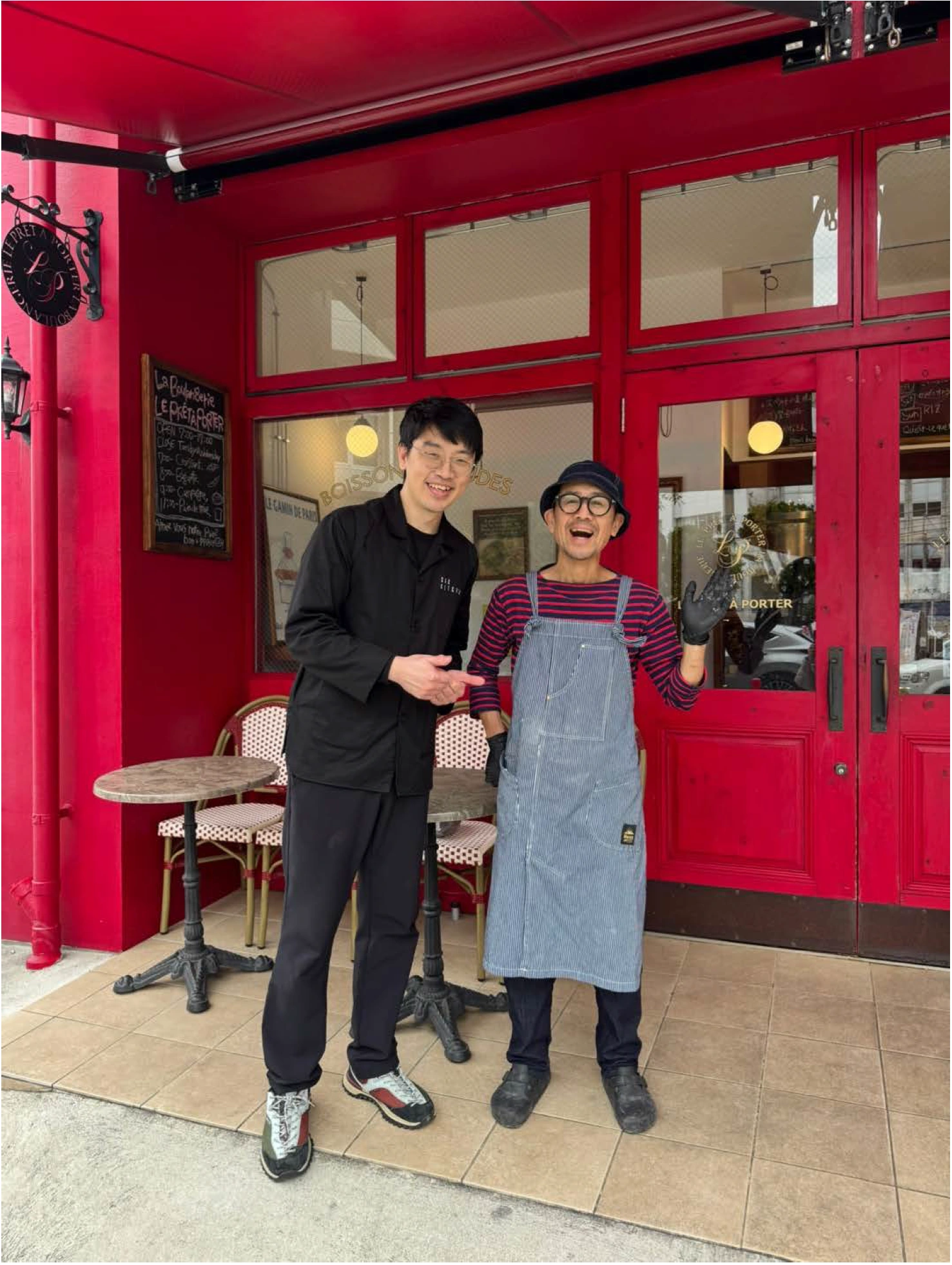
    Naha · 2024

    Learning baguette-making at La Boulangerie Le Prêt à Porter, recorded in a certificate I designed and made and the baker signed.

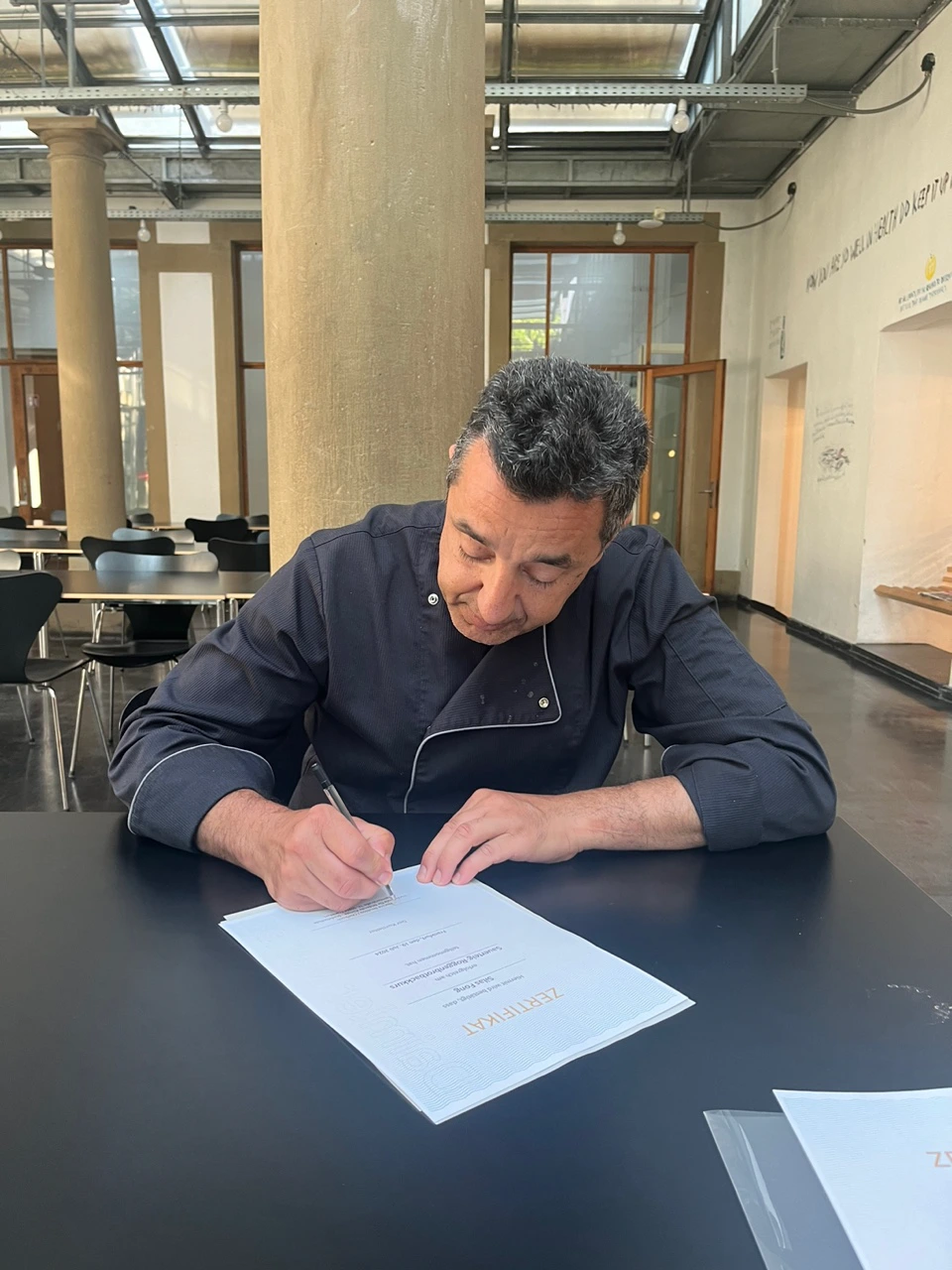
    Frankfurt: the chef signing the certificate designed and made by Silas Fong

    Frankfurt

    2024

    Learning sourdough rye bread with the head chef of the Städelschule canteen.

    Bread Whispers — ARKO Art Center

    ARKO Art Center

    Seoul · 2024

    Bread-making enters the exhibition and the public setting of an art institution.

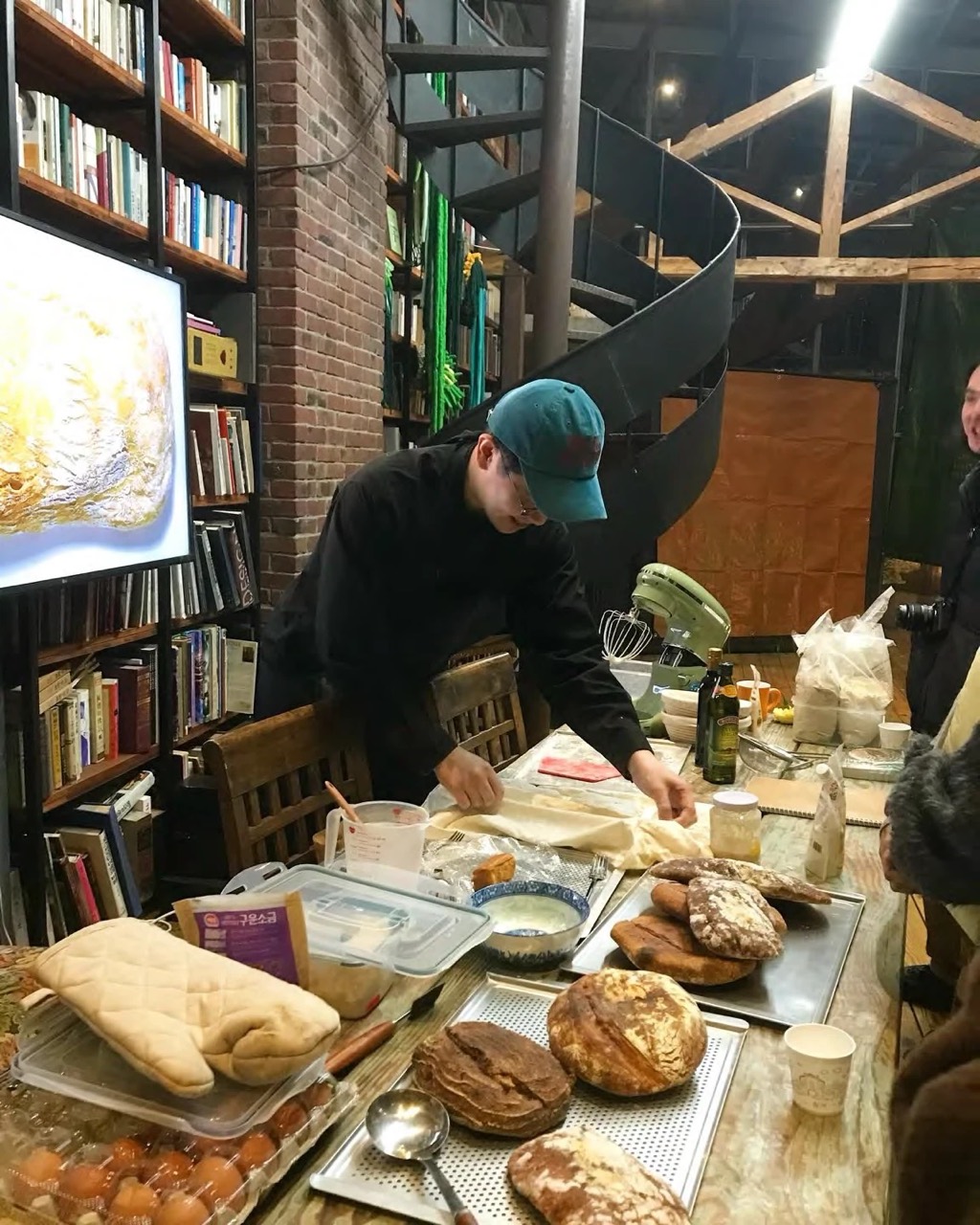
    Bread Whispers — Gwangju: working dough at a table with bread and baking equipment

    Gwangju

    Horanggasy Creative Studio · 2023

    The project begins with a learning exchange with Bread and Roses, followed by ciabatta, castella and shared meals during the residency.

  • Bread Whispers: A Study of Wheat

    Bread Whispers · Sabujak Residency, Yangpyeong · 2026

    What can learning to make bread teach me about a place? In Yangpyeong, experiments with Korean-grown wheat became a way to meet farmers, cooks and neighbours. The work follows the connections between growing, making and sharing food, and the ordinary meals through which those encounters continue.

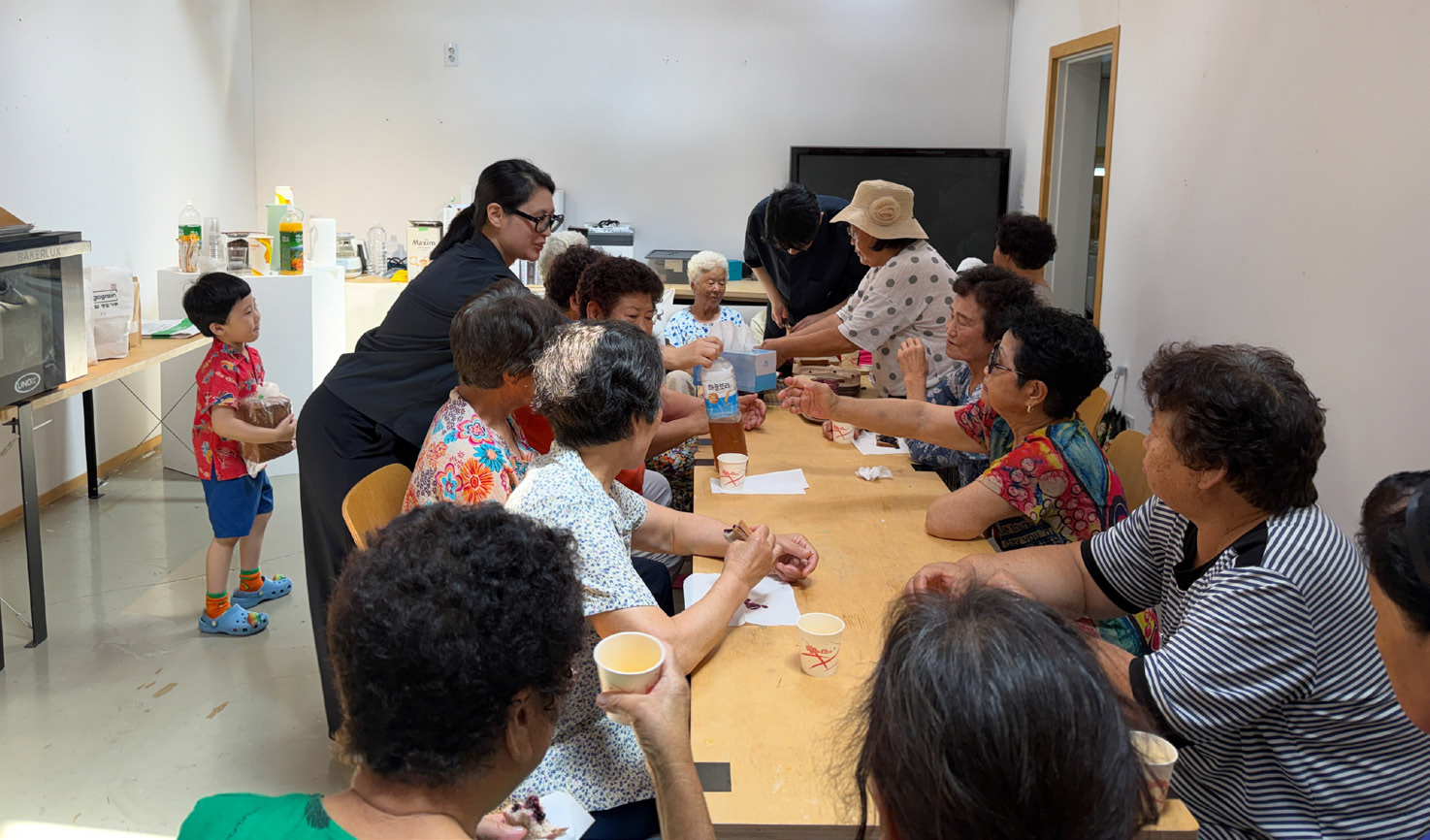
    Sharing bread around a table with the elders of Obin-ri
    Sharing bread with the elders of Obin-ri, 30 July 2026. My son joined the gathering.

    Learning through encounters

    After first receiving a sourdough starter in Gwangju in 2023, feeding it became part of feeding my family. In Yangpyeong I wanted to understand more about the flour itself. An enquiry to a local mill did not lead to a meeting; other introductions opened a different route through the area.

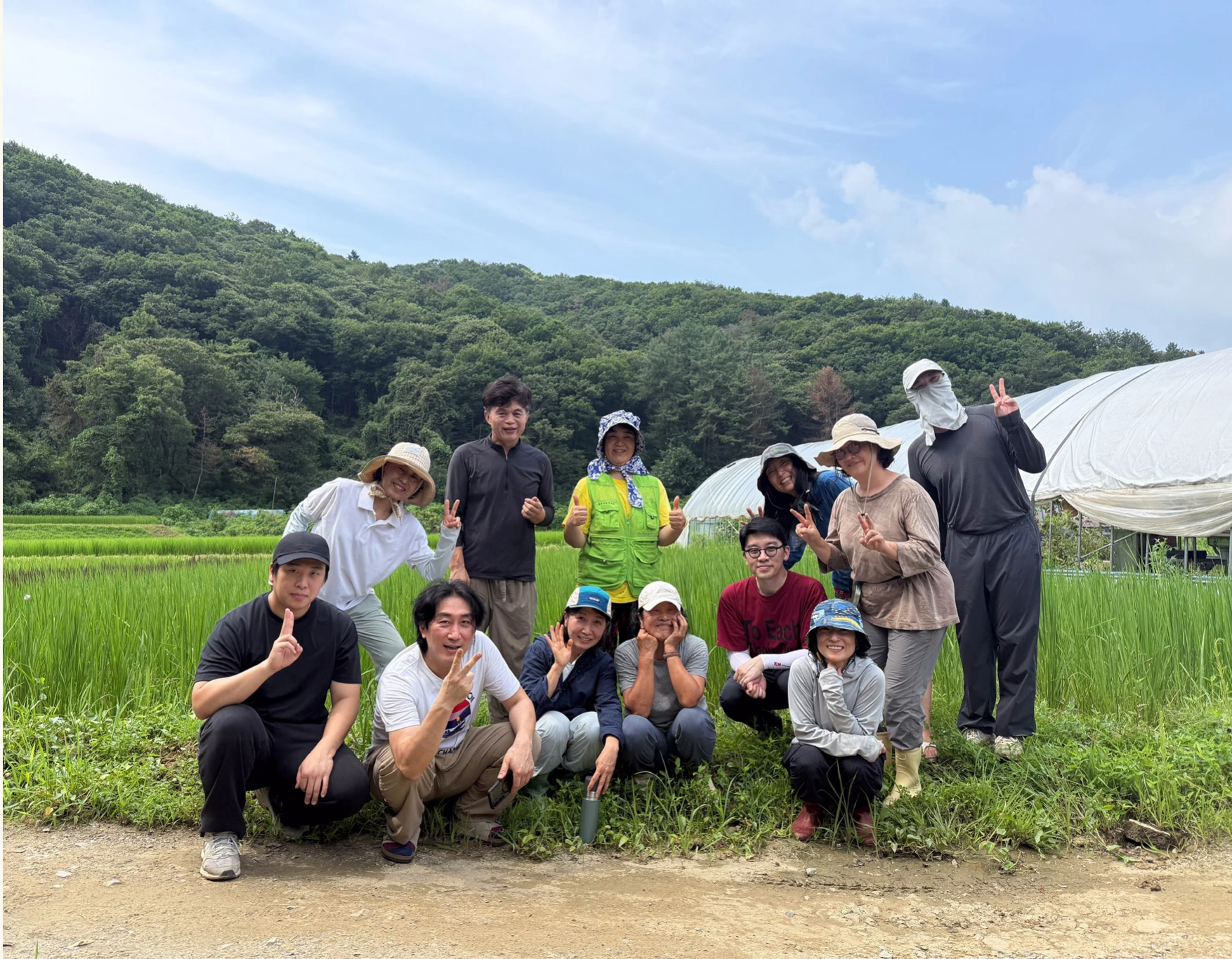
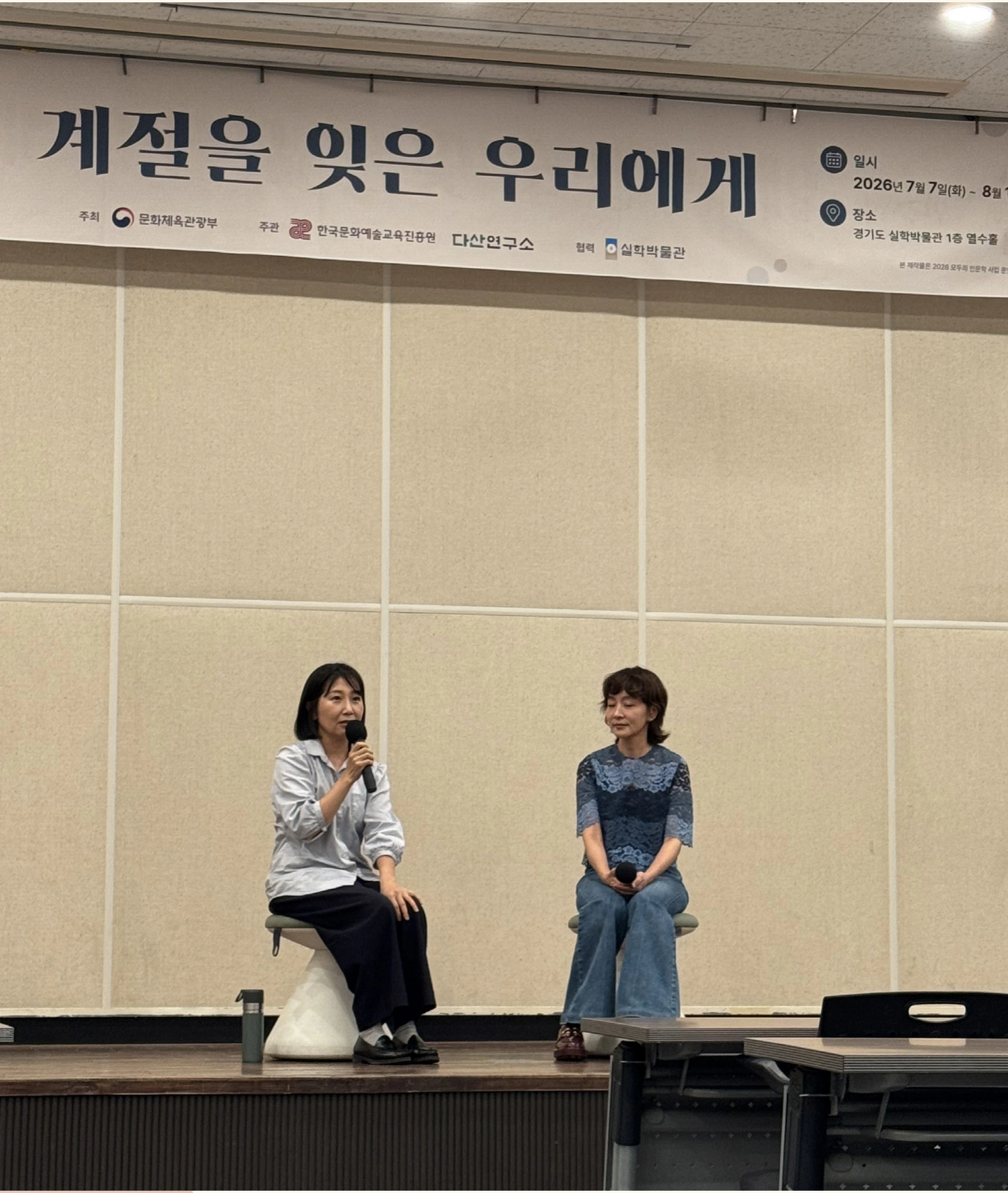
    Chef Hannah Uhm introduced me to Team Farm Tuesday. On 28 July, I joined the group in harvesting, sorting and packing vegetables, and sharing food. A visit to the Museum of Silhak on the same day became another occasion to listen and learn.

    Team Farm Tuesday gathered beside fields and greenhouses
    With Team Farm Tuesday, Yangpyeong, 28 July 2026.
    A conversation at the Museum of Silhak
    Listening at the Museum of Silhak, 28 July 2026.

    Trials in dough and jam

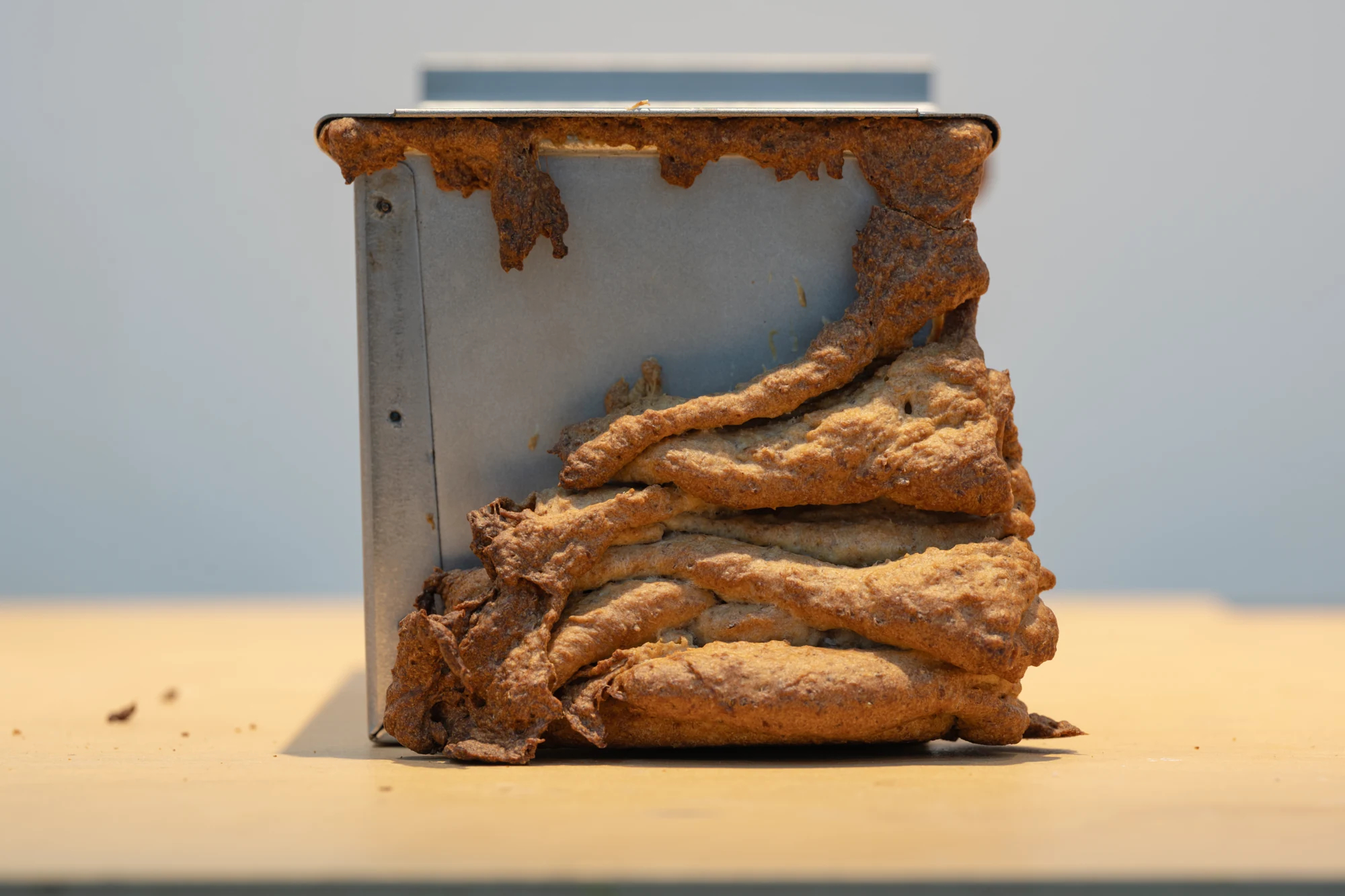
    I repeatedly tested a soft sourdough pain de mie using Korean-grown wheat, rye and whole-wheat flour. Thinking about the elders who would eat it shaped decisions about texture, thin slices and the jam served alongside it. Blueberry jam was chosen after further trials.

    A trial loaf overflowing its baking tin
    A baking trial: the loaf grew beyond its tin.
    Hands stretch dough into a thin translucent membrane
    The windowpane test: stretching the dough to examine its structure.
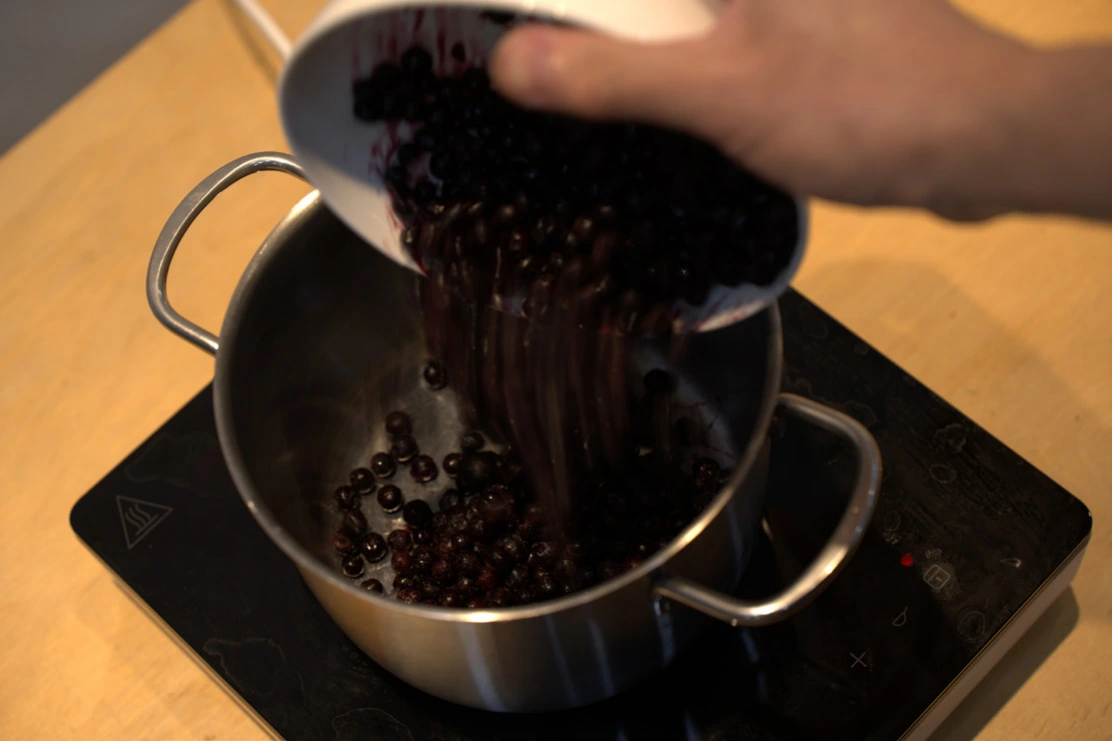
    Stirring blueberries in a pot
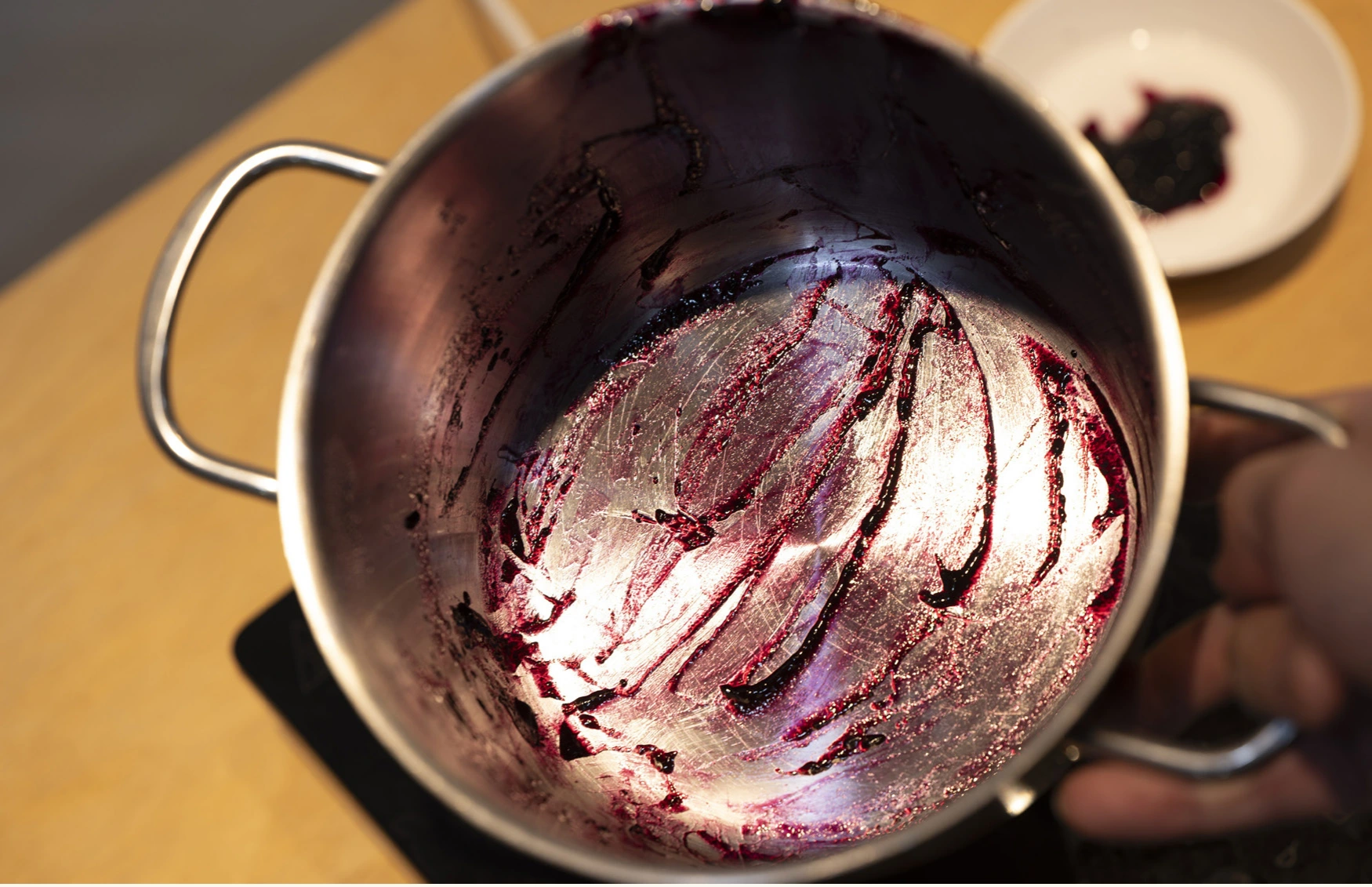
    Purple traces of blueberry jam left in the pot
    Making jam left marks of stirring and scraping inside the pot.

    What carries on

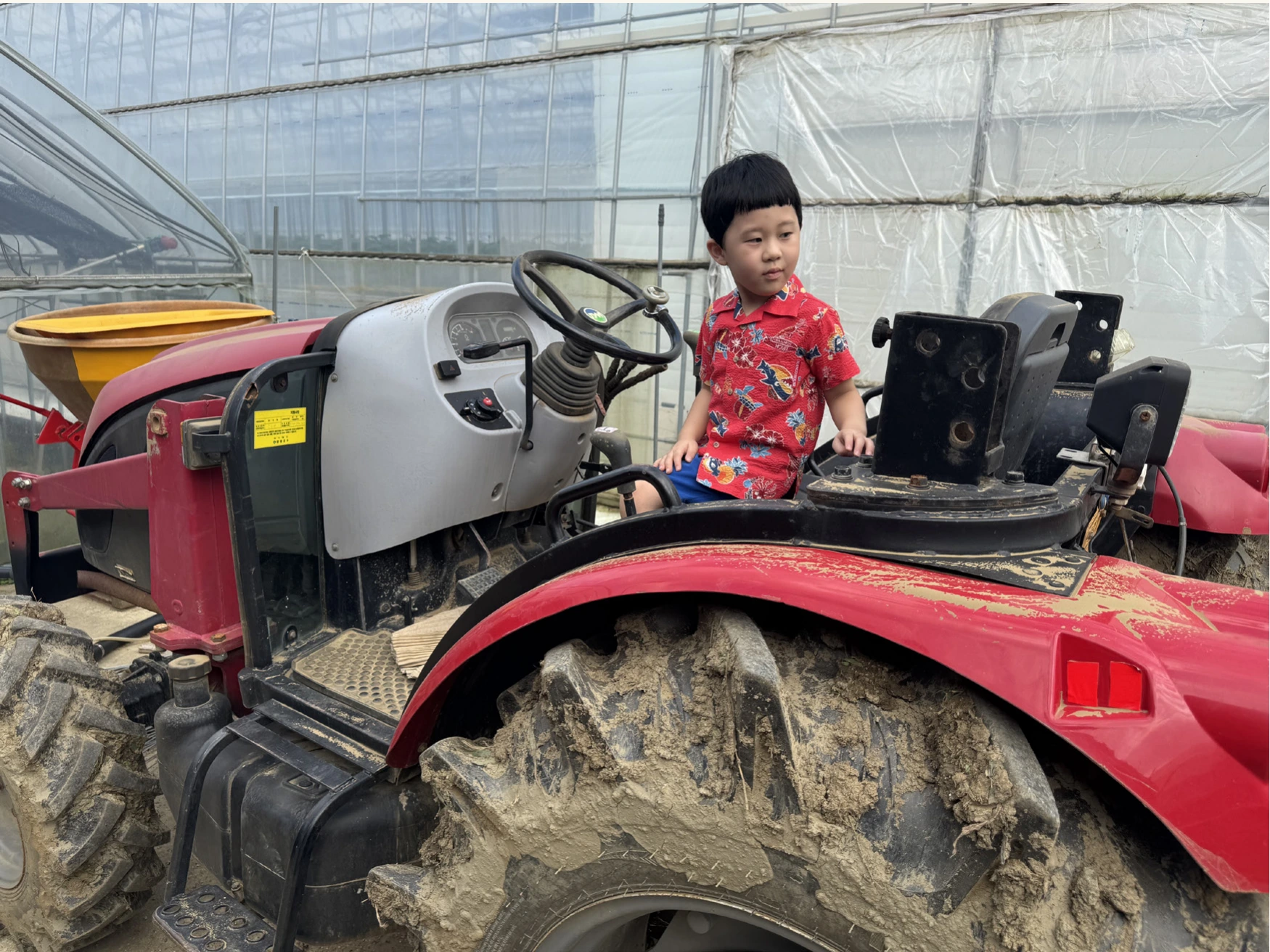
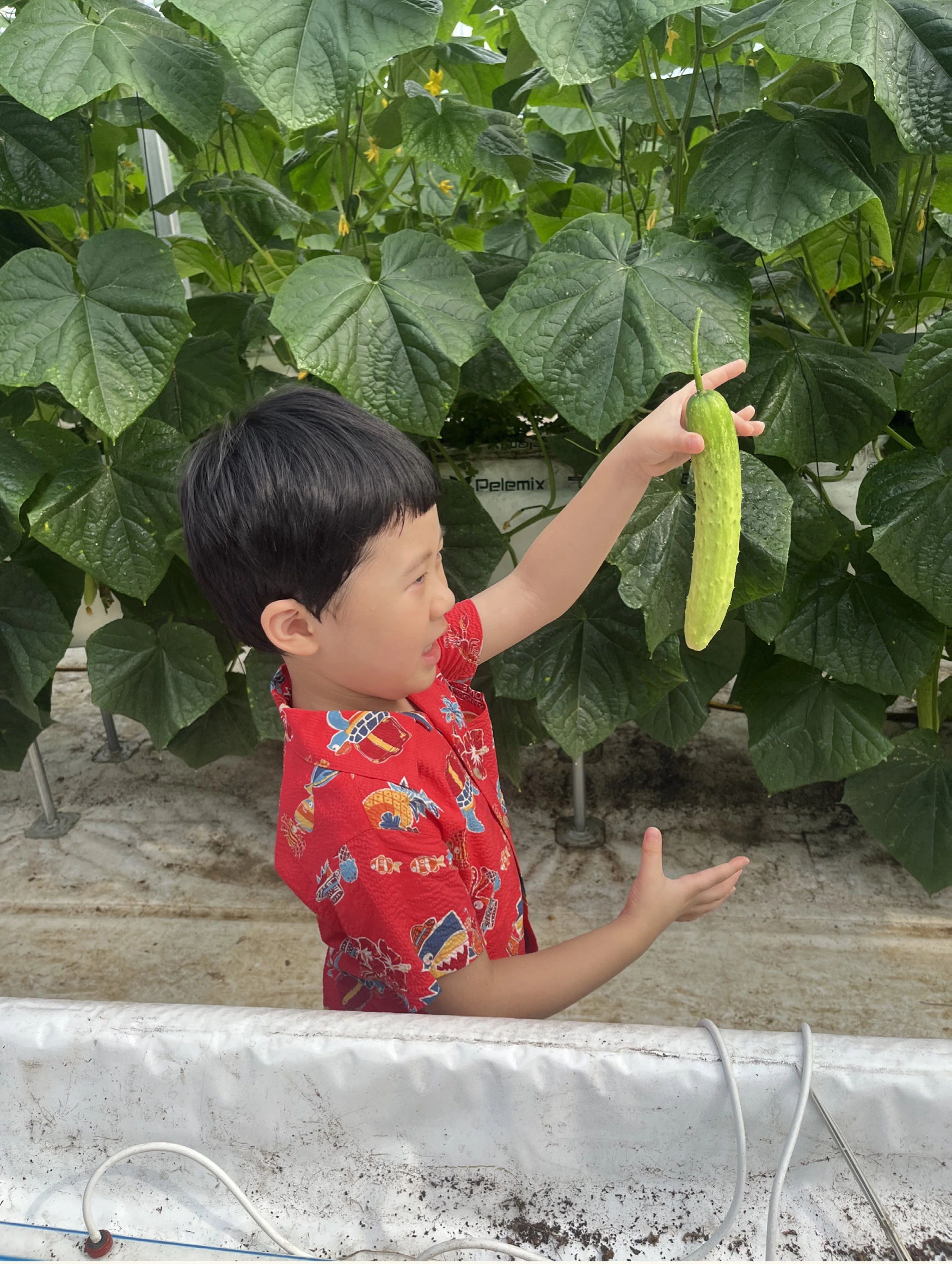
    Near the end of the residency, a visit to Oihari through a friend of my wife brought my son into a cucumber greenhouse and onto a tractor. Back at home, the bread returned to the daily table. The photographs follow these small continuations rather than treating the residency as a finished result.

    A child seated on a tractor during a farm visit in Oihari
    A child examining a cucumber in an Oihari greenhouse
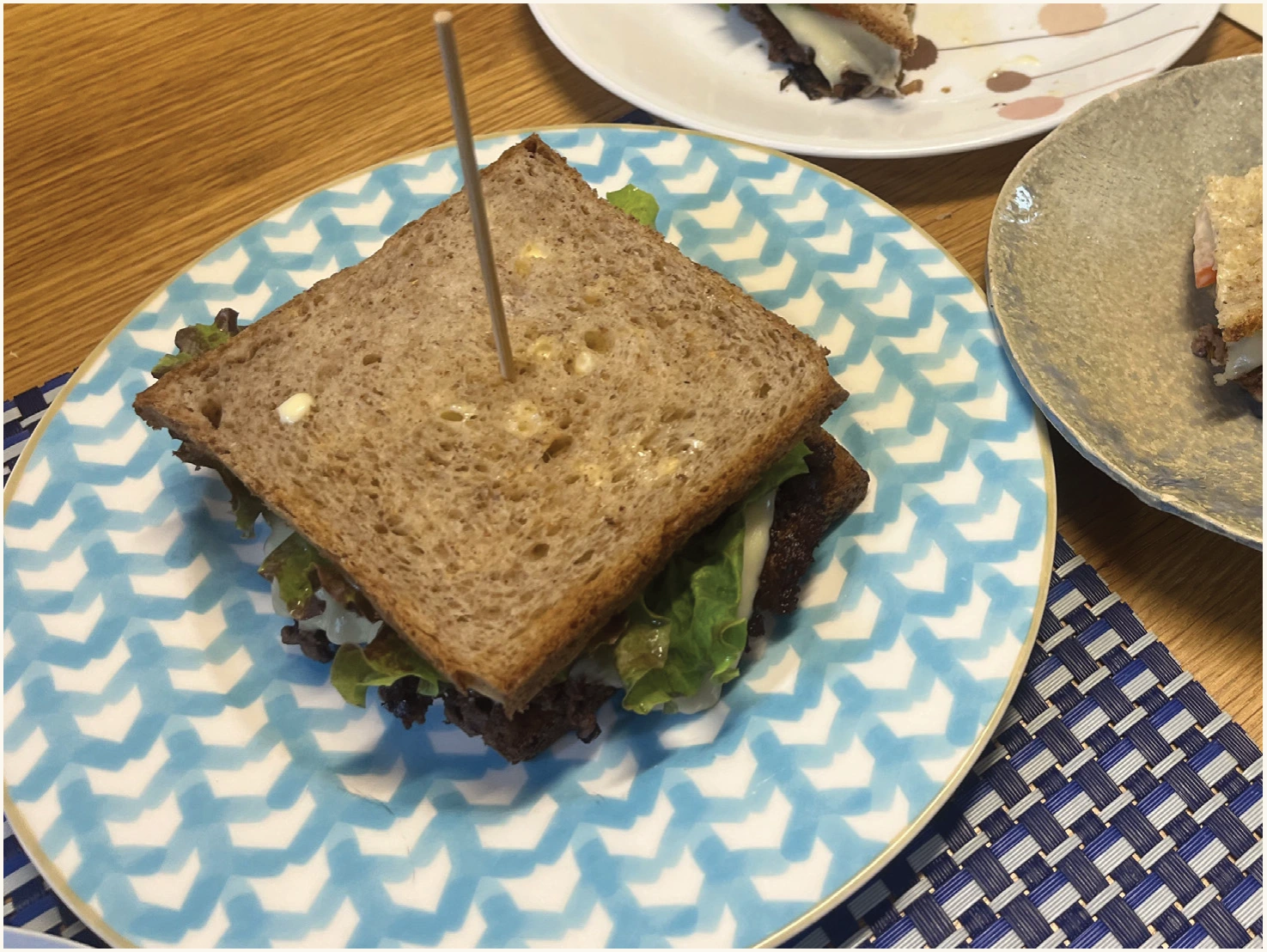
    A slice of the bread used in an everyday meal
    The next slice: bread returns to ordinary meals.
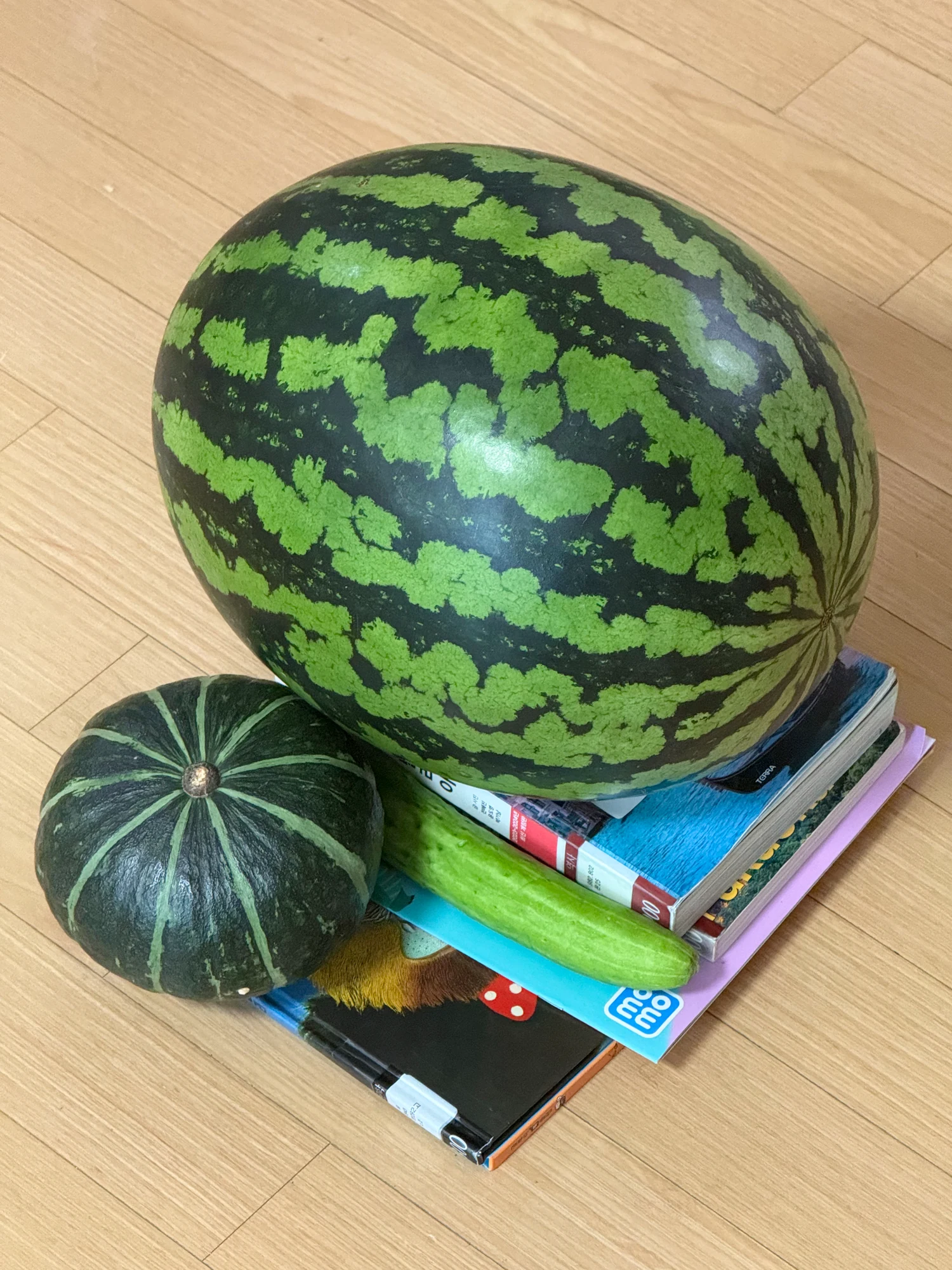
    Watermelons resting on a stack of books at home

    With thanks to Team Seohwa, the elders of Obin-ri, Chef Hannah Uhm, Team Farm Tuesday, the hosts in Oihari, Hye Kyoung Kwon and Jiho Fong.

    한국어 · 빵소리: 밀 배우기

    반죽을 다루고, 함께 일하고, 빵을 나누며 양평의 사람들과 장소를 만났다. 그곳에서의 배움은 집으로 돌아온 뒤에도 일상의 식탁과 놀이로 이어졌다.

    Explore Bread Whispers

  • Kitchen Notes – Three Attempts in Gangneung

    2025 · Solo exhibition
    Daechumoo Fine Art, Gangneung
    21 August–21 September 2025

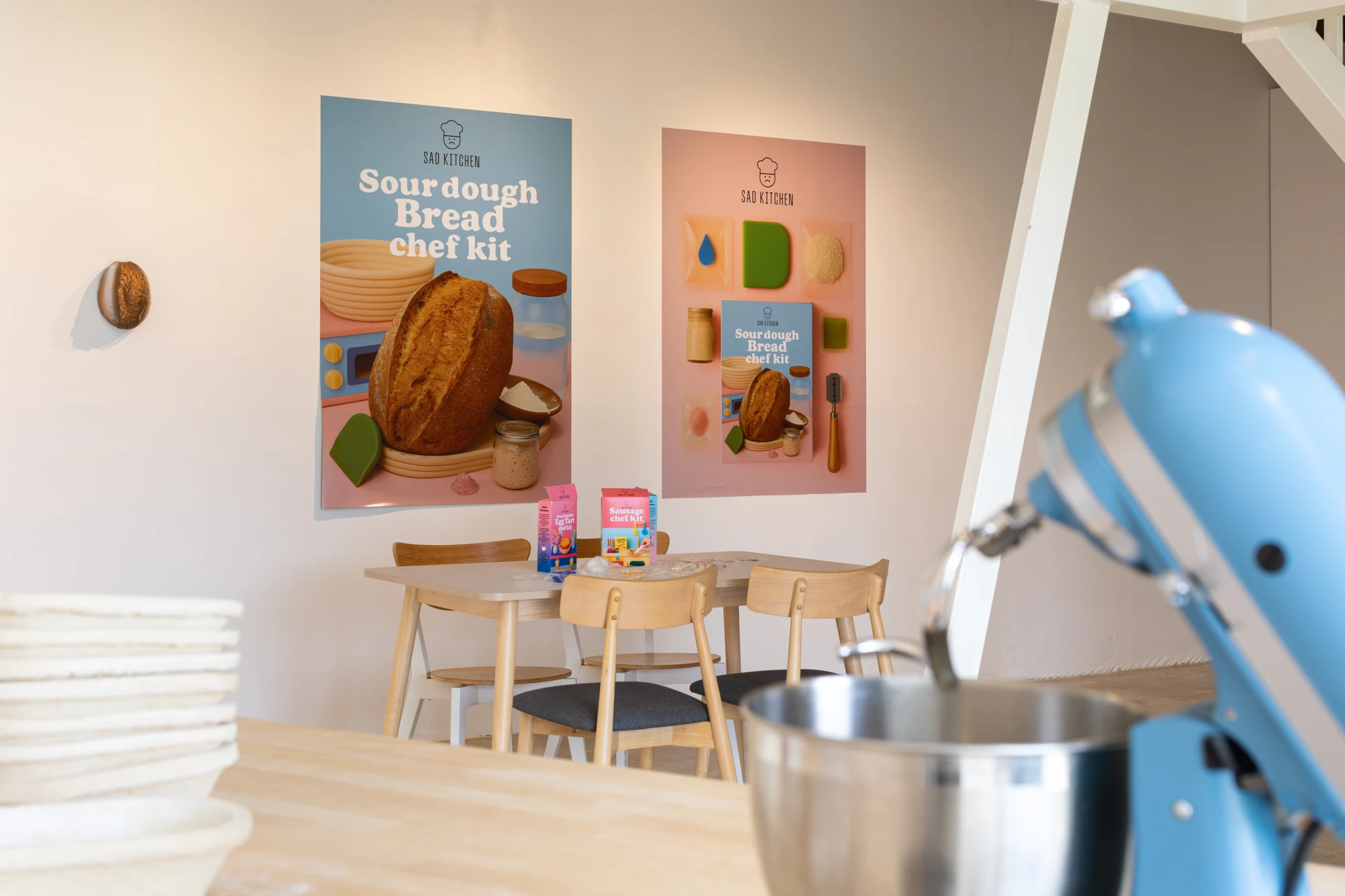
    Kitchen Notes installation with cooking tools and SAD Kitchen Chef Kits, 2025

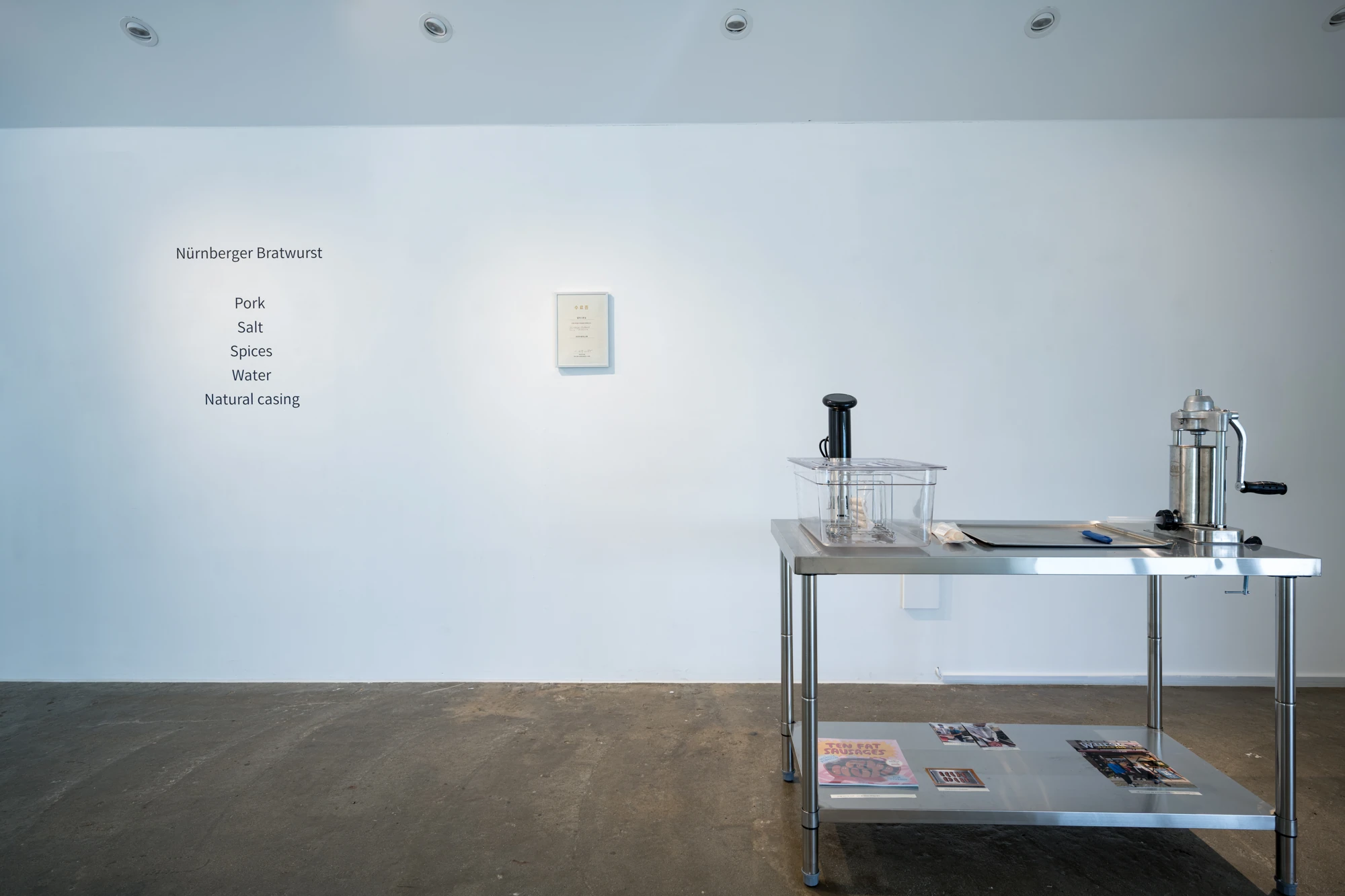
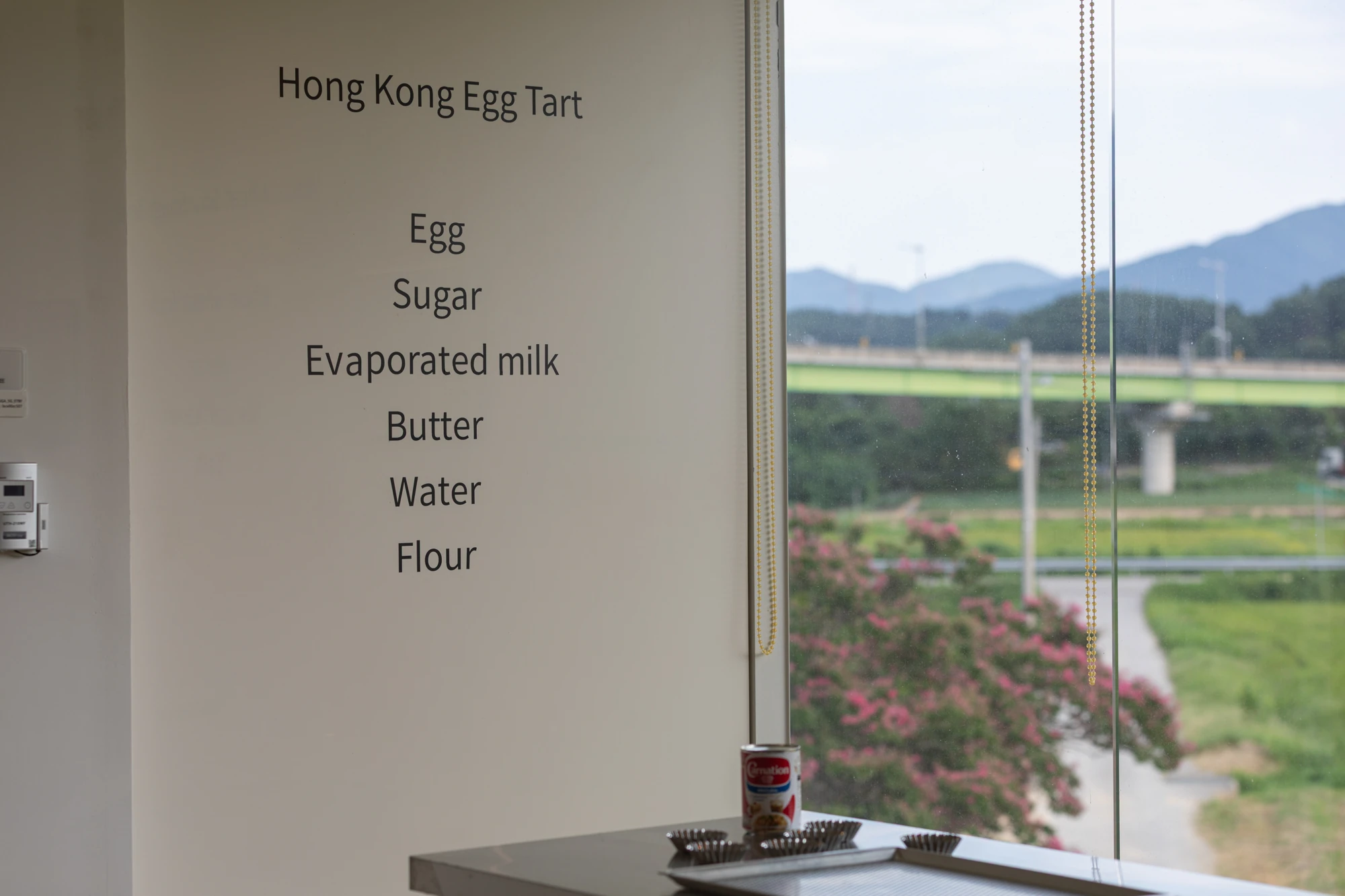
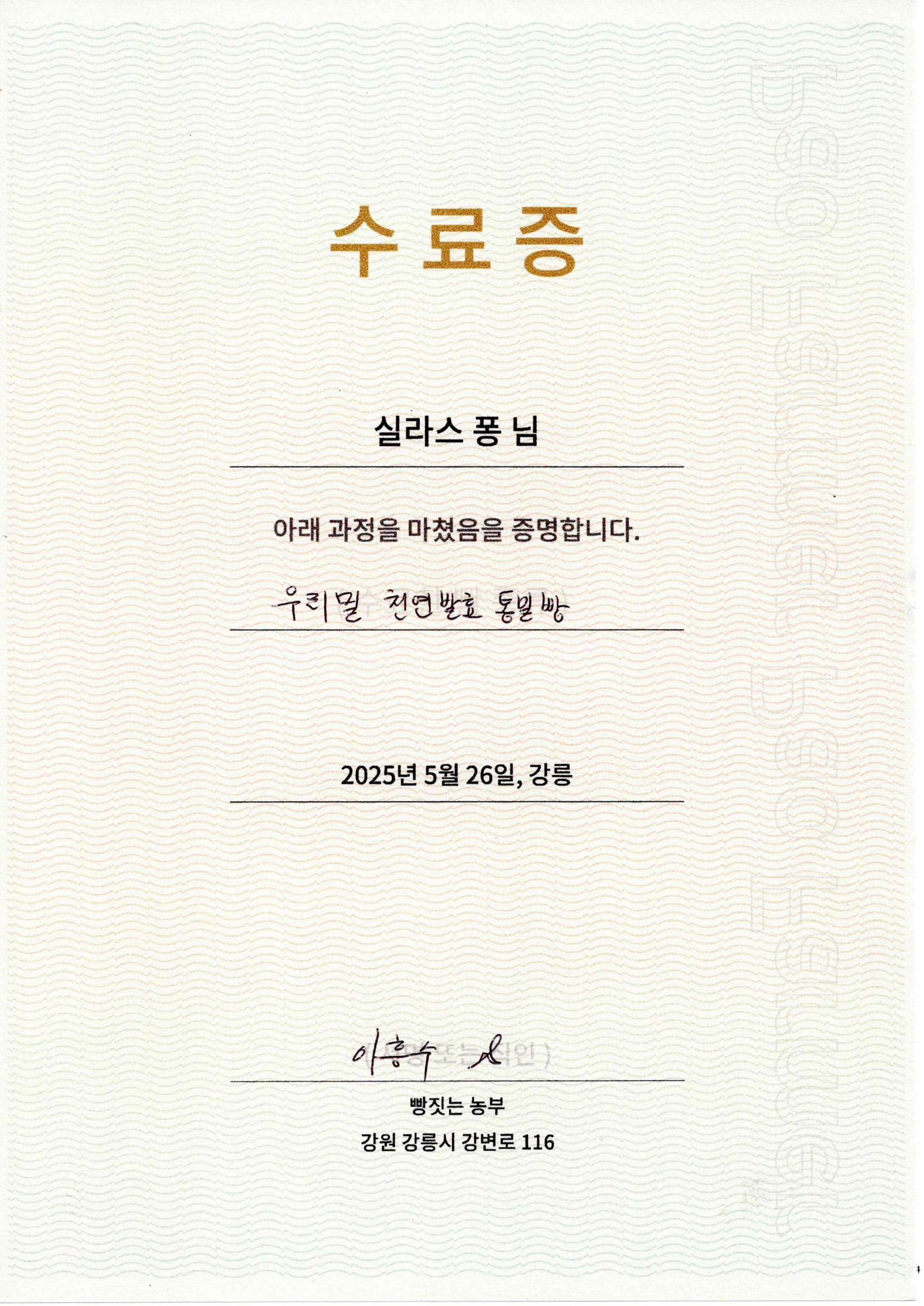
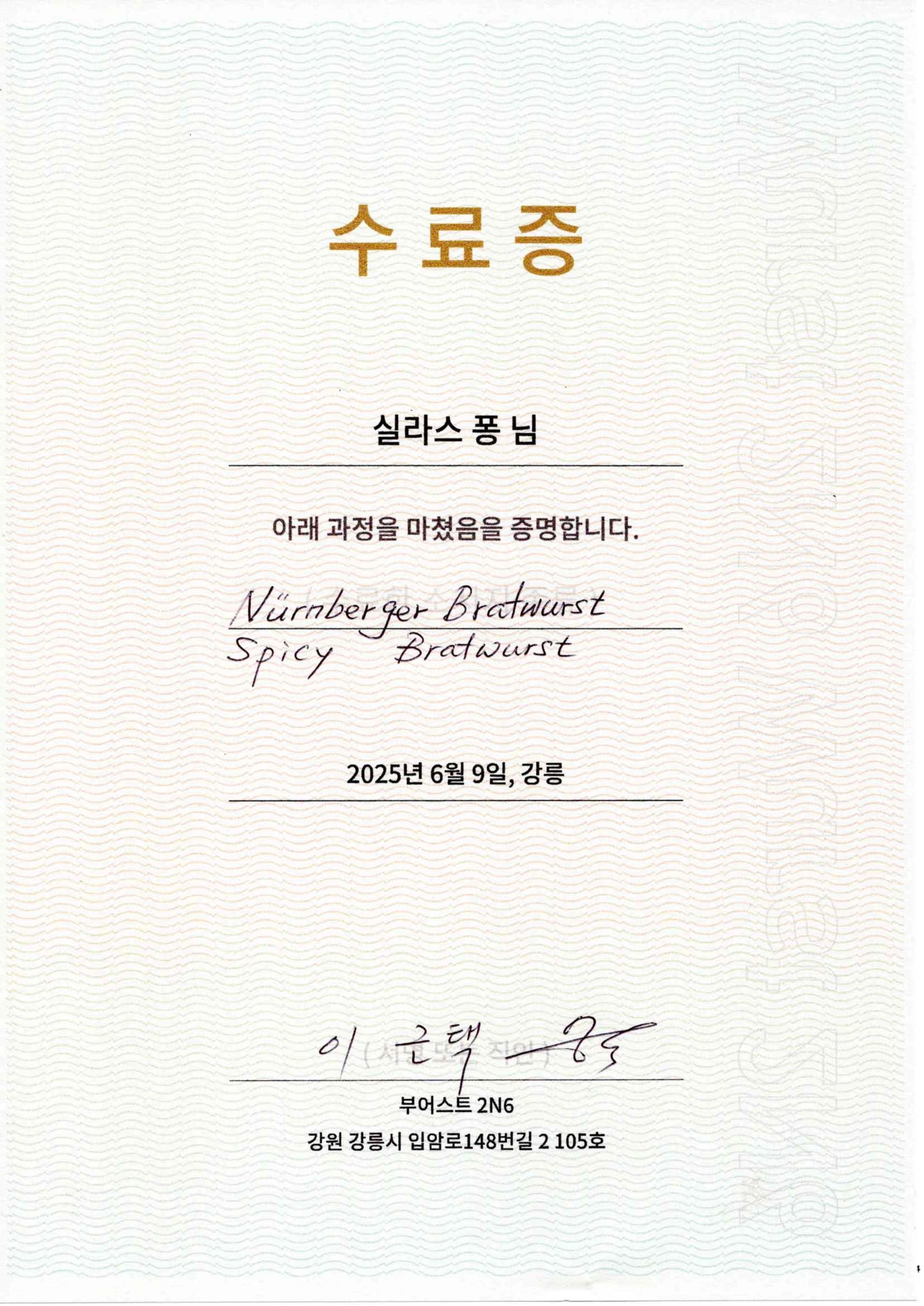
    Kitchen Notes – Three Attempts in Gangneung began with three encounters: learning directly from two local bakers and a sausage maker. Bread and Nürnberger bratwurst made through these exchanges are presented alongside Hong Kong style egg tarts, which I taught myself to make while living in Korea. Through learning, making and sharing food, the project connects everyday skills with questions of recognition and qualification. I designed and issued the certificates myself, then asked the craftspeople I learned from to sign them. They record actual encounters and skills shared outside a formal qualification system.

    The exhibition

    Cooking tools, photographs, prints and food tasting performances bring the practical work of making food into the gallery.

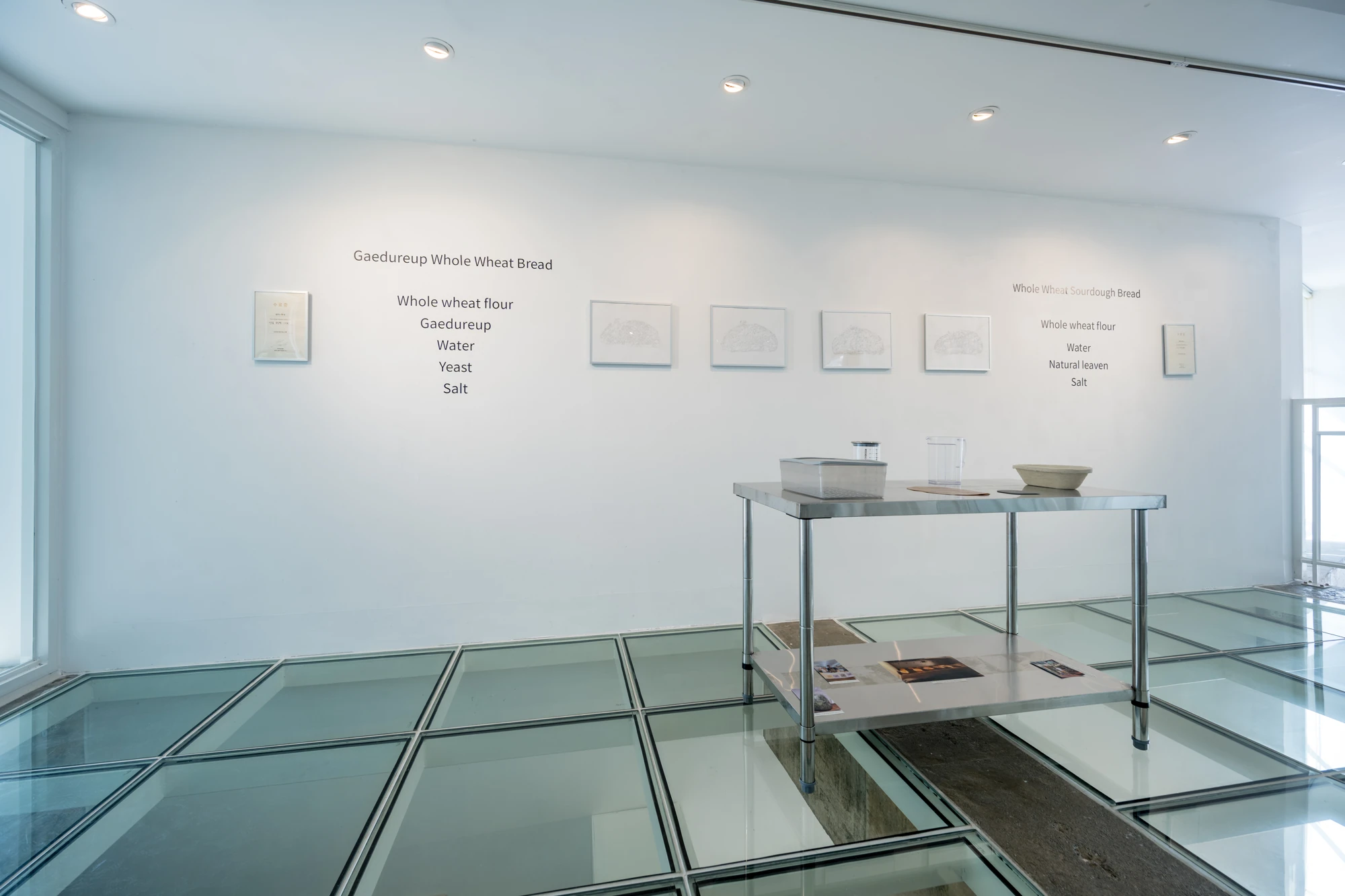
    Installation view, Kitchen Notes, Daechumoo Fine Art, 2025.
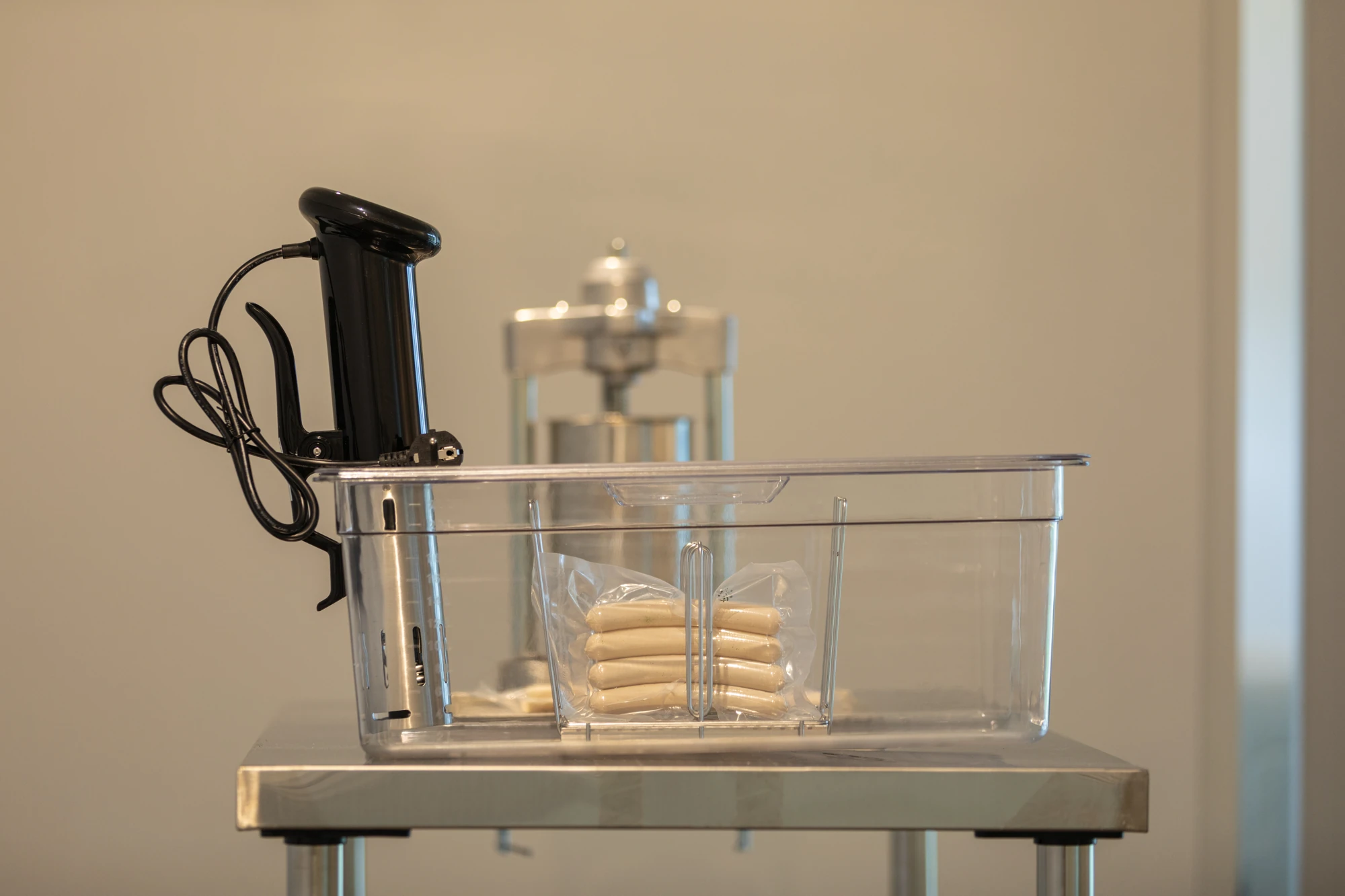
    Tools and ingredients for Nürnberger bratwurst.
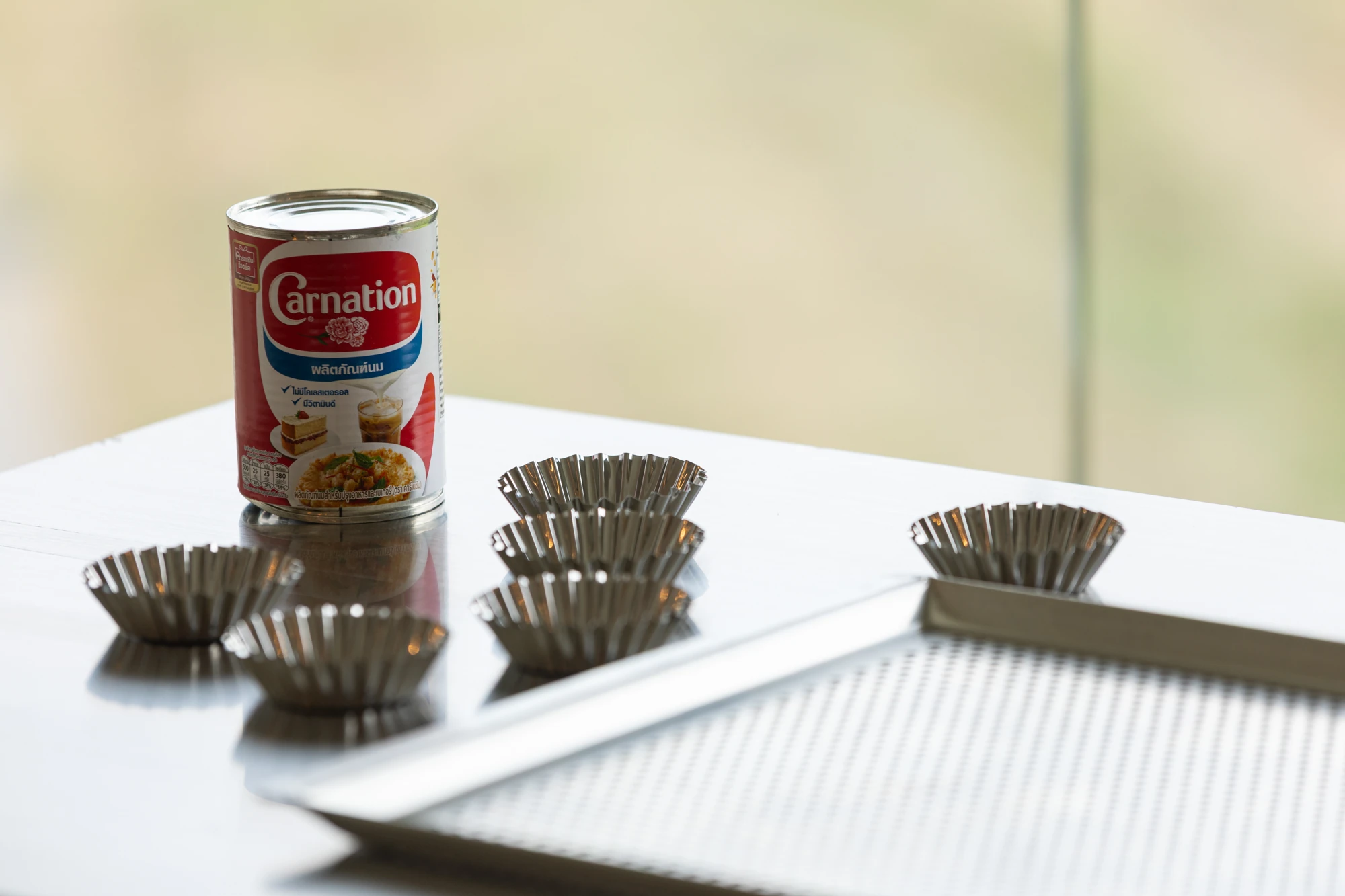
    Ingredients for Hong Kong style egg tarts, displayed beside the gallery window.

    Learning from others

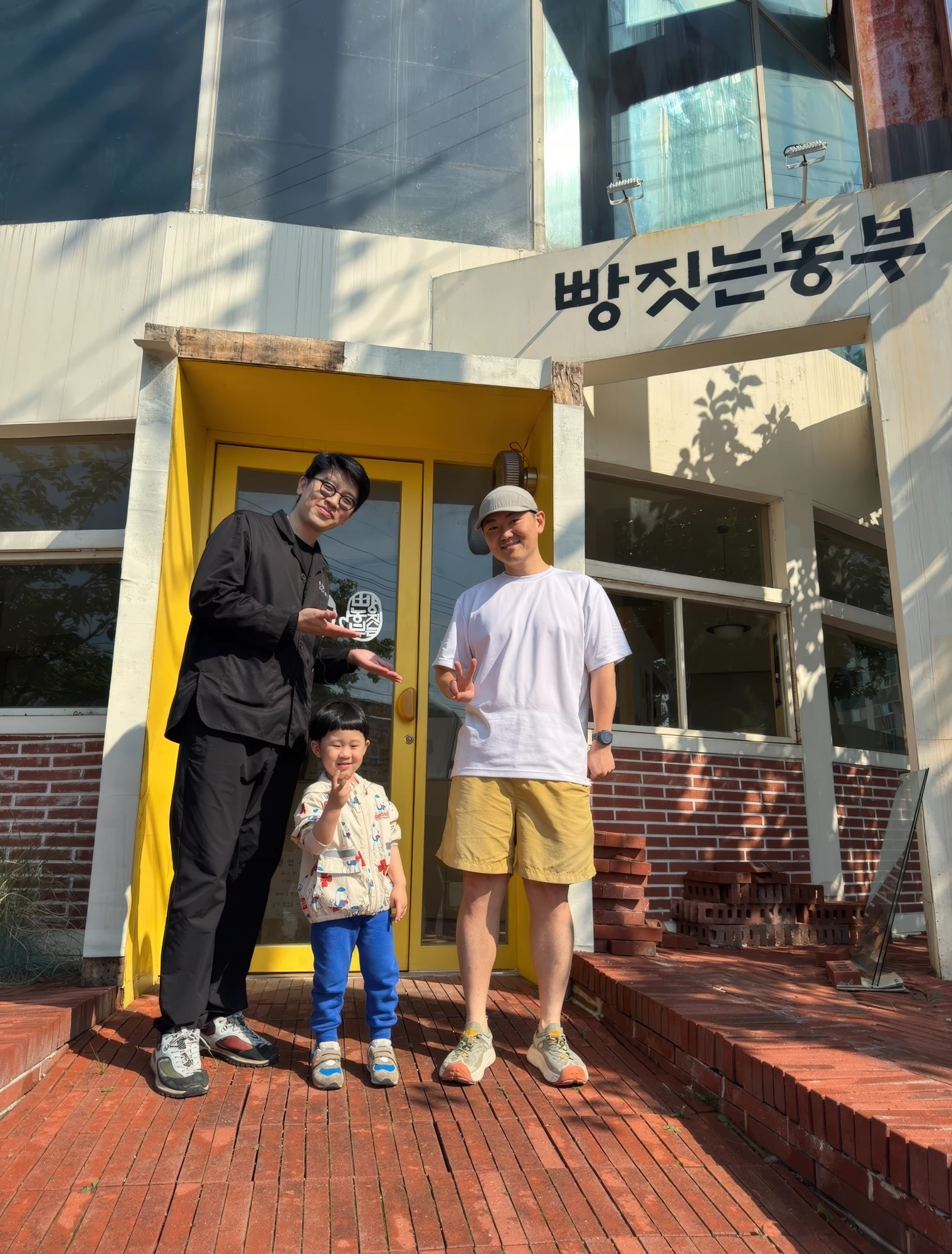
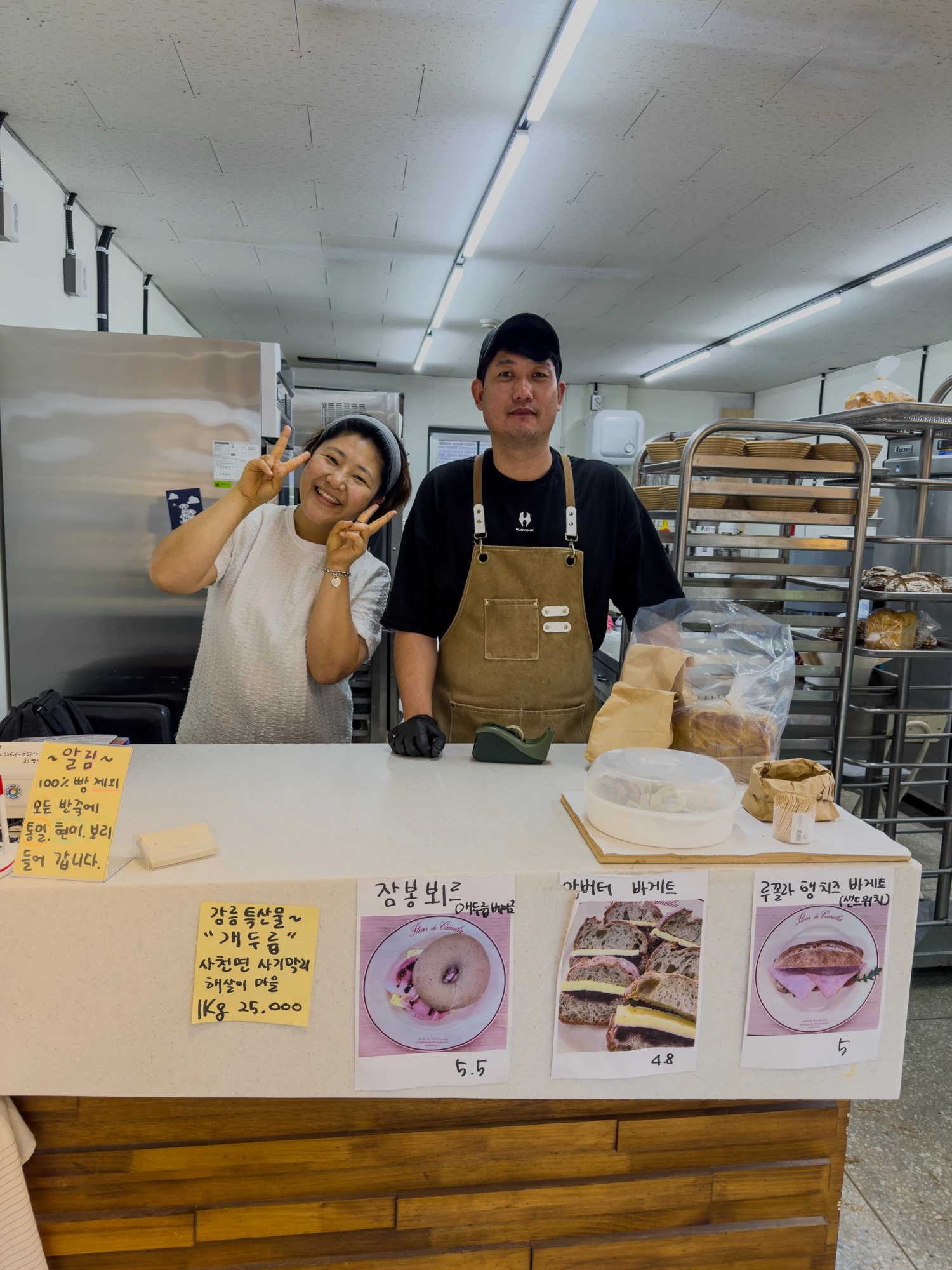
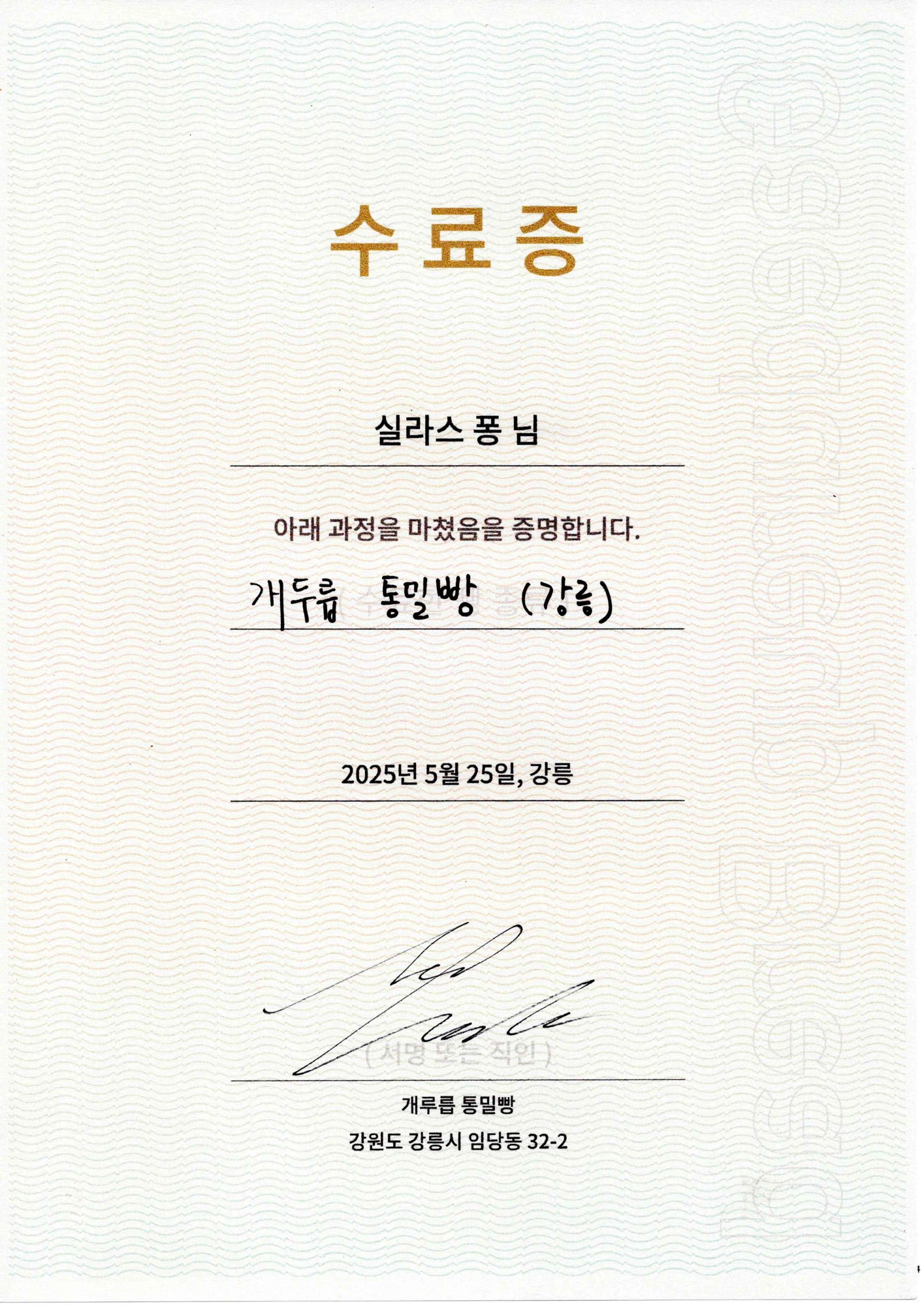
    Photographs record learning with the local bakers and sausage maker. The self-made certificates name the food, the people and the skills involved, giving these informal exchanges a visible record.

    A visit to a bakery, documented in the exhibition catalogue.
    Learning and exchanging knowledge at a bakery.
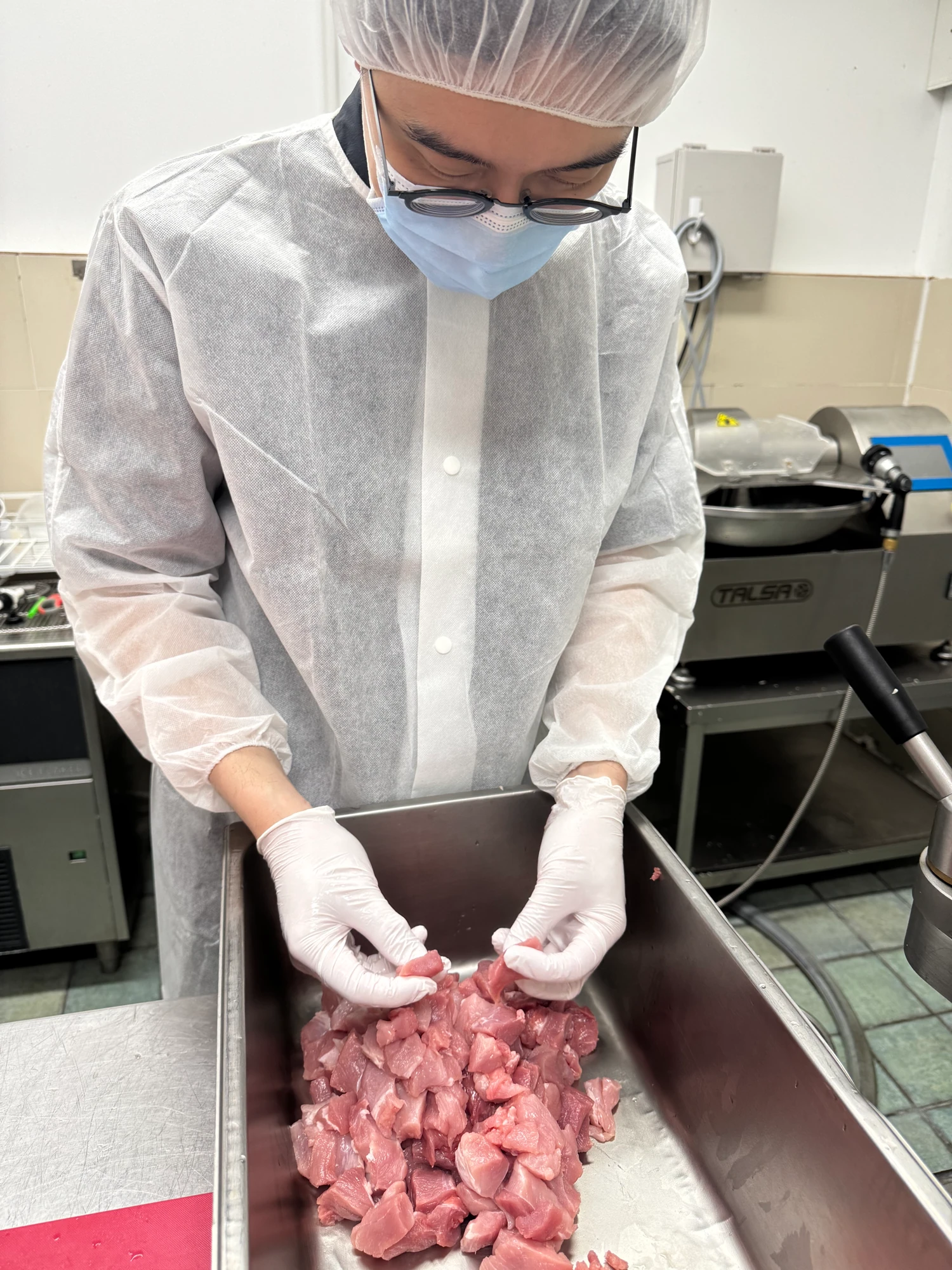
    Preparing sausage ingredients.
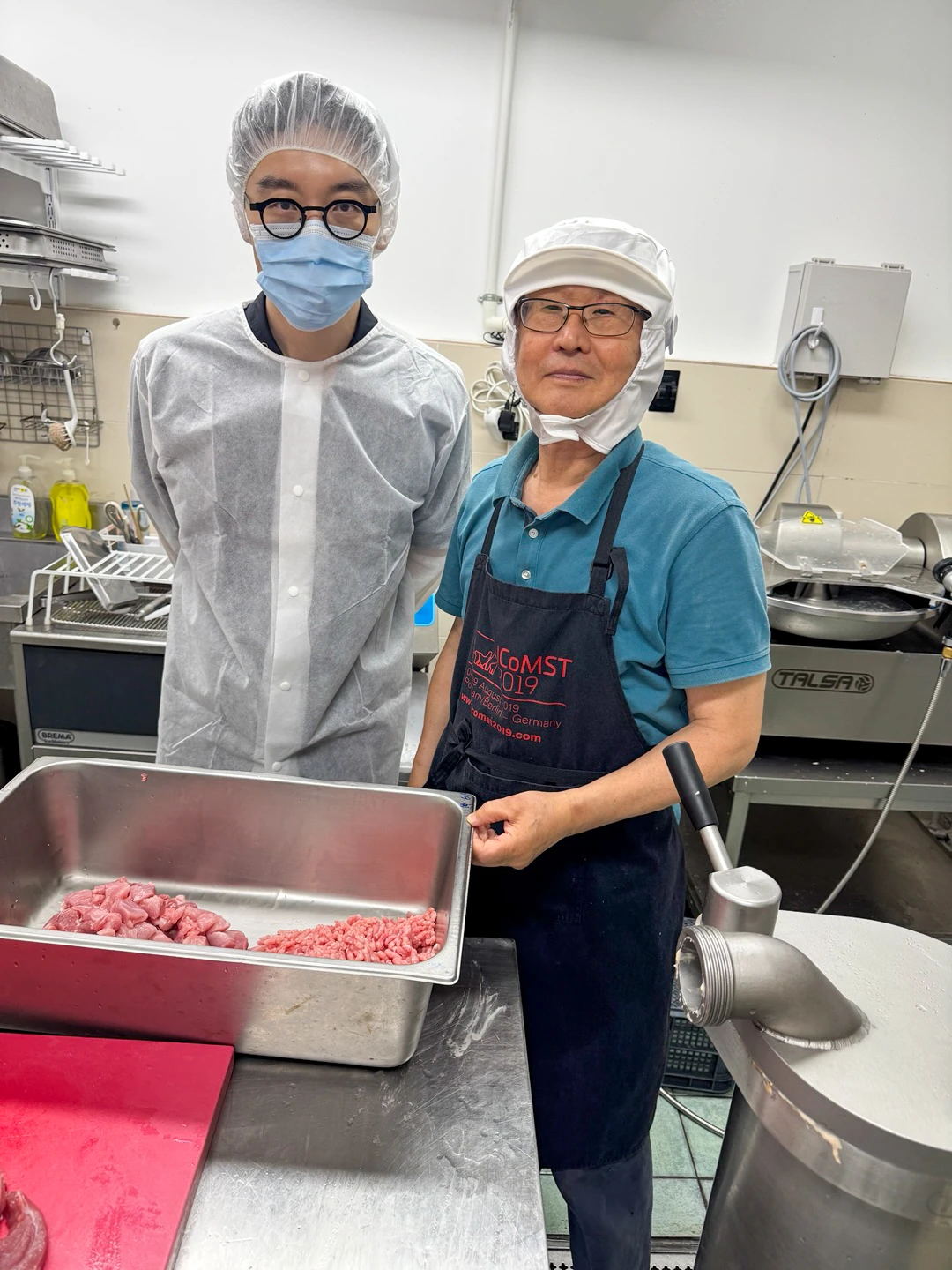
    With the sausage maker during the learning process.
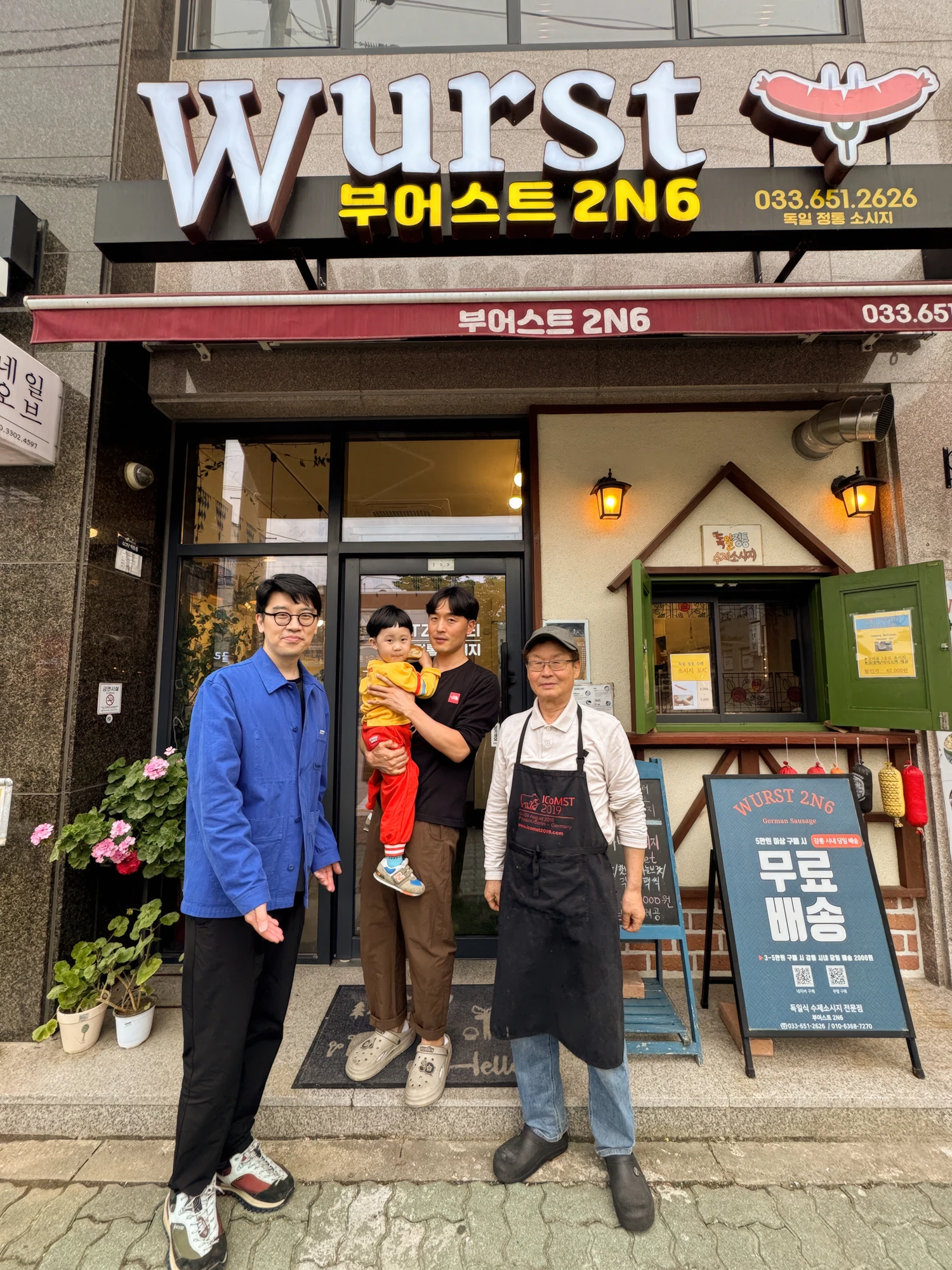
    Outside the sausage shop.
    Self-issued certificate for learning Gaedureup whole-wheat bread, signed by the baker
    Self-issued certificate for learning whole-wheat sourdough bread
    Self-issued certificate for learning Nürnberger bratwurst, signed by the sausage maker

    Tools, traces and prints

    Sausage-making tools displayed in the gallery.
    Egg tart moulds and ingredients.
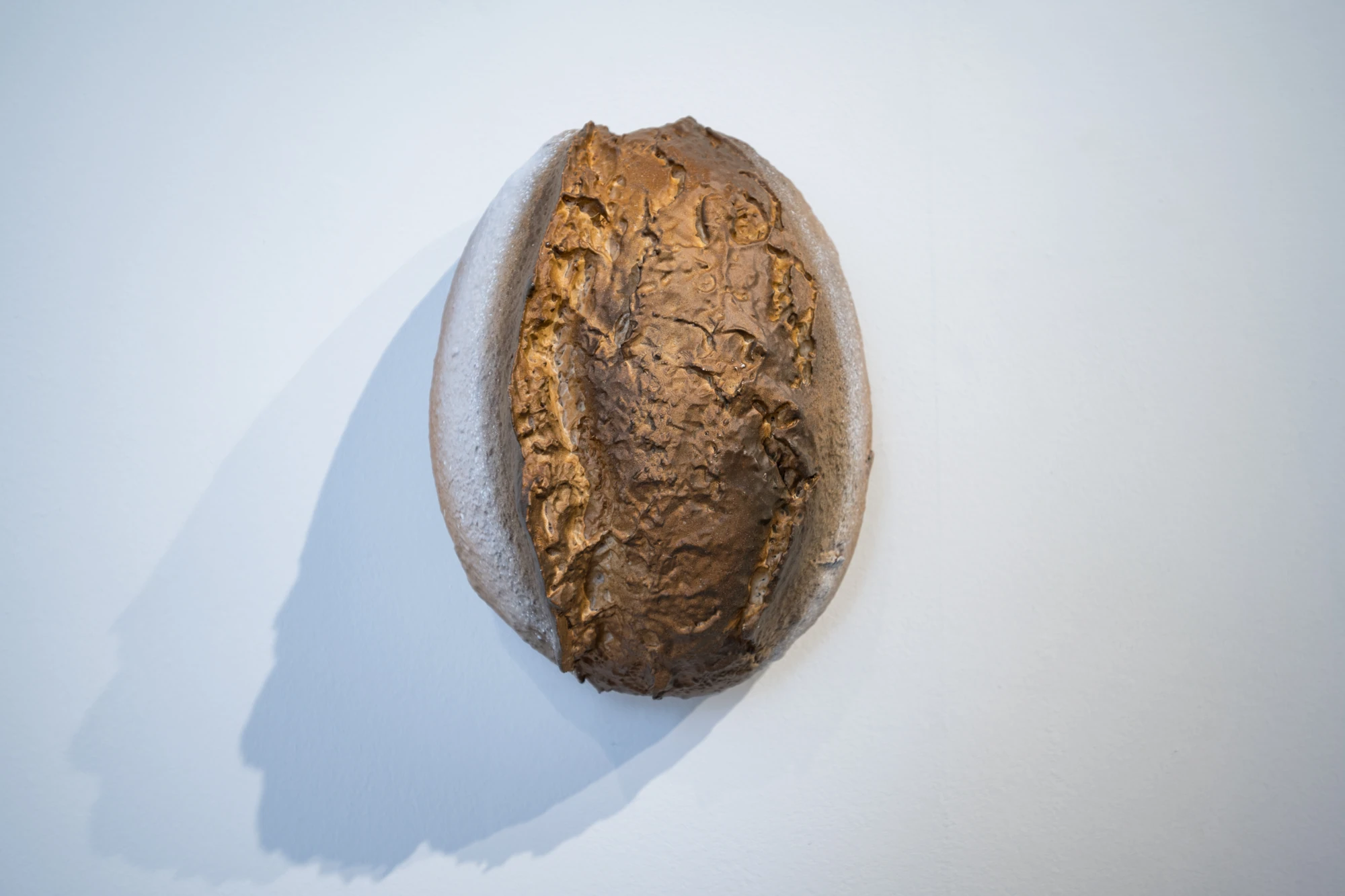
    A sourdough loaf, shown in the exhibition documentation.
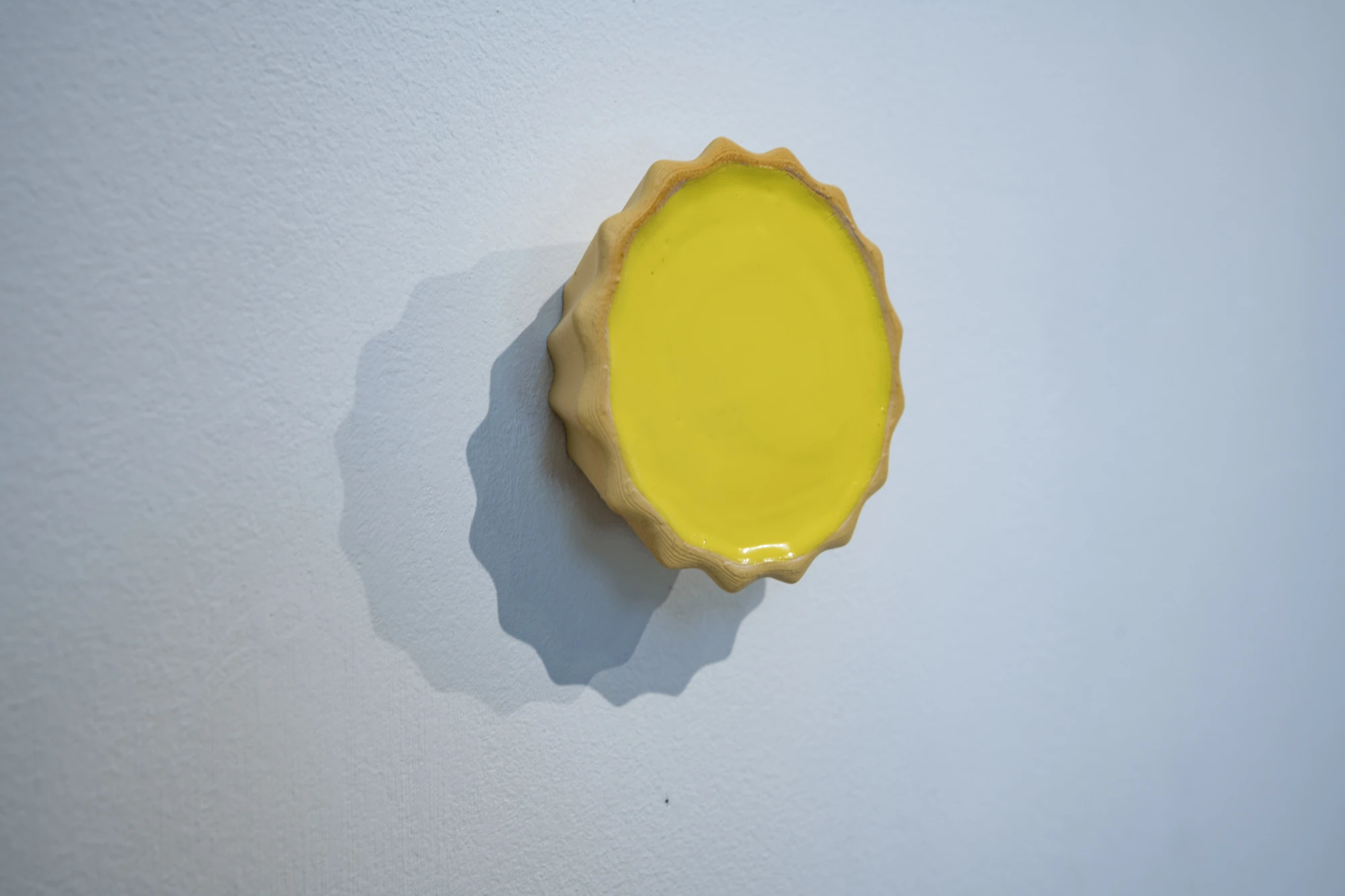
    An egg tart model from the project.
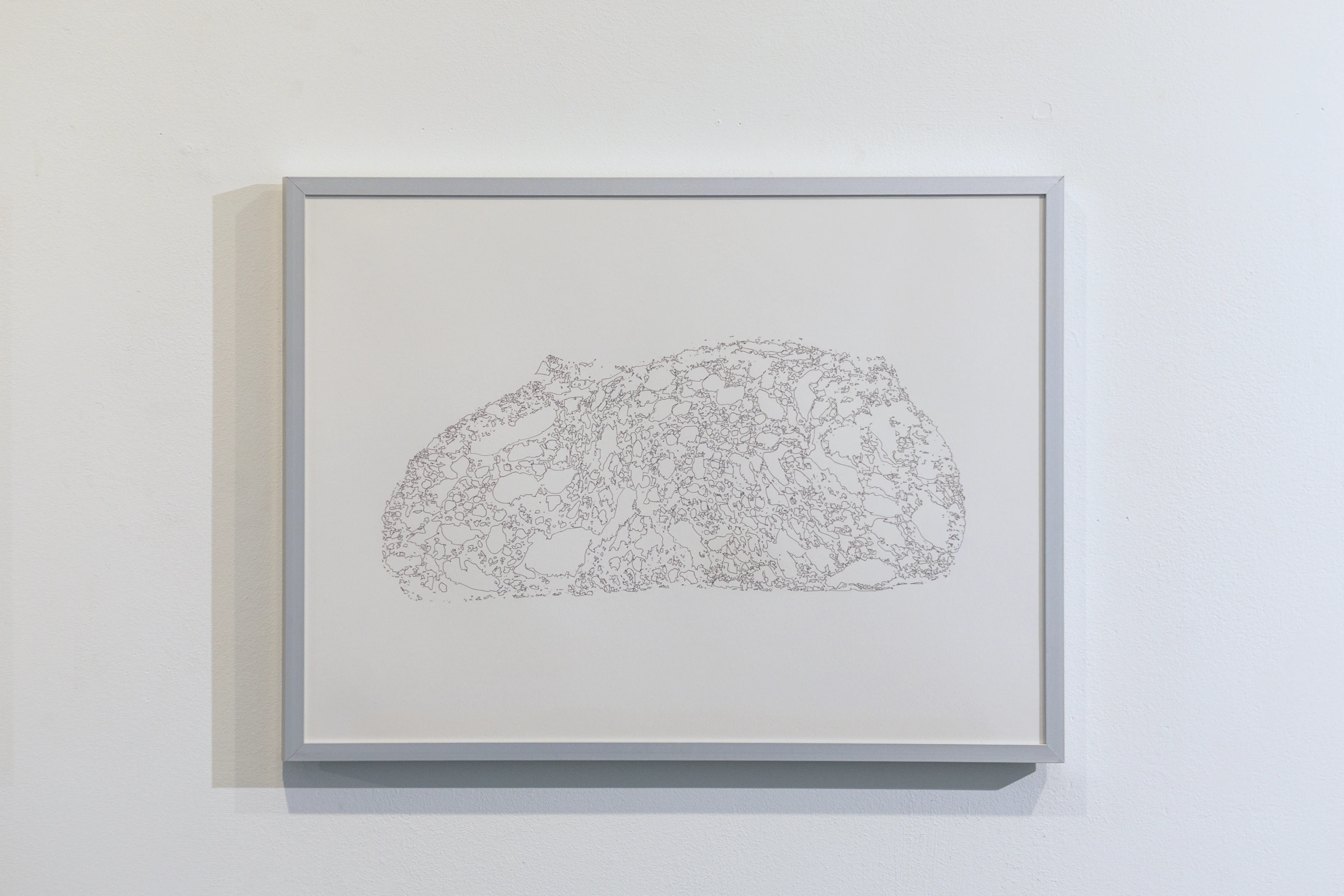
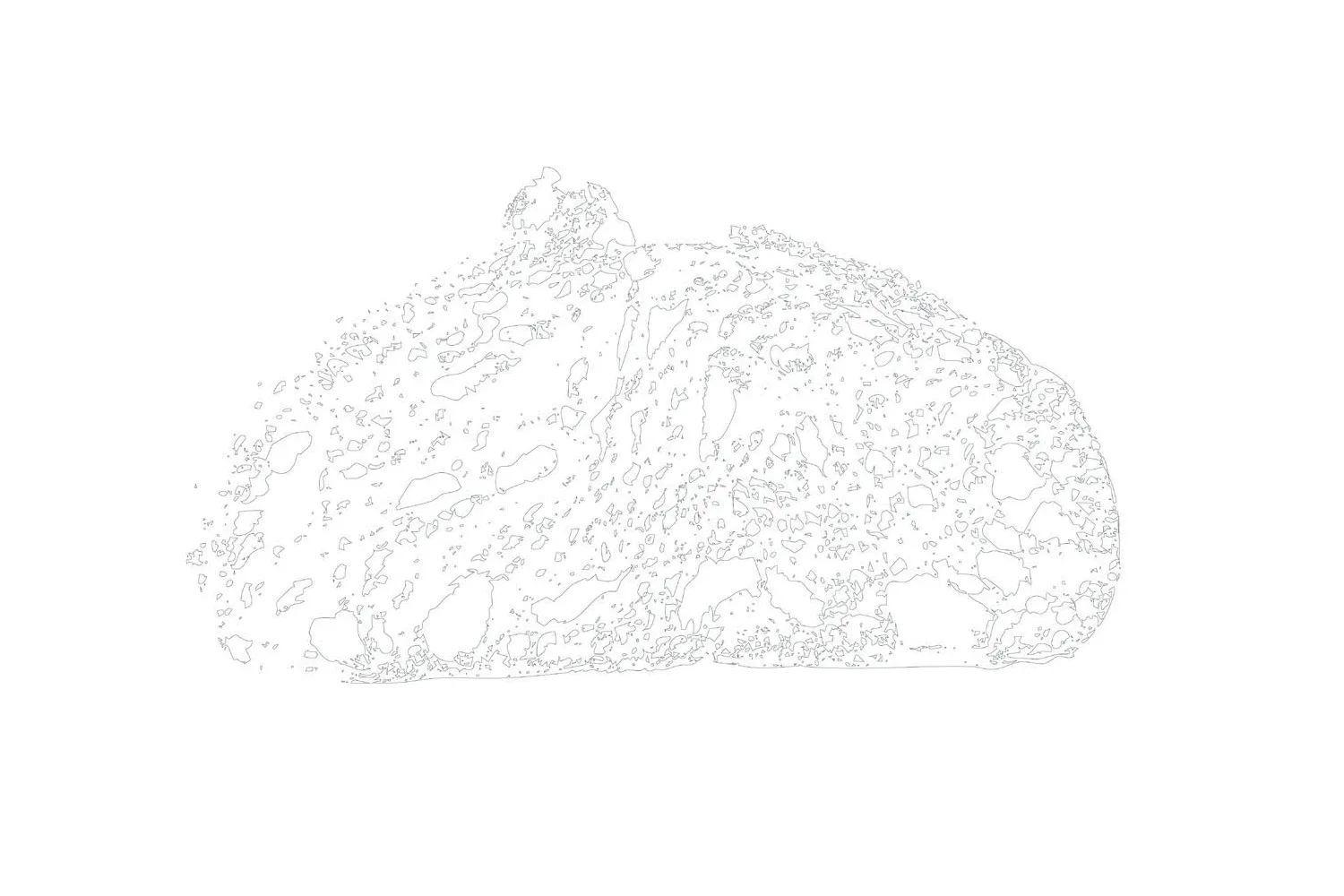
    Line drawing of a bread cross-section from Kitchen Notes, 2025
    Framed ink drawing of a slice of bread made after learning and practice with Gangneung artisans
    A slice of bread I made after learning from the artisans I met in Gangneung and practising their techniques. Ink on paper in an aluminium frame, from the Sliced Bread series, 2025.

    Making and sharing

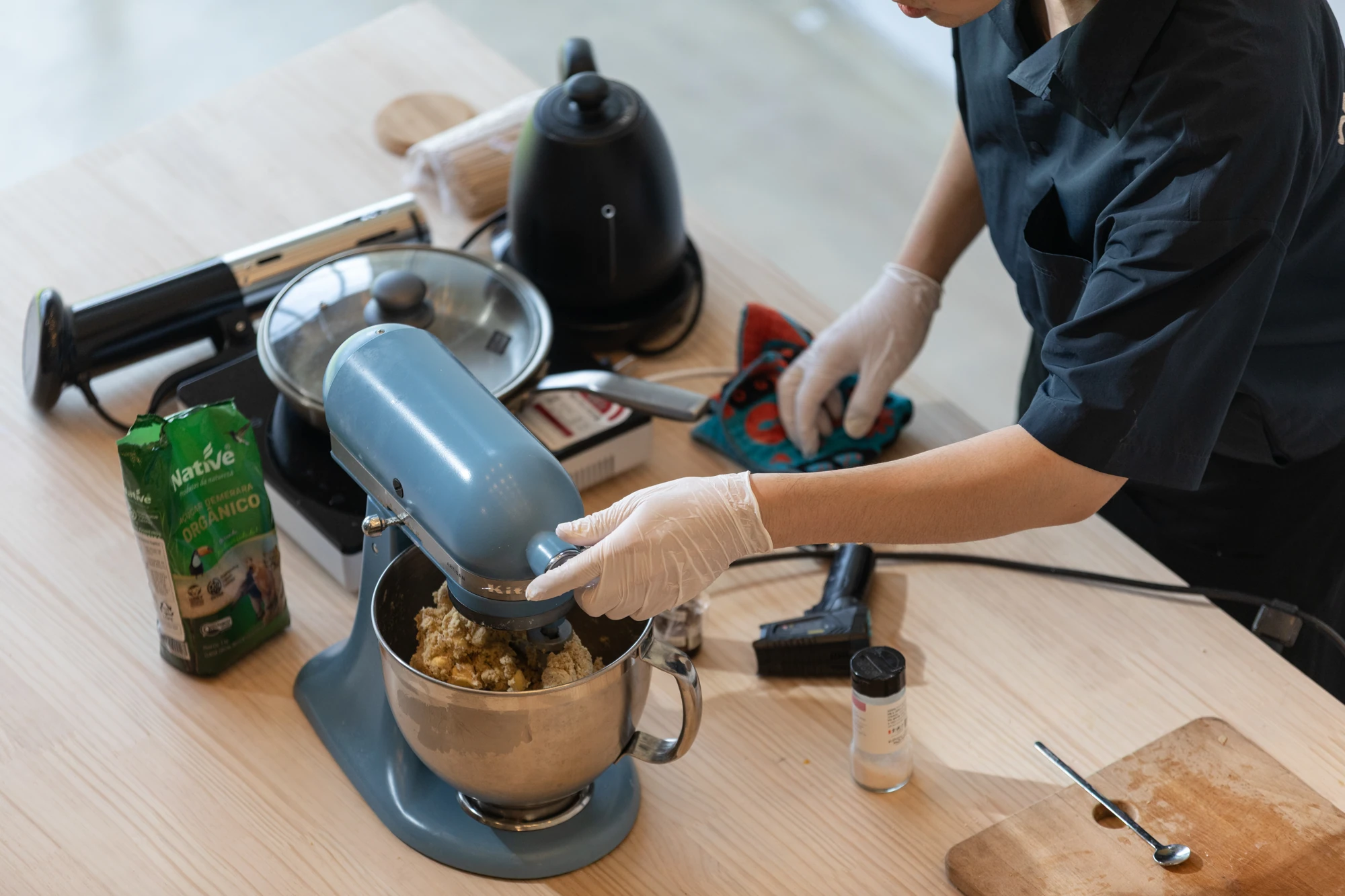
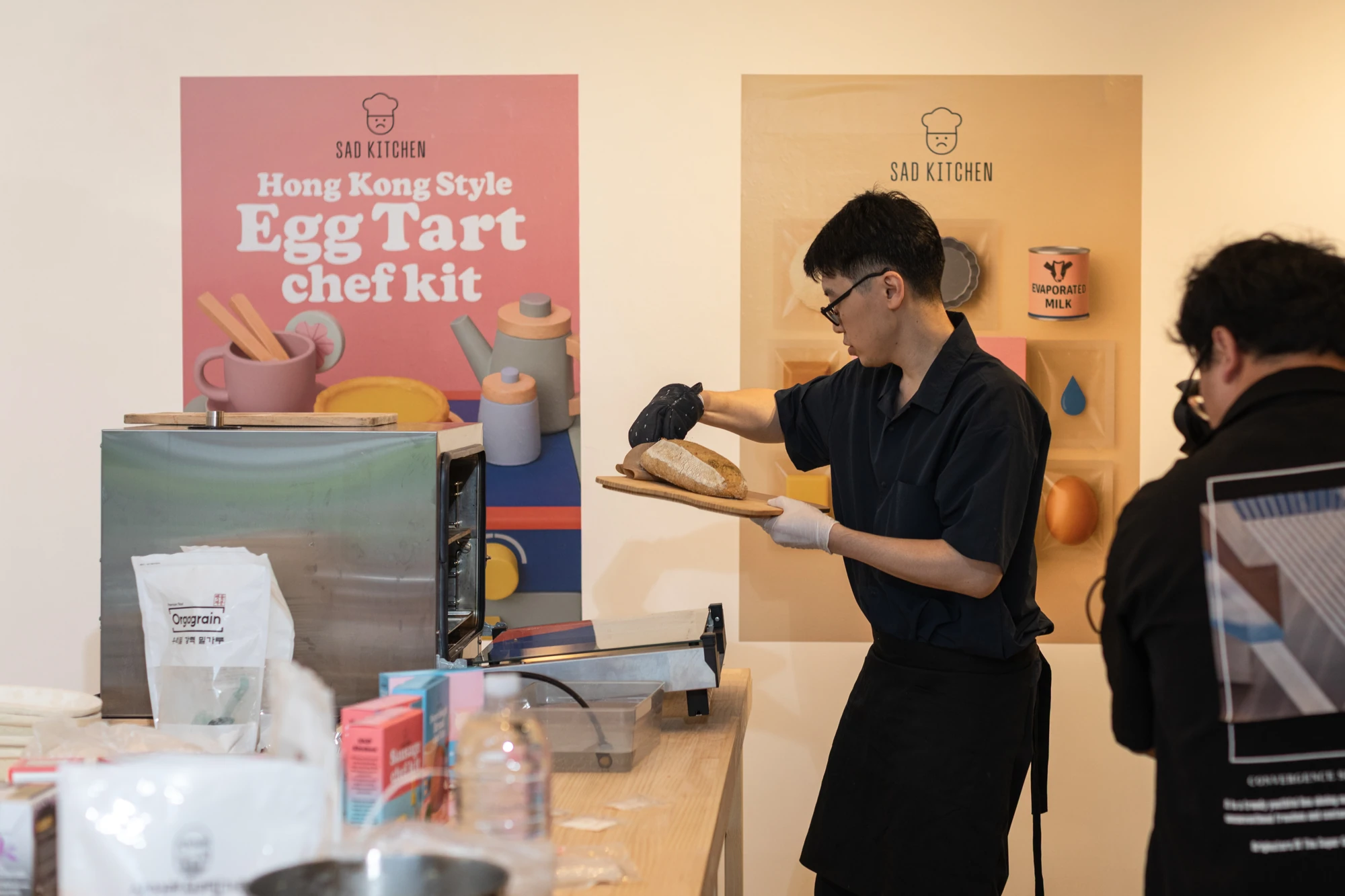
    Mixing ingredients during the gallery cooking performance.
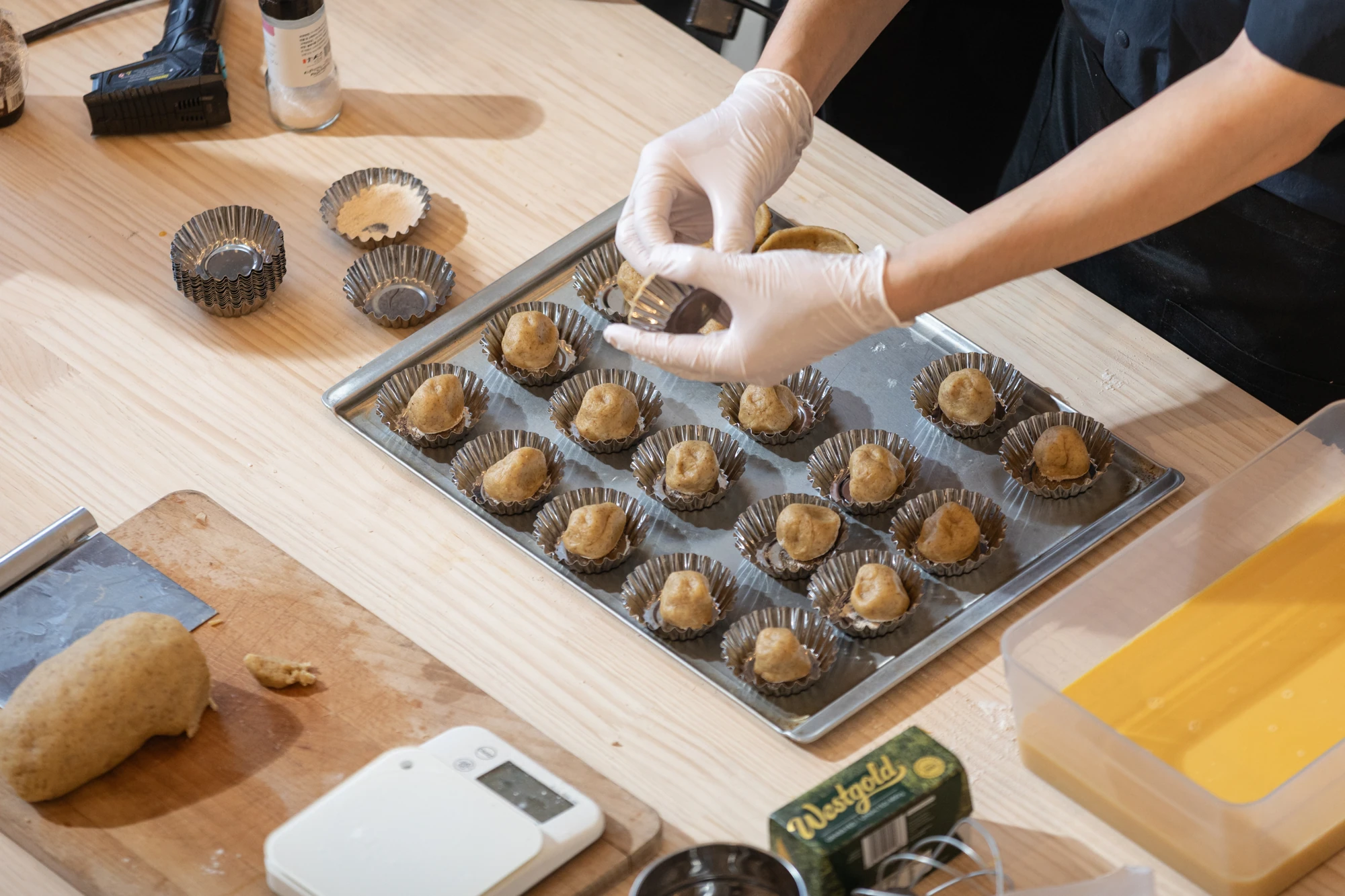
    Preparing the egg tart shells.
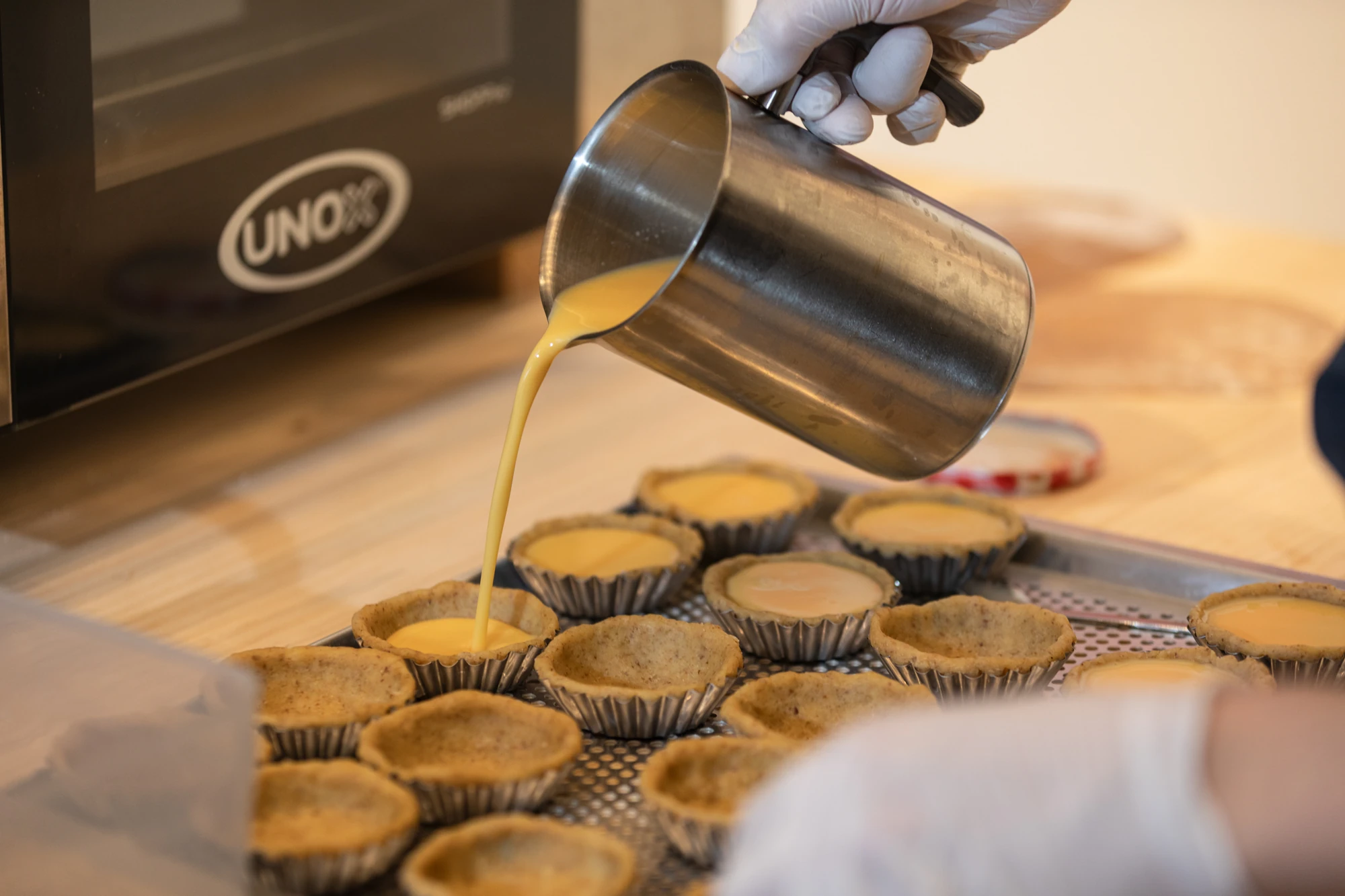
    Pouring the custard.
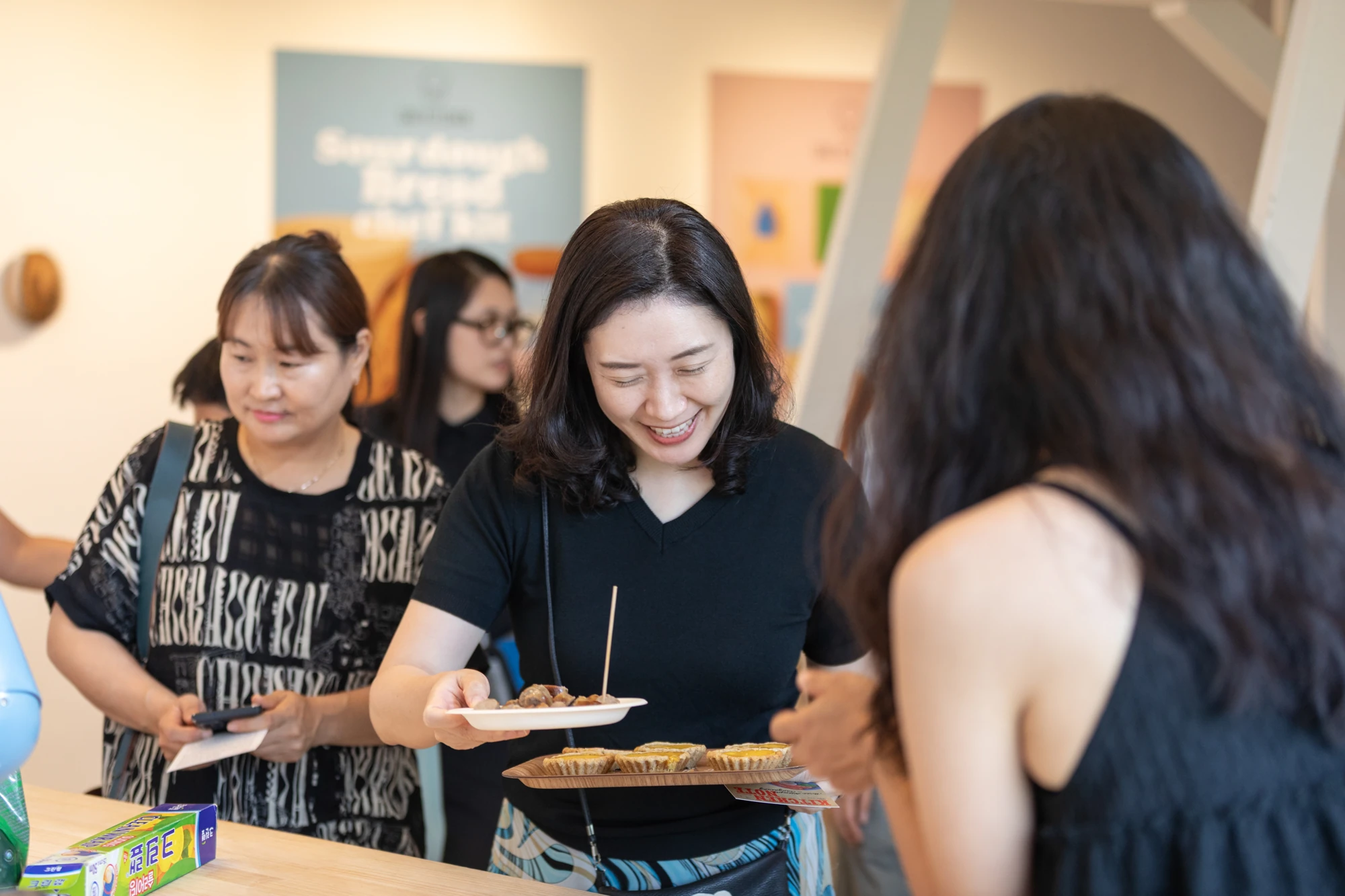
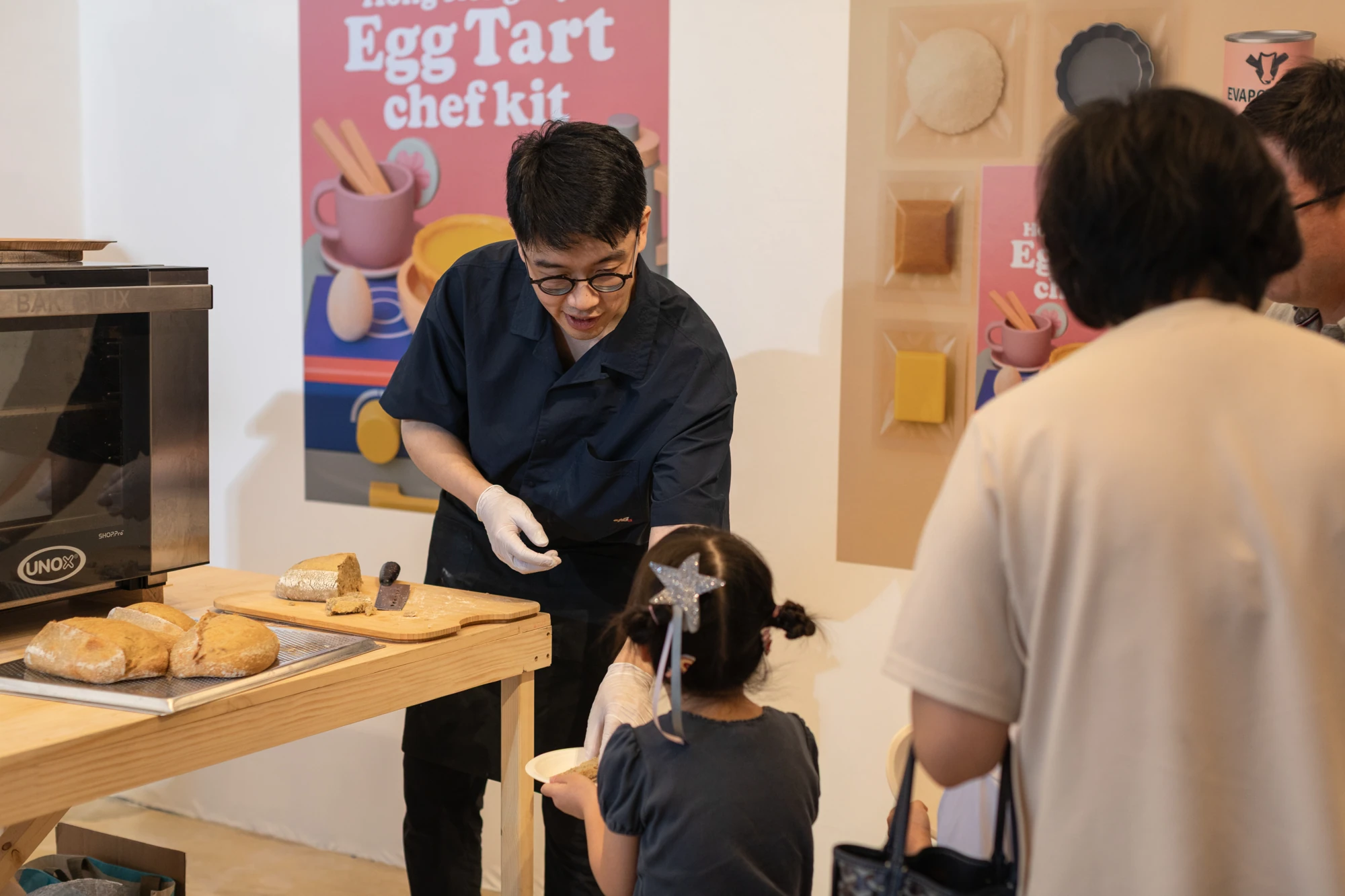
    Presenting the prepared food to visitors.
    Serving egg tarts in the gallery.
    Visitors gathered around the Kitchen Notes installation, 2025

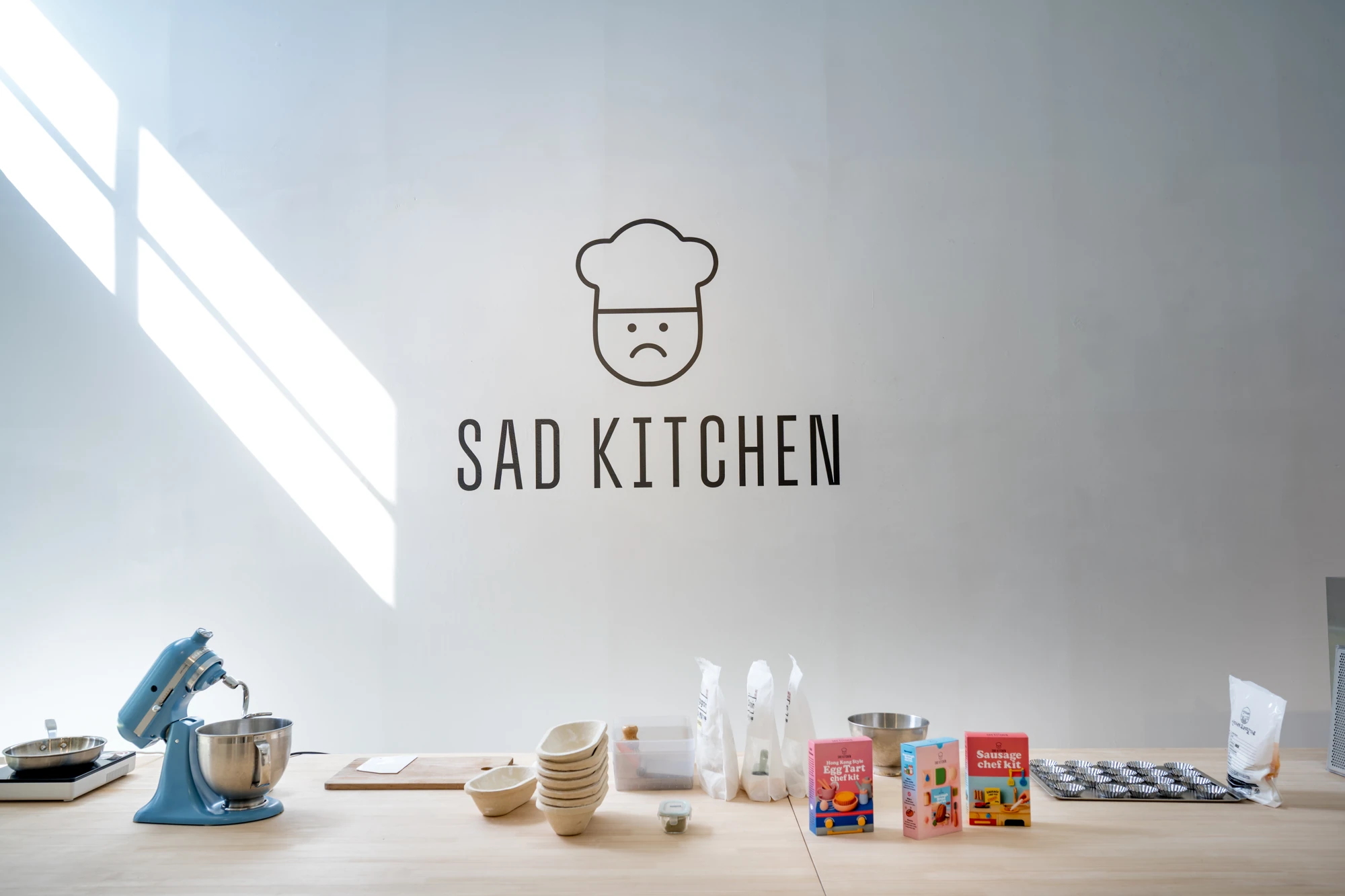
    SAD Kitchen Chef Kits

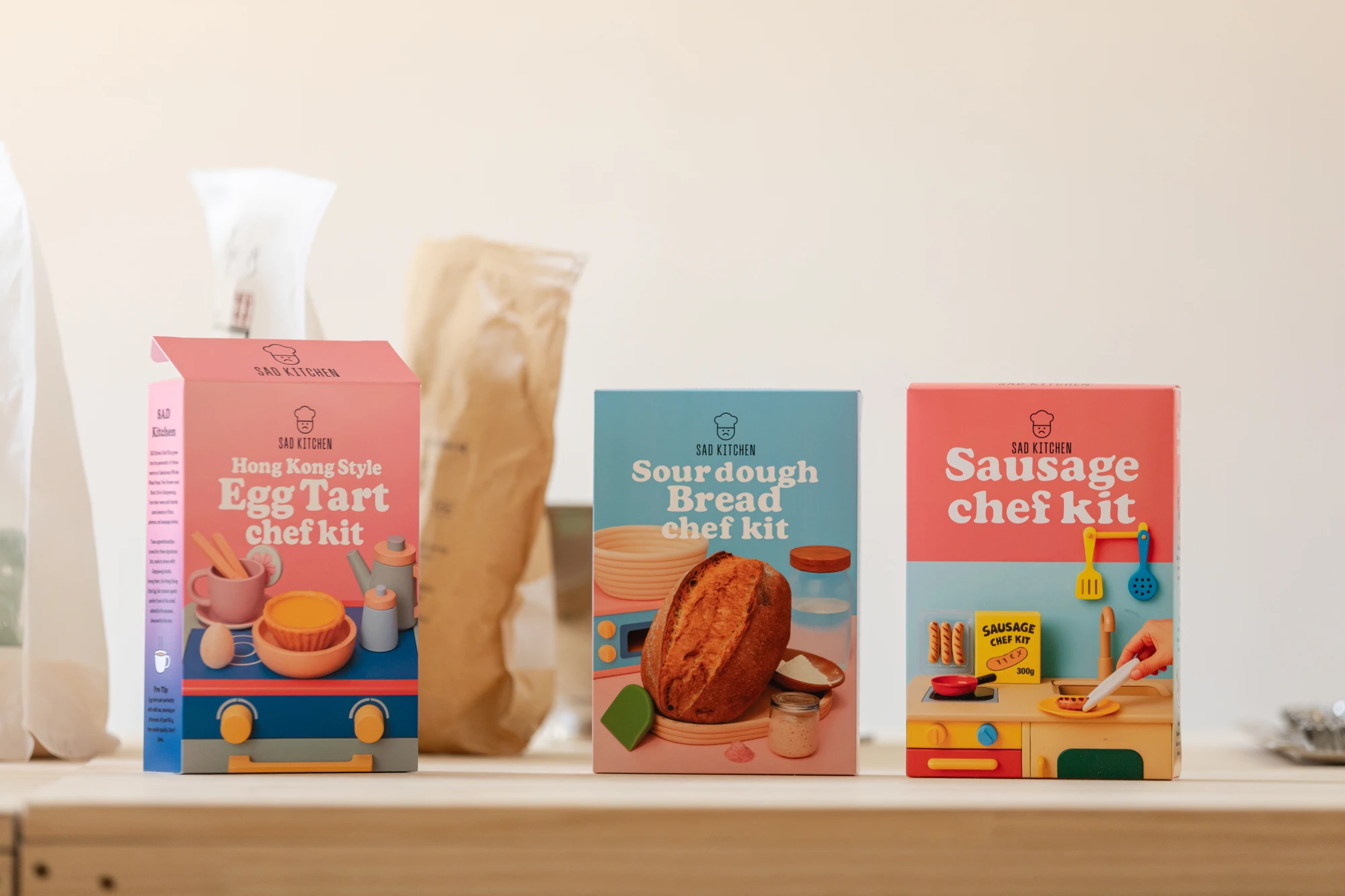
    The kits use packaging and 3D-printed food models to bring the time and labour of making food into the form of a product.

    Chef Kit posters and tools in the installation.
    SAD Kitchen Chef Kits for Hong Kong style egg tart, sourdough bread and sausage, 2025

    Read the essay by Sungah Serena Choo (English / 한국어)

    Read the full exhibition catalogue (PDF)

    Photographs: Kim Yohan (김요한) and Silas Fong.
    Catalogue essay: Sungah Serena Choo (추성아). Published by Daechumoo Fine Art, 2025.

  • The Eyes of Truth Don’t Look at the Broken Mirror

    Seoung Won Sun, Art Critic

    2021

    There should be nothing more reckless than an attempt to read the context of a creator through a work. The value of art is not born from the material but is generated when the material is transferred to a substitute. For example, the value of art is beyond the realistic interpretation of the shape and the color that the paint produces on the canvas. Instead, it means perceiving an esthetic value of the harmony made from the difference of the shape and the color, and creating its reflection on new things in each period of the history.

    There is no principle or method of putting the object of art and the value judgment in one line, but the act, intention and interpretative context that a piece of art can have through the process of its creation and circulation let us discover new value again. That is the ‘endless spiral structure of value’ and the virtuous circulation of the art, which is circulated beyond the material value of the art.1)

    The linguistic elements that Fong proposes as context are revealed through the visual form. The series work (SAD hereinafter) of Silas Fong started from his exhibition 《SAD Info Days》 presented at Art Space Geumcheon in 2019. The poster of SAD with the blue sky in the background takes a similar form as the ones to promote the university where he works as professor. This poster, which catches our eyes with the blue sky and the cloud mark of the airplane up in the sky, attributes to the university a role of a ‘railroad switchman’ 2) who suggests a bright future to students.

    Fong asks.
    What does it mean to learn art at a university? How concretely does the future we imagine show us our reality?

    The form of the SAD works aims at the conceptual art based on specific factual information. Through the works, he clearly states his social status, which is a university professor, and manipulates the interpretative judgmental awareness of viewers by inverting the social image of artist and professor. He presents the schema to execute the ‘way to become a successful artist’ covering the entire wall, and asks back to the viewer/participant the essence and the critical judgment hidden behind the work. Through question and answer process about the value that building one’s career as an artist should obtain, the participants in this project got to connect the social relationships into an ar-bitrary structure, not by learning. In addition, in the success schema of the art world that Fong analyzes, the Korean society is presented as a competitive ranking structure with a satire on its pervading rankism. Through the project of “Info Day” of SAD subtitled as “For a Better Success”, he questions if art and artist can ever develop by education and learning, and reveals the gap between the essence of art and its intended goal in the reality.

    In 2020 at Cheongju Art Studio, he expanded the steps of the way to success as an artist in SAD project into the stages of sales and dis-tribution of artworks. He attempted to structuralize the way of becoming a successful artist through the method of marketing and to interpret the artistic value.

    Fong found the boom of TV home shopping a unique social and cultural phenomenon of Korea, unlike Hong Kong. In the Korean society where the on-line commerce is much activated through mobile platforms and social media, the majority of customers using TV home shop-ping in Korea are middle-aged or older female consumers. Many of middle-aged or older consumers prefer TV home shopping because of its simple access with just one remote controller. Therefore, the advertising copy for them should be phrased simple and clear; Fong’s exhibition also adopted the expressions like ‘Only one on earth!’, ‘One in the world!’, ‘Recommended by the expert curator!’, and ‘Transfor-mation of a boring space into a gallery!’ which aim to delude customers. Of course, all this process in the work of Fong takes place in the exhibition venue. The artist invited the professional show host as the performer of his project to show the circulating method of art as com-mercial goods by reproducing a TV home shopping program in the exhibition space. The showy speech of show host and the clear ad-vertising copies covering all over the screen is no different from the actual home shopping channel program in reality. Walking a fine line between real and virtual, this project directs the position of artist, art piece, collector and viewer in an unconventional way. The reconstitution of a studio that produces an art rental home shopping program, thickly covered with only the marketing terms to sell the art pieces rather than to convey the essential value of the work, invites us to see the reality of art museums of our time from a critical perspective

    <Greeting for Artists>, a sound installation to learn the common conversing manners used in the art world, describes the meaning hidden behind the actual said, yet still expressed in the intonation of Korean language, through social relational psychology. Fong is fond of this kind of unique psychological tug-of-war that can attract the attention of viewers/participants. (2008-2010) that he created at the very starting point of his career as an artist is also a video work that recorded people in the elevator during the short time of 6 seconds when the doors remain open on the 6th floor of a 40-story building in Hong Kong. Through this tug-of-war of gaze between the object, the people who are placed in a slightly different position each time the doors open, and the artist, he mischievously questions whose time it is. Fong induces some questions: Is the time acquired in a justifiable way (he had the right to stop the elevator by pushing the stop button) really justifiable? Is the materialization of the immaterial that can happen in the system of art, which is also a process of com-mercialization, (he resold DVDs containing the video filmed in such way) justifiable? Whose time was he selling?

    One of his works that particularly attracted my attention was that he presented at the Hong Kong Art Center in 2015. He reconstituted his living space at the exhibition venue perfectly as it was including the shape, sound and lighting, and let the viewers/participants expe-rience that space for 10 minutes, after they pledged some code of conduct to be observed in the exhibition space. Through the promise with the viewer to follow the pre-decided regulation by the artist, he hides the time of the viewer/participant as well as the time of the artist himself in the form of the exhibition and questions back to the viewers what art is. It seems that he intended to twist the value of art suggested at the limit of conceptual art, highlighting the forced appreciation and enjoyment of art pieces and the one-sidedness of their experience.

    His art is aiming at the conceptual art, but he rearranges in time certain immaterial things such as video, letter, text and sound, and makes use of the structure of relational psychology that connects Langue and Parole in the works, and the artist and the viewer in the society.

    He regards his exhibitions as a place to build an ecosystem of art. Also the artist summons the viewer as a co-creator of his social exper-iment. His works are always based on a pre-determined scenario, but they do look like a real society including variable and constant, be-cause the artistic awareness of the participants has to be placed in his works. The information presented in Fong’s works is mostly undefinable as truth. Moreover, the gaze observing those pieces of information is also made in the social relationships, in the social con-ventions and their cultural background. Particularly, his observation to reveal the relation between the art and the society of our time is caustically critical and paradoxical. In the explanatory note of the exhibition, he said “SAD is a recurrent observation in the art community, self-awareness, and critique.” However, even someone who has the eyes of truth, if looking through a broken mirror, would see the frag-ments of images reflecting a distorted consciousness.

    The works of Silas Fong, reflecting the consciousness about the problems that the art world of Korea is facing in reality, are not to be un-derstood from some art theories or common art perspectives, but to be perceived as a work of critical interpretation of our art society. His works invite us to realize that a new interpretation of art can obtain the justification, through our eyes as an observer summoned as viewer/participant to this event.

    ——————————————————————————————————————

    1) In the interpretative sociology, we try to answer the questions such as ‘How is the meaning born and preserved in a social system?’, ‘How does the cultural background (norm, value, assumption taken for granted) influence on people’s decision?’ and ‘What does a specific piece of art mean?’ Max Weber, through the concept of ‘switchman metaphor’ believed that when people decide something, they behave legally according to their individual understanding. The meaning of reasonable choice, namely the profit, is based on the culture or concept.


    2) Weber said ‘Not ideas, but material and ideal interests directly govern men’s conduct. Yet very frequently the ‘world-images’ that have been created by ‘ideas’ have, like switchmen, determined the tracks along which action has been pushed by the dynamic of interest.??The perspective of interpretative sociologists of ‘believing is seeing’ is often efficiently used to help understanding the meaning of a piece of art and how people produce a meaning out of a piece of art.
  • What Makes Art Art?

    SAD School of Artists Development: Silas Fong

    Leeji Hong (Curator, National Museum of Modern and Contemporary Art)

    2020

    There is a Korean expression ‘nunchi (literally eye-measuring)’ commonly used by Koreans. Similarly, in Japan they say ‘read the air’. It means sensing the atmosphere of a situation and gauging others’ mind or attitude without being awkward. In an artistic category as well, we try to measure others’ mind. Nunchi for success, nunchi for relationship – Silas Fong has constantly been interested in certain contexts that have been accepted and tacitly agreed in the name of the art. Such interest may be derived from the fact that he is multilingual; his mother tongue is Cantonese, he teaches students in English at a Korean art school, and speaks German at home. Understanding language, culture and sentiments requires highly developed concentration and experience to read the air and measure minds subtly. This is similar to habits of the art. The atmosphere and context, intrinsic to art, is hard to be explained in letters or words or to be grasped at once, and presupposes comprehensive understanding and information. One step away from the representational thought and subjective value judgement of art, Fong tried to suggest an objective index based on very realistic and rational judgment on art, in order to objectify the process of analyzing the meaning and value of art. For many years, he has been interested in the expressions suitable for each situation and the conversation method to set up relationships for social life, and also produced small publications in that matter. <Small Talk> (2018) and <Vocabulary> (2019) contain the expressions adapted to each situation, to lead the atmosphere avoiding awkwardness. Through this work, the artist observed the expressions that people use commonly and inertially to set up a relationship, and suggested a sort of guideline to get adapted to a circumstance without being awkward. This interest of Fong in language and attitude has evolved into his concern about the formal expression method and representation of the intrinsic attributes and meaning of education and art, which he has experienced as a professor of an art university in Korea in 2017.        
    SAD School of Artists Development

    Silas Fong’s SAD (School of Artists Development, hereinafter ‘SAD’) was first introduced at <SAD Info Days> held at Seoul Art Space Geumcheon in 2019. <SAD Info Days (hereinafter ‘Info Days’)> is planned to announce the beginning of the SAD project and deal with the role of artist and the ambivalent aspects of art through this. <Info Days> held on 19 – 31 July 2019, provided the SAD programs such as the basics for portrait of artist, how to complete application forms, international art English class, and specialized course for SAD career development. During the event, SAD also arranged a portfolio review session for rising artists and students who are aspiring artists. To objectify and analyze ‘visual artist’ and also to play that role, Fong attempted to divide his role into educator, observer and performer, eventually to reconsider the fundamental meaning of art. Through <SAD Info Days>, subtitled ‘For a Better Success’, Fong questioned ‘Can art and artist be developed by education and learning?’ and intended to examine the essence of art as well as the other side of art. The artist suggests the exhibition space as a platform to perform ‘the way to be a successful artist’ and asks back the viewers/participants the hidden essence of this project and the critical judgment on it. Furthermore, he also proposes the figure of an artist, which other people think ‘an artist should be’, the steps to succeed as an artist, and the basic survival skills to be adapted to the ecosystem of Korean art world. Then he asks again whether these things can be acquired through education and information.      
    Silas Fong presented the new curriculum and program of SAD during his stay as artist-in-residency at Cheongju Art Studio in the year of 2020. At this second edition of SAD, Fong went forward to the next level from how to become an artist and the basic conditions for an artist to possess, to expand his interest to the artwork and its collection, the production of value of artwork as goods. Organizing spaces according to 3 works, Fong installed a studio where the students participating in SAD can practice the skills to promote and sell the art rental service through home shopping TV channel. Silas Fong, the founder of SAD who has been constantly dealing with the ecology of art and the nature of art since 2019, sometimes directly yet subtly, proposed <SAD Theory> and introduced his way of revealing the phenomenon by twisting the snobbish attribute of art and the social convention around it, taking the art collection as an example. He expresses with humor, but by adopting indirect methods and attitudes, he points out the excessively standardized conditions to become successful as an artist, and paradoxically reveals that now it is time to reexamine the practice of such series of processes which are so familiar that we got tamed with them. The second work <Greetings for Artists> is a sound installation work that Fong created to learn the general knowledge commonly used in art world. It aims to reconsider the nuance of Korean language and the ‘greeting’ culture. Fong describes the delicate nuance and culture that are so familiar to us that we never mention. He experienced them living in Korea since 2017, through his dual status of a foreign artist who should present his works and persuade the Korean art world, and at the same time a professor who teaches art to students in English, which is not the mother tongue for him. Lastly, he presented <SAD Shop> which is a window exhibition where we can also buy various artworks. The Shop consists of <The Artist’s Plant>, <Artist Career Map>, <Media Artist Starter Kit> and <Greeting Tote>. The public can actually purchase the goods proposed by the artist and also the Shop itself is an artwork. The work implies the ambivalent and paradoxical aspect and prejudice often found in the contemporary art which divides the commercial and non-commercial, with an ambiguity between pretense and sincerity. Through this experiment, the artist urges to rethink about how the hegemony of an exhibition space is created. An exhibition is a place to evaluate a posteriori the act of the artist and the artwork that has already left the workspace, where innumerable ideologies and political discourses indwell.

    What Makes Art Art?

    After all, Silas Fong prompts to maintain temporarily the ideological conflict and irony in the context of art, rather than to accept the position of artist and the place for art to stay in a metaphorical, inertial way. By this, he urges eventually to reveal the snobbery through the space of white cube – as Brian O’Doherty suggested in ‘Inside the White Cube’ – and to reexamine the persistent habit of self-definition. The artist stated in his explanation of the exhibition that “SAD is the result of a continuous observation of artists in the art world and the result of self-awareness and criticism.” These experiments and trials of Fong remind us of the words of Arthur Danto: “to see something as art requires something the eye cannot descry – an atmosphere of artistic theory, a knowledge of the history of art: an artworld”. The most important lesson we learned from the 21st century, is that if we don’t do anything, there is no change. Witnessing the things taken for granted disappearing and collapsing instantly, wouldn’t Silas Fong like to say that, if we act and think in an inertial way without any doubt in the matter of creation, the place of art, in which we have believed so firmly, would also be easily fading, and that it is the reason why our choice has a great importance?     

  • SAD Kitchen – Oi! Guide: A Comfort Food Journey

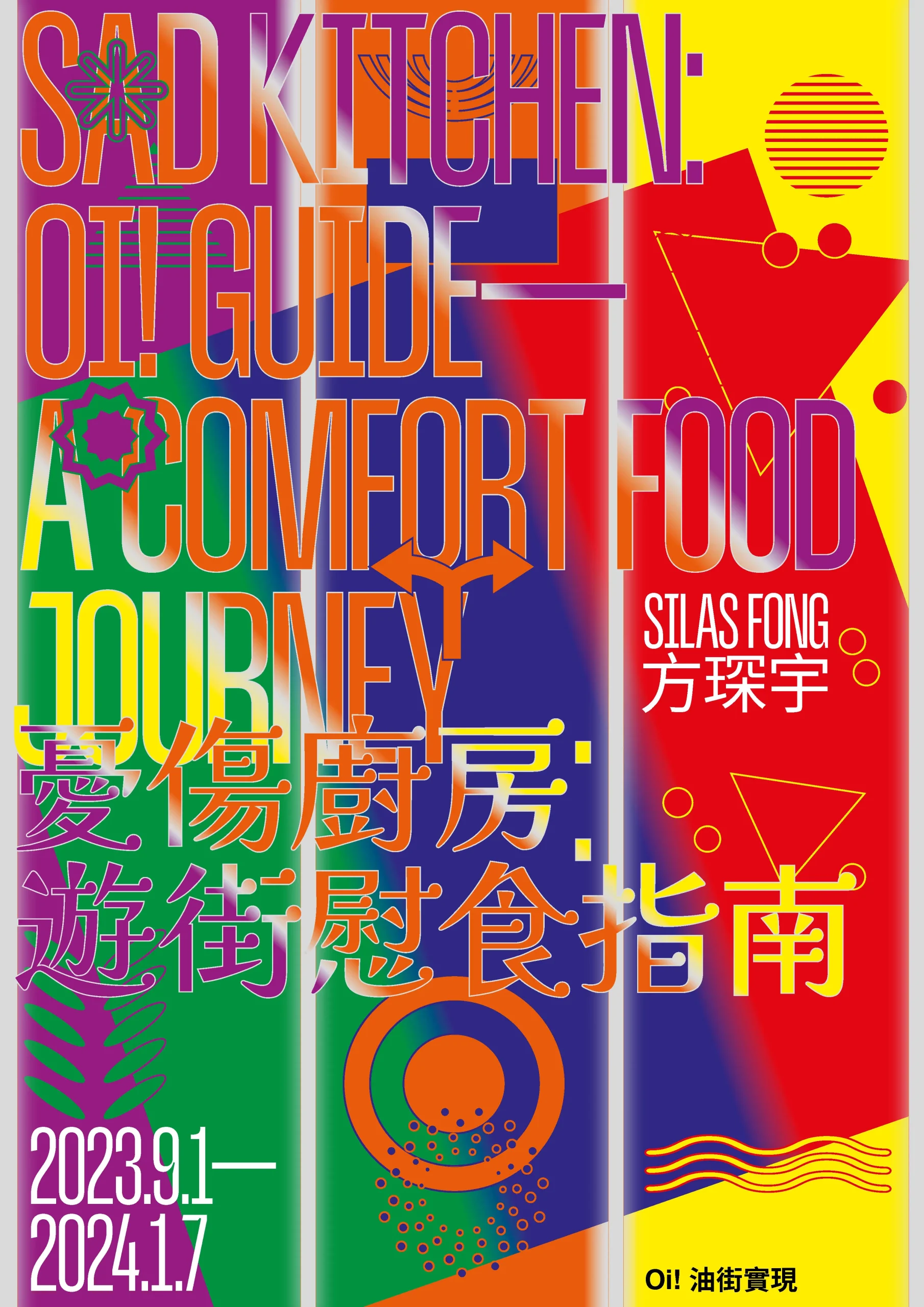
    Solo Exhibition at Oi!, Hong Kong, 1 Sep 2023 – 7 Jan 2024

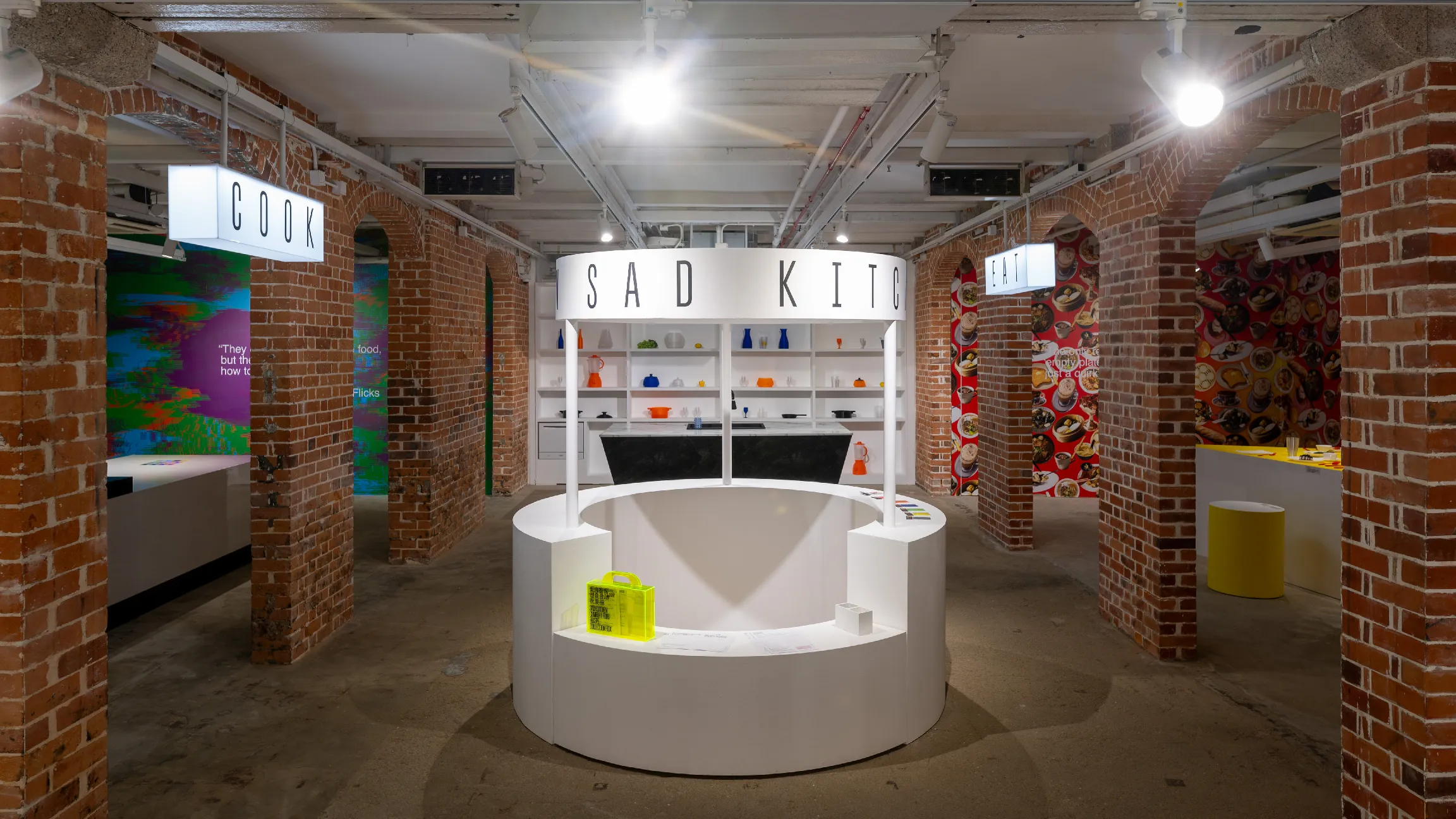
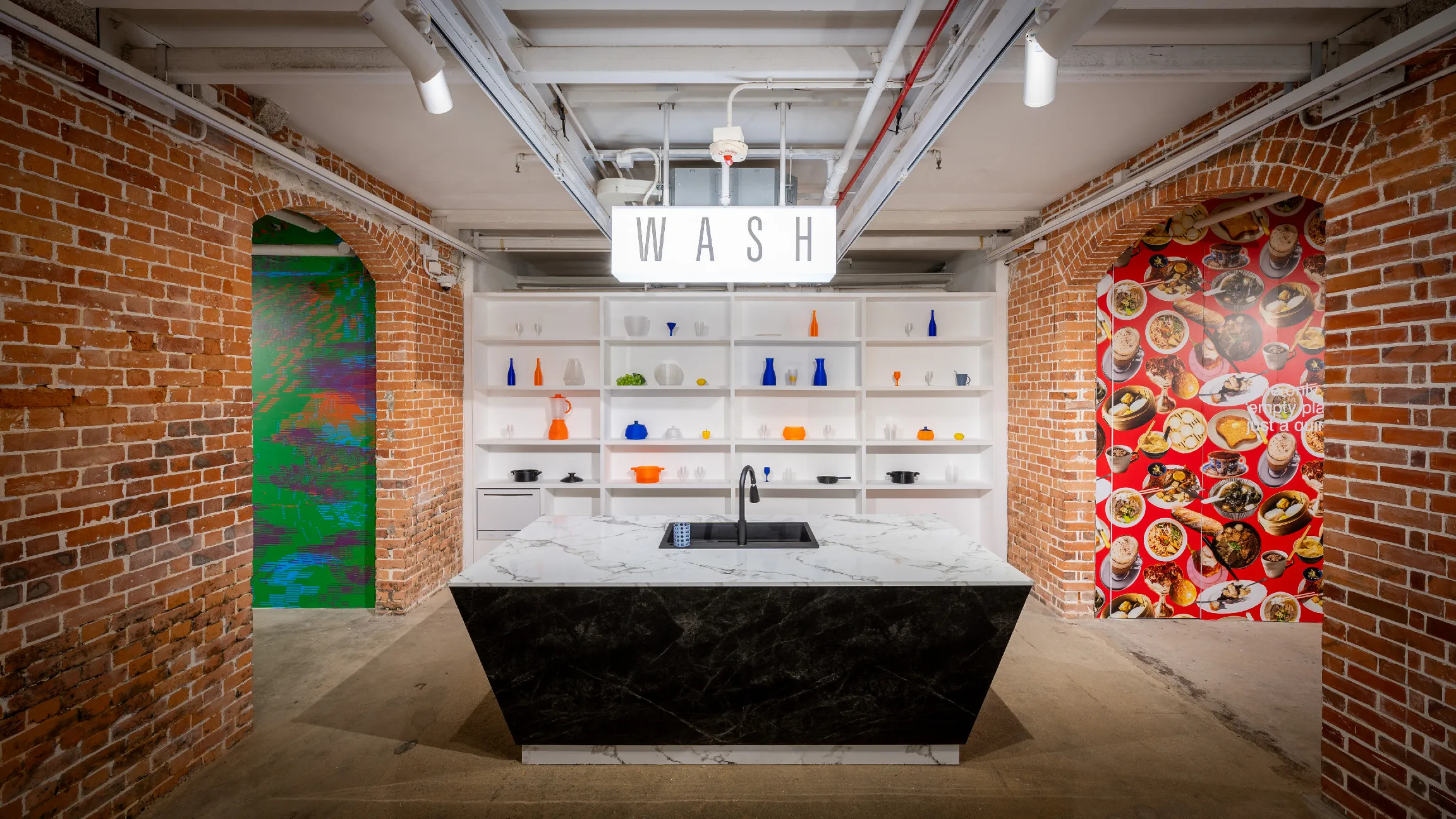
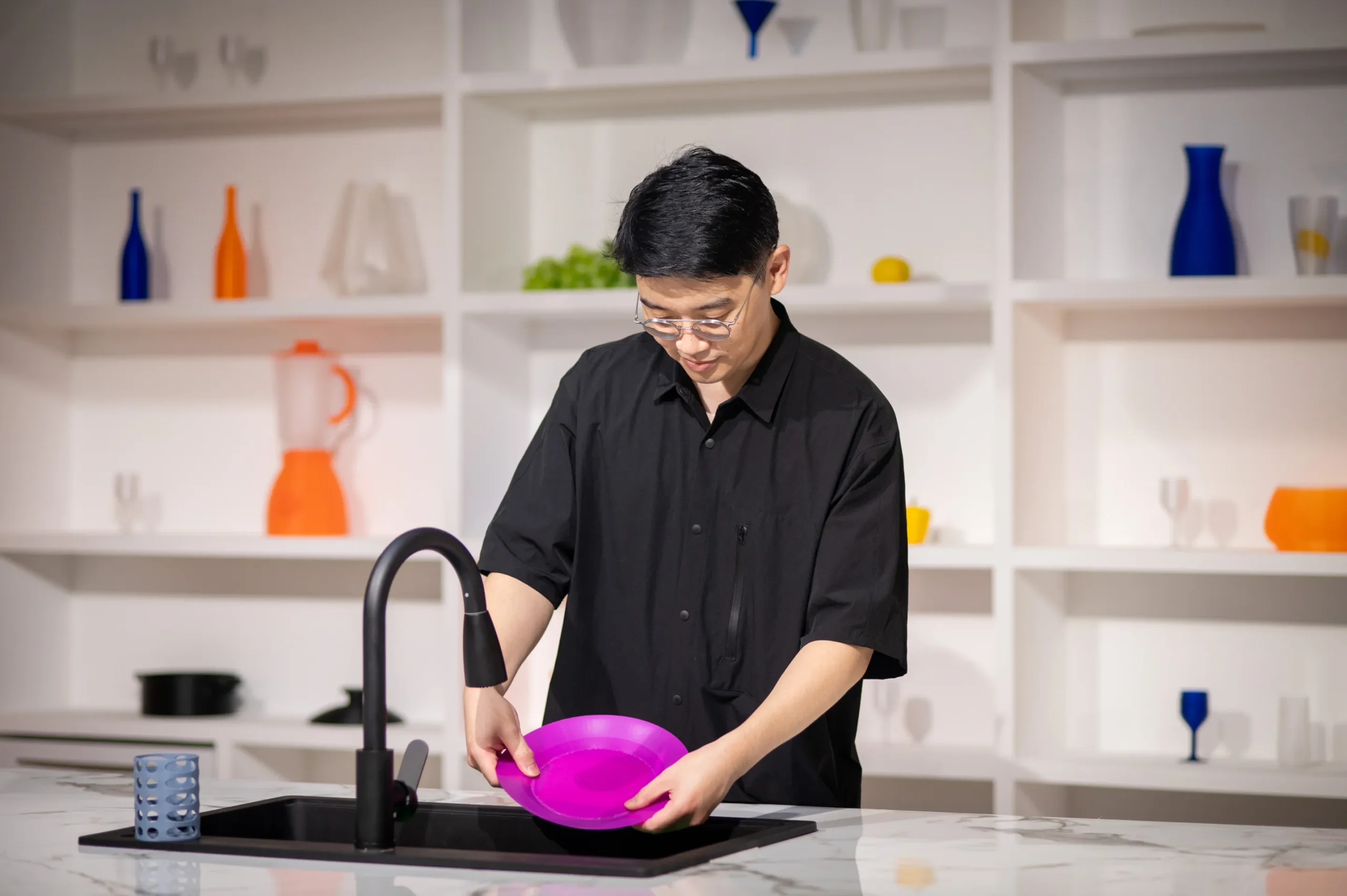
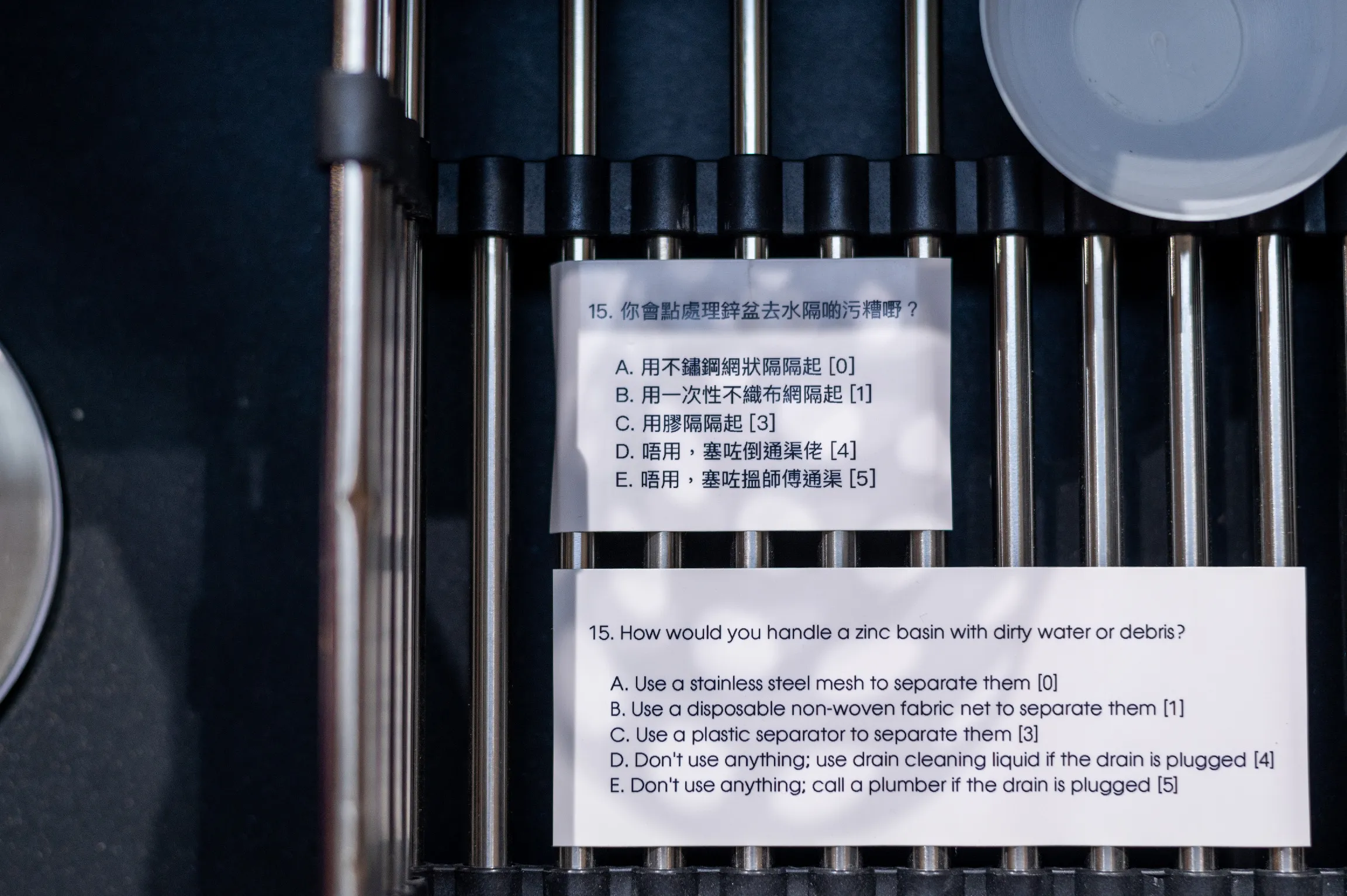
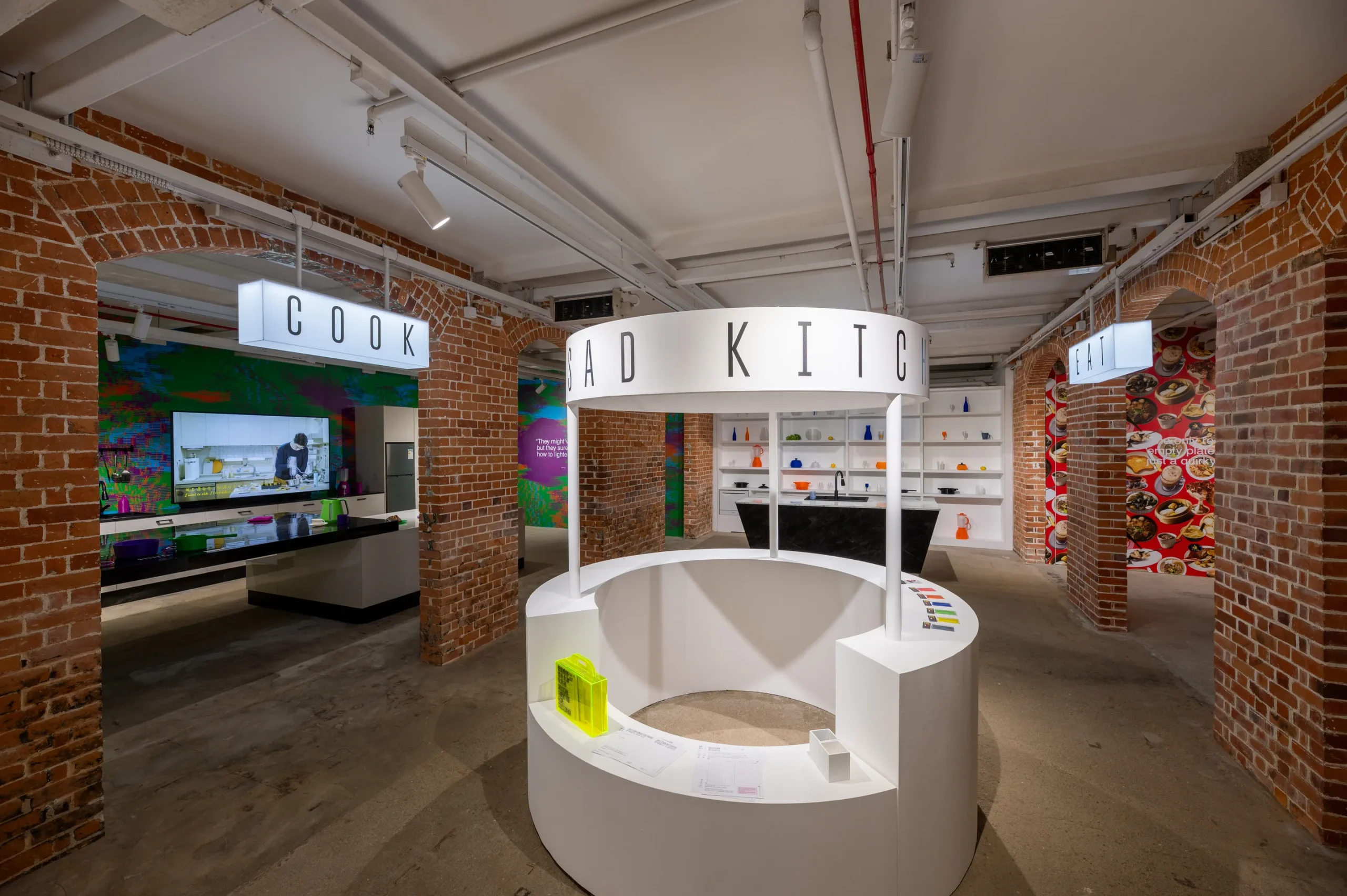
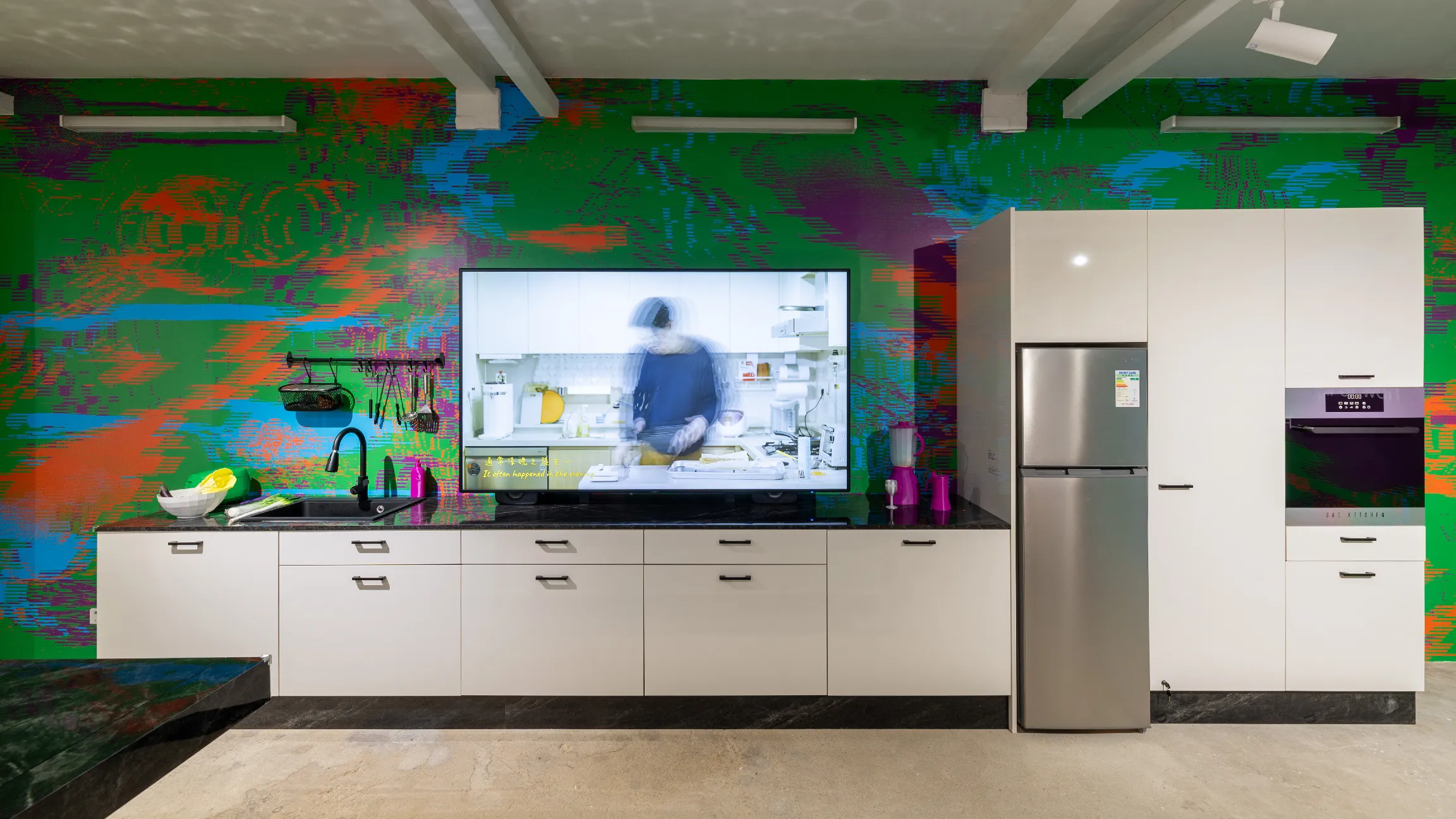
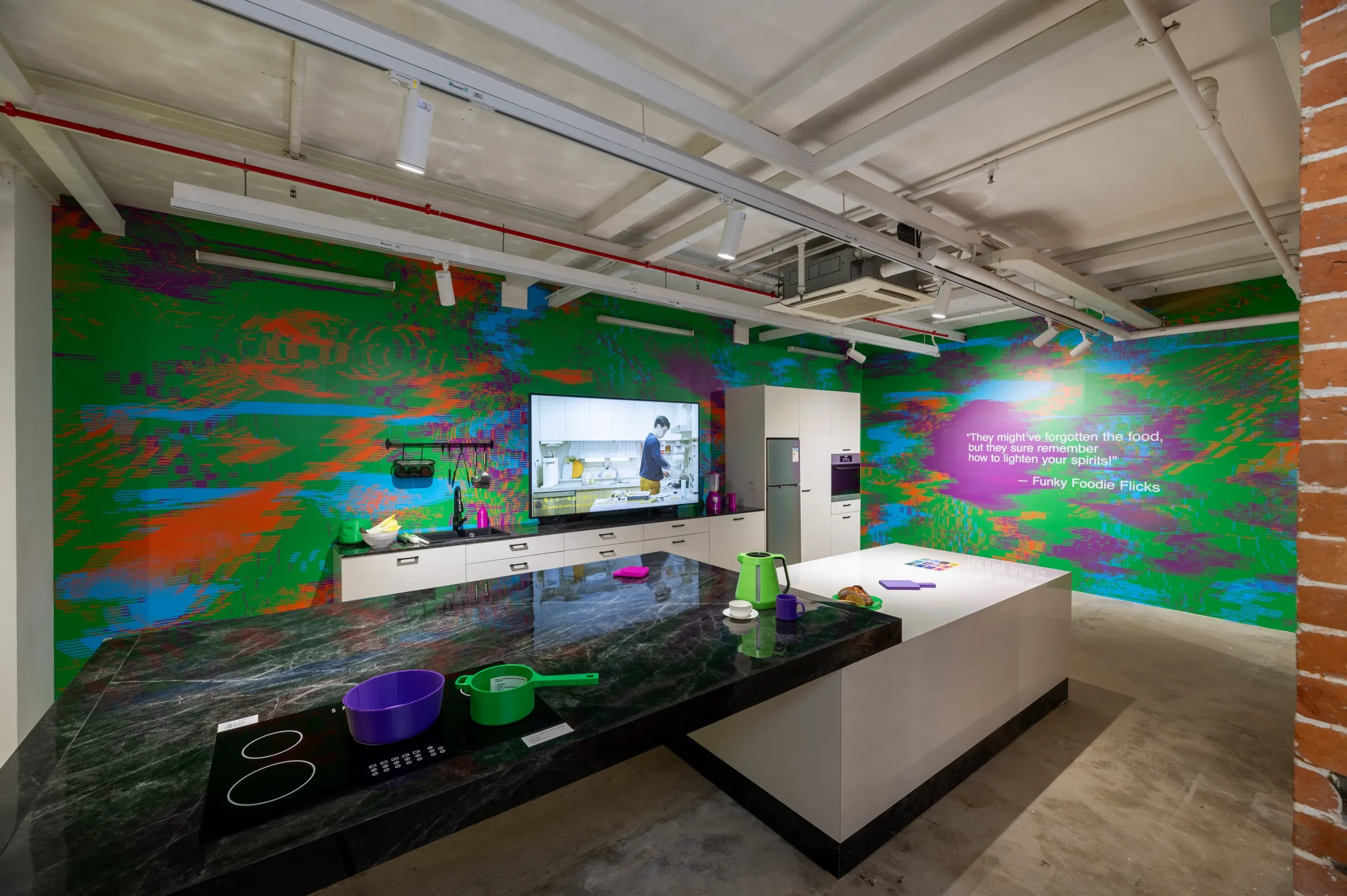
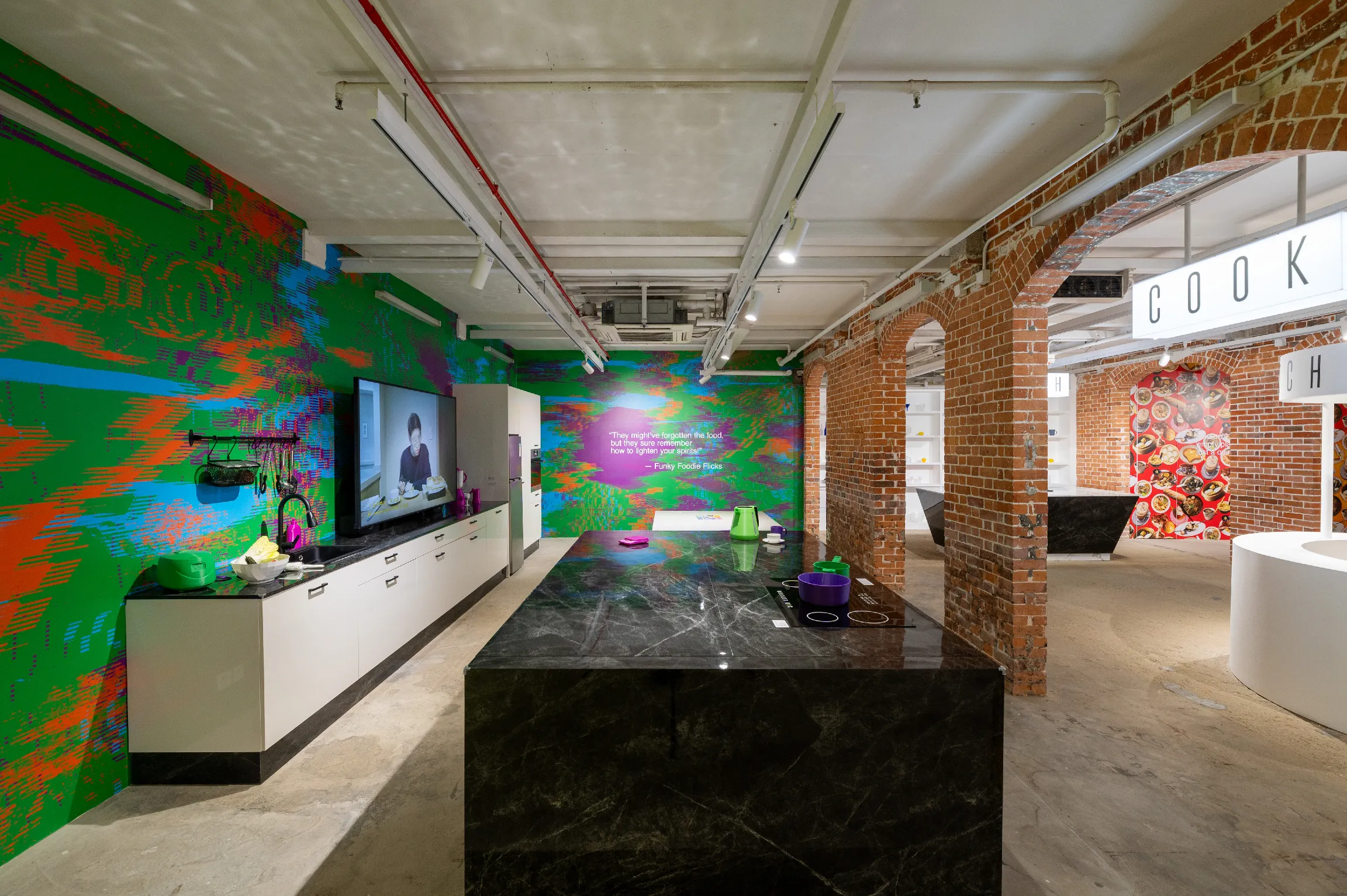
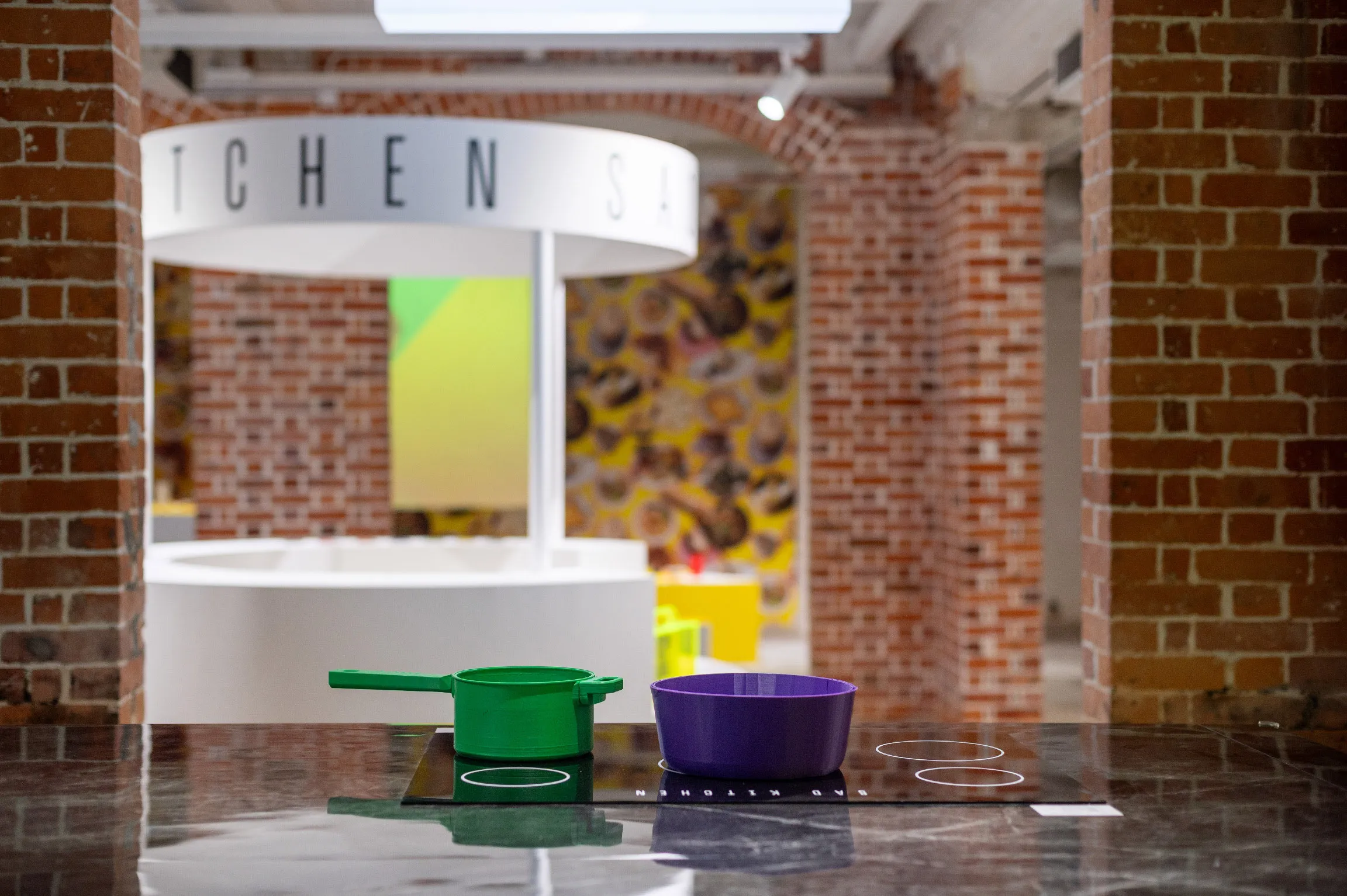
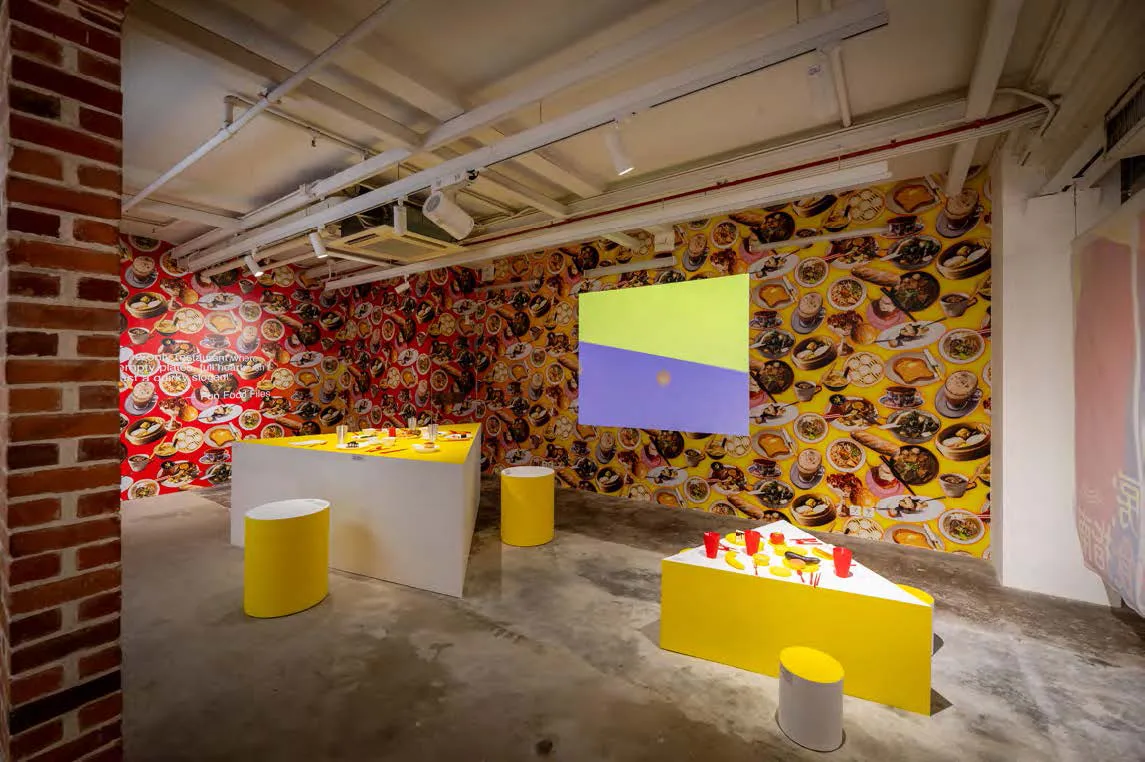
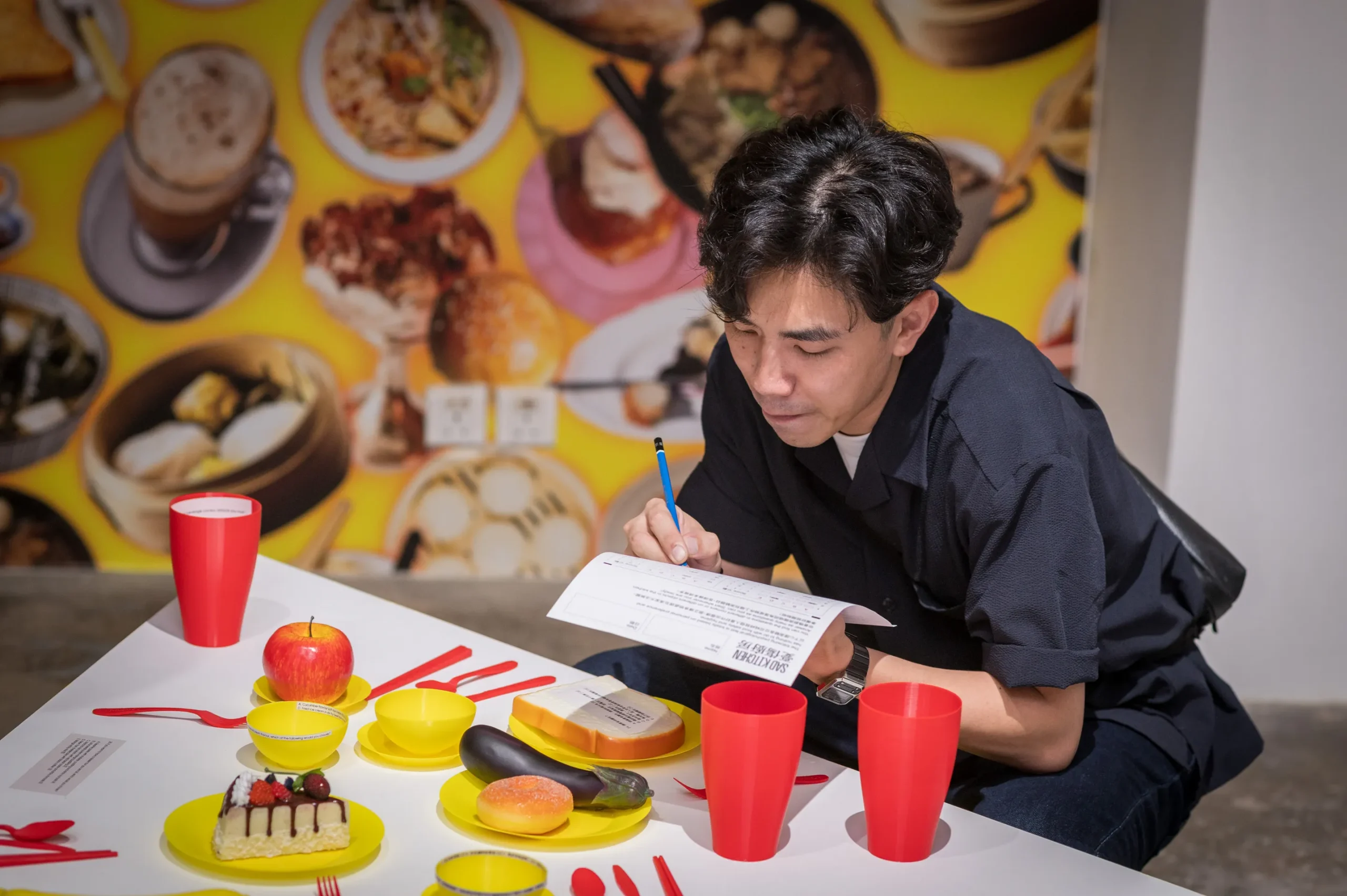
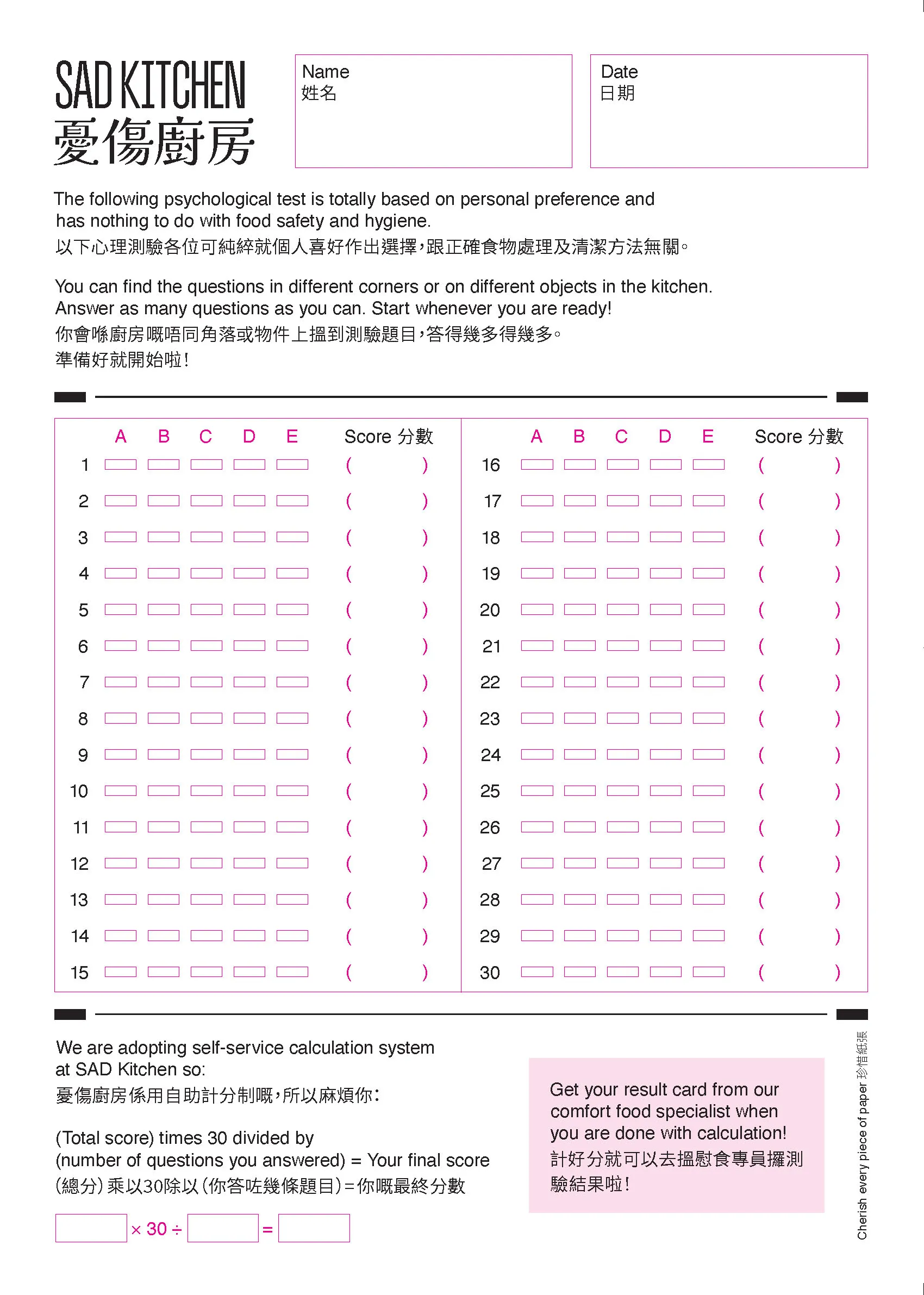
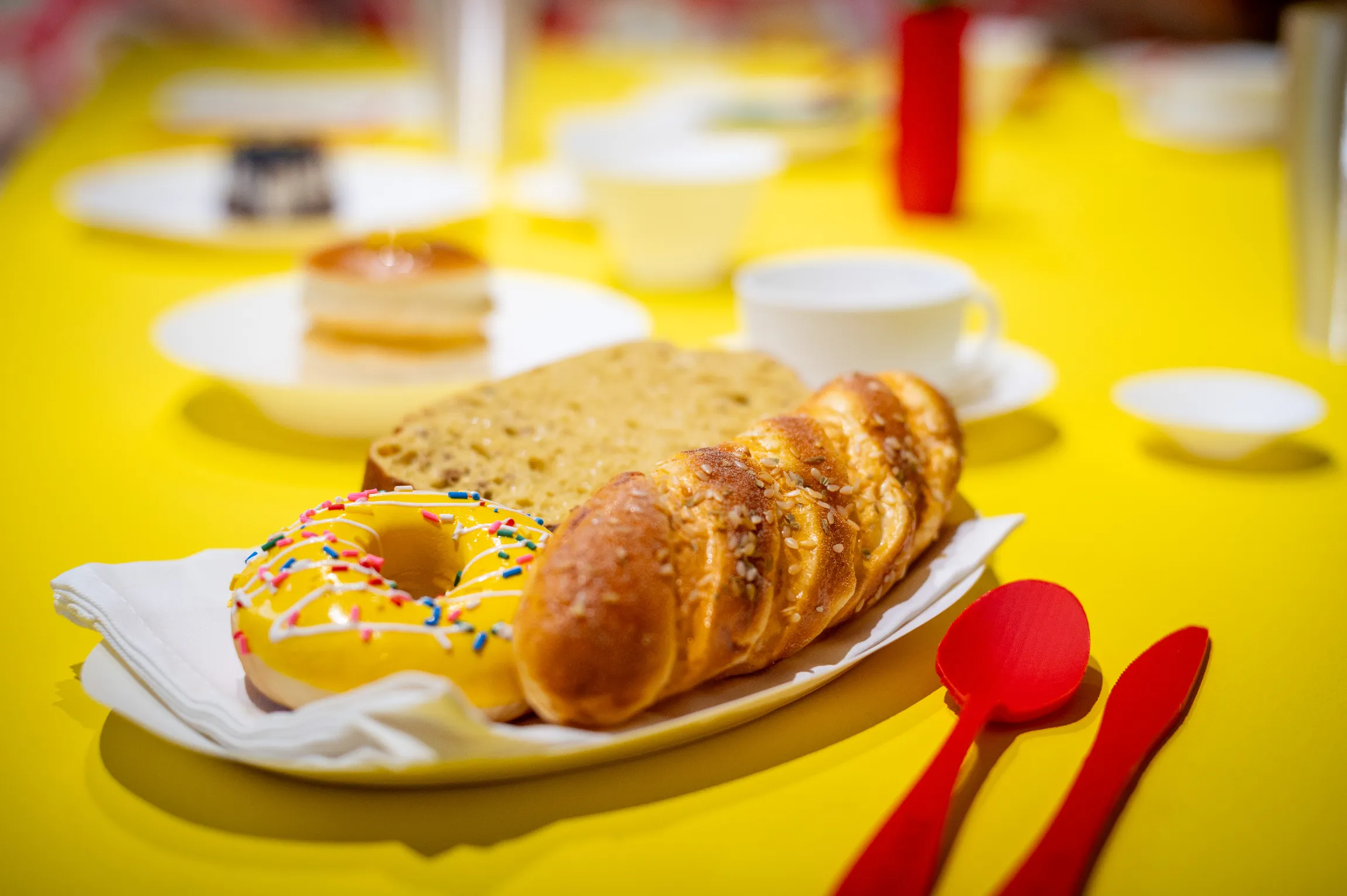
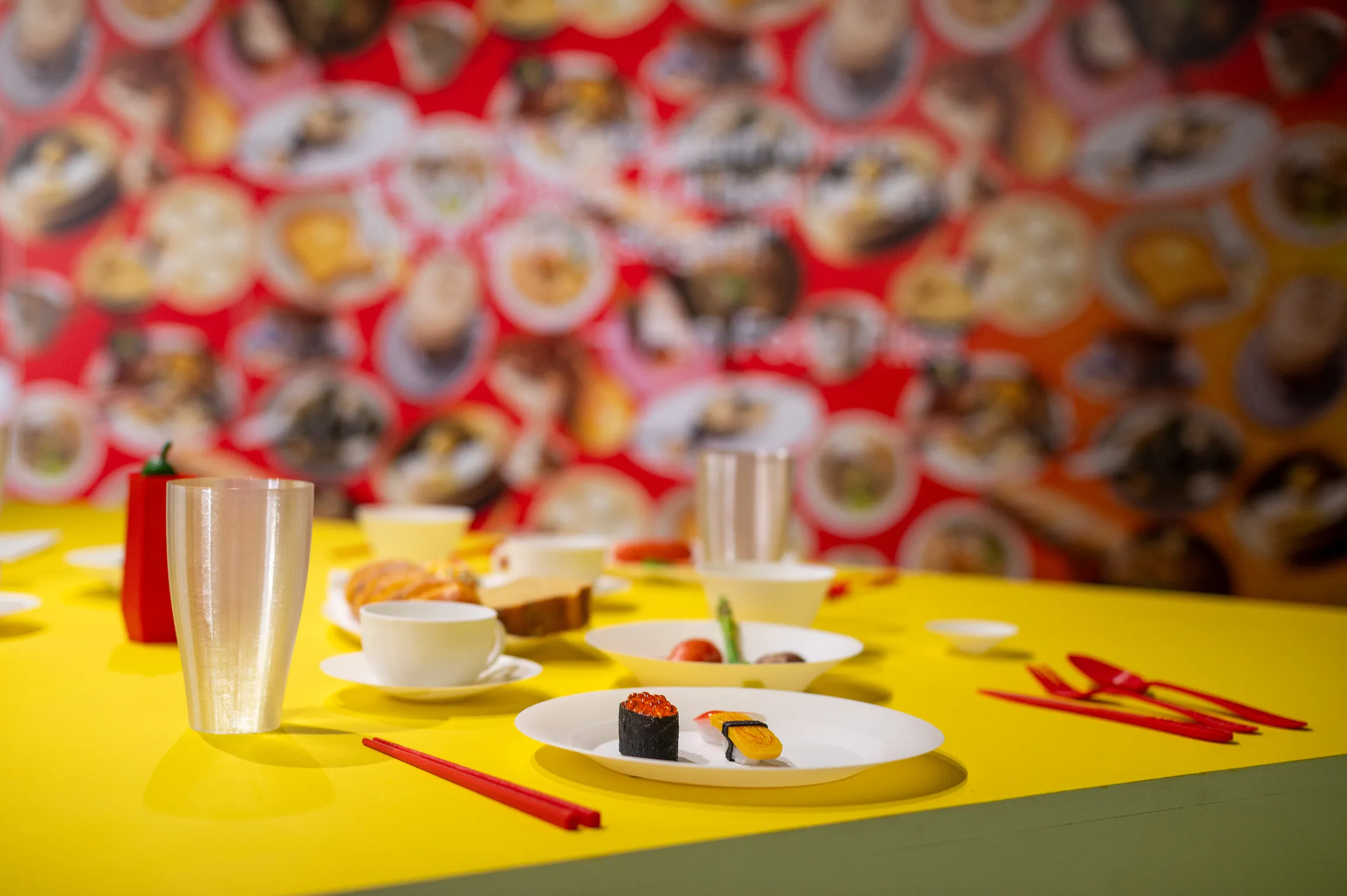
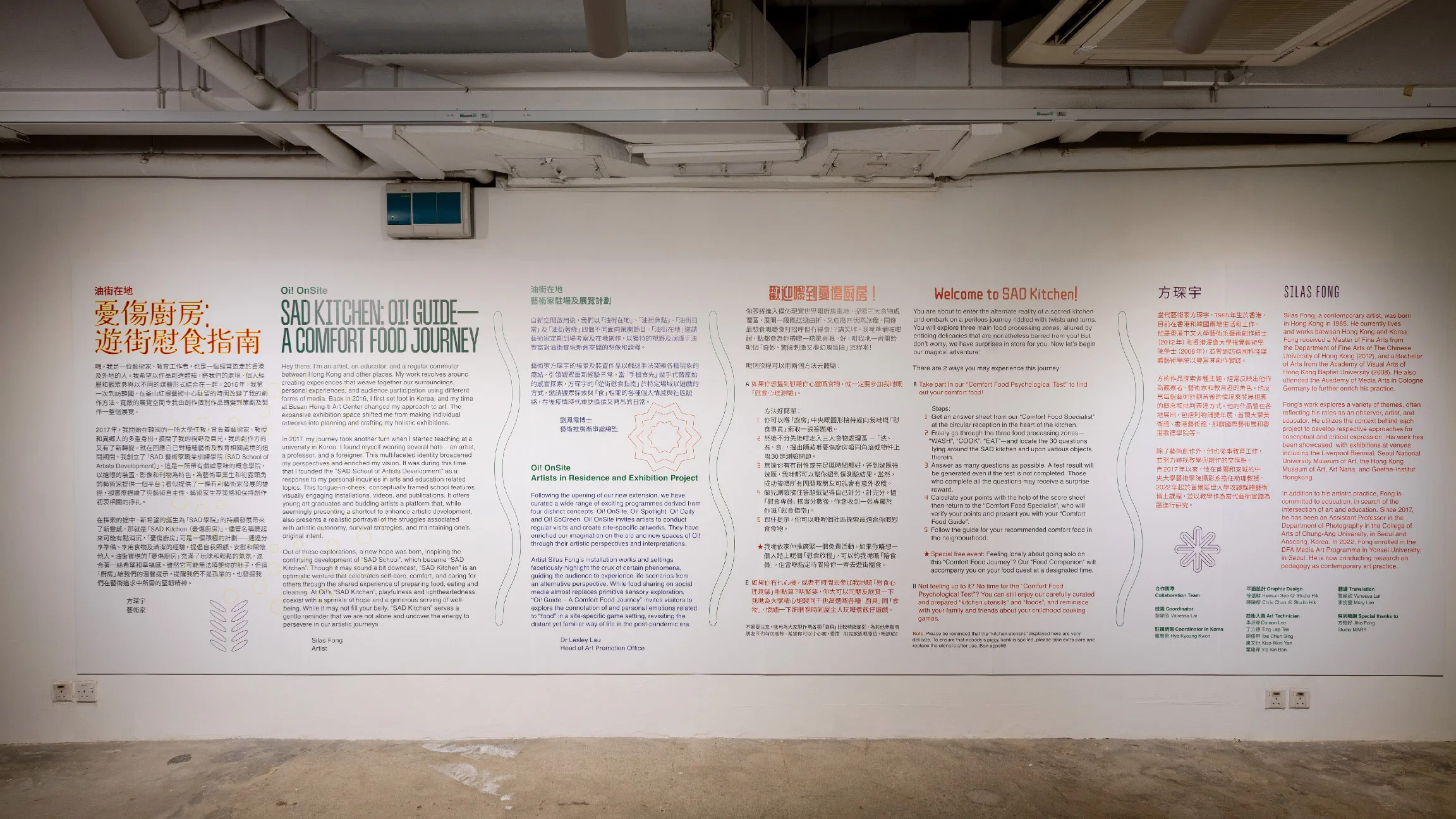
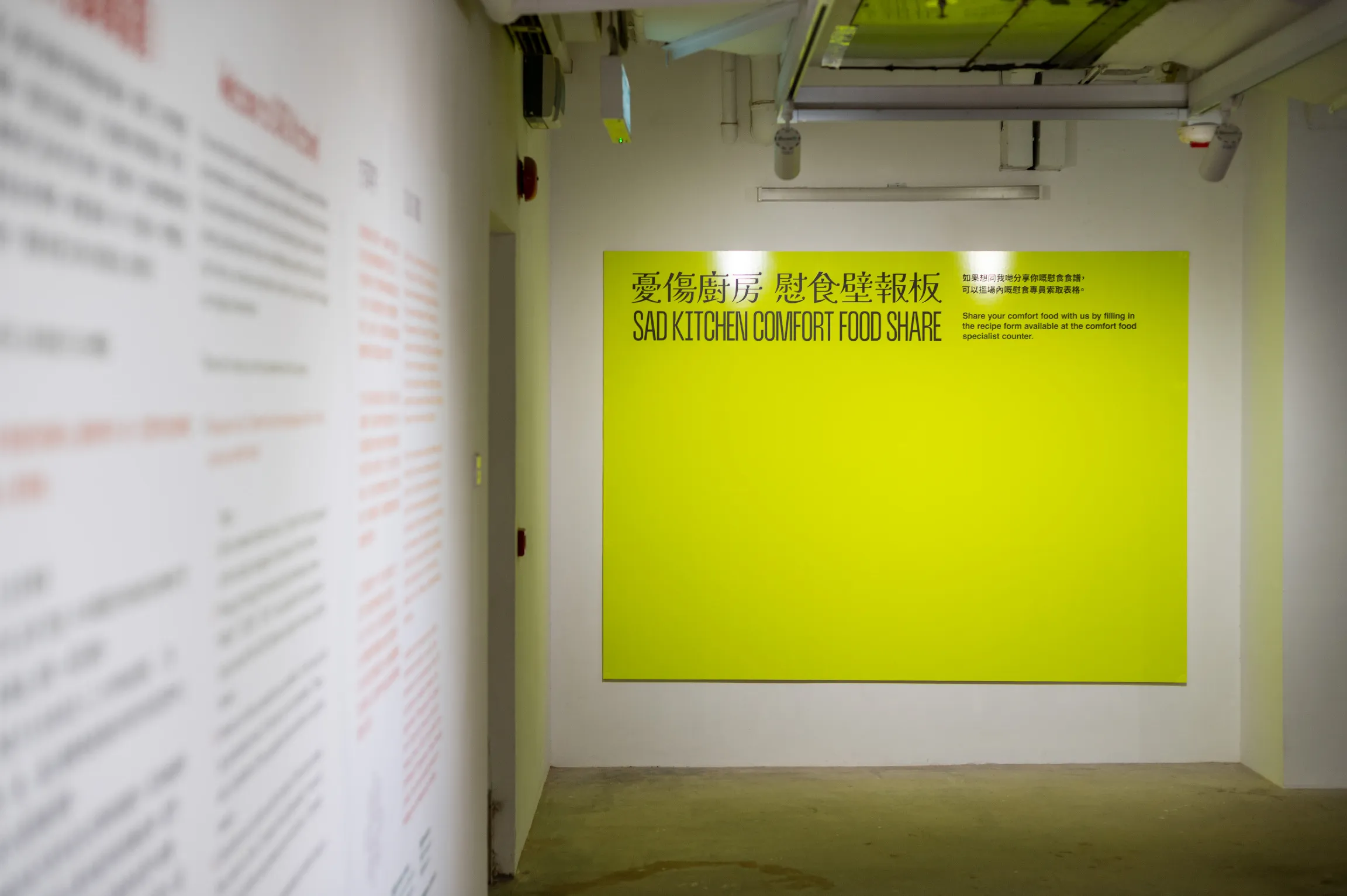
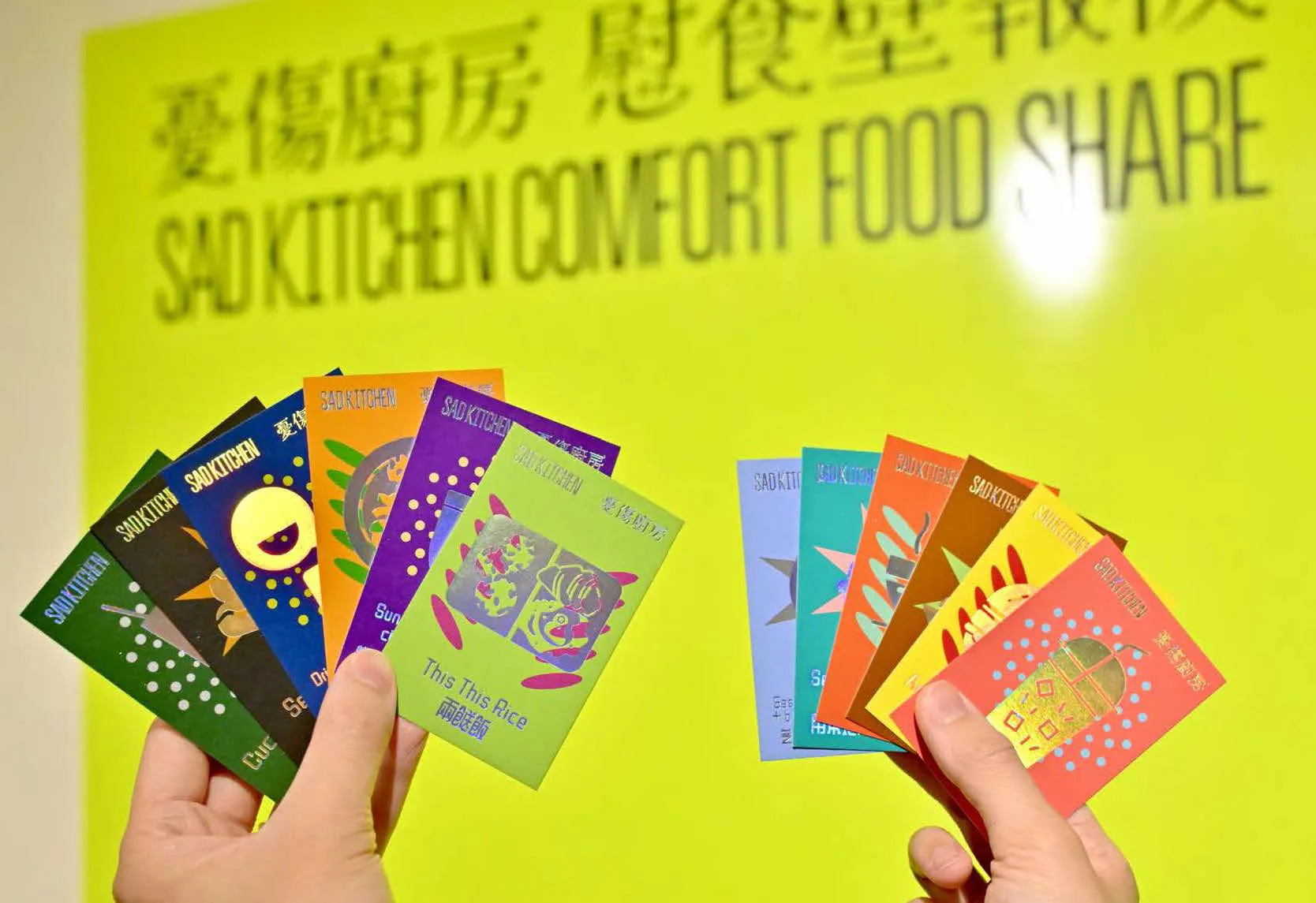
    In my recent project “SAD Kitchen: Oi! Guide – A Comfort Food Journey,” I utilized 3D printed objects, 3D scanning, animation, wall vinyl, printed matters and installation art to transform the Oi! Warehouse into a multi-sensory “kitchen.” This interactive space invites visitors to explore personal emotions and communal bonds through a site-specific game. Hidden psychological test questions were integrated into the 3D objects and animated features, encouraging self-reflection. Visitors received a personalized “Comfort Food Guide,” pointing them to local dishes in the North Point community. My art aims to use food—and digital media—as vehicles for social and cultural construction, connecting people, places, and stories.

    Coordinator. Vanessa Lai

    Coordinator in Korea. Hye Kyoung Kwon

    Graphic Design & Art Direction. Heesun Seo, Chris Chan @ Studio Hik

    Art Technician. Damon Lee, Ting Lap Tak, Tse Chun Sing, Xiao Wen Yan, Yip Kin Bon

    Translation. Vanessa Lai, Mary Lee

    Special Thanks. Jiho Fong, Studio MARY

  • SAD School of Artists Development, Department of Bread

    Solo exhibition · Gallery Chosun, Seoul
    6–29 November 2024

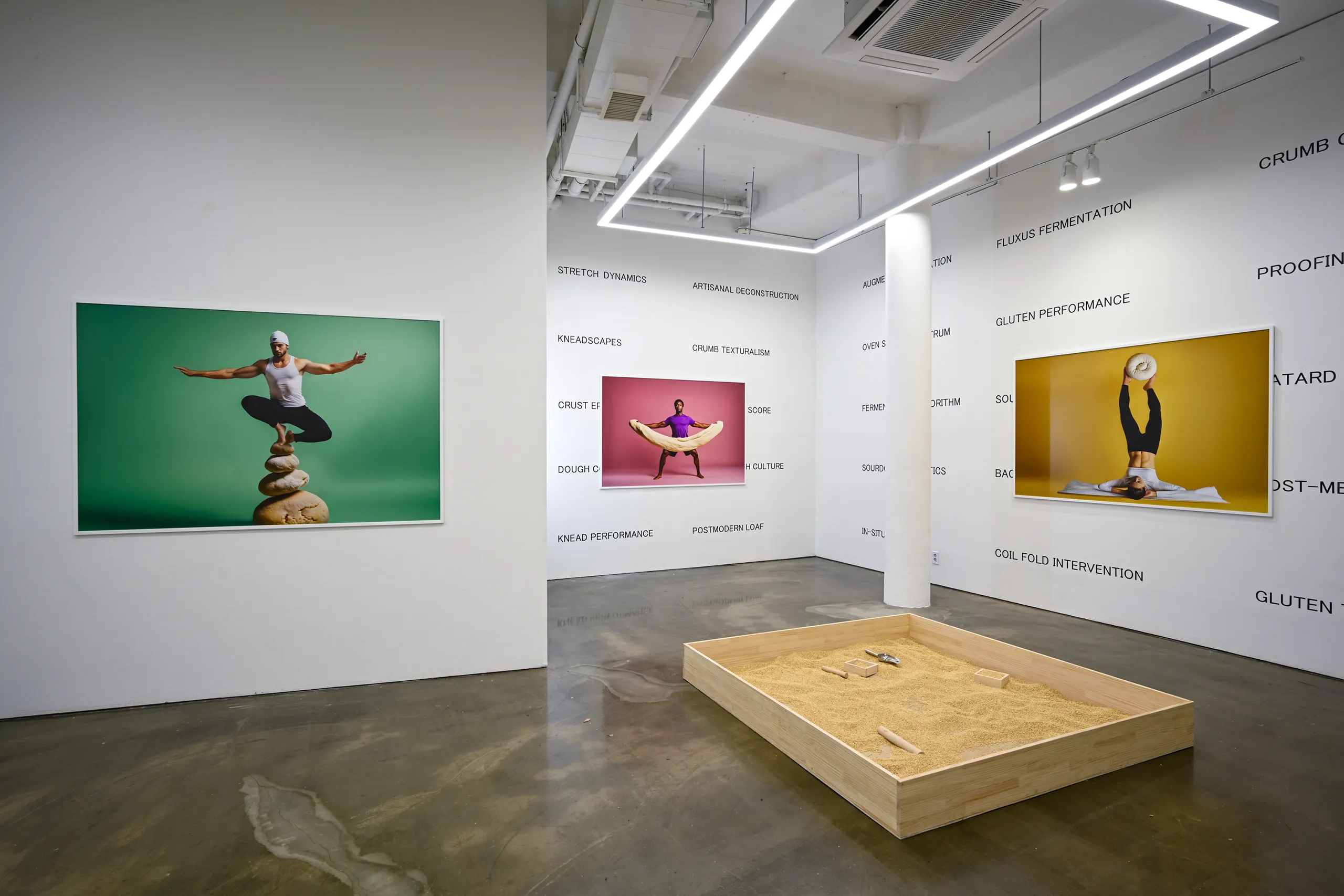
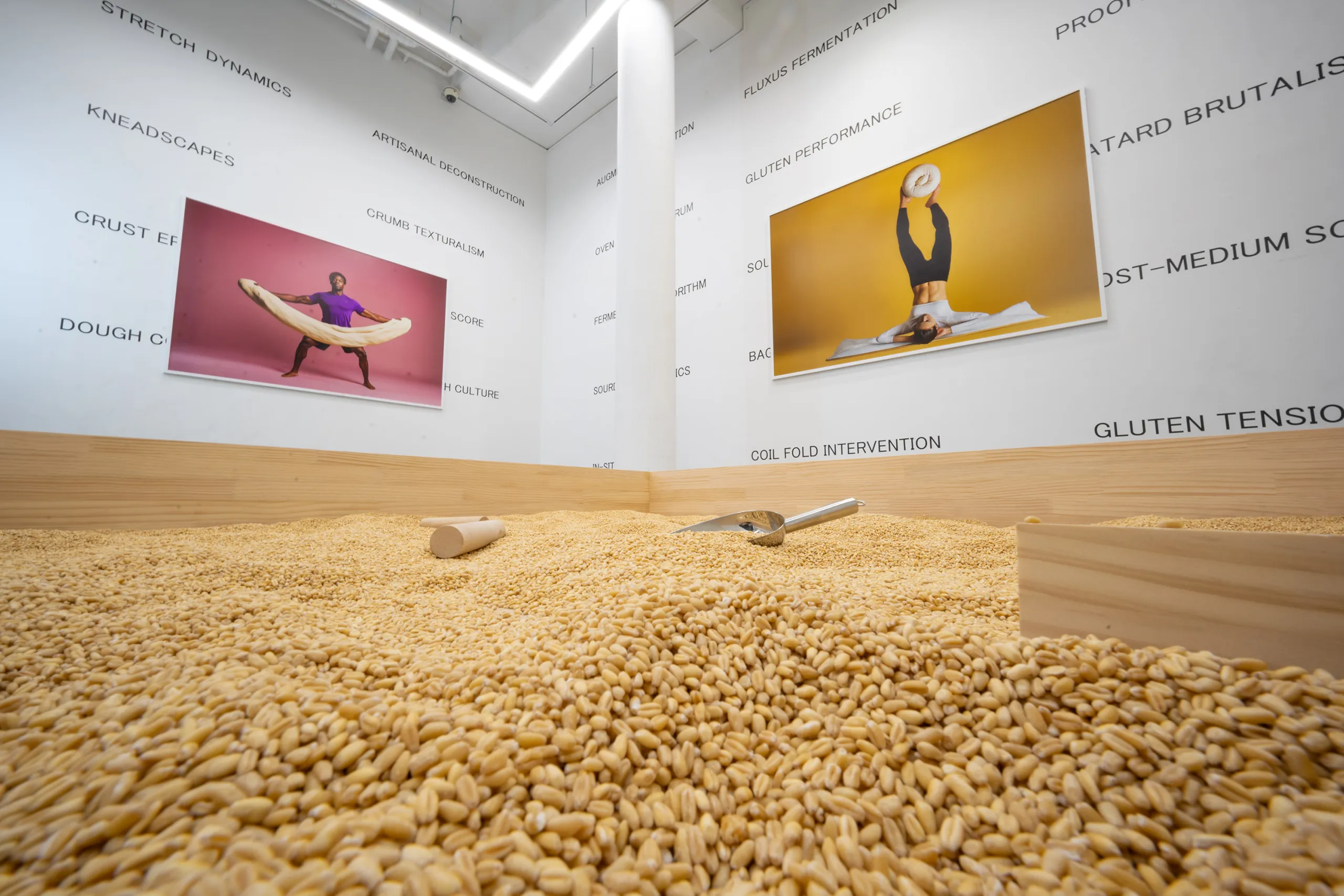
    Department of Bread turns a school’s promise of training into a question about who defines achievement. Bread-making becomes a way to examine the demands placed on artists: credentials, assessments and externally approved results can take priority over curiosity, creativity and learning.

    The fictional SAD school began in 2019. This department draws on my experience as both artist and educator, using familiar exercises and institutional language to make those pressures tangible.

    Exercises in validation

    Flourglass asks participants to practise an unnecessary skill, exposing how arbitrary a test of achievement can be. Shape and Score Clinic directs attention towards precision and prescribed standards, questioning what gets lost when conformity becomes the measure of learning.

    In Stretch, ordinary bread-making gestures become exaggerated poses. Their extravagance echoes the spectacle through which institutions present their authority.

    These exercises leave room for failure against an external standard. They ask whether participation, persistence and the desire to learn can matter even when they do not produce a certificate or a successful result.

    Department of Bread — exhibition installation view
    Department of Bread — exhibition installation view
    Department of Bread — work and exhibition documentation
    Department of Bread — work and exhibition documentation
    Department of Bread — work and exhibition documentation
    Department of Bread — work and exhibition documentation
    Department of Bread — work and exhibition documentation
    Department of Bread — work and exhibition documentation
    Department of Bread — work and exhibition documentation
    Department of Bread — work and exhibition documentation

    Exhibition press release · Gallery Chosun

  • 成功藝術家指南

    Media. 信報
    Date. 2020-09-02
    Text. 張綺霞

    https://www1.hkej.com//dailynews/culture/article/2567721/%E6%88%90%E5%8A%9F%E8%97%9D%E8%A1%93%E5%AE%B6%E6%8C%87%E5%8D%97

    在韓國教書後,Silas對藝術教育有更多反思,例如他要教導學生如何將創作變成事業。「我也不算很成功的藝術家,卻要教學生如何去『成功』。韓國藝術家很依賴資助,因此一些藝術家會教學生寫計劃書的技巧,卻讓學生的作品不自覺地迎合這些資助的要求和喜好。」

    他以此創作了一個虛構藝術學校,裏面全是可笑的「成為成功藝術家指南」。「究竟什麼才是成功?某程度上,所謂成功也是運氣使然,因為時機適合,讓他們的作品能在重要的展覽展出,有重要的藝術評論和策展人寫文章推介。但這是否成功唯一的定義?」

    雖然未算成功,但他在韓國的創作機會愈來愈多,太太在語言和生活上幫助他不少,他笑言,兩人之間也有良性競爭。「例如清州駐留計劃,我們各自也有申請和入選。」雖然她是畫畫為主,但兩人也會經常看對方的作品,給些意見。他笑道:「通常都是她請我說我才說,說到某些位見好就收,讓對方自己想一想。所以我們從未為作品問題吵架。」

    早前方琛宇在首爾衿川藝術空間舉辦個人展「SAD Info Days」,為嘉賓講解作品。(受訪者圖片)
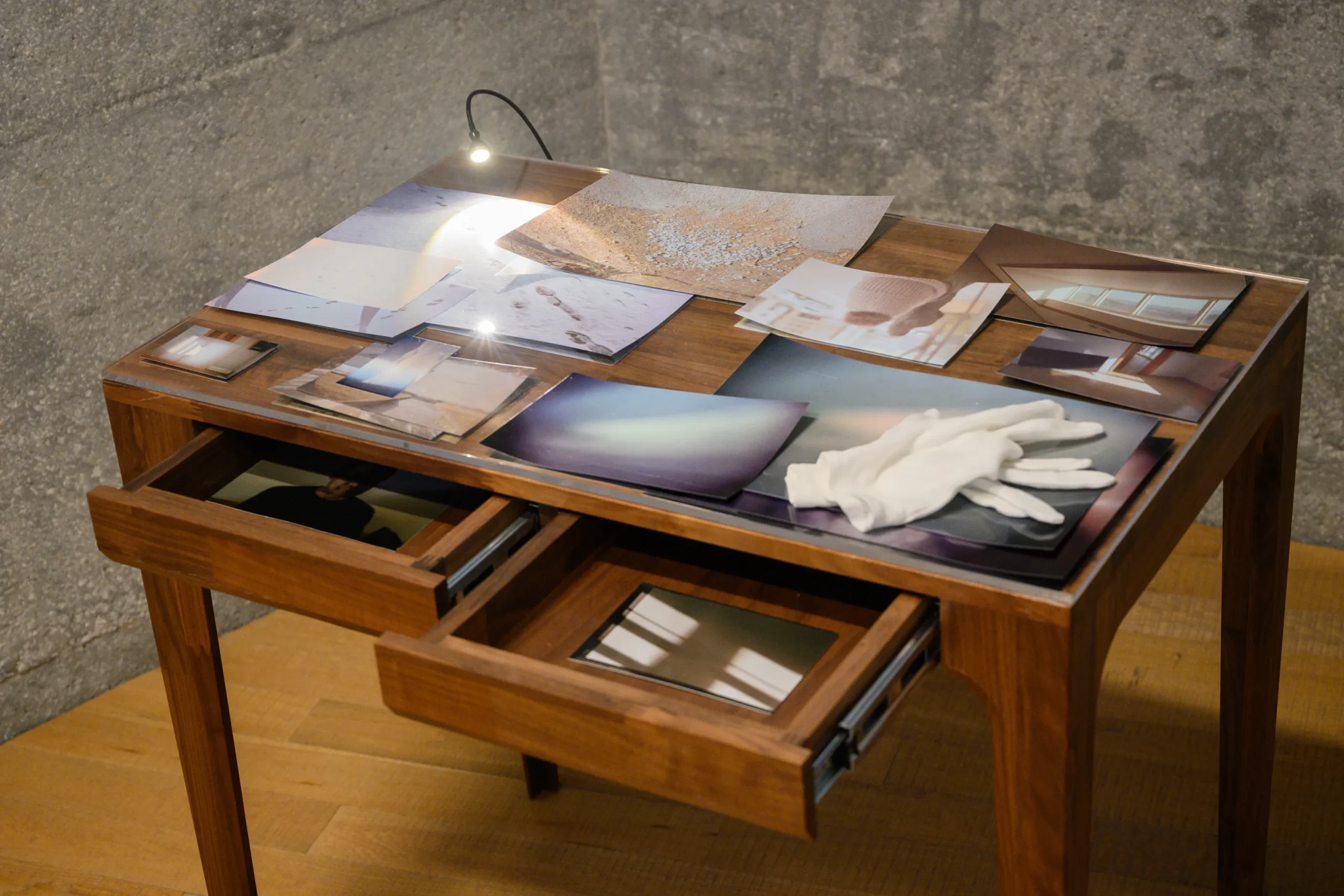
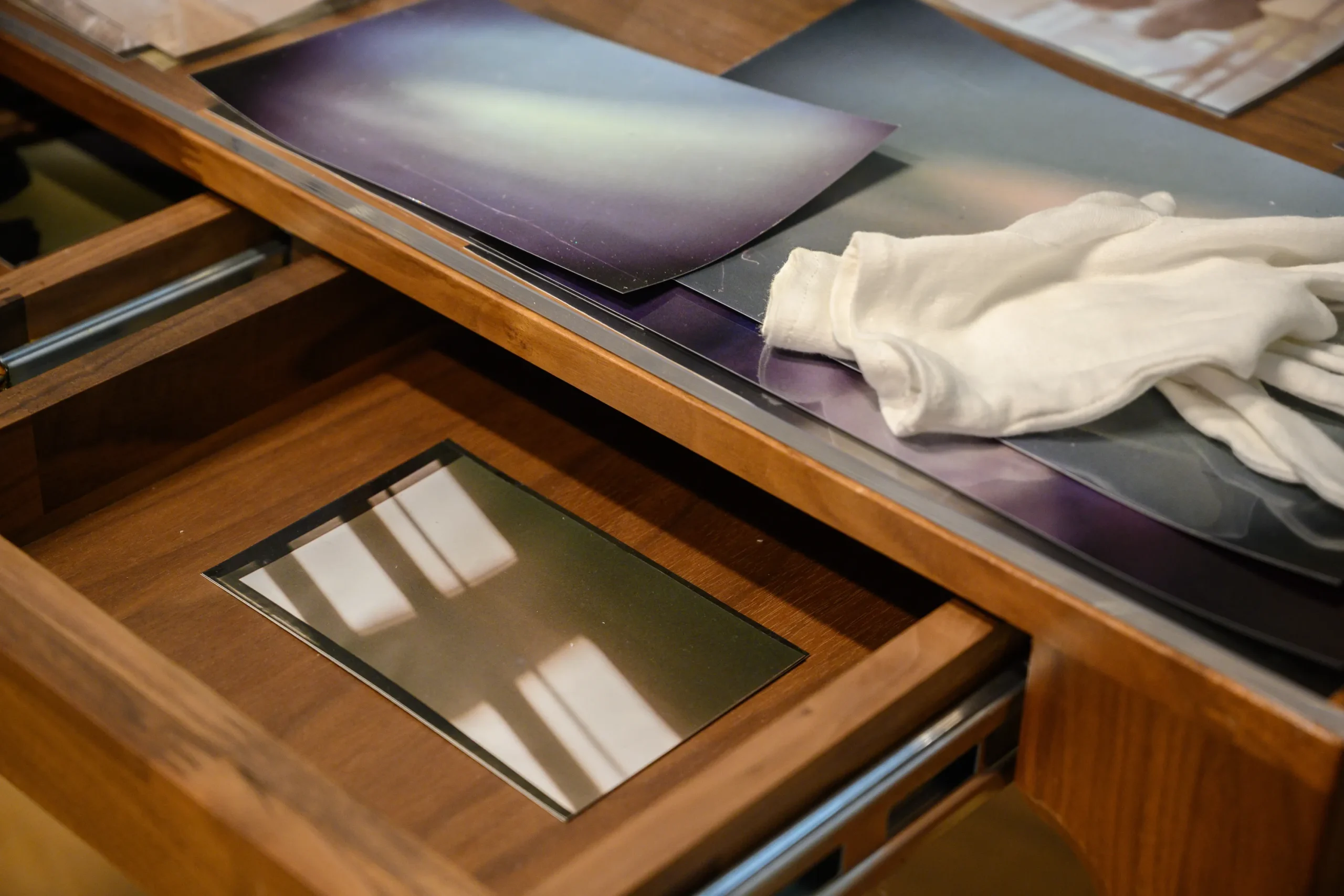
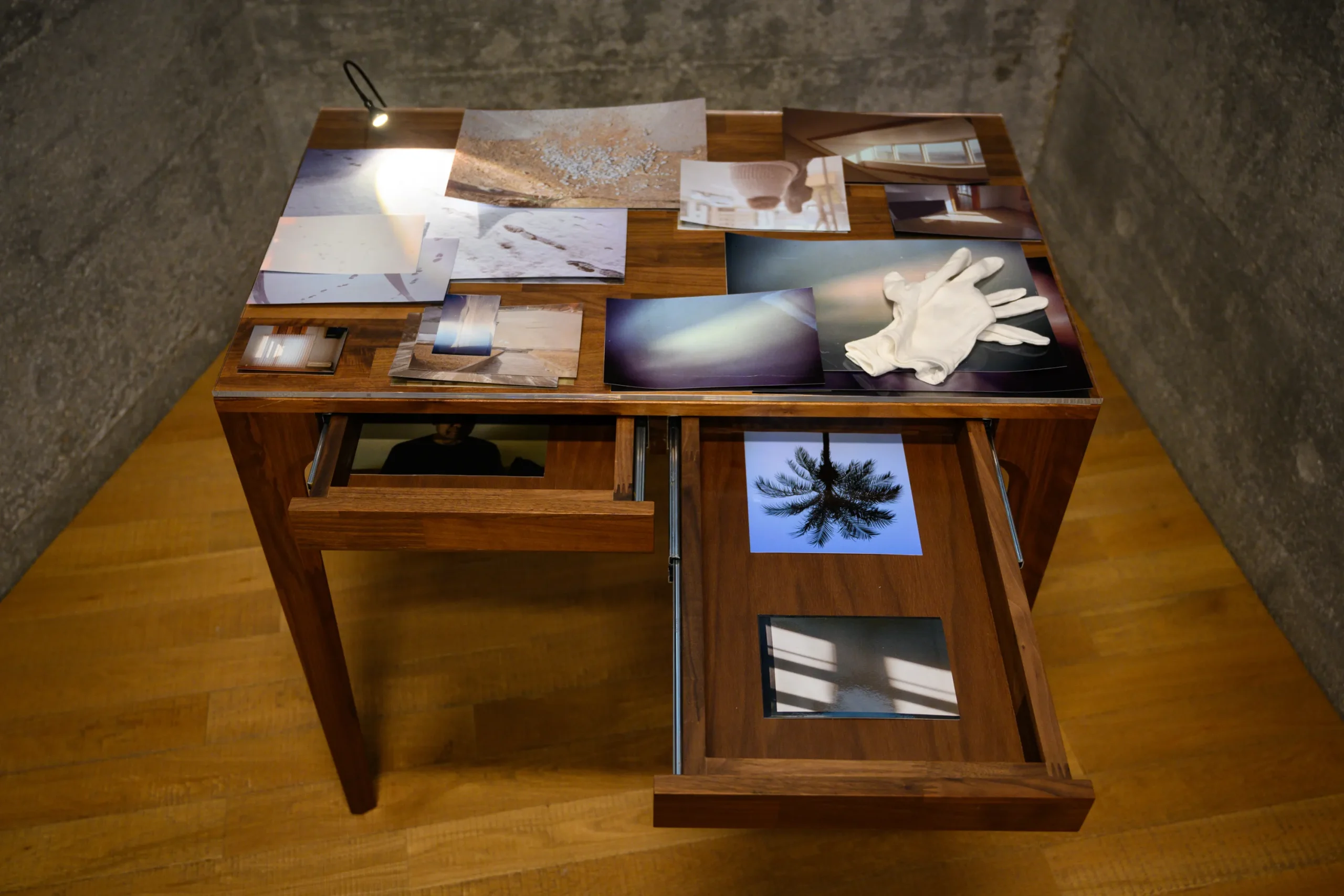
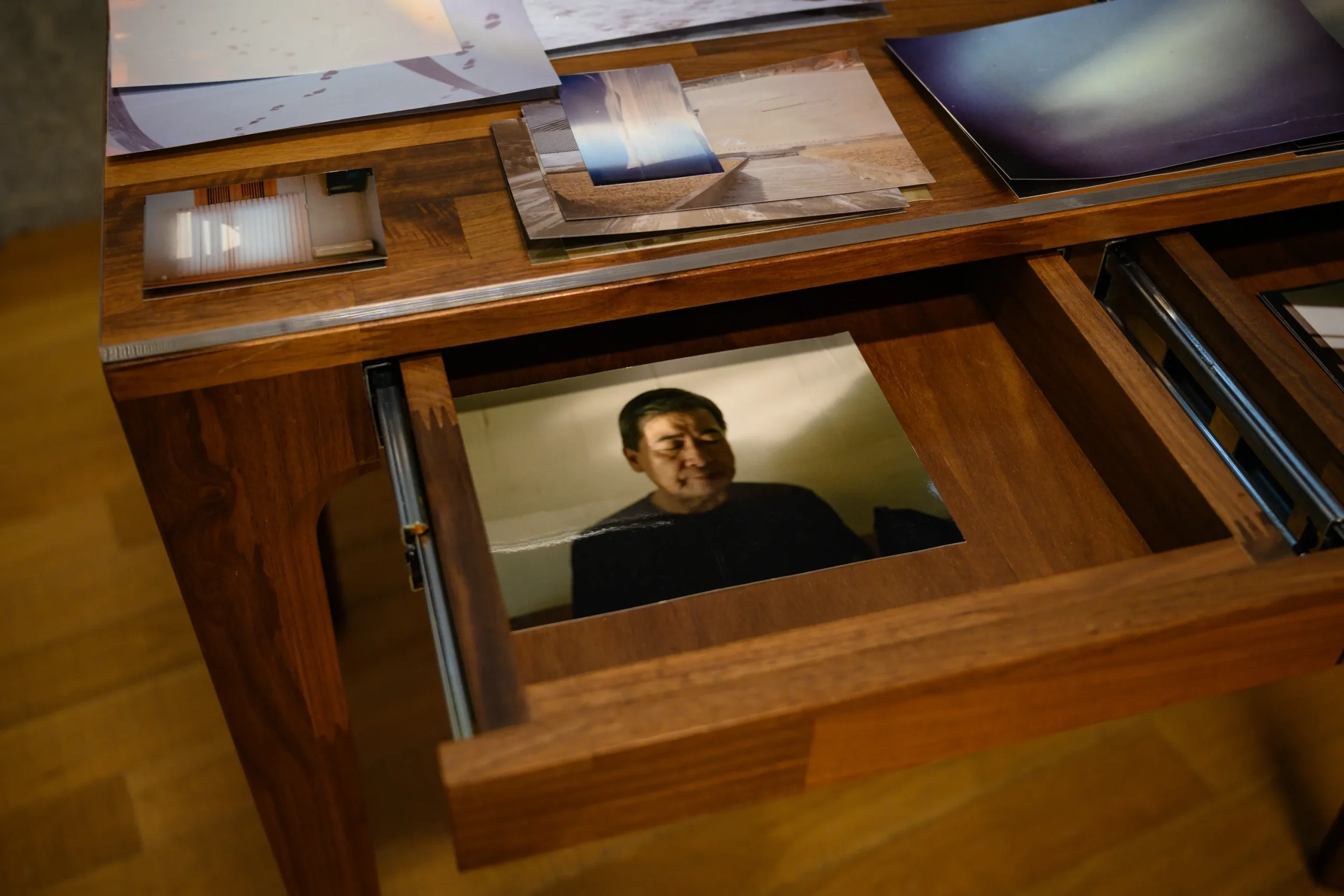
  • Stopping By Woods on a Snowy Evening (An Excerpt)

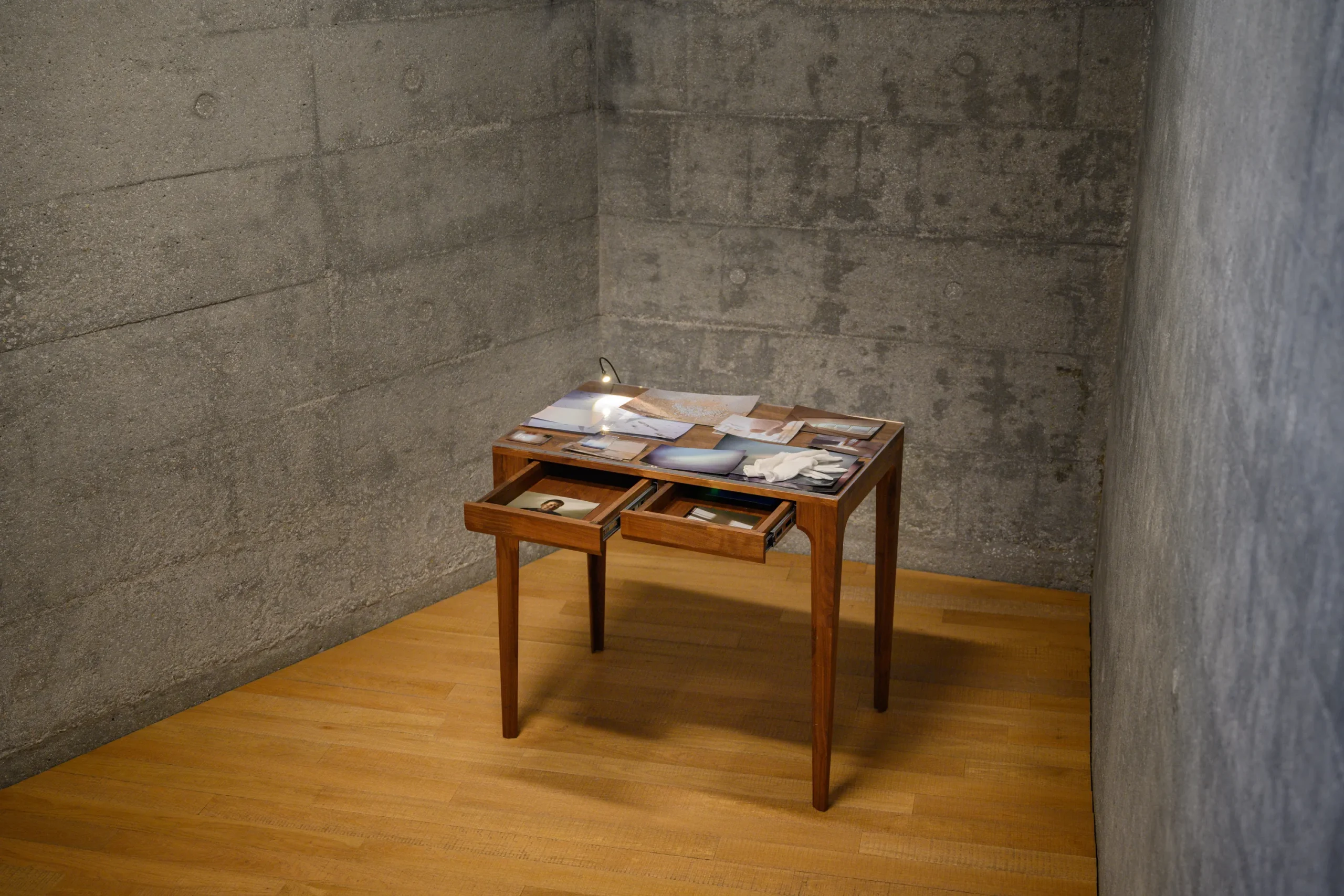
    Lambda prints, table, sound
    Size variable
    2020

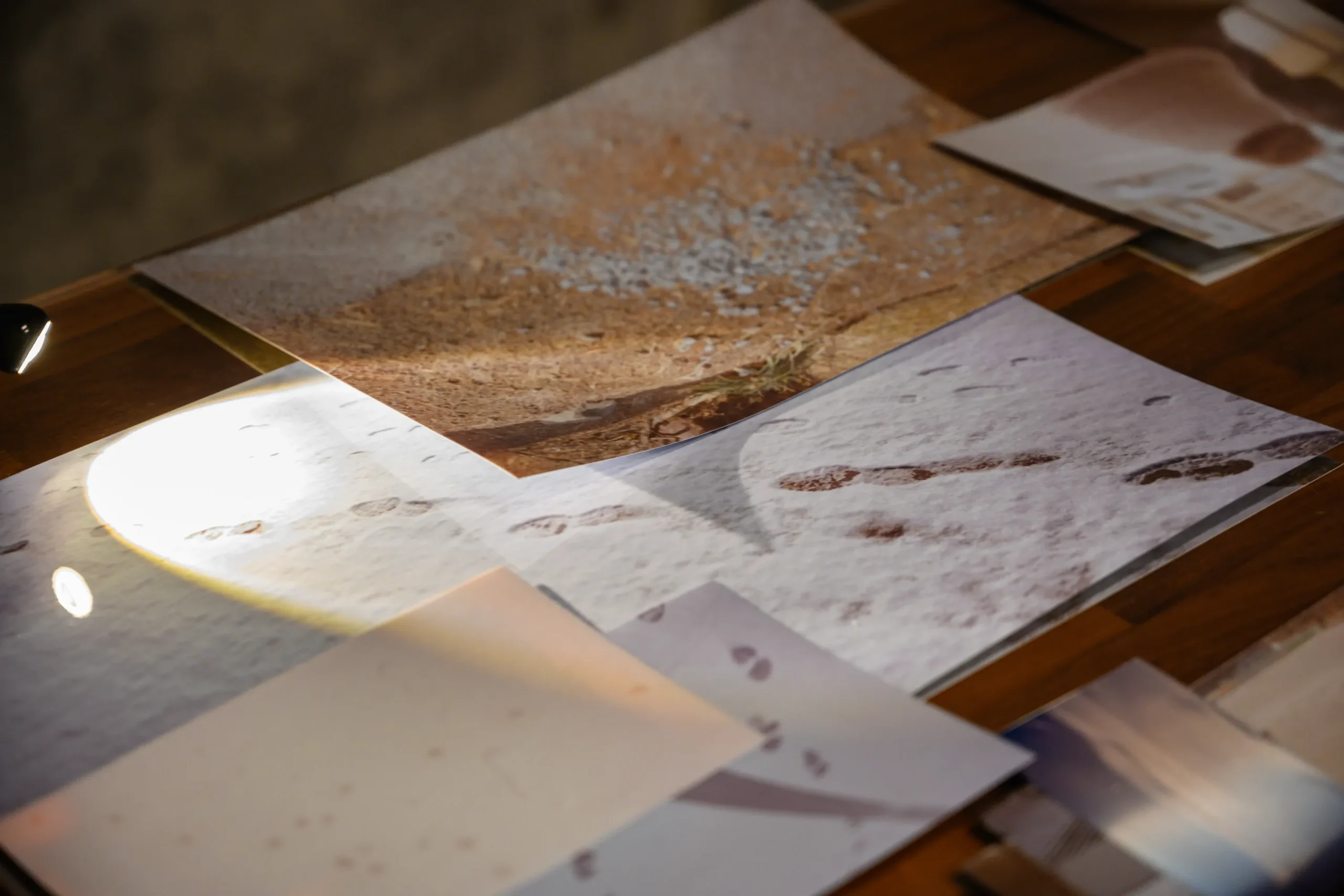
    A rearrangement from the exhibition with the same title exploring the possibility of spaces within and between images. Fong borrows the title of a poem by Robert Frost and loosely associates it with his life in foreign places. The audience is free to arrange the image sequence for their own reading.

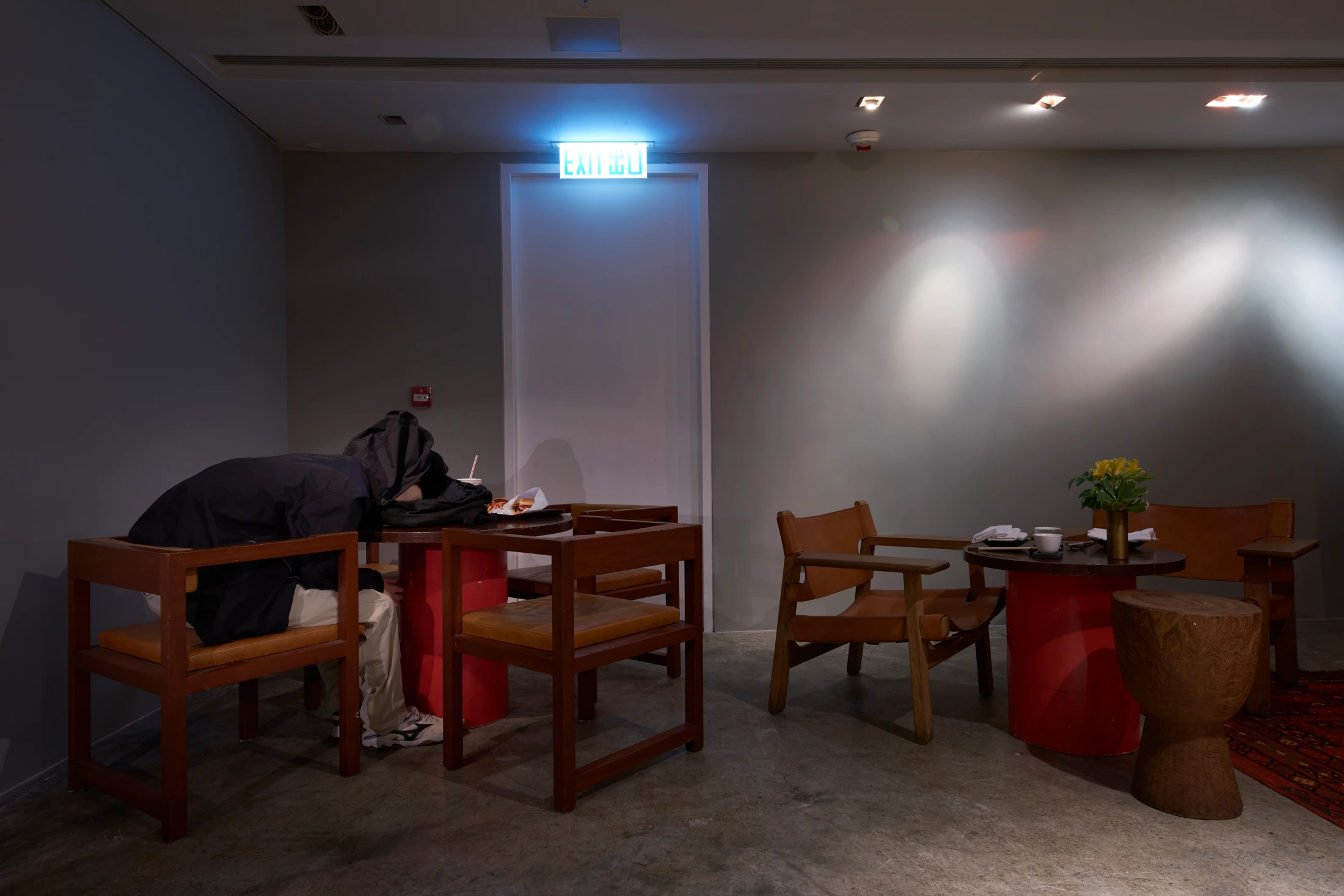
  • Enjoy Your Meal!

    Exhibited at Duddell’s, Hong Kong, 2 Aug – 23 Sep 2018
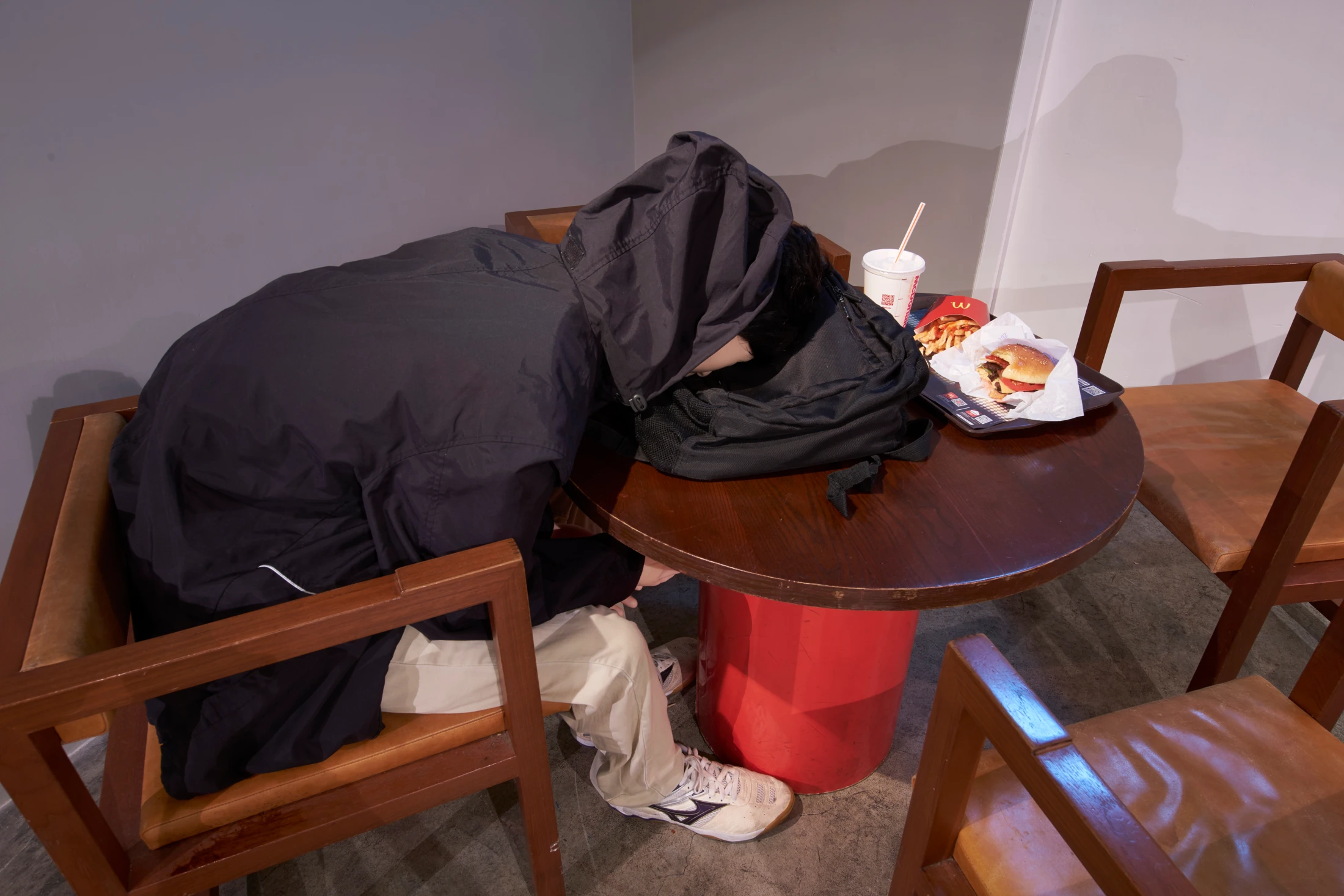
    Clothing, Dummy, Plastic Food Model
    2018

    In 1959, Mark Rothko accepted a commission from Four Seasons restaurant in New York City. “I hope to paint something that will ruin the appetite of every son of a bitch who ever eats in that room”. Sounds dramatic enough, but he failed and returned the money because he found that ‘people can stand anything these days’. I was curious about what I could do in a high-end restaurant, while contributing to the context of this exhibition.
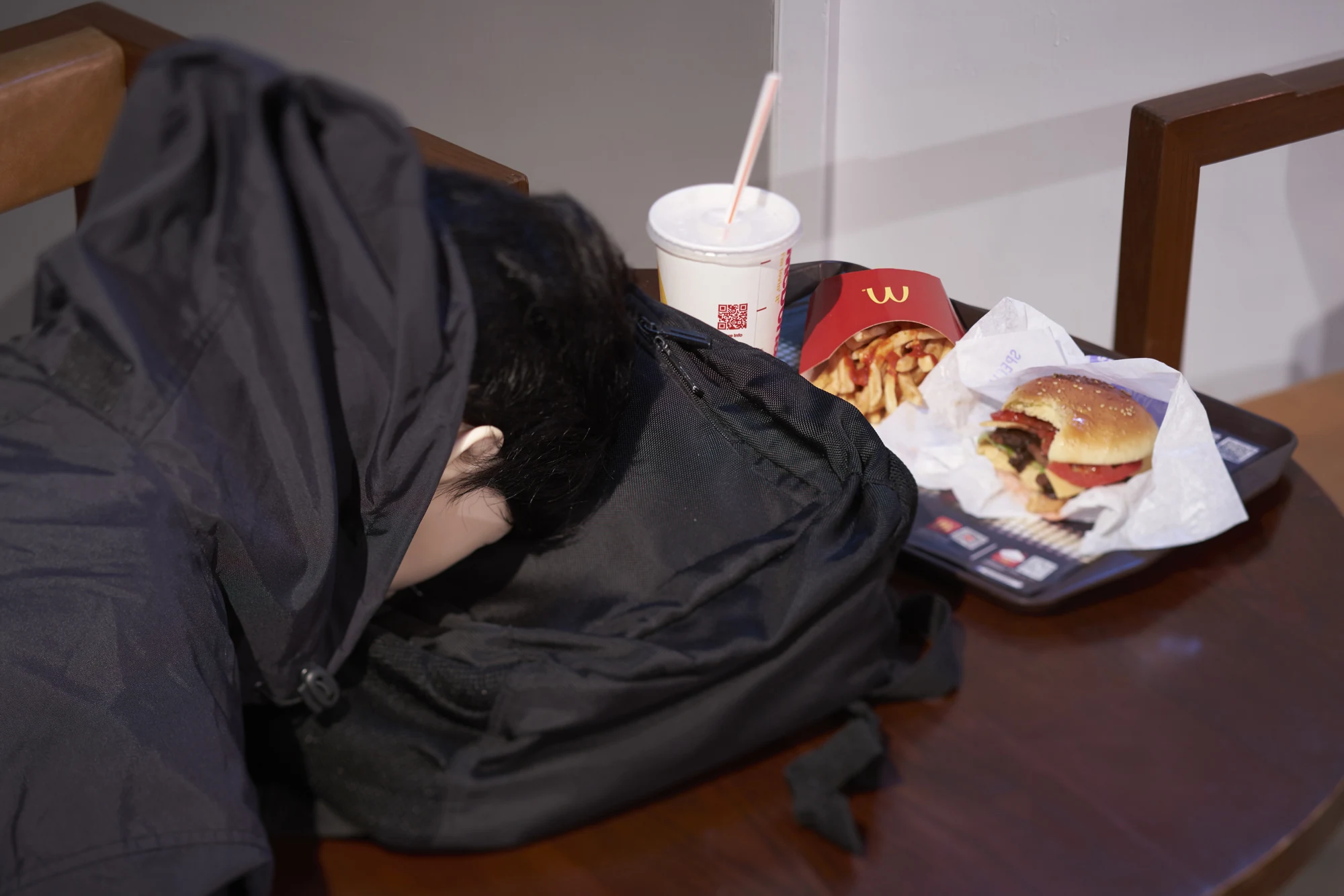
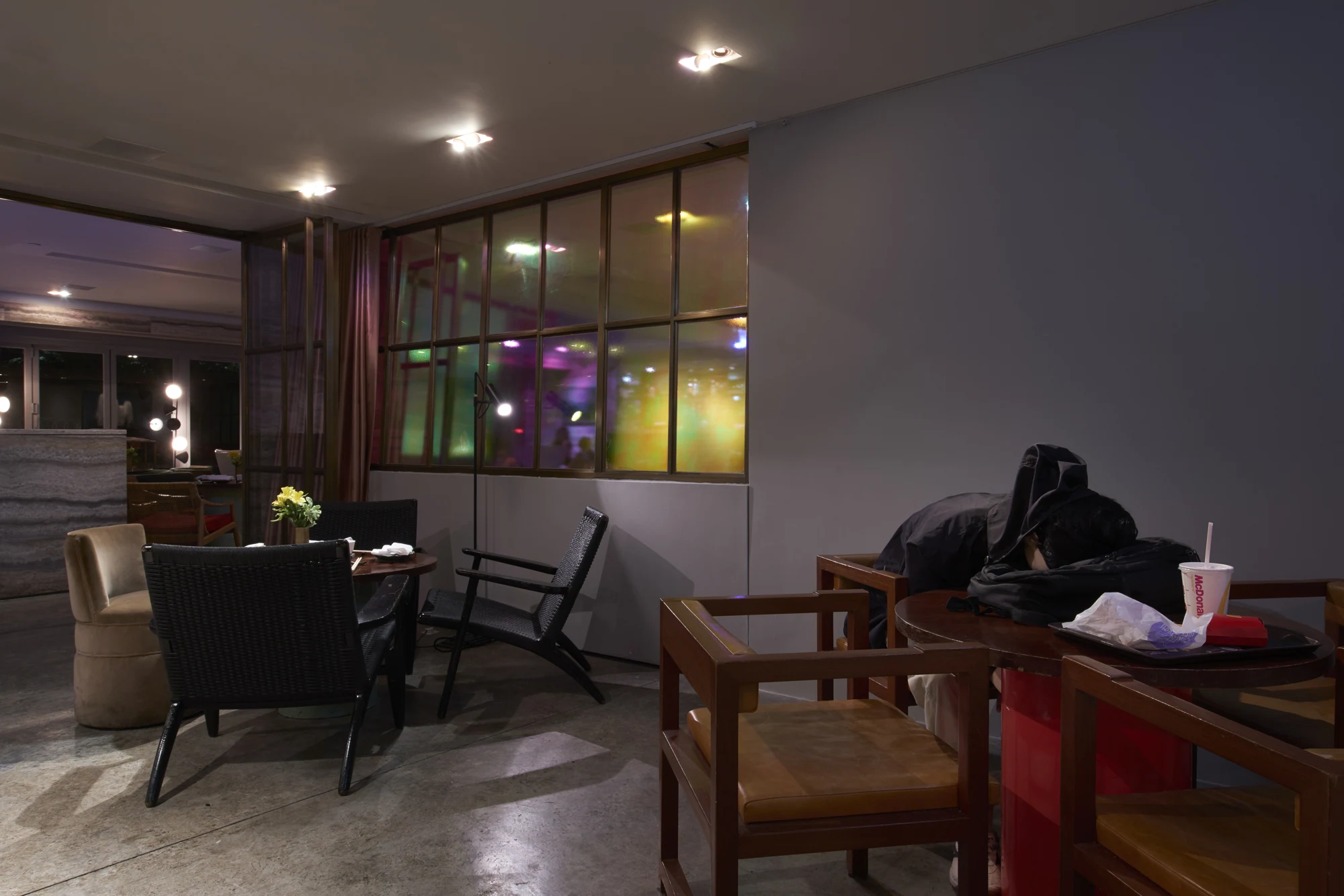
    Enjoy Your Meal! is a scene recreated to depict the McRefugee phenomenon and the problem of extreme shortage in affordable housing situation in Hong Kong.

    Enjoy Your Meal!, installation detail, Duddell’s, 2018.
    Enjoy Your Meal!, installation view, Duddell’s, 2018.
    Enjoy Your Meal!, figure at the restaurant table, 2018.
    Enjoy Your Meal!, wider installation view in Duddell’s restaurant, Hong Kong, 2018.