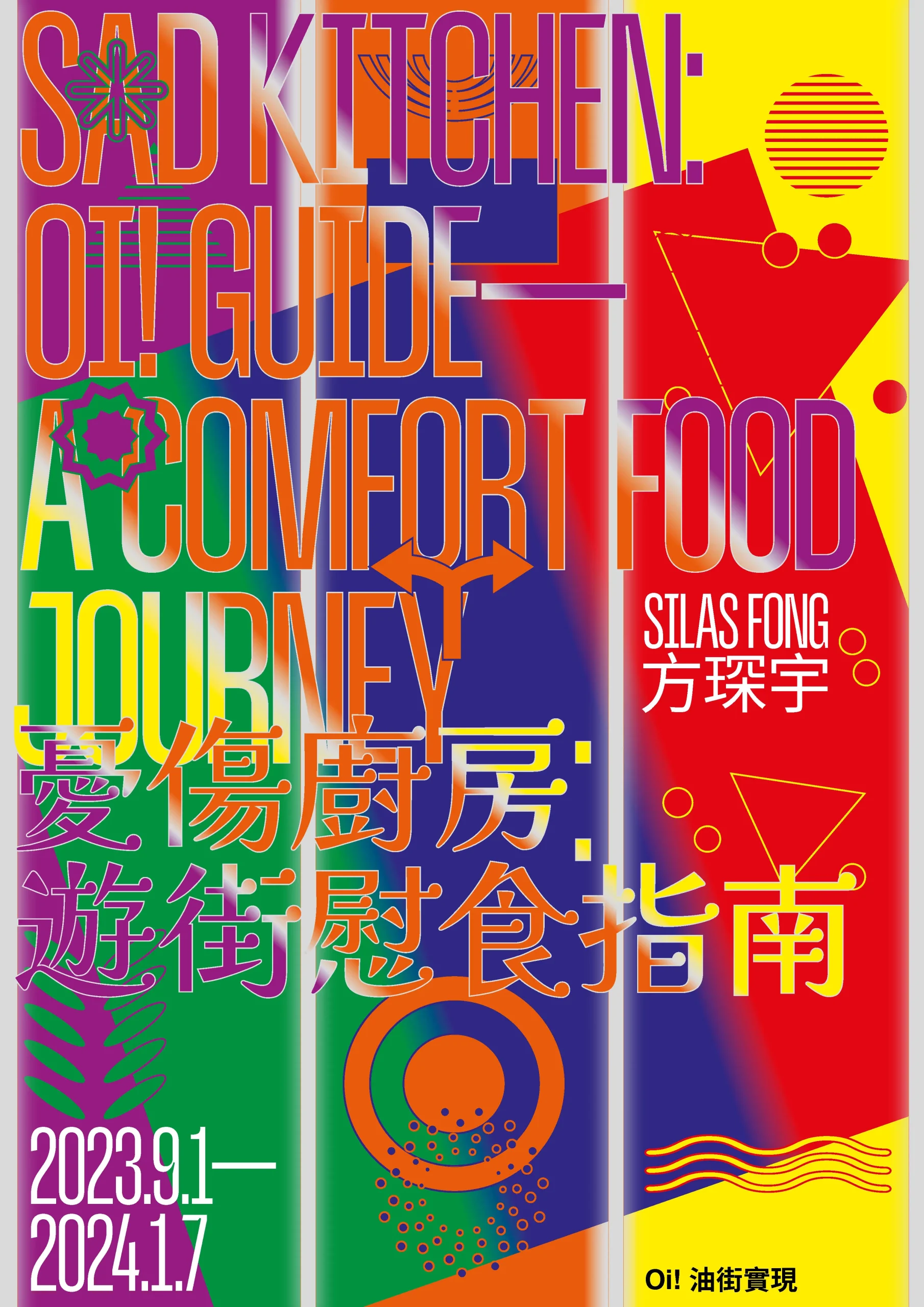
Solo Exhibition at Oi!, Hong Kong, 1 Sep 2023 – 7 Jan 2024
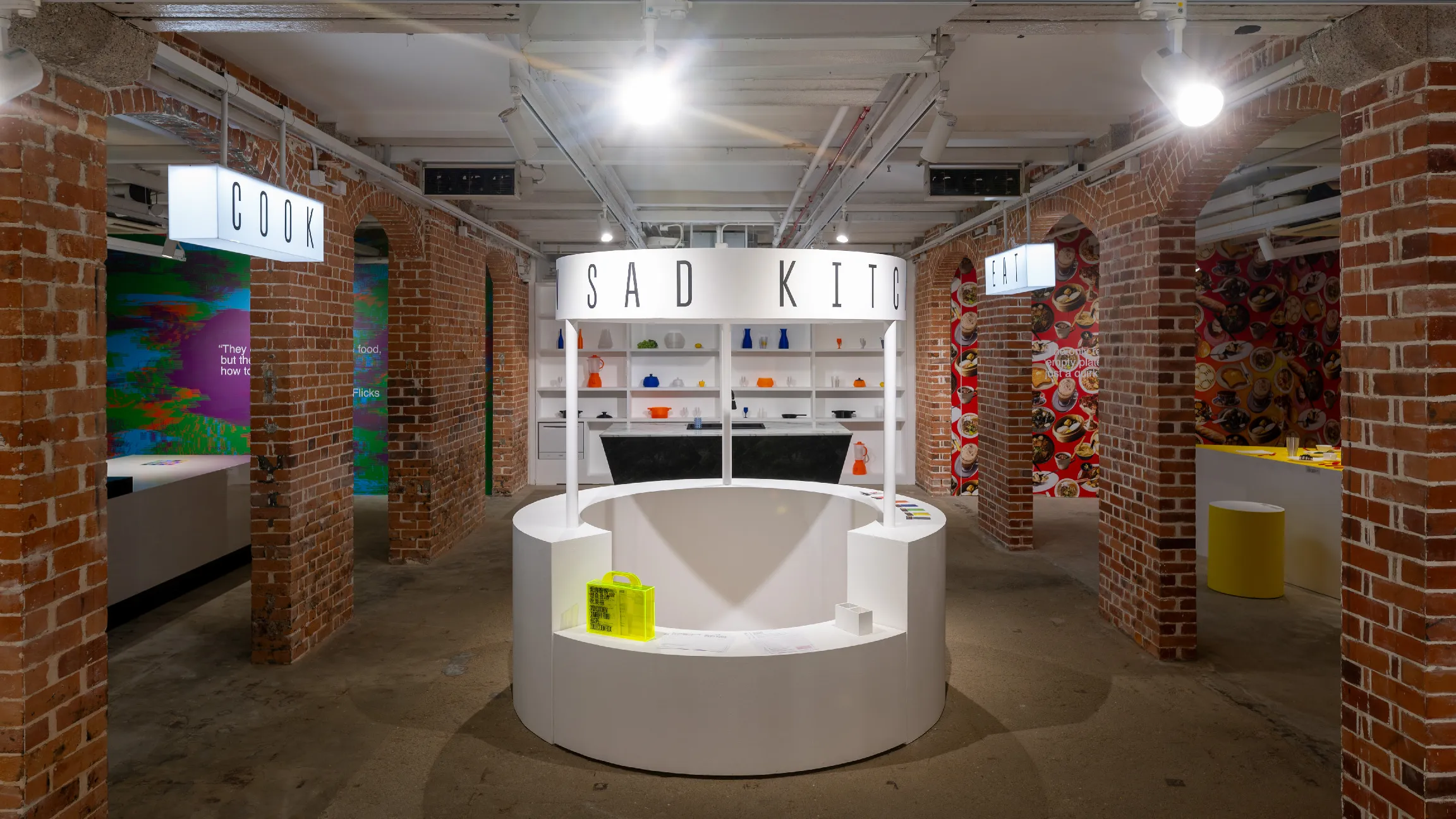
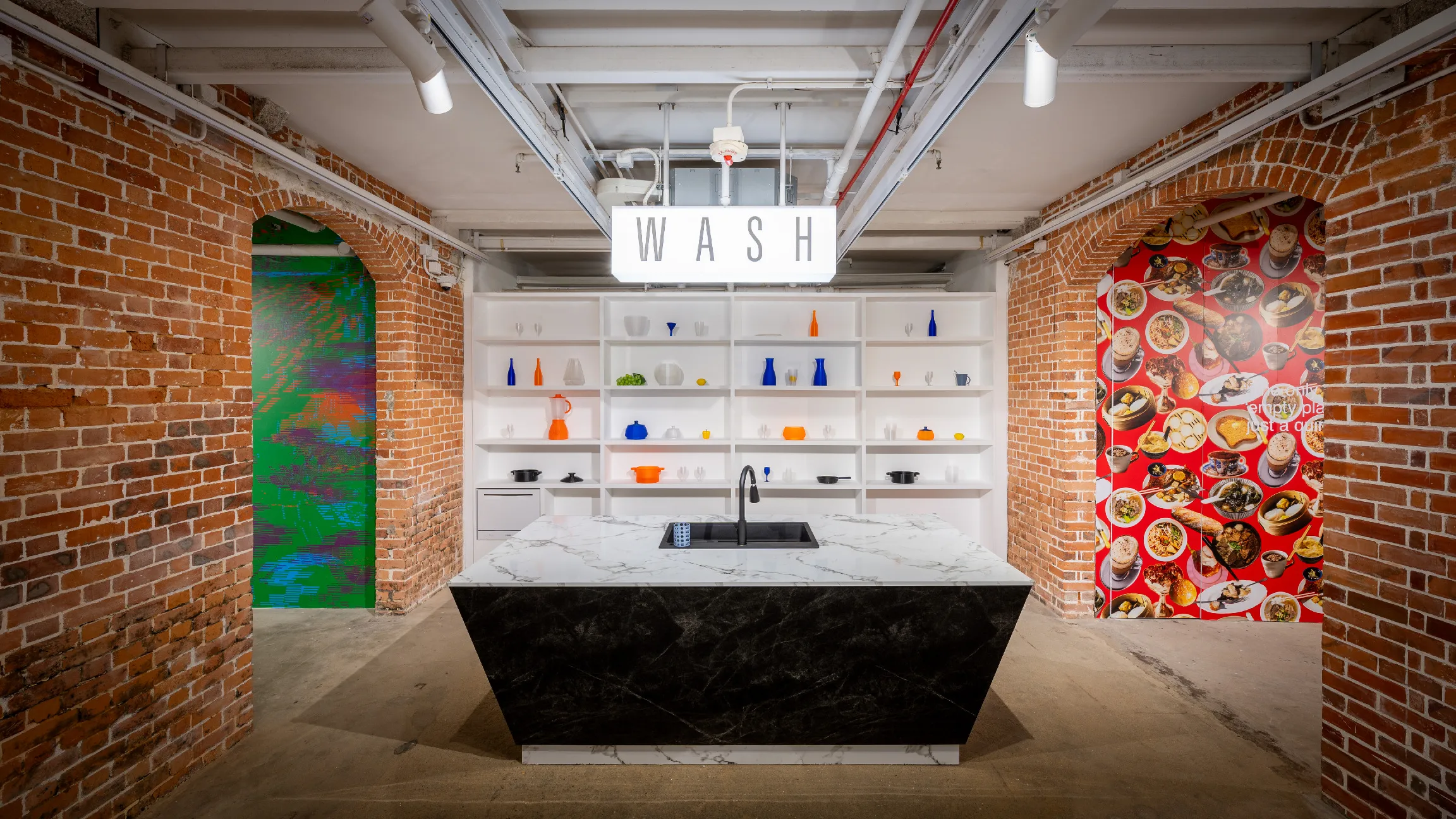
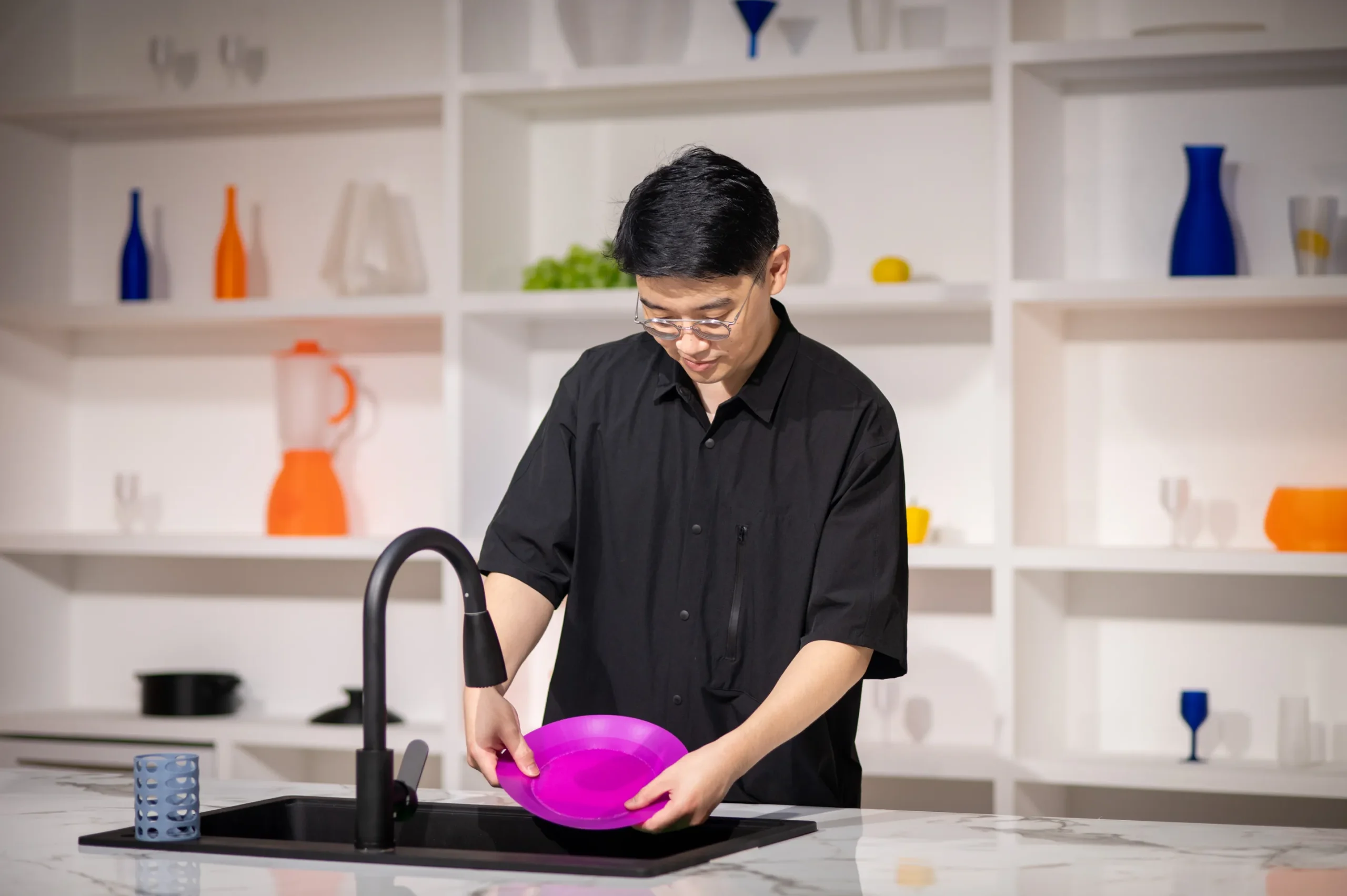
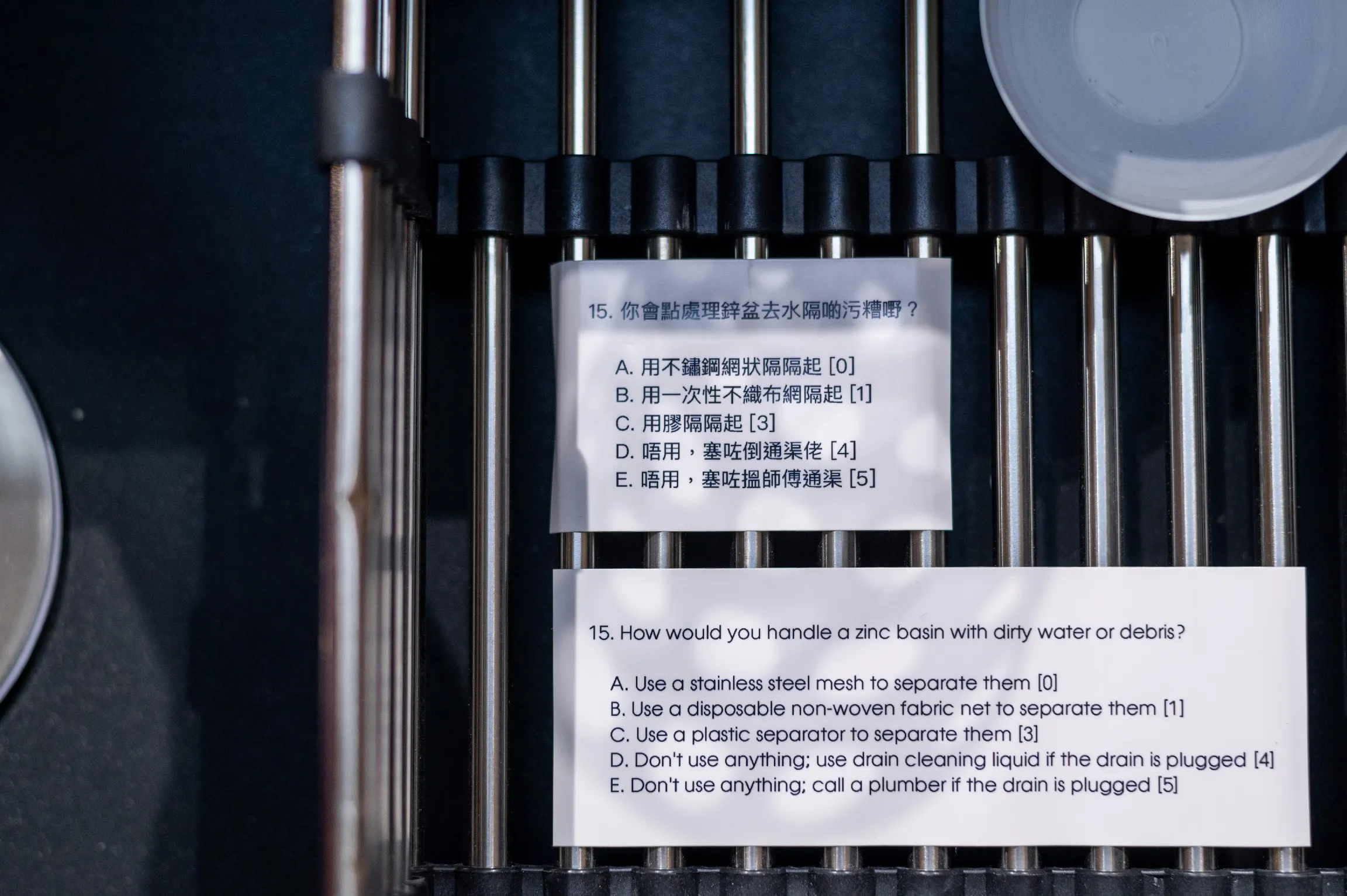
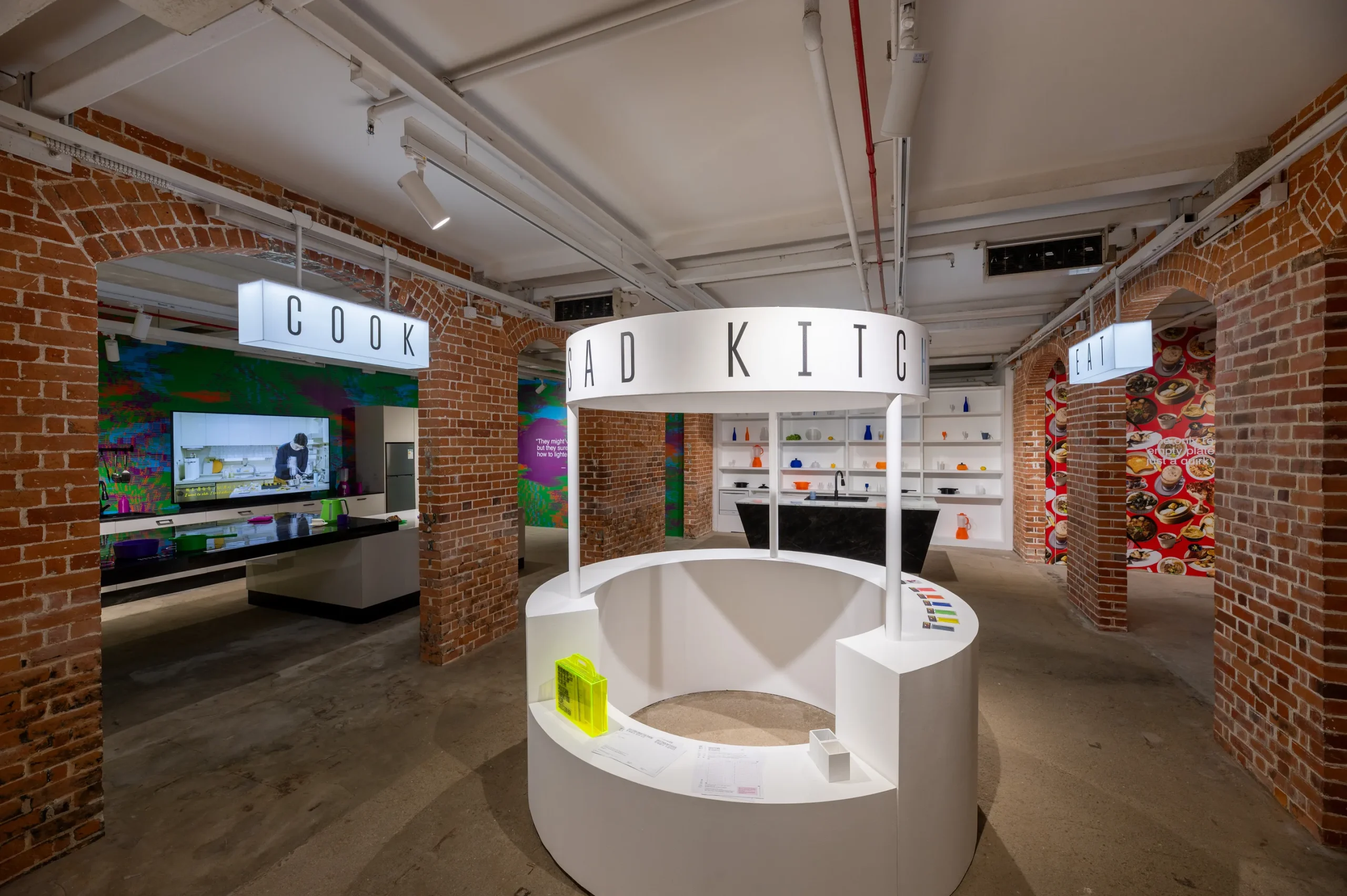
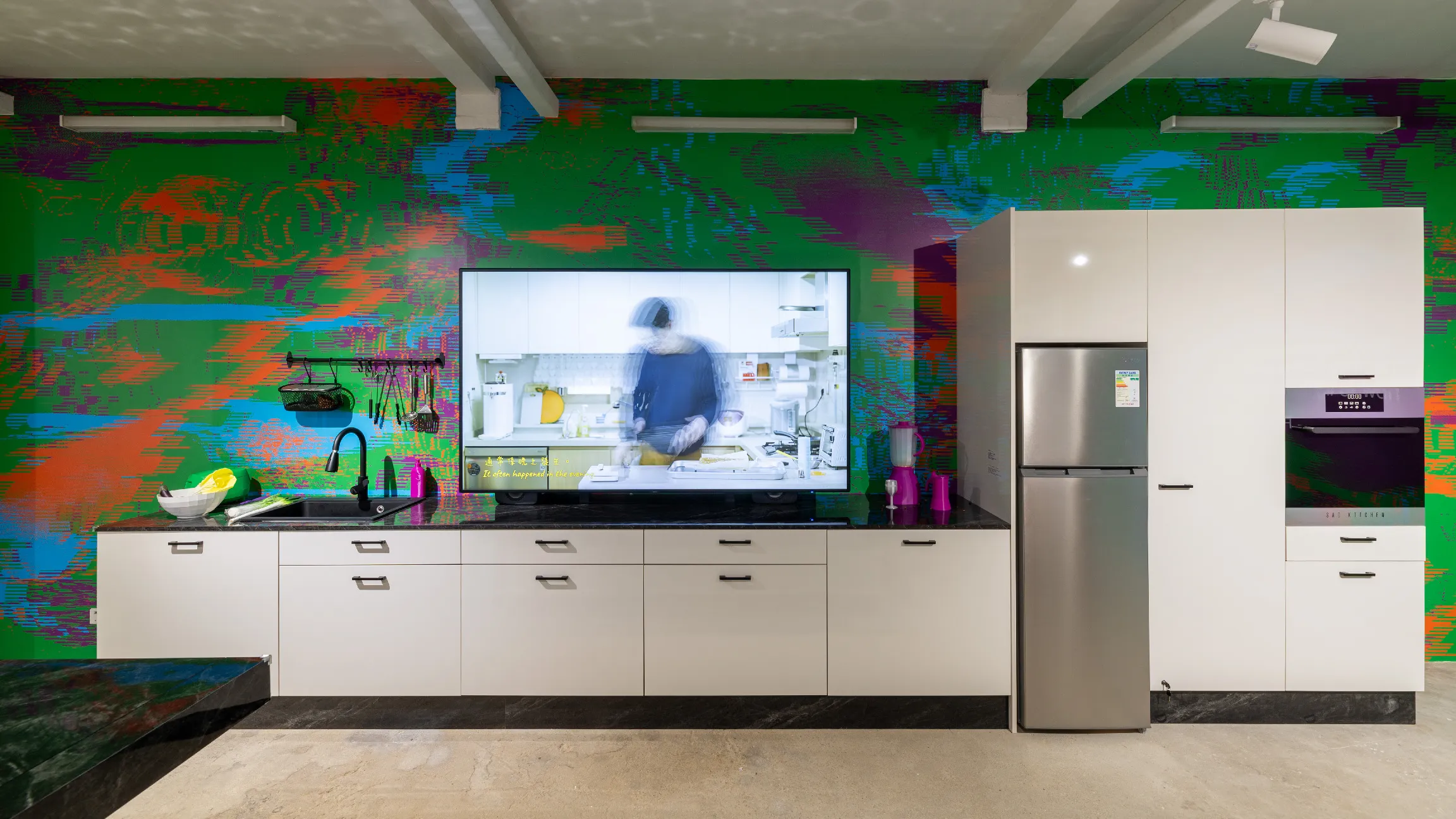
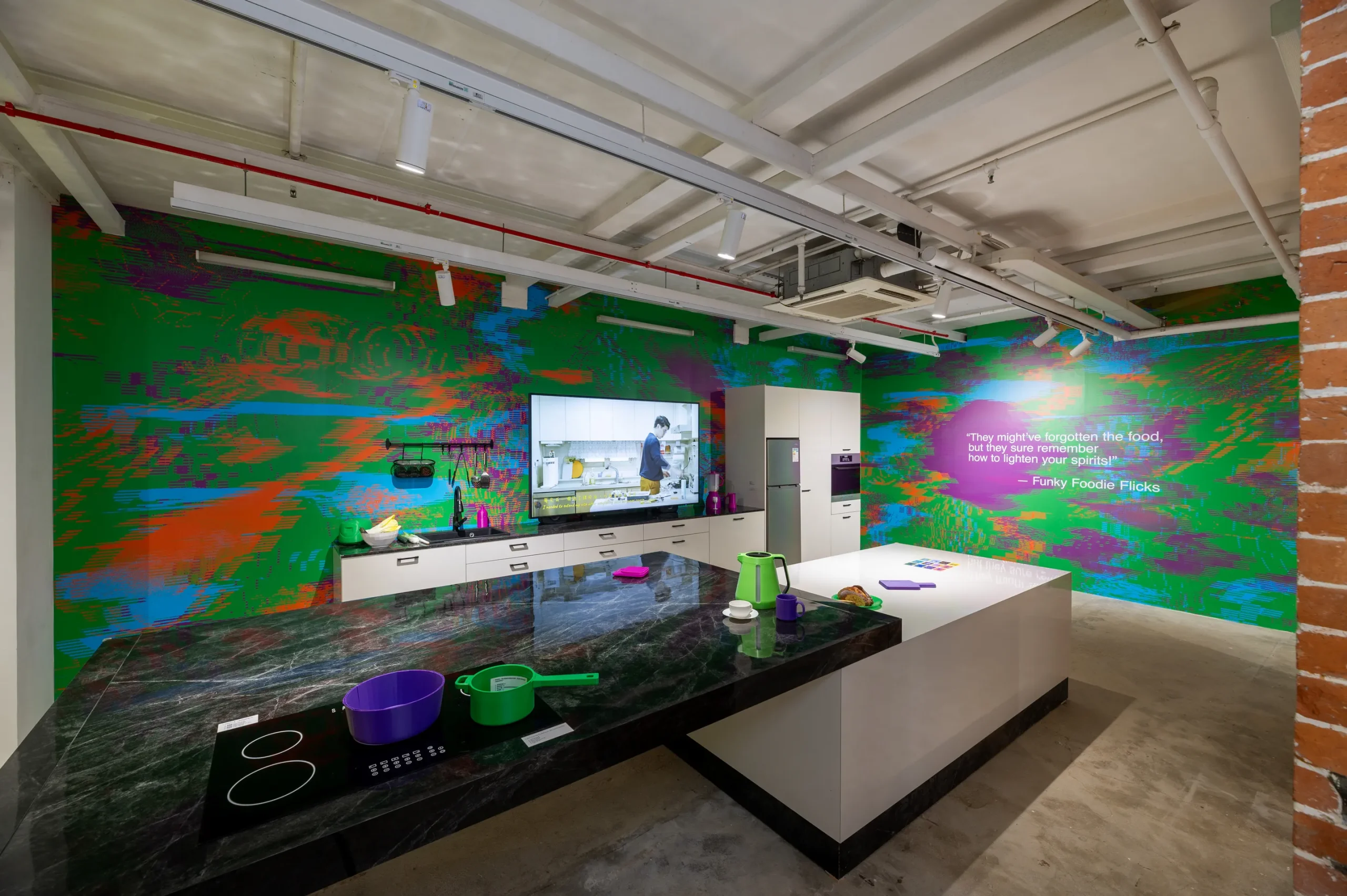
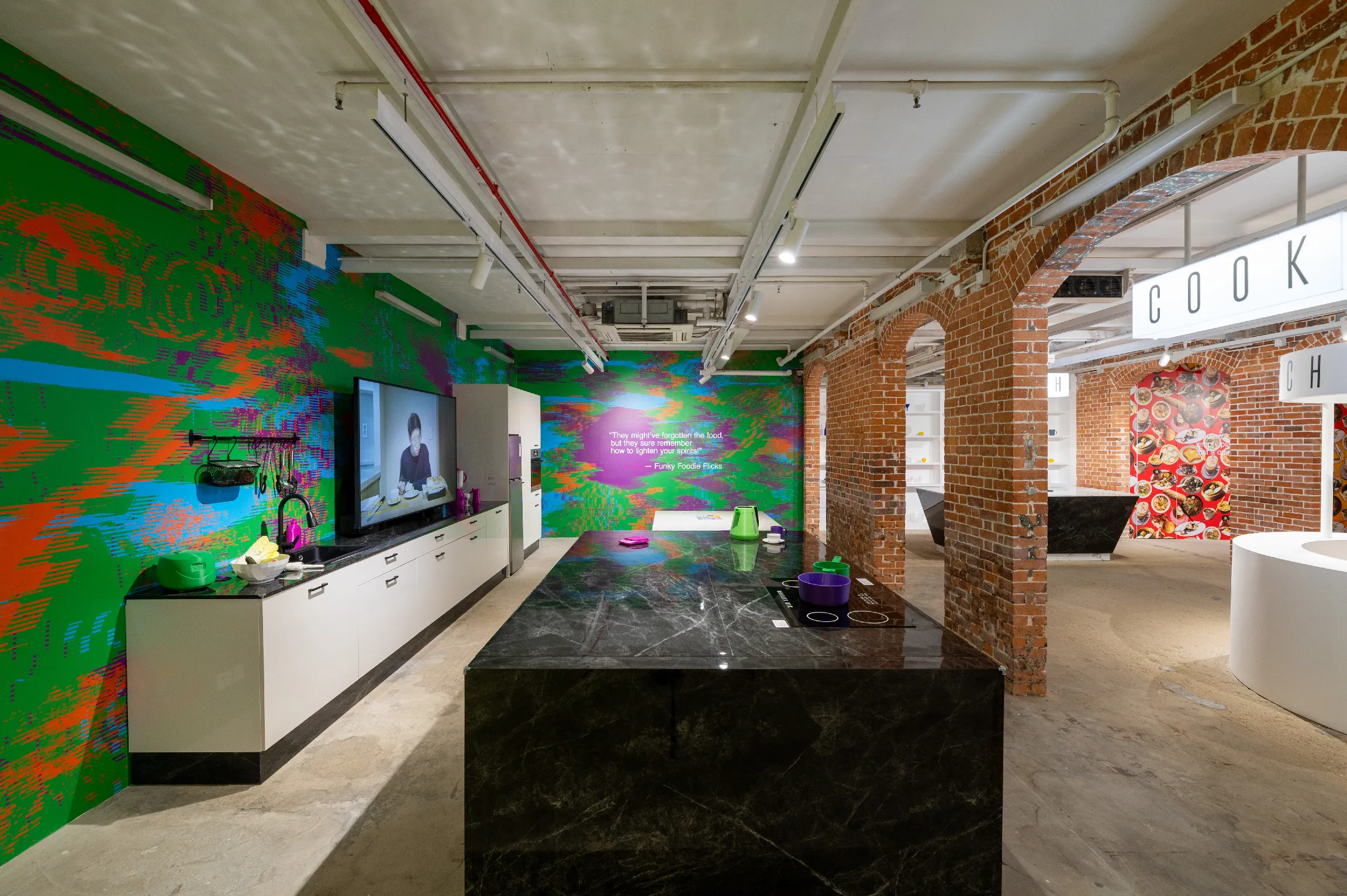
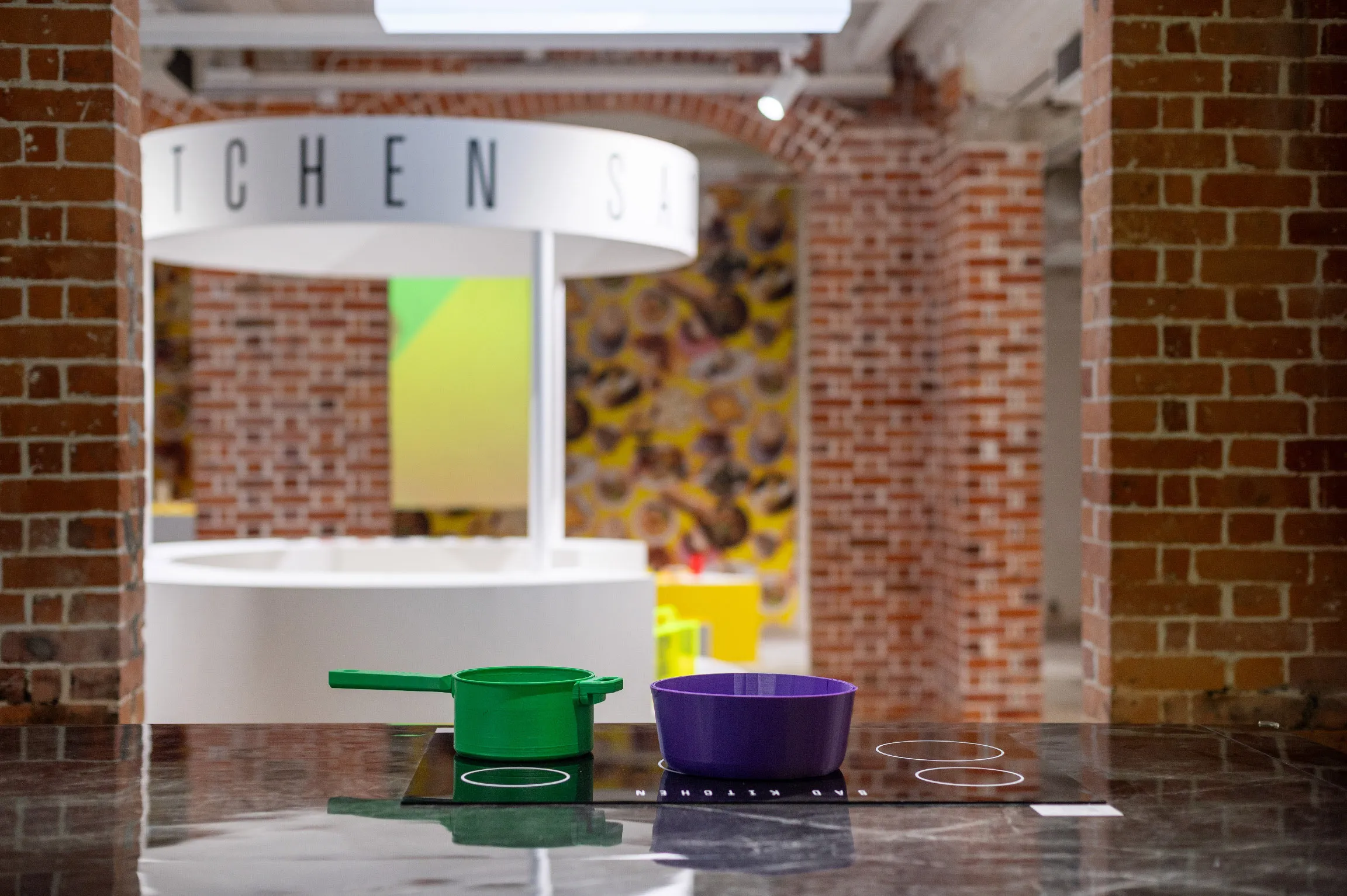
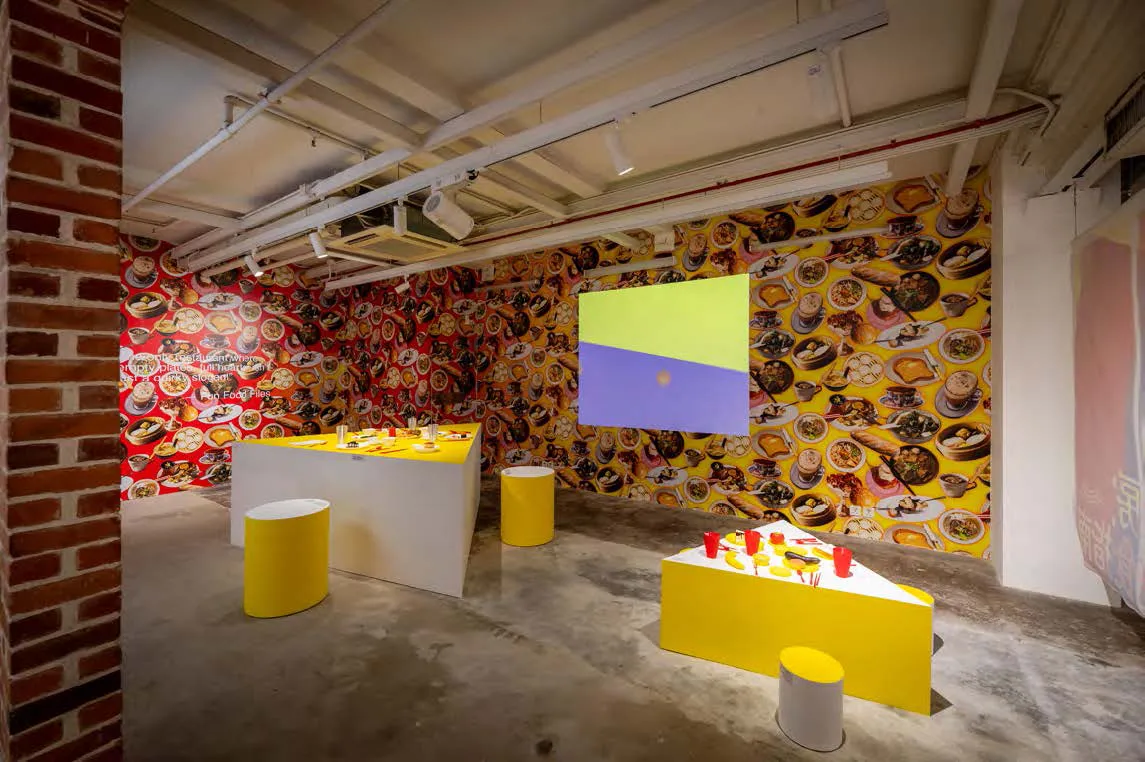
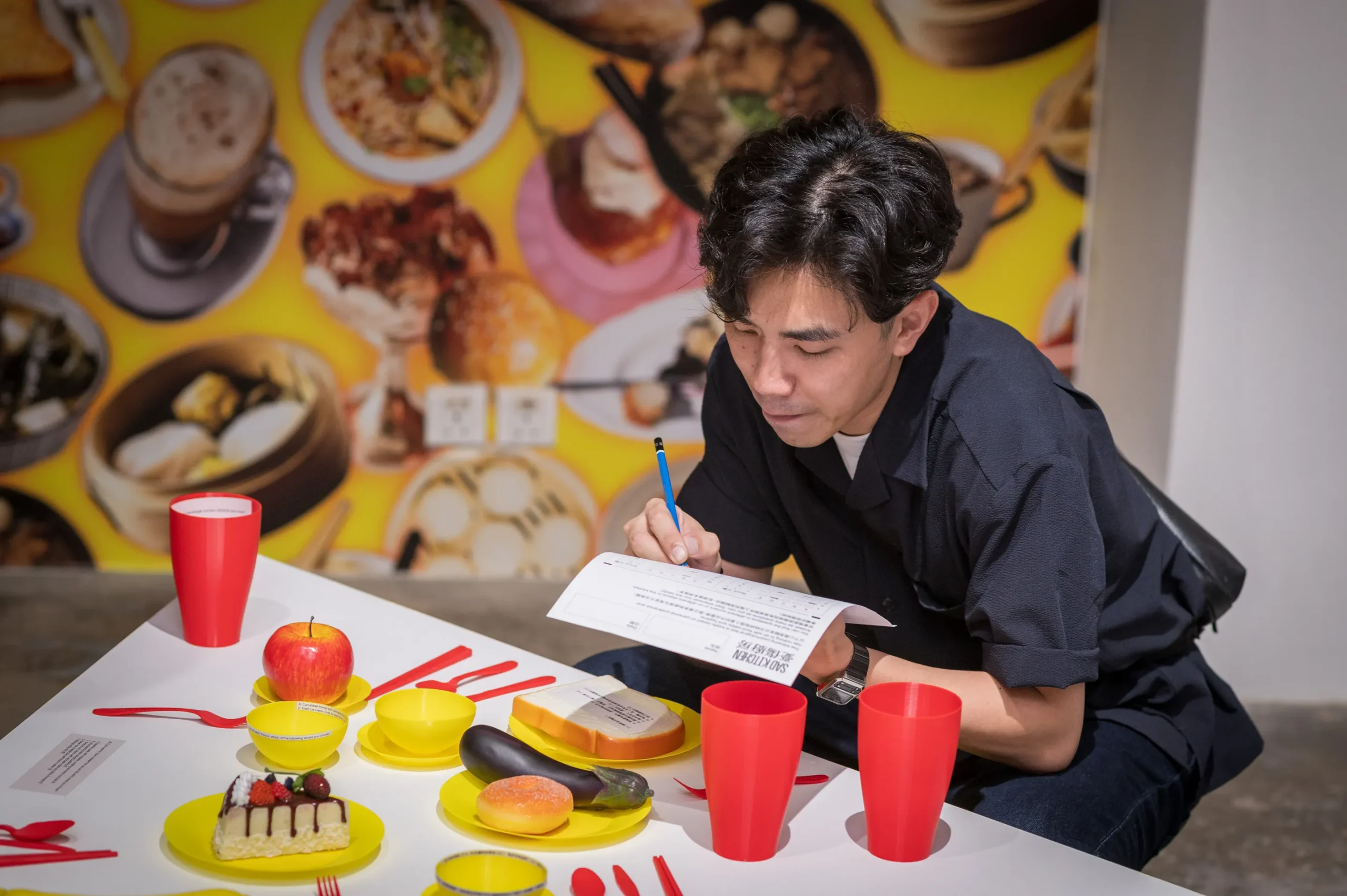
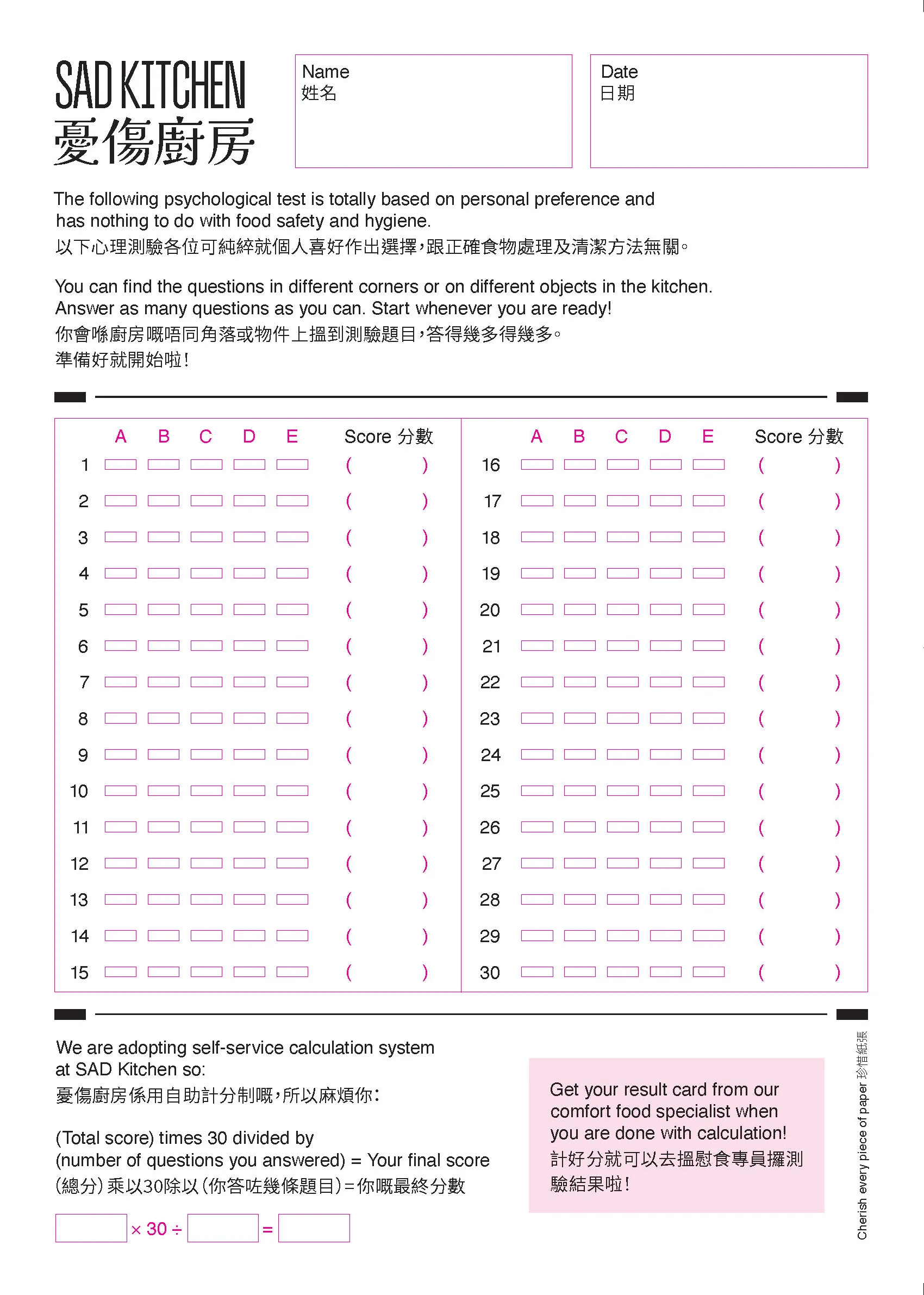
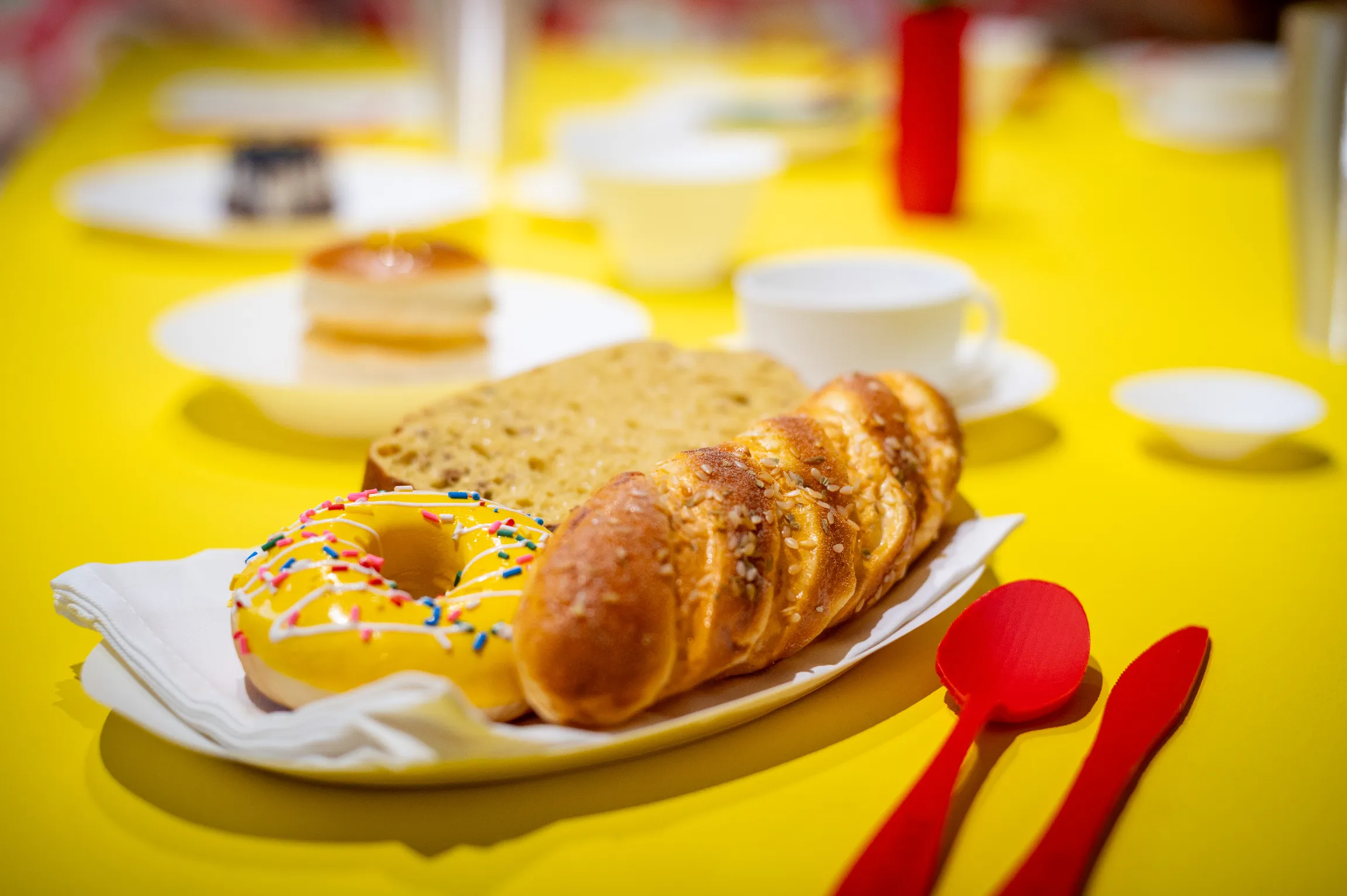
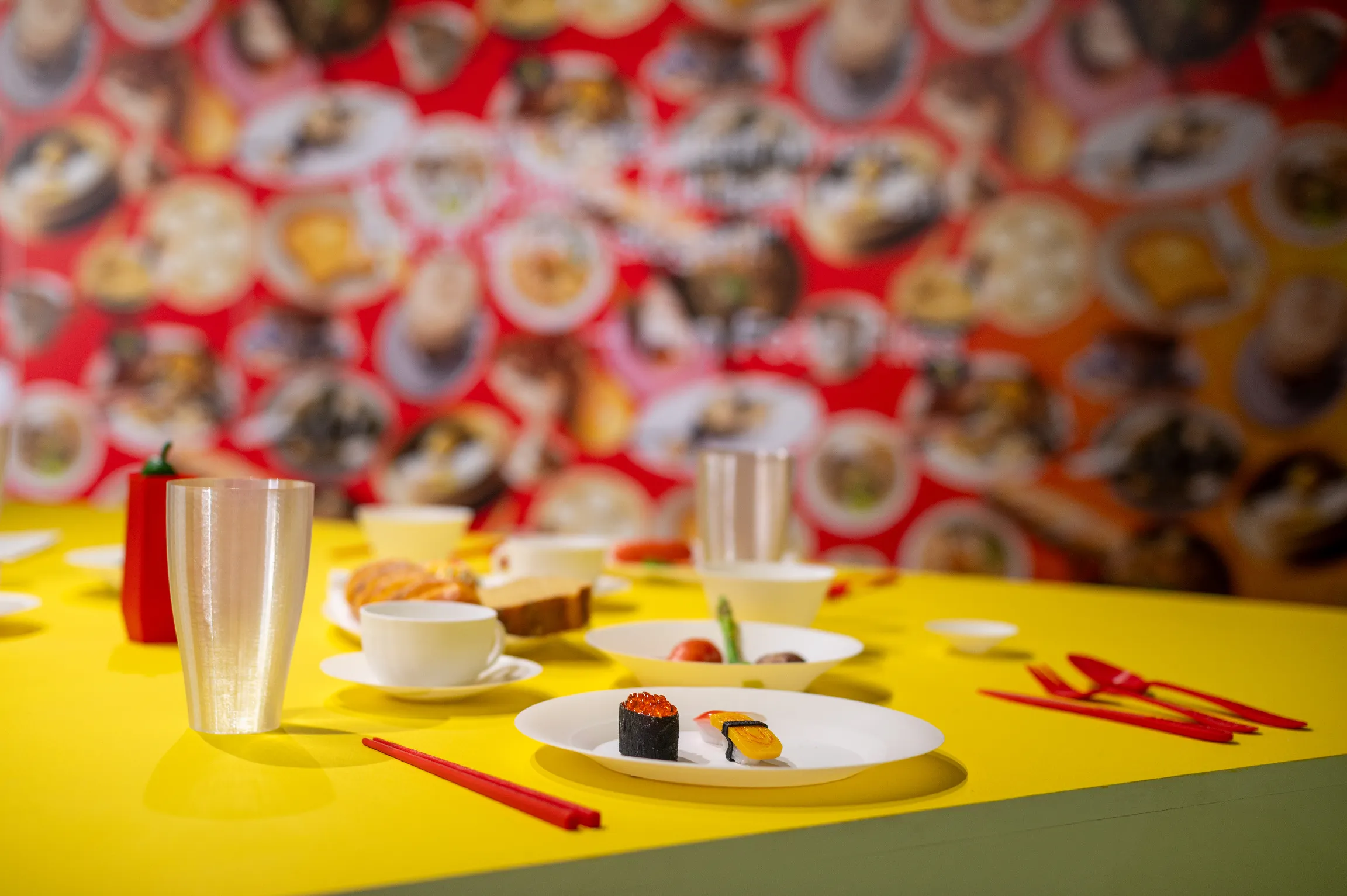
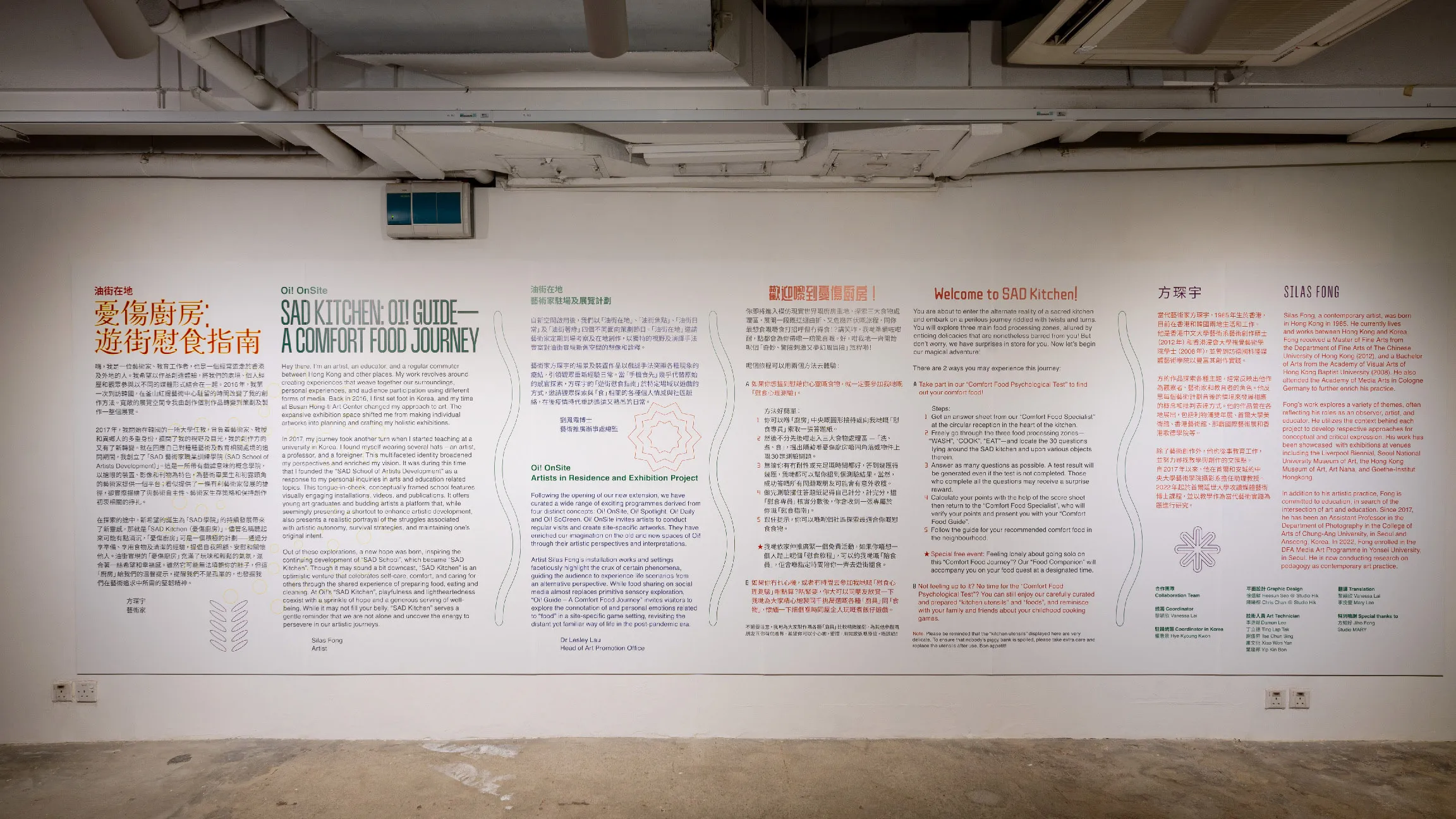
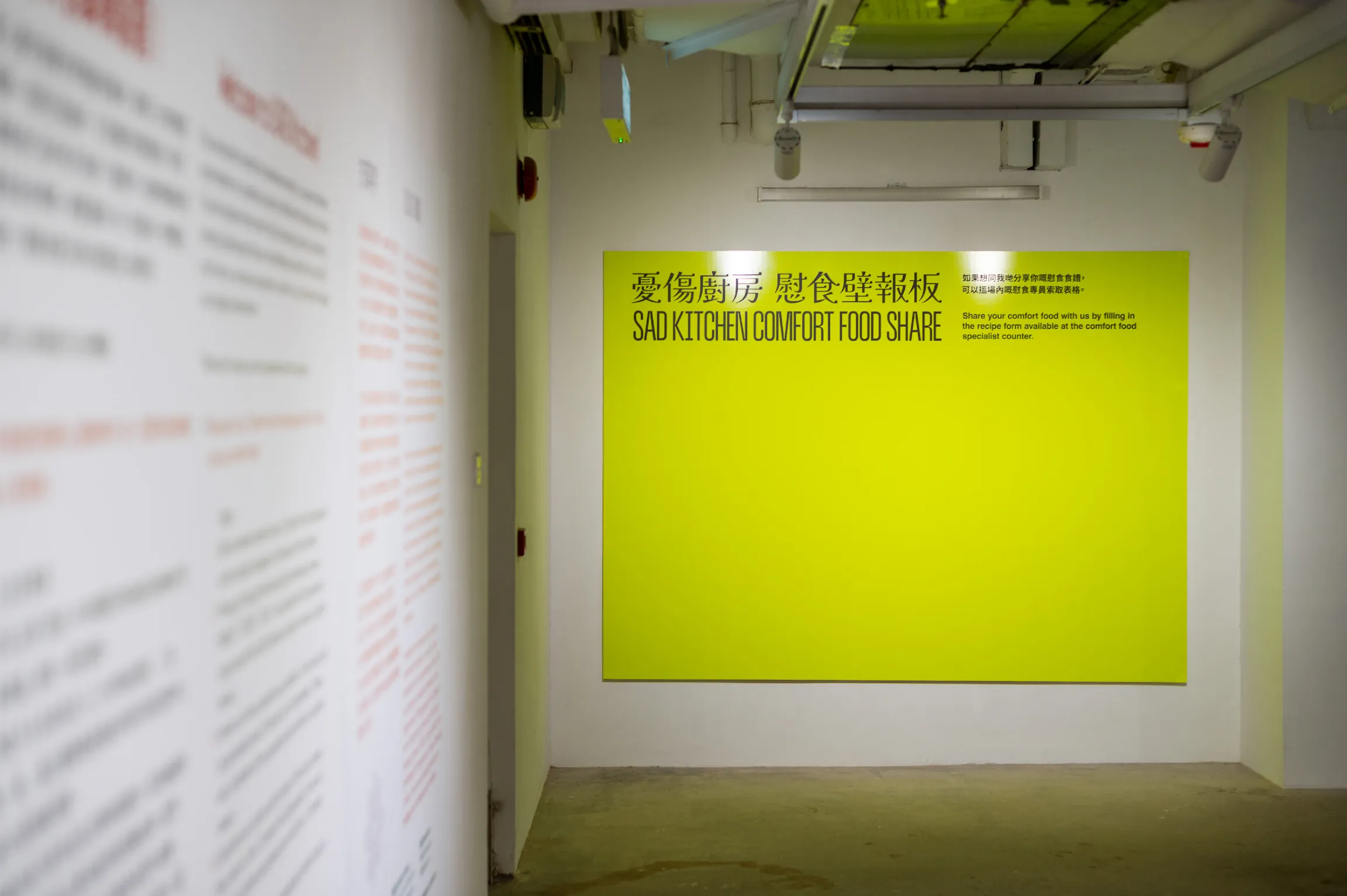
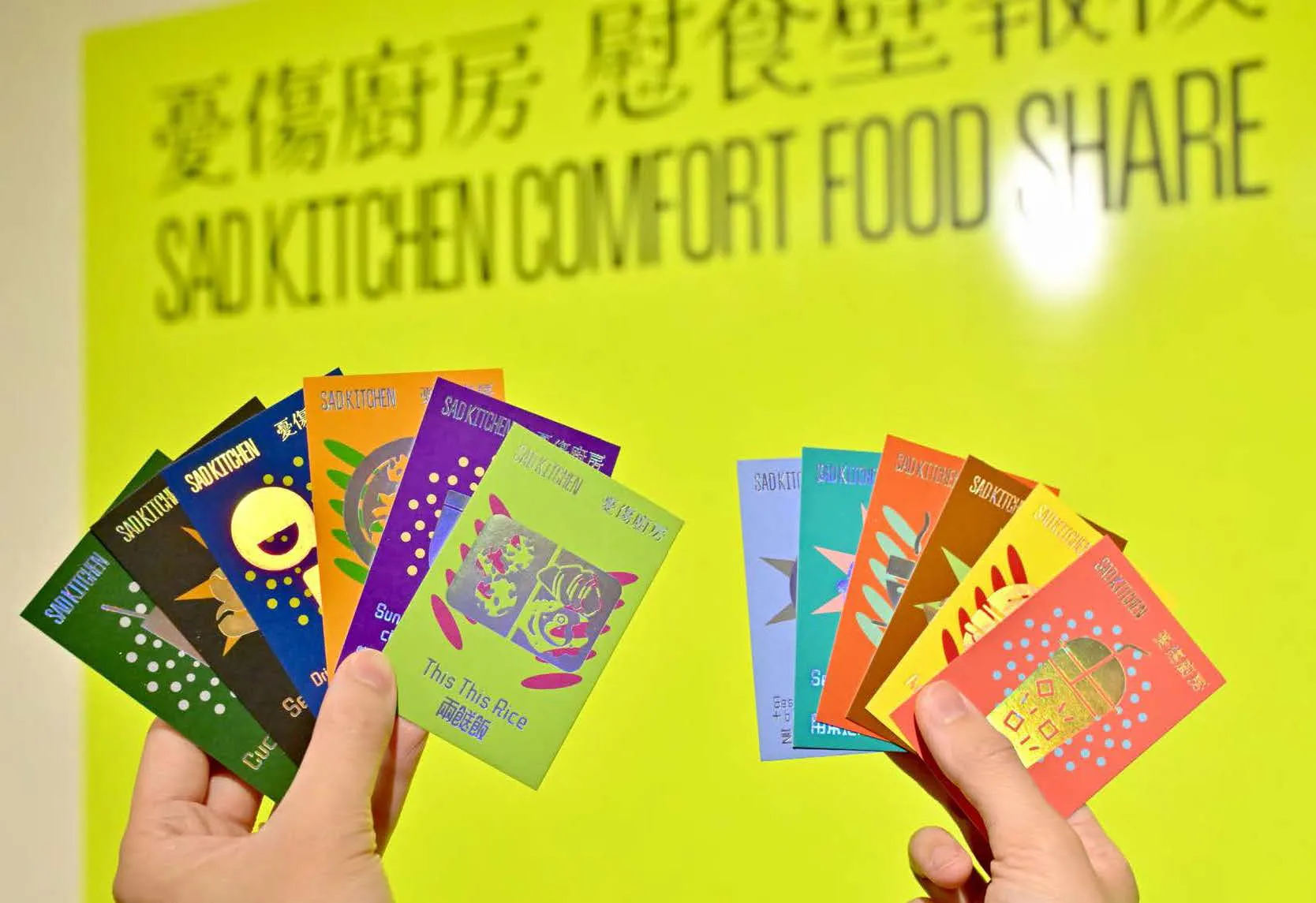
In my recent project “SAD Kitchen: Oi! Guide – A Comfort Food Journey,” I utilized 3D printed objects, 3D scanning, animation, wall vinyl, printed matters and installation art to transform the Oi! Warehouse into a multi-sensory “kitchen.” This interactive space invites visitors to explore personal emotions and communal bonds through a site-specific game. Hidden psychological test questions were integrated into the 3D objects and animated features, encouraging self-reflection. Visitors received a personalized “Comfort Food Guide,” pointing them to local dishes in the North Point community. My art aims to use food—and digital media—as vehicles for social and cultural construction, connecting people, places, and stories.
Coordinator. Vanessa Lai
Coordinator in Korea. Hye Kyoung Kwon
Graphic Design & Art Direction. Heesun Seo, Chris Chan @ Studio Hik
Art Technician. Damon Lee, Ting Lap Tak, Tse Chun Sing, Xiao Wen Yan, Yip Kin Bon
Solo Exhibition at Gallery Chosun, Seoul, 6 – 29 Nov 2024
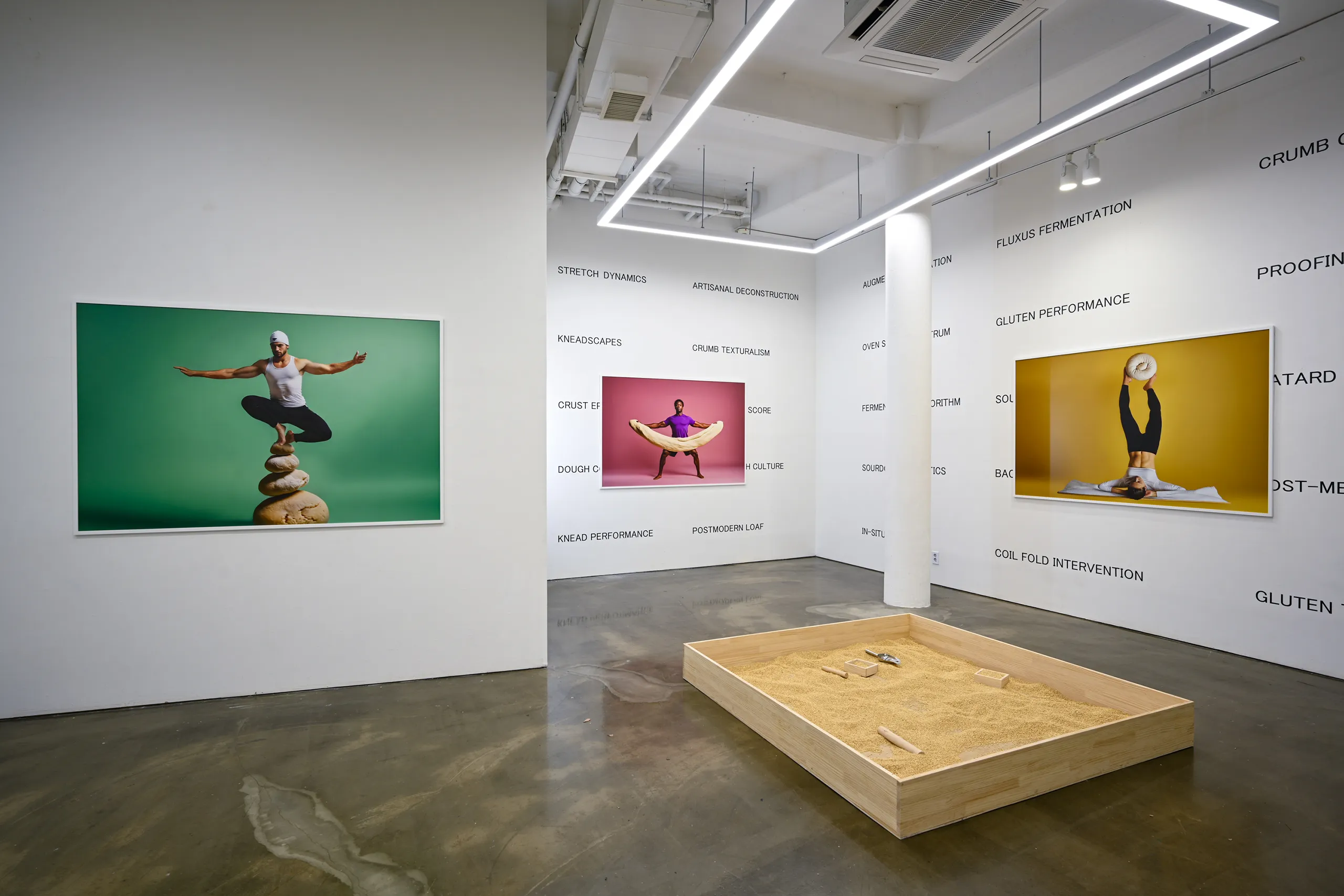
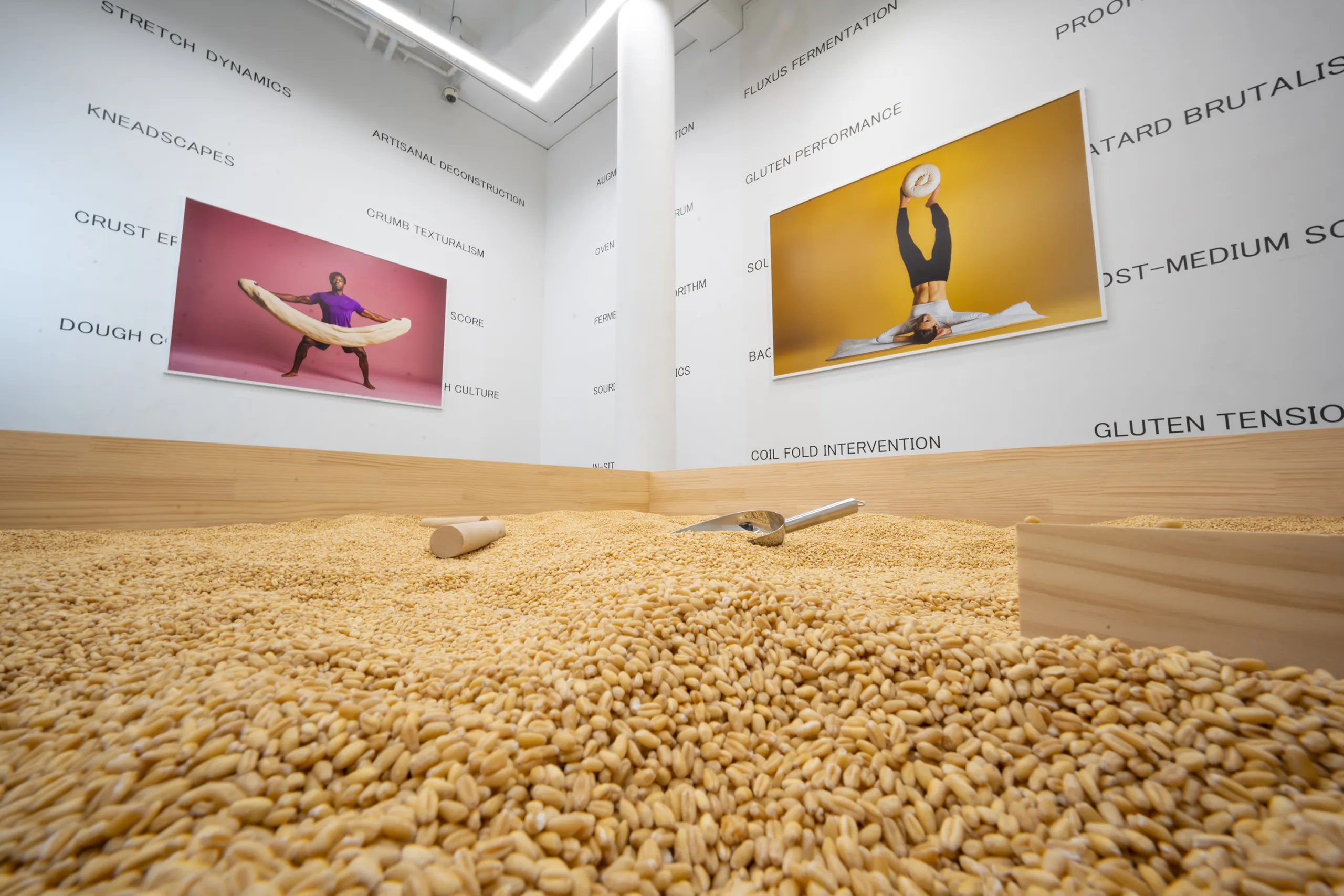
The SAD School of Artists Development, Department of Bread transforms bread-making into a satirical exploration of education and validation systems, critiquing the relentless pursuit of credentials in a society fixated on external measures of success. Through workshops like Flourglass, where flour and time slip away in futile races against the clock, and the Shape and Score Clinic, where dough is shaped but never allowed to rise, the project playfully exposes the absurdities of institutional pressures. Surreal photographs from the Stretch series, blending yoga poses with intertwined masses of dough, reflect the balancing act between external expectations and raw creativity. By focusing on process over results, the work challenges visitors to question how institutions shape value and meaning, offering a humorous yet reflective critique of a system where showing up often matters more than true learning or growth.
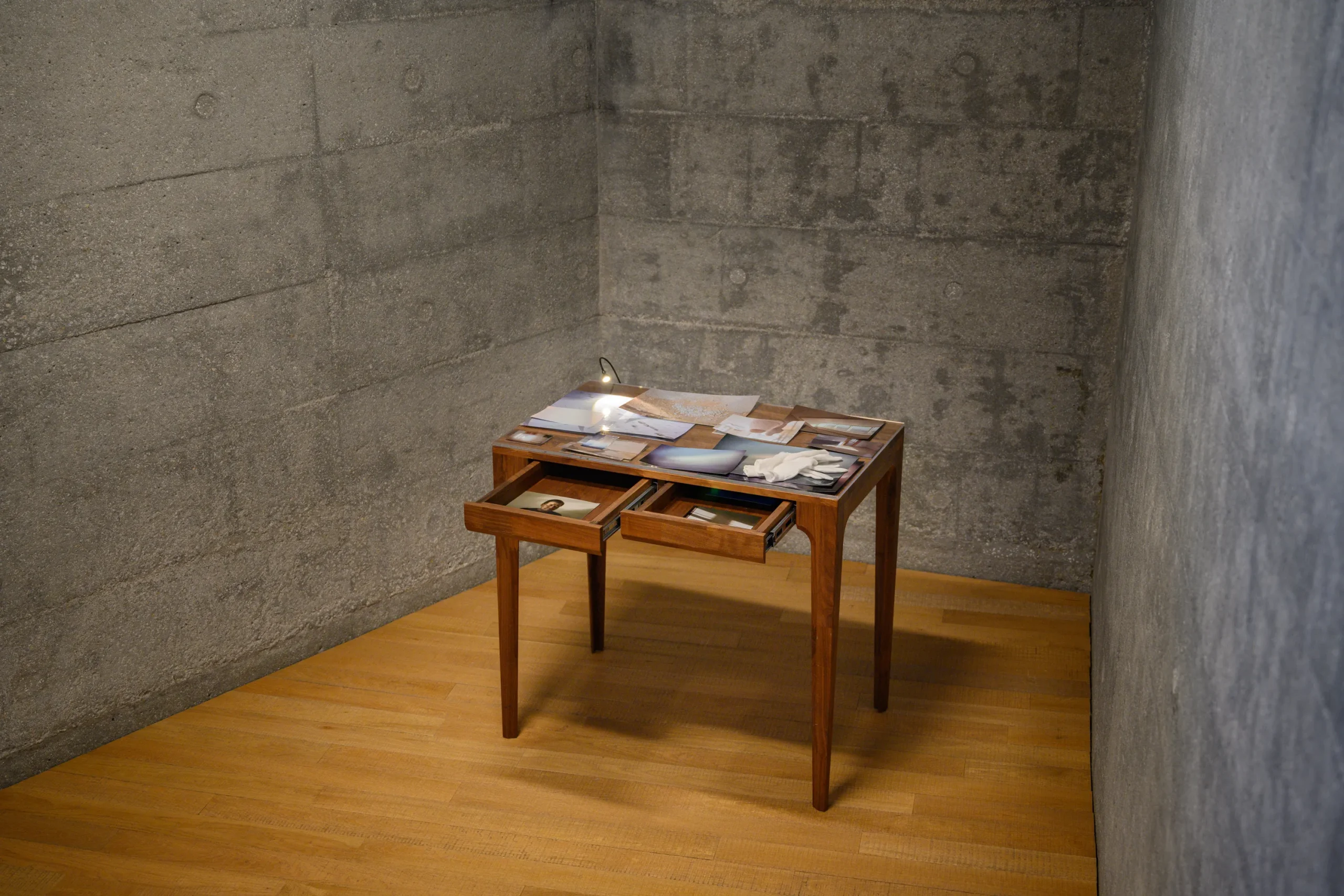
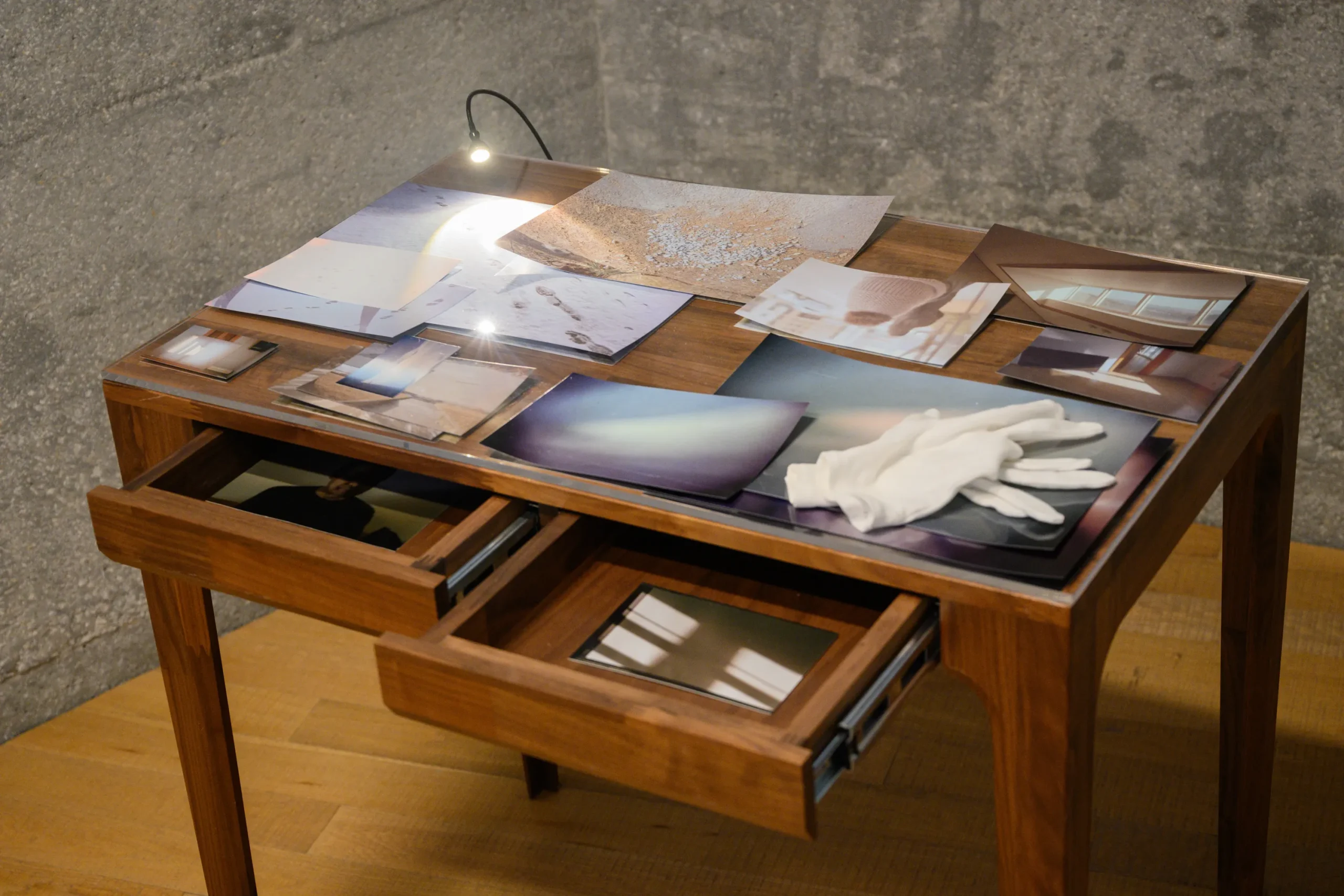
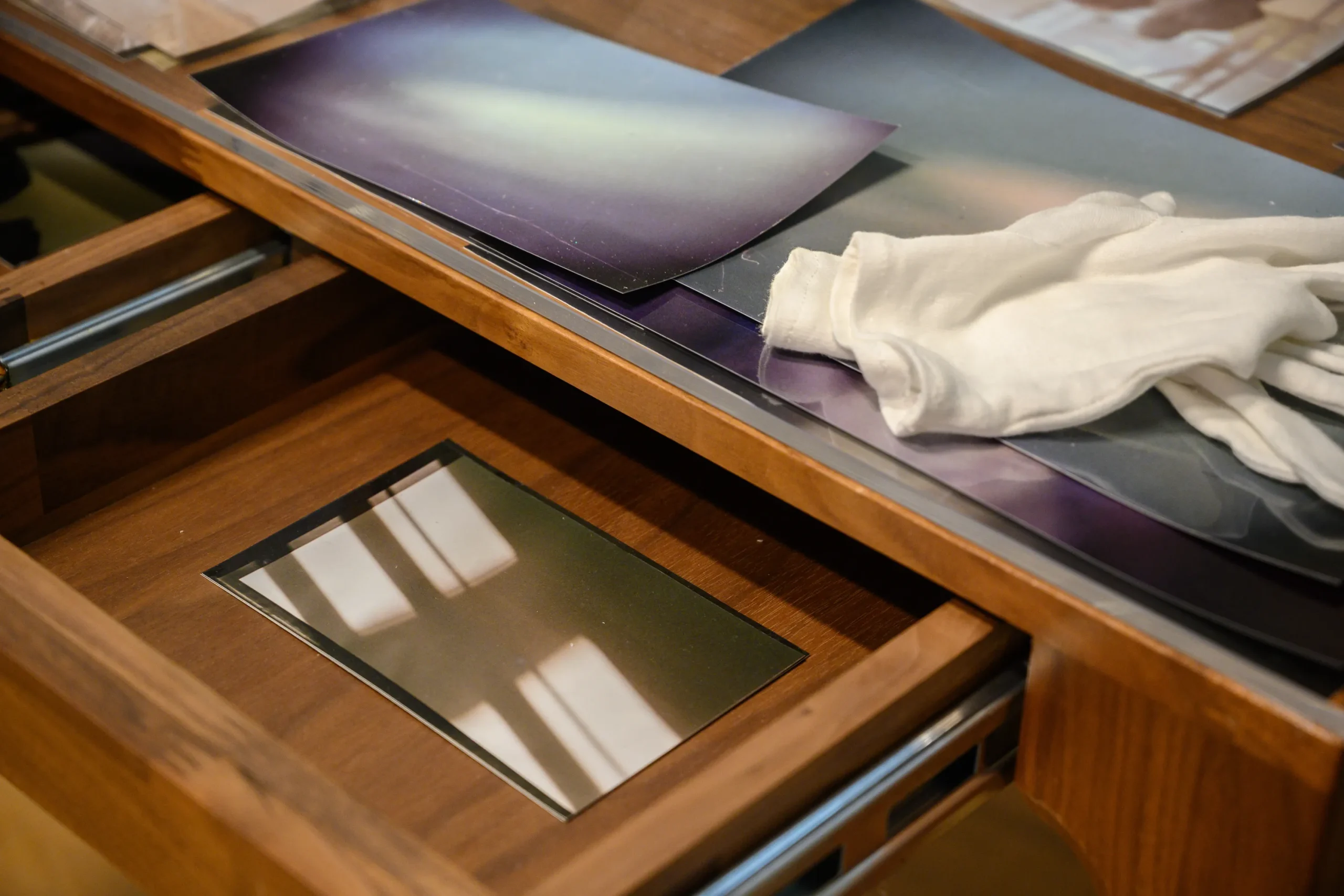
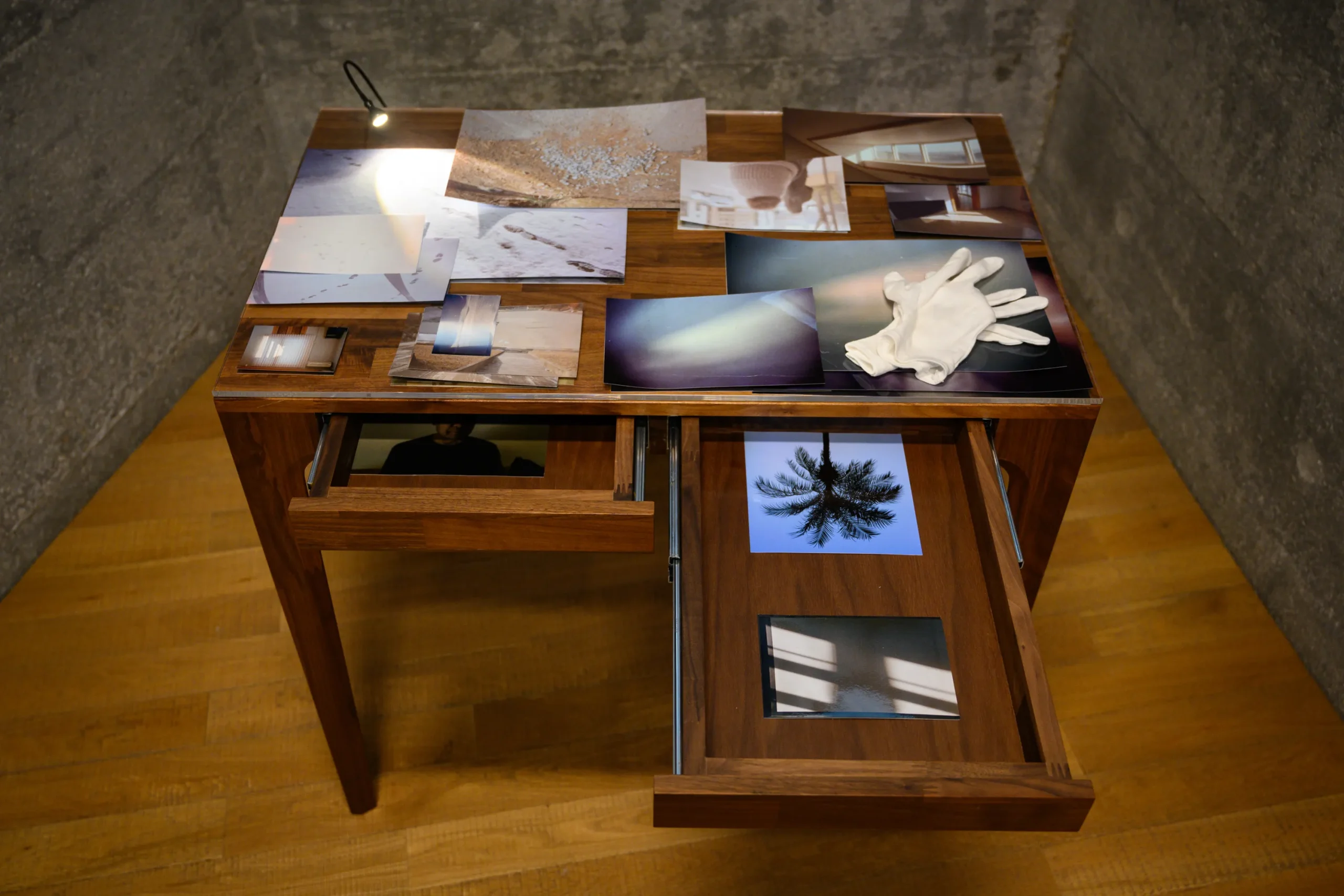
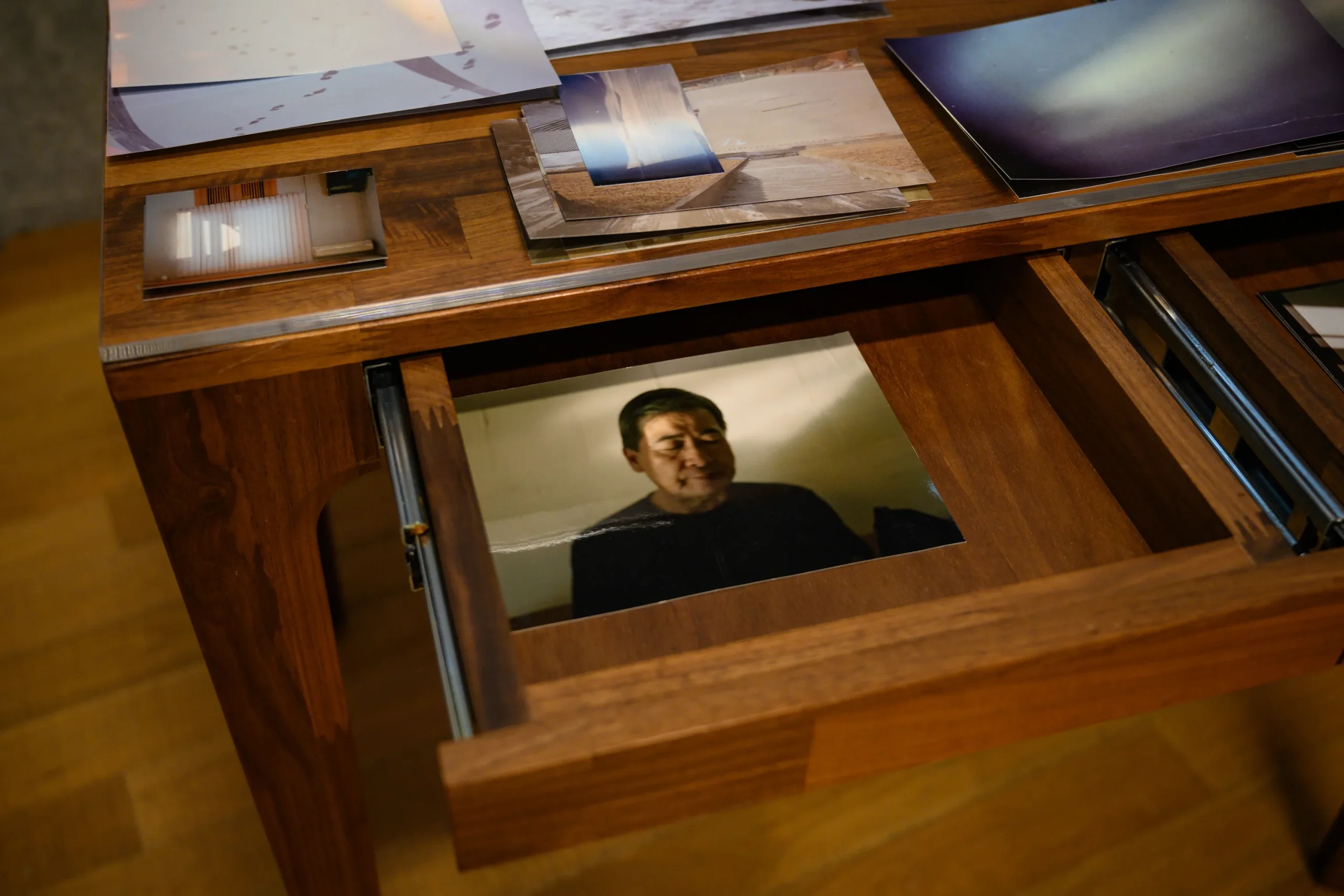
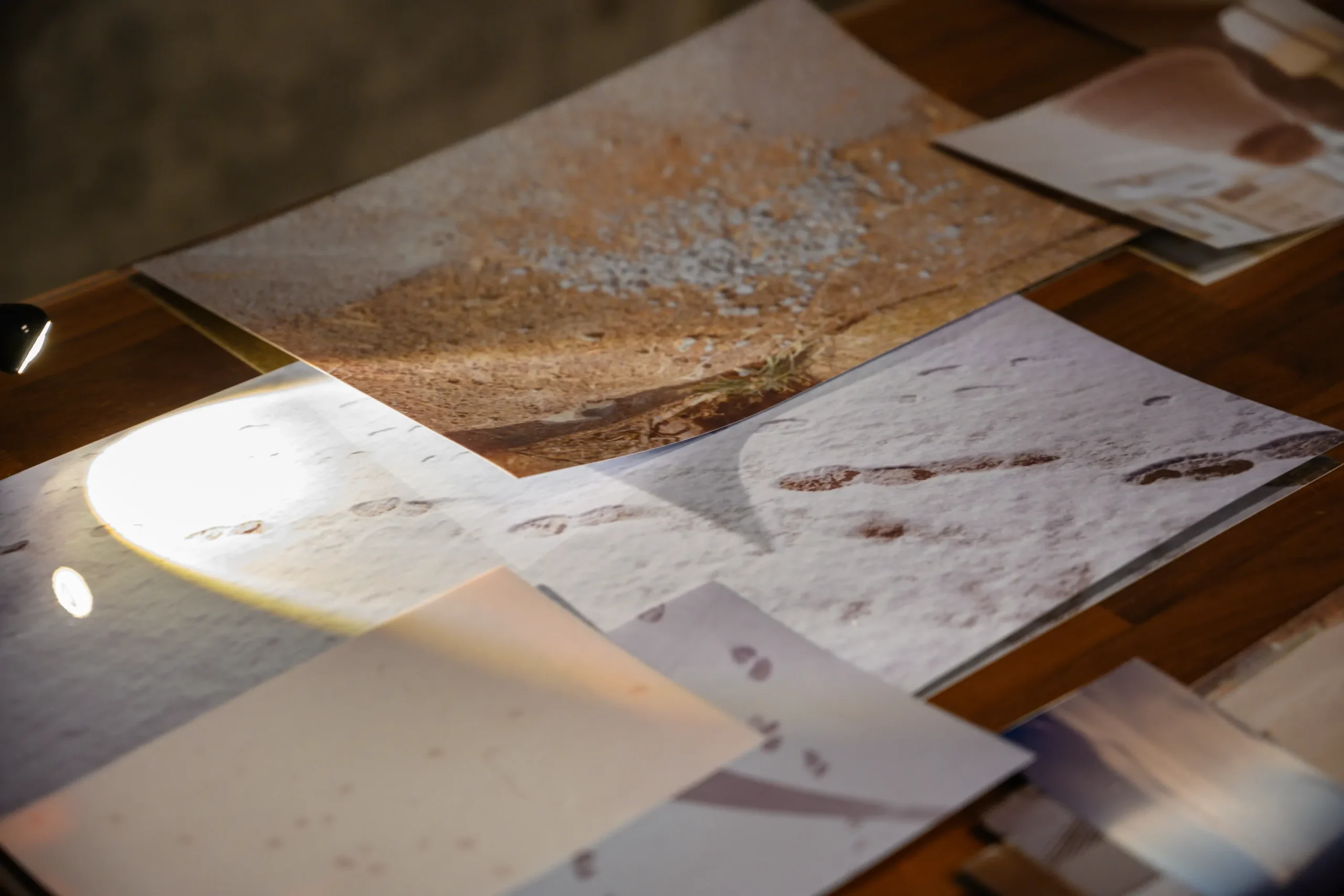
A rearrangement from the exhibition with the same title exploring the possibility of spaces within and between images. Fong borrows the title of a poem by Robert Frost and loosely associates it with his life in foreign places. The audience is free to arrange the image sequence for their own reading.
FUSE Artist Residency: Stopping By Woods On A Snowy Evening
Supported by Hong Kong Arts Development Council
at Videotage, Hong Kong
2 Feb – 11 Mar 2018
‘Through slow-moving videos, images, and objects that are oft missed, Fong creates an encounter with the everyday in a controlled environment to allow the visitor to be with the urban in a different way. Many of the images are personal to Fong, and he brings in three textual perspectives (including this one) to obscure this narrative of his memories, opening them up to be shared. Bringing in media art theory into more traditional image-making practices, Stopping by Woods on a Snowy Evening employs a light touch in a grand gesture toward a place where we can choose to be still.’
– Excerpt from Hera Chan’s text, The Freedom To Be Still
At the entrance, visitor picks up one of the catalogues and misses out the two others which look seemingly identical. In fact, each catalogue contains a different text that guides the visitor to an alternative experience of the same exhibition.
參觀者在展覽入口拿起其中一本場刊,錯過了貌似完全相同的另外兩本。 實際上 , 每本場刊內有不同的文本,引導觀眾在同一個展覽裏經歷不同的體驗。
Digital print on paper, A5, 32 pages, 3 in a set, 2018
紙上數碼打印, A5, 32 頁, 3本1組, 2018
Dye sublimation print on voile, 140 cm x 260 cm, 2 in a set, 2018
透明紗上熱昇華印刷, 140 米 x 260 厘米, 2件1組, 2018
Silas FONG is interested in our struggle to remain calm and focused in an urban environment flooded with information. He often explores this problem with the help of found objects drawn from the world of technology. The video “Focus Test”, for example, consists of a series of tests charts for cameras. Their geometrical patterns, designed to determine the focusing ability of optical lenses, are equally challenging to the human eye. FONG’s fascination with test patterns is also evident in “Nozzle Check/Head Alignment”, a printout whose original purpose was to verify the proper function of a printer. Its fragile array of colour fields and lines is a constant reminder of how little it takes to become misadjusted, for both machines and humans.
Solo Exhibition
Hong-ti Art Center, Busan
25 Nov 2016– 16 Dec 2016
Artist Statement
Time is always not enough, but it is only true when we have things to do. Artist residency is an experience of time travel. Once you step into another culture, far away from your own. Suddenly you realize that you have to learn from the very beginning, from the basic understanding of daily life. It recalls memories of childhood, of youth and of future. Nothing is necessary to be done. Just stay in the studio, which is very spacious compared to that I had in Hong Kong, allows a lot of solitary thought to fill up until your back feel painful with the chair. The spacetime is open. ‘Time is an illusion.’ – Albert Einstein
After arriving Busan for a month, mostly I stay in the area nearby Hong-ti Art Center. It is an industrial area where things are made. There is not much traffic. In a foreign place, most fundamental elements become sentiments. The air, the light and shadows, the sea, the ambient sound, the fallen leaves and the sense of time seems dilated. To start from a personal perspective, I couldn’t help but reflect on my life in Hong Kong. I hope to describe the feeling of living here from Hong Kong.
One touristic attraction in my studio is definitely the sunlight. Here I could see the same ‘light drawing’ on the wall and the floor from 8am to 3:30pm in my studio. Outside there are different trees and plants filling up the window scene. It is somehow rare in Hong Kong, at least in my neighbourhood. It might sound awkward to you, but the residential life in Hong Kong are mostly in a high-rise, far off the ground. Still, the windows are blocked by the other buildings so you hardly see ‘light drawing’ on the walls and shadows of trees in your flat.
The sense of timelessness may not be a thing of Busan, but certainly for me in Hong-ti.
2016- Installation
Direct UV inkjet print on roller blind, inkjet print mounted on translucent black acrylic plates
200 x 140 cm; 180 x 90 cm, 90 x 90 cm (2 pcs)
The room I lived was on the first floor of a building in a small quiet street. It was surrounded by towering trees with not much traffic. In winter, snow covered the trees and the roofs of the houses. In summer, the flourishing leaves almost pushed their way into the window. Sunlight fell into my room, casting on my table a blue and greenish shadow, swayed gently with the wind.
The room I live is on the sixth floor of a high rise in an estate made up of ten blocks. The view from the window stays the same throughout the year. Tall concrete penetrates the hazy sky. In the small slit of the harbour view, I can see ships passing by. Sunlight also comes into my room, but it looks quite different. It is just the reflection from a window of the building opposite.
One day I walked around the streets alone. I looked at people’s faces, but few looked back at me. They weren’t even aware. They don’t look around now. They may well be living a second life in another space and time. At some point I walked pass a tree and realised there was a big sky high above the black mirror.
Exhibited in POST PiXEL. Animamix Biennale 2015 – 16, Run Run Shaw Creative Media Centre, Hong Kong
椴樹底下
2016- 裝置
捲簾上UV噴墨打印, 透光黑色亞加力膠片上噴墨打印 200 x 140 厘米; 180 x 90 厘米, 90 x 90 厘米 (2 件)
Flat D, 6/F, Aldrich Garden’ is the title of this exhibition but also the artist’s home address. This implies a doubleness: an address is functional and indicative – as a concept, it is most commonly understandable – but at the same time it is also meaningless because it is not meant to help you to find the place, as for the audience of this exhibition it refers to a place so far away that it may as well not exist. Such a conceptual doubleness epitomizes Silas Fong’s artistic project in temporal experiences and psychological activities – things that are utterly personal, yet also entirely common.
The address is also giving us hints with which to understand the exhibition: first of all, it brings us to Hong Kong. A global financial center built first by manufacturing industries (the predecessor of ‘the world’s factory’), then by financial-trading freedoms, the city likes to evaluate its business and its people in terms of productivity and efficiency. In this society of pragmatism, wasting time is no different to burning billnotes. Growing up here, people pick up an almost ethical obligation to spend time in the ‘correct way’, and for the younger generation to not do so is a major rebellion. With this context in mind, Fong’s works are actually a research on sheer unproductivity, on the moments that we learn to feel guilty and negative about. He questions if these moments really are worthless and whether our personal histories are not in fact constituted within all these ‘ahistorical times’.
The address also brings us to Flat D, a piece that was first shown in the Hong Kong Art Centre in 2015. There, Fong had taken corner of the exhibition space and reconstructed it into his bedroom at home. He then invited visitors to spend ten minutes in this room. With the time set to precisely 10 minutes, and the fact that there was not anything at all in the room to look at or contemplate, visitors could do nothing but go with whatever came up their minds. Coming inside Flat D, their plans, their experiences of the day were interrupted, though voluntarily, and now they had to stop and think about the interrupted. Eventually, the piece provided an experience and a question: what does this interruption, these ten minutes that are cut out of our life, mean to us?
Three other pieces within the exhibition (Work Report for Museum Ludwig, Attendance Report for Academy of Media Arts Cologne and Passenger Report for Meinfernbus) can be seen as elements of ‘fieldworks’ relating to such research – with pictures and texts, he documents the activities of his mind during long hours undertaking internship duties in a museum, attending classes and taking long bus rides. These records may remind us of the typical texts of ‘stream of consciousness’, in particular Camus’s Outsider, but literariness is not Fong’s main concern here. What he tries to explore is the common rather than the unique – he wants these records to remind us of our own experiences. Think about it, we all talk to ourselves during moments of boredom and distraction, when in our minds words start to flow randomly, unbounded from social norms (manners, ethics, and so on) and a chain of memories appears, no matter how irrelevant they are to the things immediately surrounding us. Using the artist’s own experiences as case studies, these pieces ask us to pay attention to these conversations we have with ourselves.
Even two years ago, Fong was already a considerably experienced artist. Coming to ‘study’ in Germany, what is the most precious to him is perhaps not the new information to even methodologies, but the unfamiliar environment, a sense of distance and indifference that provokes thoughts and experiences. For as we can tell from these works, the core theme of Fong’s practice is an inevitable loneliness, and art is a tool to process and transcend it and make us understand ourselves better. In this sense, we may see the last work in this exhibition as a beautiful metaphor – Afternoons (2015) is a series of books, but books with no words, no knowledge, no ‘history’ – just the sunlight that changes as time goes by. It symbolizes what Fong attempts to create with art: a sensitivity to the subtleties of our time and our mind.
Download PDF 2015 Durational Installation Table, grey plastic tray, watch, attendant in formal wear, wooden door, soundproof walls and ceiling, laminate flooring, wall skirting, aluminum window with sanded glass, air-conditioner, wall paint, steel wall hanger, curtain, light bulb, kinetic light system
300 cm x 220 cm x 250 cm, 10 minutes
In front of a door, there is a person sitting on a chair. When you get close, this person greets you and asks if you want to enter. However, you are only allowed to enter individually, without your mobile phone, camera, electronic devices and books, etc. After you enter, the door would be locked, and it would only be unlock after 10 minutes. You would sign an agreement to confirm your decision at your own risk. Inquiries about what is behind the door would not be answered. Every visitor is only allowed to enter the door once for the whole exhibition period.
There is overwhelming information all around that numbs our senses. We are constantly forced to fool our basic observation of our daily life surroundings. In urban city life like Hong Kong, it’s almost impossible to be alone. We are always occupied and distracted. With mobile communications, it gets even “better”. That actually hinders us to understand ourselves and our needs. It is believed by many and even proved that, indulge in boredom helps creativity. This work tries to offer a solitary meditative experience which is free from social pressure and provide guidance to inner exploration.
Exhibited in
《The 20th ifva Awards – Media Art Category Finalist Exhibition》
Pao Galleries Hong Kong Art Centre, Hong Kong, 2015
An attendant sits next to the entrance of Flat D to control the operation.
A grey tray is used for visitors to leave their belongings (mobile phone, camera, watch and etc.).
Visitors are obliged to read the agreement carefully before entering Flat D. A watch is used for the attendant to keep time.
The attendant locks the door after the visitor has entered Flat D.
Light from outside the window scatters on the wall and the floor. It changes slowly across the room.
Air conditioner creates an atmosphere with ambient mechanical sound, temperature and humidity.